2022 Car Buying and Maintenance Advice

Article Image

Consumers continue to cite concerns about new vehicle tech

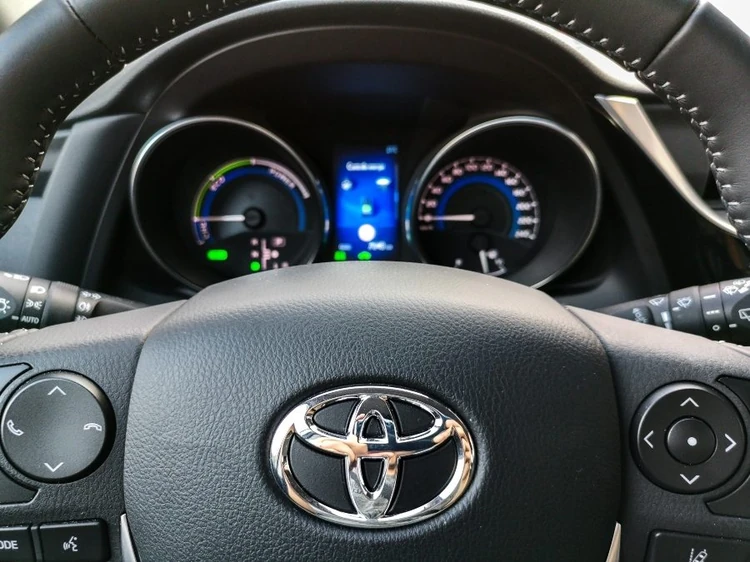
New car shoppers are often swayed by flashy technology but a new survey of car owners finds some of the latest in-dash technology may not be ready for prime time.

J.D. Power’s 2022 U.S. Tech Experience Index (TXI) Study conducted a deeper dive into advanced vehicle technology and found that 46% of vehicle owners reported at least one problem with the technology in their vehicles.

The study follows similar research a year ago that found problems with the vehicle infotainment system were the major source of customer dissatisfaction with new cars and trucks. Specifically, more consumers were unhappy about how their smartphones connected -- or didn’t connect -- to their vehicle’s system.

‘Automakers should keep innovating’

J.D. Power researchers say the auto industry should address the issues identified by new car owners but should not back away from experimenting with new technology.

“Innovation is non-negotiable,” said Kathleen Rizk, senior director of user experience benchmarking and technology at J.D. Power. “The fact that the average problems per 100 vehicles (PP100) for a technology is high should not discourage automakers from innovating, as there is often a wide range of total problems experienced for a technology across the brands.”

Steve, of Beaumont, Calif., recently reported problems with the infotainment system in his Honda Civic.

“It used to go blank for some time and come back, touch screen stopped working, could not see the backup camera on the right-hand side camera,” Steve wrote in a ConsumerAffairs review.

“Did some research on the web and Youtube.com and found out that a lot of Civic owners had these issues.” 

Fingerprint reader frustrations

In the latest study, J.D. Power researchers found that the fingerprint reader was the most problematic tech issue in the study’s history. Included in the study for the first time, the fingerprint reader experienced the lowest overall satisfaction score.

Hyundai introduced the fingerprint reader in 2018. Using a fingerprint reader on a smartphone, the technology allows the driver to unlock doors and start the engine remotely.

In the 2022 study, Hyundai's Genesis ranked highest overall for customer satisfaction with in-car technology. It was also the highest among premium brands with an Innovation Index score of 643. In the premium segment, Cadillac, with a score of 584, ranked second and Mercedes-Benz ranked third with a score of 539.

Hyundai ranked highest among mass market brands with a score of 534. Kia earned a score of 495 to rank second, while Buick, GMC, and Subaru tied for third with a score of 482.

Article Image

Illinois suspends Carvana’s dealer license over titling delays

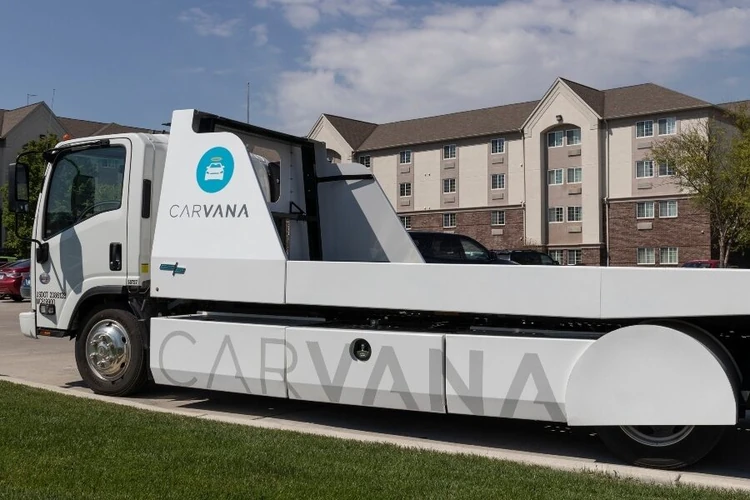
The Illinois Secretary of State has temporarily lifted Carvana’s dealer license that allows it to sell cars to consumers in the state. 

In a statement to Automotive News, Henry Haupt, an Illinois Secretary of State spokesman, said the company has been charged with failing to properly transfer titles for some of the vehicles it sold in Illinois. The Secretary of State’s Office opened an investigation in February based on nearly 90 complaints from Illinois consumers.

Carvana did not immediately respond to media requests for comment, but the issue has been reported in a number of consumer review forms, including ConsumerAffairs.

Biswadip, of Prospect Heights, Ill., said he received what was supposed to be his permanent license plate for the car he purchased from Carvana. However, he later learned that the license plate number is not the one that appears on the registration.

“I called Carvana several times to give me a temporary plate so that I can at least drive the car but did not get any resolution,” Biswadip told ConsumerAffairs. “It's already two weeks now and still I can not drive the car because of the plate. I have a little baby at home and without (a) car life is getting difficult.”

Problem not limited to Illinois

Consumers in other states have also reported registration issues after purchasing a vehicle from Carvana. Skye, of Topeka, Kan., told us that they purchased a car in January 2020.

“The registration department put the wrong odometer reading on the title paperwork as 62,000 miles when the vehicle had about 32,000 miles,” Skye wrote in a ConsumerAffairs review. “It took Carvana almost two months to make the correction and get me the paperwork back with a correction form. I submitted everything to the DMV and thought everything was handled properly.”

Apparently, everything was not resolved in the way they thought. Skye claims the company never connected the odometer correction with the VIN. This created a serious problem when Skye tried to sell the vehicle.

“While trying to trade or sell my vehicle, I am being accused of odometer rollback fraud due to their error and failure to correct it,” Skye told us. 

Similar complaints about Vroom

Carmax’s competitor Vroom has experienced similar issues. As we recently reported, Texas Attorney General Ken Paxton has sued that dealer in response to consumer complaints about lengthy delays in transferring titles.

In our reporting on that story, auto industry analyst Cliff Banks, the publisher of TheBanksReport.com, told us that Vroom and Carvana appear to be the only dealers that are producing complaints about delays in titling.

“I think it's due to them both (Vroom and Carvana) trying to grow quickly and not having the processes in place as they enter new markets to adequately provide the services required in a vehicle transaction,” Banks said.

Both companies have similar business models. Consumers choose a vehicle from online listings, and the cars are delivered to their homes. Both companies were highly popular during the first year of the pandemic.

Article Image

Car dealers continue to mark up vehicles beyond the sticker price

Consumers who want to purchase a new car or truck are having to dig deeper into their pockets as an increasing number of dealers are adding thousands of dollars to the sticker price.

Auto manufacturers, notably Ford and GM, have asked dealers not to do this, fearing a consumer backlash against the brand. But dealers are independent businesses, and some told the Wall Street Journal that they are selling fewer cars and must increase profits on each sale.

In some extreme cases, buyers have discovered that the most popular vehicles on the lot are selling for as much as $40,000 above the manufacturer’s suggested retail price (MSRP). Dealers say there is no shortage of people willing to pay it. In January, 80% of new car buyers paid over the sticker price.

In one ConsumerAffairs review, Steve, of Beverly Hills, Calif., wrote that he “verbally” agreed to pay the sticker price for a 2021 Range Rover and waited nine months for the car to arrive. When the car arrived at the dealer, he said a salesman called him to tell him the price had gone up by $40,000.

“Before I even had a chance to get to the dealership to discuss the price he sold it to someone who was willing to pay the 40k over,” Steve wrote in his review. “I waited 9 months for nothing!!!” 

Buyers in revolt

According to the Journal, car buyers are in revolt. It recounted the efforts of one buyer who flew to a dealership 300 miles away to get the car he wanted at a reasonable price. Karl Brauer, executive analyst at iSeeCars.com, says making that kind of effort is increasingly necessary.

“If you can expand your search from a five or 10-mile radius around your house to a 100 or 200-mile range you can greatly expand your opportunities,” Brauer told ConsumerAffairs in a recent interview. 

Brauer points out that if you have to travel six hours round trip to save $1,200 on a car, you’re gaining around $200 an hour.

Article Image

Buying a vehicle in 2022 is difficult for many consumers, survey shows

Only a couple of months ago, economists predicted that the ripple effect of a car shortage could slam consumers, and they certainly got it right. Supply chain issues have made shopping for a new car a lot less fun than it used to be. With prices continuing to rise, many people are thinking twice about how much they need a new set of wheels.

The ConsumerAffairs Research Team surveyed over 1,000 consumers and asked about the struggles they’ve faced while recently searching for a new vehicle. Our findings show that 28% of people are thinking about simply giving up on looking for a car right now.

Sadly, only 2 out of 5 people who are looking for a new car were able to identify potential options in their price range.

Settle on a vehicle and rethink travel

If you’re still in the pool of vehicle buyers who are determined to buy a new car or truck, there are several things you should expect when doing your shopping. Here are some of our researchers' recommendations to help speed up the process:

Settle for what you can find: Buying a car is a serious investment for most consumers. After going through the process several times over their lifetime, many experienced car owners know what they’re looking for before they even pull up to the lot. 

However, many people are also aware that the current shortage of available cars will limit their options. That might force a determined buyer to settle for a vehicle that meets their budget while only having some of the bells and whistles they’re looking for. 

On the subject of budget, the price ceiling for the consumers surveyed suggests that car buyers are trying to hang on to every dollar they can. The average amount that the survey respondents said they'd be comfortable spending is $21,310, which is less than half of the average price of a new vehicle in 2022 ($47,077), according to Kelley Blue Book. If new vehicle inventory levels remain tight, it’s possible that sticker prices could continue to rise.

Rethink how you travel: With growing concerns about the environment, traffic problems, and rising gas prices, consumers are starting to look at how they travel on a day-to-day basis. The average number of daily personal car trips plunged as much as 45% during the pandemic, thanks in part to people ordering more online and having their purchases delivered. Unfortunately, that's a move that the Environmental Protection Agency (EPA) says does more harm than good to the environment.

The U.S. is split about driving the same or pulling back, according to our survey. Just over half of respondents said they’re not likely to go without a car in the future, but the other half of respondents say they’re likely or moderately likely to pull back on their daily travel. ​​Drivers aged 18 to 25 were more likely to consider taking alternative transportation, while baby boomers were the least likely.

“Going carless is easier for those with reliable public transportation options. People who are able to walk, use a scooter or bike to and from their destinations may also find it easier to make the change,” the ConsumerAffairs research team advised. “Ride-sharing and carpooling are other good alternatives to car ownership when you can’t afford a car or are waiting for your dream car to become available.”

There’s more

The study covers a lot of other aspects car buyers should consider – the most desirable brands, added insights on inventory levels, and more. Consumers can learn more by reading our full list of findings here.