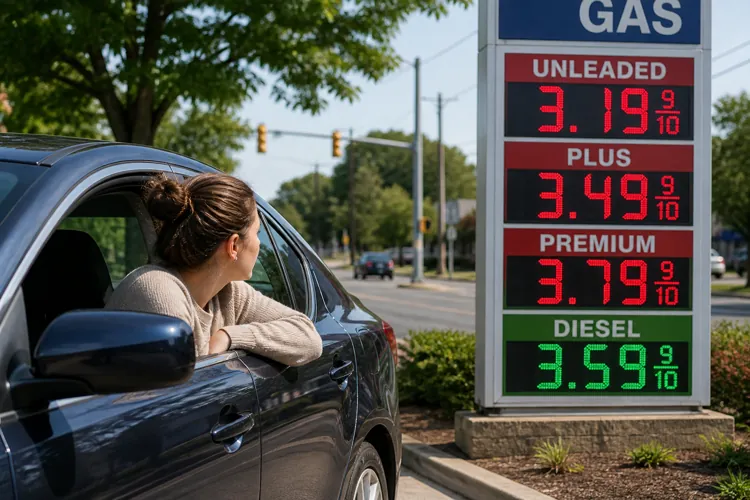

Americans are changing their driving habits to save on gas, with 56% saying they’ve reduced how often they drive and 40% willing to drive at least 10 minutes out of their way for cheaper fuel.
Driving farther for cheaper gas doesn’t always pay off, especially when the extra mileage and time outweigh the savings at the pump.
Simple habits can help lower fuel costs, including combining errands, avoiding unnecessary idling, maintaining proper tire pressure, and comparing gas prices along routes you already drive.
When gas prices start eating into the household budget, even a trip to the pump can lead to some tough decisions.
For many Americans, saving a few dollars on fuel now means changing how — and how often — they drive, combine errands, and even spend time with family and friends.
A new study from ExtremeTerrain found that Americans are going to considerable lengths to cut their fuel costs. Four in 10 say they’ll drive more than 10 minutes out of their way to find cheaper gas, while more than half have reduced how often they drive. And for some, the impact goes beyond the car: 43% say rising fuel costs have caused them to skip vacations, family gatherings, or other social plans.
ConsumerAffairs spoke with Paul Knoll, Sr. Marketing Director, to learn more about how drivers can save at the pump.
Survey methodology and key findings
ExtremeTerrain surveyed 1,000 American drivers via SurveyMonkey on July 14, 2026, to better understand how rising gas costs are affecting driving habits and household spending.
The survey found that Americans are making some significant changes to save at the pump. Here are some of the biggest findings from the survey:
40% of drivers said they would drive at least 10 minutes out of their way to find cheaper gas.
56% said they’ve reduced how often they drive overall.
The average driver reported spending $134 a month on gas.
Combining errands, driving less, and comparing prices between gas stations were among the most common strategies to save money on gas.
Drivers estimated that these tactics save them about $28 per month on average.
43% of drivers said gas prices have caused them to miss a vacation, family gathering, get-together with friends, or another special occasion.
69% said they’ve cut back on at least one other spending category to keep up with fuel costs.
Does driving farther away actually help your gas budget?
Knoll says going the extra distance for cheaper gas may not always be the smartest move.
“The mistake is fixating on the price per gallon instead of the cost and time it’s taking you to find that cheaper gas,” he said/ “If you’re adding 10-20 minutes of driving just to save a few cents, the extra you’ll burn can eliminate much of the savings, especially if you’re only filling a partially empty tank.
“If a cheaper station is on your way home, then sure it makes the most practical sense, or if the price difference is massive, but aside from that, the additional mileage to realistically save not that much, just isn’t worth it.”
Keep up with regular car maintenance
Aside from driving less, keeping up with your regular car maintenance can also help with fuel efficiency.
“One of the easiest things you can do to keep cut down how much you’re spending and improve your fuel efficiency is just keep your tires properly inflated,” Knoll said. “Underinflated tires increase rolling resistance and force your engine to work harder.
“Staying on top of basic vehicle maintenance, including the correct oil, filters, and addressing engine or emissions problems early on also can help with your fuel economy. At the end of the day, it’s about keeping your vehicle operating as efficiently as possible as it was designed to.”
What actually works?
Instead of trying different ways to save money on gas, Knoll shared some of the tried and true methods that can work.
“Start with combing your errands, avoid any unnecessary time idling in your car, don’t slam your foot on the gas when accelerating, stay within reasonable highway speeds, and keep your tires properly inflated,” he recommended.
“It’s also smart to compare gas prices along routes you’re already driving on versus making a special trip for cheaper gas. The goal should be to reduce the total cost of driving, not just find the lowest price tag for gas.”
Knoll also mentioned that the recent survey found that drivers estimate they’re saving about $28 a month with some of these tactics, and none of them require a huge change in behavior.
“Consistency matters more than chasing every possible penny you can save,” he said.