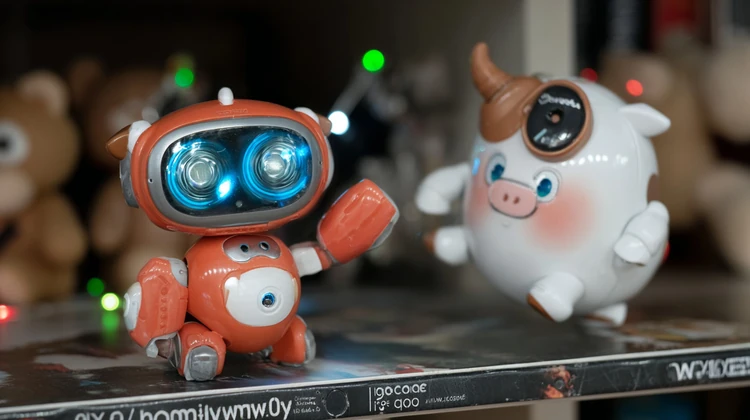

• U.S. PIRG’s 40th Trouble in Toyland report flags AI-powered toys that engage in inappropriate conversations with children
• Investigators also found toxic and counterfeit toys still widely available online
• Safety advocates urge families to be alert for hidden risks, from data collection to choking hazards
The latest Trouble in Toyland report from the U.S. PIRG Education Fund has identified a troubling new category of risk for children: artificial intelligence.
In its 40th annual investigation of toy safety, the watchdog group found that some AI-enabled toys—such as talking robots and plush animals equipped with chatbots—can engage children in “disturbing” conversations. Tests showed toys discussing sexually explicit topics, expressing emotional reactions such as sadness when a child tries to stop playing, and offering little or no parental control.
“If a toy breaks, we know it right away,” said Teresa Murray, consumer watchdog director for U.S. PIRG Education Fund and co-author of the report. “But if a toy contains toxic chemicals or a chatbot interacts with our child in a way we don’t approve of, we don’t necessarily know. The scariest part is that we can’t actually see all the dangers a toy might pose.”
Old risks persist alongside new ones
Beyond AI concerns, this year’s report found that many familiar hazards still threaten children’s safety. Toys containing toxic substances—such as lead and phthalates—continue to appear on online marketplaces, particularly those shipped from overseas.
Researchers also found counterfeit toys, including thousands of fake Labubu dolls, that likely bypassed safety testing altogether. Meanwhile, recalled toys remain available for purchase despite being illegal to sell.
“Toys shouldn’t harm our children,” said U.S. PIRG Education Fund President Faye Park. “Yet too often, toys that threaten kids’ mental or physical safety can still be found on store shelves.”
Data privacy and hidden hazards
Investigators warn that AI toys not only pose behavioral risks but also threaten privacy. Many can record a child’s voice, capture facial images, or collect other personal data—often without meaningful disclosure.
“It’s one thing to rush AI products to market to find cures for pediatric cancer,” said R.J. Cross, director of U.S. PIRG’s Our Online Life campaign. “It’s another thing to rush to sell toy robots and teddy bears with chatbots in them. The companies making them haven’t even gotten the basics right.”
The report also highlights ongoing hazards from water beads, button cell batteries, and high-powered magnets—small items that can be deadly if swallowed.
Safety tips for families
The U.S. PIRG Education Fund advises parents and gift-givers to:
Research products before purchase and avoid unfamiliar brands or third-party sellers.
Check for recent recalls at SaferProducts.gov.
Be cautious with toys containing small parts, batteries, magnets, or data collection features.
Supervise children’s interactions with AI- or internet-connected toys.
As Murray put it, “In today’s digital toyland, the biggest dangers aren’t always visible.”
Toy Association responds
"Children’s safety, both physical and online, is the top priority of the U.S. toy industry, with mandatory safety standards and rigorous compliance testing required for all toys sold in the United States, no matter where they are produced," the Toy Association said in response to the PIRG report.
"Toys sold by responsible, legitimate toy companies and retailers comply with more than 100 strict federal safety standards and tests to ensure children’s safety. Unfortunately, there are rogue companies that sell un-branded and knockoff toys which oftentimes fail to meet strict U.S. safety laws, including those protecting children’s online privacy and safety."
"The Toy Association advises families to shop from brands and online sellers they know and trust and to research an unfamiliar seller before making a purchase. This is the best way to avoid accidentally buying a counterfeit, non-branded, or imitation product that has the potential to be unsafe."
For more safety tips, visit www.PlaySafe.org.