

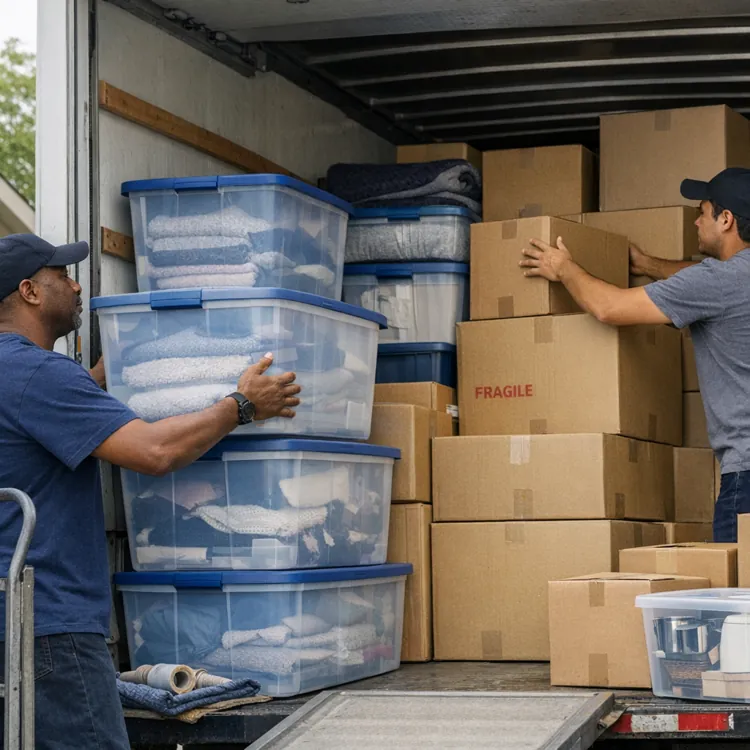
Moving boxes vs. plastic bins overview
Cardboard boxes and plastic bins are both great options for storing and transporting your belongings during a move. However, one may be a better choice than the other, depending on your situation.
If you’re on a tight budget, cardboard boxes can help you save money on moving supplies upfront, especially if you buy them in bulk. Plastic bins typically require a higher upfront cost, but if you plan on reusing them, they can save you more money down the line.
If you’re concerned about durability, you may want to go with plastic bins instead of cardboard moving boxes. Cardboard can tear easily and weaken when it gets wet, but plastic can typically endure more impact and maintain its shape under heavy stacking. Plastic bins are also water-resistant, which makes them a much better option if you’re moving on a rainy day.
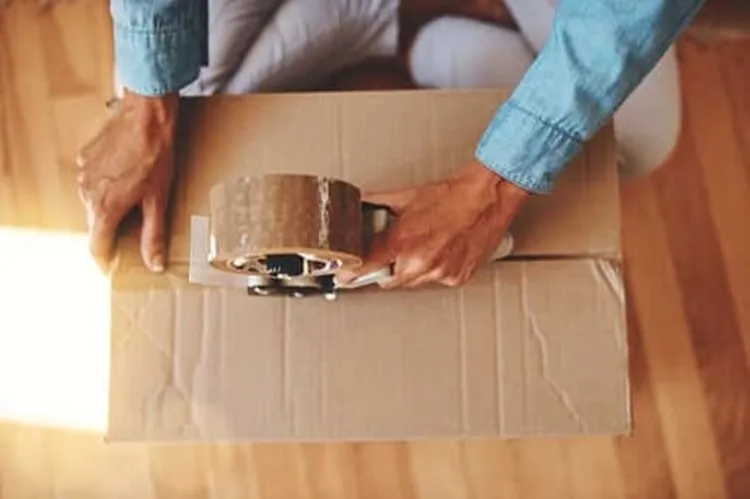
Another thing to consider when you’re choosing between the two is setup and storage. You’ll typically have to assemble and tape cardboard boxes, whereas plastic bins need no setup. That said, cardboard boxes can collapse flat, but plastic bins take up more space even when they’re empty. You can easily label both; the difference is that you can write directly on cardboard, and bins usually require tags or tape to prevent the writing from smearing.
As far as environmental considerations are concerned, cardboard is recyclable and biodegradable, but many boxes are used only once. Plastic bins have a higher manufacturing footprint, but you can reuse them for years.
| Factor | Cardboard boxes | Plastic bins |
|---|---|---|
| Cost | Lower upfront | Higher upfront |
| Durability | Moderate | High |
| Water resistance | Poor | Excellent |
| Stackability | Good when dry | Excellent |
| Sizes | Wide variety | Limited standard sizes |
| Setup time | Requires folding and taping | Ready to use |
| Reuse | Limited | High |
| Storage after move | Collapses flat | Bulky even when empty |
| Environmental impact | Recyclable and biodegradable | Reusable but plastic-based |
| Best use cases | Budget moves and short-term packing | Long-distance, wet conditions, storage |
Cardboard moving boxes pros and cons
Many people choose to pack their belongings in cardboard boxes for a move because they’re relatively cheap, easy to find and available in a variety of sizes. That said, there are a few potential downsides to consider before relying on them for your entire move.
Cost and availability
Cardboard boxes are the most budget-friendly option if you’re trying to save money on your move. You can find them at Amazon, Walmart, The Home Depot, and many other retail stores and marketplaces for anywhere from $1 to $5 each. You can also ask grocery stores or other retailers if they have cardboard boxes they’re willing to give you.
Sizes and specialty boxes
One major advantage of cardboard boxes is the variety. You can find them in all sizes, ranging from small book boxes to large lightweight-item boxes. Some places also sell specialty boxes designed for fragile items.
Stacking and space efficiency
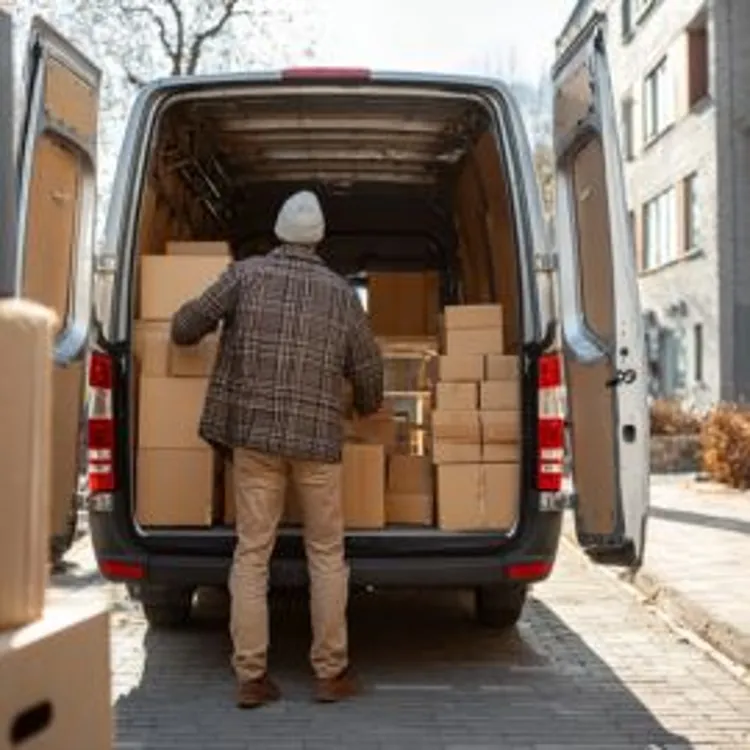
Cardboard boxes pack tightly in moving trucks because they’re typically uniform and rectangular. Since they’re also lightweight, they can be much easier to carry and load than larger plastic bins. After the move, you can flatten them for recycling or storage.
Moisture and tear risks
The biggest downside of cardboard moving boxes is that they’re more susceptible to damage than their plastic counterparts. Cardboard weakens when exposed to water and can collapse if it’s overpacked. Also, the bottom seams could fail if they aren’t taped properly. Because of this, cardboard typically makes more sense for shorter moves and items that aren’t extremely heavy or valuable.
Plastic moving bins pros and cons
Plastic moving bins are sturdier than cardboard boxes, but they’re not perfect. Here’s what you should know before investing in them for your next move.
Durability and impact protection
Plastic is great at preventing crushing and tearing, even when these bins are stacked high. Because of this, plastic moving bins make more sense than cardboard boxes if you have heavy belongings such as books, tools or electronics. The lids could also help protect your belongings if the bins tip over during transit.
Water resistance and weather moves
One of the best things about using plastic bins for moving is that they’re waterproof, so you don’t have to worry about your stuff getting wet, even if your moving day is rainy, snowy or humid.
If you’re planning a long-distance move where your belongings may be exposed to multiple loading stages or outdoor conditions, using plastic bins can significantly reduce the risk of damage to your items.
Cost to buy or rent
The main downside of plastic bins is that they’re typically more expensive than cardboard boxes. Depending on the size and where you buy them, each bin could cost between $10 and $30. But even though they’re expensive upfront, bins can be reused for storage or future moves, which can eventually offset your initial investment.
If you don’t plan to reuse the plastic bins, consider renting them for a lower cost instead of buying them.
Storage space when empty
Another disadvantage of plastic bins is that they don’t collapse flat, which can be inconvenient if you don’t have space in your home to store them after the move.
» MORE: Best moving companies
Best choice by move and items
Traditional moving boxes and plastic bins can both make packing for a move easier, but the best choice for you depends on your specific situation, your budget and the types of belongings you’re moving. Before you start buying supplies, review your moving checklist and think about how long your items will be packed, as well as whether you’ll need the containers again afterward.
Consider the following factors to help you decide which one to go for. And remember that you don’t have to choose one over the other; you can do a mix of both if that’s what works best for your items and your move.
- Moving distance: Either option can work well for local moves, but plastic bins may endure long-distance moves better than cardboard boxes.
- Weather conditions: If you’re moving in the rain, high humidity or extreme temperatures, sealed plastic bins offer more protection than cardboard.
- Budget: Cardboard boxes typically have lower upfront costs. Though plastic bins cost more upfront, you can reuse them for storage or future moves.
- Fragile items: If you’re moving fragile items, you may want to opt for plastic bins instead of cardboard boxes to prevent them from breaking.
- Heavy items: Cardboard boxes can tear or collapse if you overpack or fill them with heavy items such as books. In this case, plastic bins may be a better option.
- Long-term storage needs: Plastic bins are a better option for long-term storage since they’re better at resisting moisture and pests.
- Truck-packing efficiency: Uniform containers tend to stack neatly and can maximize space in a moving truck. However, plastic bins maintain their shape better under pressure than cardboard boxes.
FAQ
Is it worth buying boxes for moving?
Yes. Buying boxes for moving is usually worth it since boxes tend to protect your belongings better than bags and can stack sturdily on top of one another. Especially if you have lots of heavy items and valuables, moving boxes can be worth the investment.
Are plastic bins or cardboard boxes better for long-distance moves?
Plastic bins are generally more durable and weather-resistant than cardboard boxes, which makes them better for long-distance or multi-day moves. Cardboard boxes are lighter, but more vulnerable to crushing and moisture.
How do I prevent cardboard boxes from getting damaged during a move?
To prevent cardboard boxes from getting damaged during a move, buy high-quality moving boxes and reinforce the bottoms with extra packing tape. Also be sure to keep cardboard boxes off wet surfaces.
Are plastic moving bins environmentally friendly?
Reusable plastic bins can be eco-friendly when you rent them or use them repeatedly. However, buying them for a one-time move may have a higher environmental impact than recycling cardboard boxes afterward.