

When to hire professional movers
The biggest factor in deciding whether to hire movers or do it yourself is whether the cost outweighs the risk of injury or potential damage to your home, including your staircase.
Professional movers have experience moving heavy furniture through tight spaces and bring specialized equipment to reduce the risk of damage.
They use plywood sheets, carpet protectors, corner guards and moving blankets to prevent damage to stairways. They also use ramps, dollies, carrying straps and floor runners to create stable, nonslip paths for heavy items.
Prevent stair damage before it happens
Ask movers what protective materials they plan to use. Quality companies bring floor runners, plywood sheets and padding to protect stairs.
When you hire professional movers, the company becomes responsible for safeguarding your property during the move. Most moving companies include insurance coverage that provides financial protection if damage occurs despite precautions.
How to protect your stairs when moving
If you plan to move without professional help, there are some steps you can take to protect your staircase:
1. Check your stairs and gather supplies
The moving supplies you need will depend on what kind of stairs you have.
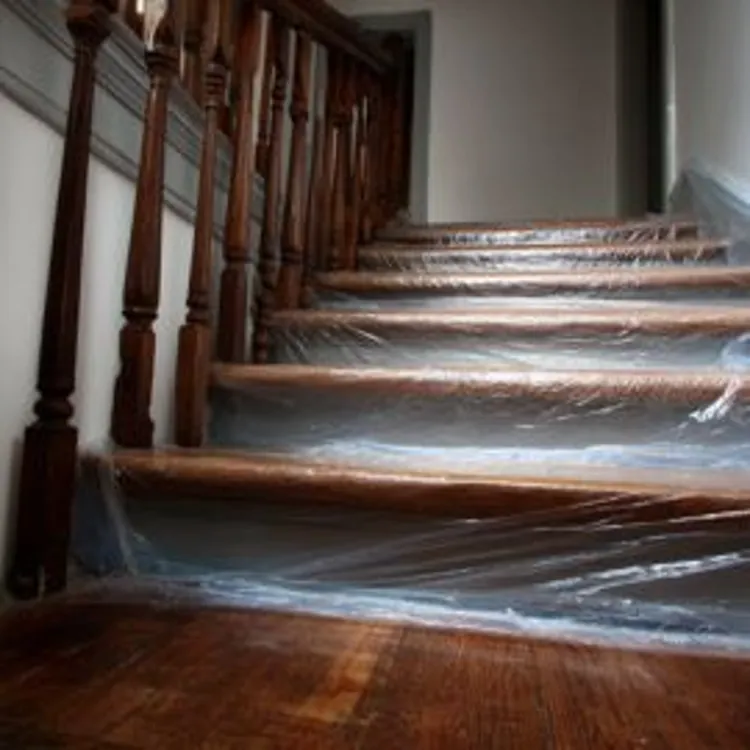
- Hardwood stairs need materials that prevent slipping and damage from impact. You may need runners with nonslip backing for the steps. Professional-grade floor runners are sometimes made of neoprene or carpeting with nonslip backing to add stability. Avoid using standard plastic film on hardwood; it can be slippery, even when taped down.
- Carpeted stairs need protection from tears and stains rather than scratches. You can buy carpet protection film with adhesive backing that won't leave residue. This is especially important if there’s rain or snow on your moving day.
- Walls and railings can be protected with a wide variety of materials. You can use rugs, moving blankets, comforters, furniture pads, cardboard and more on your banister. Wrapping your furniture in moving blankets creates a buffer zone that prevents your walls from getting scratched. Be sure to secure your padding with painter’s tape to prevent tripping hazards.
» MORE: Moving supplies that everyone needs
2. Clean and prepare your stairs
Before laying down your protective materials, you’ll want to clean your stairs thoroughly. Remove dust, debris and objects that could get ground into your carpet or scratch your steps if trampled on. This also keeps dirt from getting trapped under protective materials and causing permanent stains.
Place doormats outside and inside your entrance. The outdoor mat is your first defense against dirt and mud. You might consider getting shoe covers, especially if you have especially light carpet on your stairs.
3. Apply protective materials
After cleaning, cover your stairs and railing with protective materials to prevent scratches and dents. Secure anything loose with painter’s tape to eliminate tripping hazards.
For hardwood stairs, use nonslip stair runners or other adhesive floor protection specially designed for wooden stairs. These materials cushion impacts and prevent scratches without creating a tripping hazard. Avoid using loose rugs or blankets — they can shift underfoot and cause falls.
For carpeted stairs, apply carpet protection film with adhesive backing that won’t leave residue. This helps prevent stains and wear from heavy foot traffic during the move.
4. Use proper moving techniques
Protective materials won't prevent damage if you use poor moving techniques. Improper lifting increases the risk of dropping items, damaging stairs and causing injuries.
Have at least two people handle heavy items on stairs. The person at the bottom bears more weight and guides movement. The person at the top maintains balance and control.
Also, use moving straps to lift and carry heavy items. This keeps items away from stair surfaces and reduces strain on movers.
Some items might require special care when moving, including:
Moving day safety tips
Plan your moving route to reduce trips up and down stairs. Pack strategically by consolidating items and using properly sized boxes.
Don't overfill boxes. Use small and medium boxes for heavy items like appliances. Use large boxes only for lightweight materials, such as clothes and linens. Overloaded boxes can easily tear and spill. If you only have large boxes for heavy items, like books, fill them halfway and use the rest of the box for blankets, towels and other lightweight items.
Measure furniture and stairway dimensions before moving day. Damage often occurs when the furniture is too wide for the staircase and the corners scrape the surface.
Tip: Never force furniture through tight spaces. Some movers offer hoisting services that use special equipment to move furniture through windows when it won't fit through stairways.
» RELATED: Planning an out-of-state move
FAQ
How do you protect stairs during moving?
It depends on the kind of stairs you have. Hardwood stairs need padding to prevent scratches and dents, like padded nonslip runners. Carpeted stairs need adhesive film to stop stains and tears. Use furniture pads or cardboard to protect walls and railings, and secure all coverings with painter’s tape to avoid tripping hazards.
How do movers deal with stairs?
Professional movers bring special equipment to help protect stairs, like runners and padding. They use moving straps and dollies designed for stairs and employ team lifting techniques.
When items won't fit through stairways, movers may employ hoisting services to move furniture through windows.
How to protect floors from movers?
Use runners, furniture pads and doorway mats to protect hardwood or tile floors from scuffs and dirt. For carpet, apply adhesive protection film on high-traffic paths to prevent stains. Always secure coverings to keep them from shifting or creating tripping hazards.
What are the risks of not protecting stairs during a move?
Unprotected stairs can lead to scratches and dents on hardwood. Carpeted stairs may get torn or stained, and railings can get scrapes and dings. Rental property damage always comes with the risk of losing your security deposit. Also, antique banisters are often selling points in some homes, and damage like scratches, dents and dings could reduce their appeal and be expensive to repair.
Article sources
ConsumerAffairs writers primarily rely on government data, industry experts and original research from other reputable publications to inform their work. Specific sources for this article include:
- Centers for Disease Control and Prevention, "Check For Safety: A Home Fall Prevention Checklist For Older Adults." Accessed Nov. 9, 2025.