

How to pack wall pictures for moving on a budget
When you think about how to pack for a move, perhaps you imagine placing all your belongings into a bunch of boxes and loading them onto a moving truck. But when it comes to fragile items like art and wall hangings, some additional steps are needed to ensure these items make it safely from point A to point B.
In this article, we’ll teach you how to pack your art, picture frames and other wall hangings effectively. We’ll provide you with a complete, step-by-step process for packing wall pictures affordably and teach you how to prepare glass surfaces before wrapping. Then, we’ll explain exactly where these items belong on the moving truck.
The best initial step is to gather all of your wall hangings in one place. Take them off the wall in every room and bring them to a central location early in the moving process. This will help you determine how much packing material you’ll need. Then, based on the budget you’ve determined for specialty packing material, start gathering supplies.
We’ve included helpful lists of packing materials both for large and small budgets.
Pricier packing supplies
- Specialty picture or mirror boxes (these are designed specifically for this purpose, and can be expandable)
- Bubble wrap
- Canvas cloth
- Moving blankets
- Packing peanuts
- Glassine paper (great for canvas art, which should not be wrapped in newspaper)
Budget alternatives
- Towels
- Blankets/quilts
- Newspaper
- Plastic grocery bags
- Trash bags
- Cardboard
Regardless of the packing supplies you use, moving companies recommend a standard formula for packing wall hangings to ensure they stay as safe as possible. We’ve outlined the steps below.
Step-by-step method for packing wall hangings and art
- Gather several pieces with similarly-sized frames.
- Use masking or painter’s tape to make an X across the glass surface to keep art safe in the event of shattering.
- Wrap the frame in paper. Packing paper or newspaper works well for art or pictures in glass frames, while glassine paper is best for canvas art.
- Protect the corners. You can purchase cardboard or foam corner protectors, or use things you already have, such as small pillows, folded cardboard, T-shirts or dust rags.
- Place cardboard between each frame. You can purchase cardboard sheets from a moving company or retail store, or you can simply cut out the bottom of a large cardboard box. This offers a great deal of protection in case the frames bump against one another during transit.
- Add padding to empty spaces. Use this anywhere the frames might shift.
- Label as “fragile.” This is especially important if you’ve hired movers to assist with the relocation.
Tips for moving wall hangings
Keep the following tips in mind to protect your valuable wall hangings.
- Pack frames vertically instead of flat.
- Avoid overpacking, since too much weight can crack glass.
- Keep valuable or sentimental items with you instead of in the moving truck.
- Label as “fragile” clearly and on multiple sides of the box.
- Purchase insurance for high-value or sentimental pieces.
Budget packing supplies and free alternatives
Moving is already an expensive undertaking, so it makes sense to save as much money as possible on packing supplies. According to its website, The Home Depot charges just under $20 for a medium-sized picture box, which includes foam corners and extra protective material. But you can save a lot of money by using materials you have at home.
Above, we provided a list of budget packing materials that can help protect fragile wall hangings, including pictures, mirrors and art. In this section, we’ll share tips and tricks for sourcing these items, and how to use them so your wall hangings are protected during a move.
These substitutes work well because the main goal of packing materials is simply to absorb shock and prevent movement during transport.
How to find free and low-cost moving materials
Follow these tips to save as much money as possible on packing supplies such as boxes, cardboard and packing paper.
Use what you have
If you’re on a tight budget, refer to the above list of items that can double as packing supplies when it’s time to pack wall hangings and mirrors. Don’t be afraid to get creative. The main objective is to stack items together and store them vertically, then pack around them to reduce potential shifting.
Post on community sites
Local Facebook groups can be excellent resources for moving supplies such as boxes and bubble wrap. Often, people who have just moved to an area post boxes for sale or free pickup. You can also use these sites to post your own search for free or low-cost packing material.
Check with liquor stores, grocery stores and bike shops
These are examples of retail establishments that regularly use sturdy (and sometimes large) boxes for inventory. Asking for spare boxes can be a great way to score free boxes and cardboard pieces.
Visit warehouse stores
You can also check with warehouse stores, such as Costco or Sam’s Club. These stores frequently have boxes available for customer use and often hand them out if you ask.
Picture boxes vs. DIY cardboard protection
By now, you should have a good idea of how to use items you already have to securely pack wall hangings like art and mirrors, whether you’re moving yourself or hiring movers. Sometimes, though, you may have a particular item that must be protected at all costs, whether it’s a sentimental piece or something of high value.
In cases like these, you may want to purchase a specialty picture box, like the one we mentioned above from The Home Depot. Amazon sells a similar item for around $17. A great way to minimize expenses is to use what you have on hand for lower-priced items and purchase a few specialty boxes for the items you most want to protect.
These boxes offer maximum protection for important wall hangings (or TVs) because they’re sturdy and sometimes expandable. They often come with foam corner protectors, which help minimize shifting and serve to avoid corners becoming damaged during the move.
Loading wall pictures safely in transit
You should have your picture boxes loaded and ready to go early in the moving process so you can ensure they’re placed exactly where they should be in the moving truck.
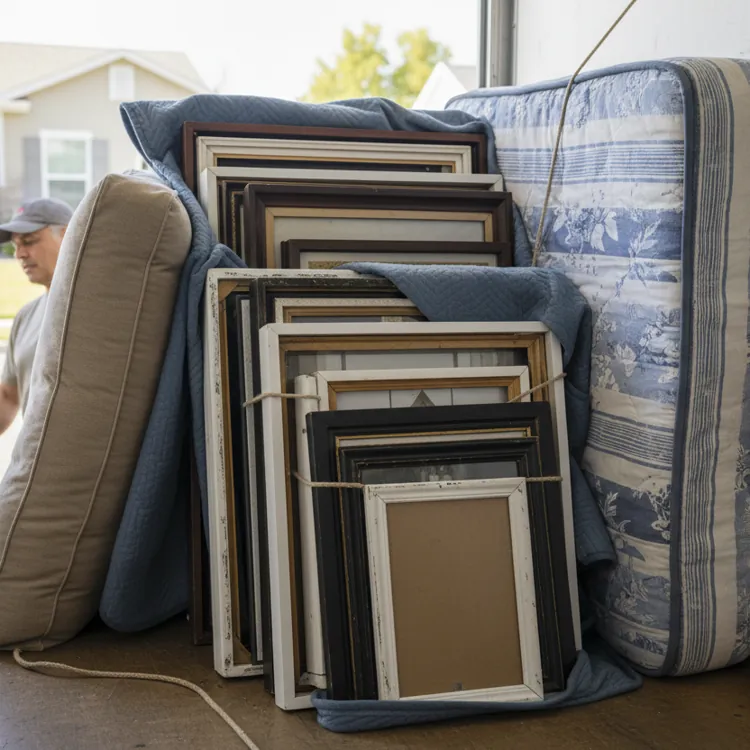
Boxes containing pictures and wall hangings should always be loaded vertically, like records or books, instead of lying flat. This prevents the weight of other boxes or items from pressing on your wall hangings, which can bend or break them. And stacking them vertically allows the sturdy frame to absorb most of the pressure, which can help protect your mirrors or pictures.
The best spot in the moving truck to put your wall hangings is along a flat wall, and/or sandwiched between the back of a sofa and a mattress. This provides a natural space with support and protection while allowing you or your movers to pack the truck strategically and efficiently.
Avoid placing your fragile wall hangings near the rear door of the moving truck; otherwise, they could fall out and break when the door is lifted. When packing picture boxes, ensure they’re not placed close to items that could tip over onto them, such as a high stack of boxes that aren’t secured with rope or a ratchet strap.
FAQ
What is the cheapest way to pack pictures for moving?
The cheapest way to pack pictures for moving is to use a coverlet, quilt or heavy blanket that you already own. Double it up if possible, then place the frame in the middle, fold the blanket over the top and bottom of the frame, and wrap the ends around the frame. Secure with moving or painter’s tape if you have some.
Can you wrap pictures directly in bubble wrap?
No. You should use a layer of packing paper or glassine paper first, before wrapping pictures in bubble wrap. This adds an additional layer of protection and prevents the bubble pattern from transferring onto your picture or art. This is especially true for canvas prints, or anything without a layer of glass covering it.
What household items can replace packing paper?
Household items you can use in lieu of packing paper or bubble wrap include clothing, sheets, towels, blankets, comforters, beach blankets, newspaper, toilet paper, paper towels and trash bags.
Article sources
ConsumerAffairs writers primarily rely on government data, industry experts and original research from other reputable publications to inform their work. Specific sources for this article include:
- North American Van Lines, “How to Pack Pictures for Moving.” Accessed Mar. 7, 2026.
- MovingPlace, “How to Pack Pictures for Moving.” Accessed Mar. 7, 2026.
- Bekins Van Lines, “How to Pack Framed Art and Posters for Moving.” Accessed Mar. 8, 2026.