

Steps to pack golf clubs for moving
Proper golf club wrapping techniques help minimize damage and reduce shifting during transit. Learn how to pack your golf clubs safely for a move using the steps below.
1. Gather all necessary packing supplies
To prepare your golf clubs for moving, start by gathering the following packing supplies:
- Travel golf bag
- Bubble wrap
- Packing tape
- Golf club head covers
- Towels
- Golf bag rain cover
- Stiff arm
- If you plan to move your golf clubs across the country, consider documenting their condition before you pack them. Take detailed photos, especially of the heads and connection points.
2. Remove accessories and clean clubs
Take any loose gear out of your golf bag, including towels, brushes, tees, rangefinders and any other personal items. Clean the inside of the bag with a damp cloth, then let it dry before putting anything back inside.
Wipe down the club shafts and grips. Remove dirt and grass from club heads with a soft-bristled brush, and allow clubs to dry to prevent moisture-related damage.
3. Wrap each club head with protective material
Gently wrap each club head with bubble wrap, ensuring full coverage for maximum protection against impact damage. If you have removable club heads, separate them from the shaft before wrapping them.
4. Add head covers to clubs
Place head covers on all your club heads, especially drivers, hybrids, putters and woods. Should anything sharp contact the club heads during transit, the head covers will shield the bubble wrap from punctures.
5. Insert a stiff arm or support rod
Place a stiff arm or support rod inside the golf bag to help protect the clubs if the bag is dropped or compressed during the move. Adding this support can help reduce the risk of damage to longer clubs, especially at vulnerable connection points.
6. Arrange clubs tightly in the bag
Gather your golf clubs in a bundle and wrap them tightly with bubble wrap, securing everything with packing tape. Place any removable club heads at the bottom of your golf bag before inserting the bundle.
7. Fill empty spaces with towels or padding
Stabilize club heads and shafts within the golf bag by filling empty spaces with clean towels or old clothing.
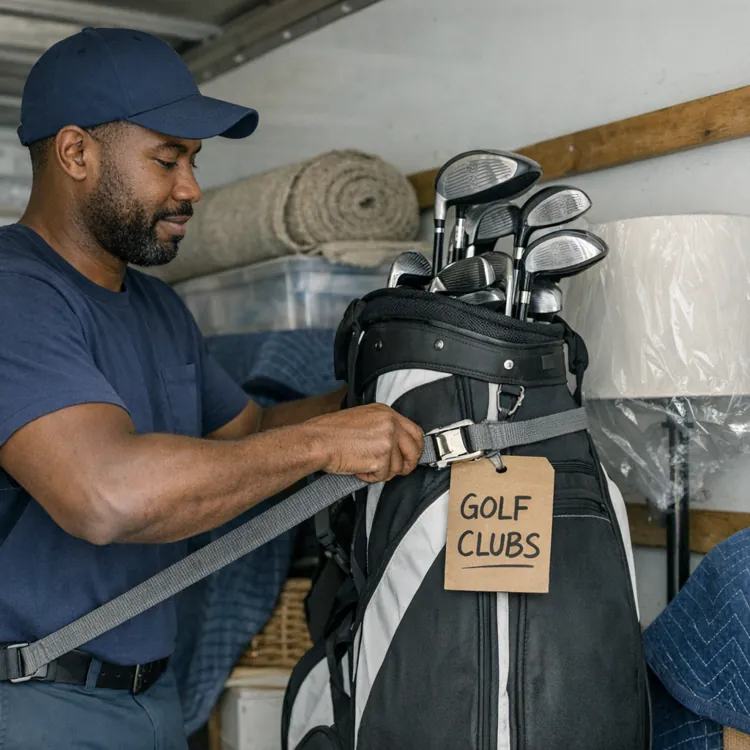
8. Secure the bag with straps or tape
Secure your golf bag with built-in straps, luggage straps or packing tape to help it stay closed during the move. This can reduce shifting and help prevent items from falling out during transit.
9. Add a rain cover or outer protection
Place a rain cover over the golf bag to protect the bag and its contents from moisture and contaminants during the move.
10. Label the bag clearly for movers
Clearly label your golf bag with your name and phone number. Placing a tracking device in your golf bag can provide you with additional peace of mind should it get lost in transit.
» MORE: Best moving companies
Packing supplies for golf club protection
These are the essential supplies you’ll need to pack your golf clubs for moving:
- Travel golf bag: Soft cases offer a more affordable, lightweight and compact option than hard cases, which provide greater protection but can cost and weigh more.
- Cleaning supplies: If you don’t want to purchase a golf club cleaning kit, you can remove dirt and debris just as effectively with a microfiber cloth and a soft-bristle brush.
- Bubble wrap: This should be your primary padding material for wrapping golf clubs before moving them.
- Packing tape: Tape keeps bubble wrap in place and helps stabilize multiple golf clubs.
- Golf club head covers: Use neoprene head covers or thick socks.
- Towels and blankets: Clean, thick towels and blankets provide excellent padding to help stabilize clubs during transport.
- Golf bag rain cover: Protect your golf club bag and its contents from moisture. If you don’t have a rain cover for your bag, substitute with an oversized plastic bag or waterproof tarp for added protection.
- Stiff arm: This device resembles a telescoping golf club and extends upward from the center of your golf bag. If you don’t have a stiff arm, a long broomstick or PVC pipe can offer similar protection.
- Luggage tag or permanent marker: Clearly identify your golf bag with your name and phone number.
Transport options for packed golf clubs
The best transportation method for moving your golf clubs offers enhanced protection, helps you control costs and minimizes associated risks. Choose the right method for you based on your budget, the level of control you want over handling, the degree of protection your clubs need and the distance you’re moving.
| Transportation option | Protection level | Cost range | Best for | Key risks |
|---|---|---|---|---|
| Moving truck | Moderate to high | $80 to $100/hour (local) or up to $5,000+ (long-distance) | Local or long-distance moves when moving your entire household | Clubs shifting, pressure from heavy items and moisture damage |
| Personal vehicle | High | Roughly the cost of a tank of gas, depending on the distance | Short-distance moves, minimal budget and high control over handling | Limited space, shifting if not secured properly and theft potential |
| Shipping service | Moderate to high | Starting at $54 one way | Long-distance moves | Delays, lost packages and damage |
| Airline checked bag | Moderate | $35 to $40 | Long-distance moves | Rough handling, lost luggage and overweight fees |
If you’re moving your entire household — whether you hire professional movers or do it yourself — adding your golf clubs to the mix doesn’t have to affect your final costs, regardless of distance. Transporting your clubs in your personal vehicle gives you full control over handling, reducing the risk of shifting or damage during long-distance moves.
Shipping your golf clubs can cost more than moving them yourself, in addition to increasing the risk of mishandling and any potential damage. Checking your clubs with an airline carries similar risks, but both options offer alternatives to transporting them by truck for long-distance moves.
Common golf club packing mistakes
Packing your golf clubs hastily or incorrectly can lead to damaged equipment, added stress and unexpected costs, including potential repairs or replacements. Avoid these mistakes to ensure your clubs arrive at your destination safely.
- Failure to protect club heads: Drivers, woods and hybrids are especially vulnerable to scratches and dents. Always use head covers, bubble wrap or towels to cushion each club.
- Skipping a stiff arm or support rod: Without internal support, long club shafts can bend or snap under pressure. Stiff arms and support rods help distribute weight and protect shafts.
- Allowing too much movement in the bag: Clubs that shift during transport can rub against one another or the bag, causing damage. Fill empty spaces with soft padding to keep everything snugly in place.
- Applying tape directly to clubs: Tape can stick to grips, shafts or finishes and cause permanent cosmetic damage. Always wrap clubs in protective material before securing them with tape.
- Underestimating padding and space fillers: Thin layers of protection leave clubs exposed to impact. Use thick padding to absorb bumps during transit.
- Poor positioning in a vehicle or moving truck: Placing your golf bag under heavy items or at an odd angle can increase the risk of bending or breaking. Keep clubs upright and away from heavy boxes or cargo that may be prone to shifting.
- Skipping rain covers or moisture protection: Water can damage grips, shafts and club heads. Rain covers or oversized plastic bags can offer added protection against precipitation and moisture.
- Not labeling bags clearly: Without labels, lost or misplaced clubs can prove harder to recover. Add your contact information and a “fragile” label to increase the chances they’ll be handled and returned safely.
FAQ
How do you pack golf clubs for movers?
Pack golf clubs for movers by removing loose accessories, cleaning each club and wrapping the heads individually with bubble wrap. Place the clubs upright in a travel bag, insert a stiff arm and secure the bag with straps or tape to prevent shifting.
What is the best way to protect golf club heads during a move?
Head covers, bubble wrap and stiff arms provide the best protection for golf clubs during a move. Towels and thick socks can help prevent shifting and cushion clubs from any outside pressure.
Do I need a hard case, or is a soft travel bag sufficient?
Soft bags may offer adequate protection for careful handling during short-distance moves. Hard cases offer maximum protection and work best for long-distance moves, shipping and airline travel.
What can I use instead of bubble wrap to protect golf clubs?
Thick blankets, towels, old clothing or neoprene head covers can help protect golf clubs in lieu of bubble wrap.
Is it better to ship golf clubs or pack them in a moving truck?
Packing golf clubs in a moving truck makes sense if you’re moving the rest of your home. Shipping your golf clubs offers convenience and tracking for long-distance moves, but this method can increase cost and risk of handling damage.
Article sources
ConsumerAffairs writers primarily rely on government data, industry experts and original research from other reputable publications to inform their work. Specific sources for this article include:
- World Media Group LLC, "How to Pack Golf Clubs for Moving: Putting Safety First." Accessed March 23, 2026.
- Skyscanner Ltd, "Jet-set like a pro: the best way to pack golf clubs for travel." Accessed March 23, 2026.
- CaddyDaddy Golf, "Guide to Golf Travel in 2026: Protecting Your Clubs the Smart Way." Accessed March 23, 2026.
- Fairway Golf Tours, "Golf Club Transportation: Essential Tips for Transporting Your Equipment." Accessed March 23, 2026.
- Jack Cooper, "How Much Does It Cost to Ship Golf Clubs?" Accessed March 23, 2026.
- ShipSticks, "Skip Baggage Claim. Ship your golf clubs instead." Accessed March 23, 2026.
- U.S. PIRG Education Fund, "Checking Bags on a Flight: How Much Does My Airline Charge?" Accessed March 23, 2026.