

Preparing to move your dishwasher
Relocating a dishwasher requires careful preparation, especially when it comes to disconnecting the unit and safely moving it.
You’ll need a few essential tools for the job, including:
- Appliance dolly
- Ratchet straps
- Moving blankets
- Non-contact voltage tester
- Adjustable or crescent wrench
- Flathead and Phillips screwdriver
- Pliers
- Utility knife or box cutter
- Flashlight
- Large piece of cardboard
- Water bucket
- Duct tape
- Packing tape
- Labeled bag
Thoroughly clean and dry the interior and exterior of the dishwasher before disconnecting and moving it to prevent odors and residue during transit.
- Remove the filter at the bottom of the unit.
- Scrub it with a brush and hot water to remove any food particles, and then replace it securely.
- For the first cleaning cycle, place two cups of white vinegar in a dishwasher-safe glass bowl on the lower rack.
- Run a normal wash cycle on the hottest setting, skipping the drying cycle.
- After that cycle is complete, sprinkle one cup of baking soda onto the bottom of the tub.
- Run a final hot water cycle. Once the dishwasher’s cycles are finished, open the door and use a towel to wipe all interior surfaces completely dry before preparing it for the move.
» RELATED: Best moving companies
Disconnecting power and water
To safely begin disconnecting your unit, you must turn off both the electrical power and the water supply to the dishwasher. First, locate your main circuit breaker panel and identify the specific breaker dedicated to the kitchen or the dishwasher; flip this breaker to the OFF position. It is critical to turn the power off when dealing with both electricity and water lines for safety.
If your dishwasher is plugged into an accessible outlet (often under the sink), also unplug the cord. If the unit is hardwired (connected directly to house wiring), use a non-contact voltage tester to confirm that the power is completely dead before touching any wires.
Next, locate the water shutoff valve, usually under the kitchen sink and connected to the hot water line used by the dishwasher. Turn this valve clockwise until it is firmly tightened to ensure the water supply is cut off. You can also shut off the main water supply. After turning the valve, confirm the water is off by briefly trying to turn on the kitchen sink faucet.
Finally, place a bucket under the water supply line that connects the dishwasher to collect any remaining water once you disconnect it. Use your adjustable wrench (also known as a crescent wrench) to carefully loosen and remove the nut securing the water line to the dishwasher's inlet valve, allowing any remaining water to drain into the bucket. Next, disconnect the drain hose. Use pliers or a screwdriver to loosen the hose clamp (if present), and then gently pull the drain hose free.
If your dishwasher is hardwired, you’ll need to open the electrical junction box located behind the kickplate (bottom of dishwasher), remove the wire nuts, and carefully separate the appliance wires from the house wiring. With all hoses and wires disconnected, securely fasten them to the side of the dishwasher tub using duct tape.
Removing the dishwasher from the cabinet
Before pulling the dishwasher out, you must remove the fasteners securing it to the cabinet. Open the dishwasher door and locate the mounting screws, which are typically found on metal brackets attached to the top sides of the unit. Use your Phillips screwdriver to completely remove these screws and place them in a labeled bag.
Next, place the piece of cardboard on the floor directly in front of the cabinet opening to protect your floor as you slide the appliance out. Use your adjustable wrench to loosen the locking nuts (if present) and then rotate the front left and right leveling legs to lower the unit slightly onto the cardboard.
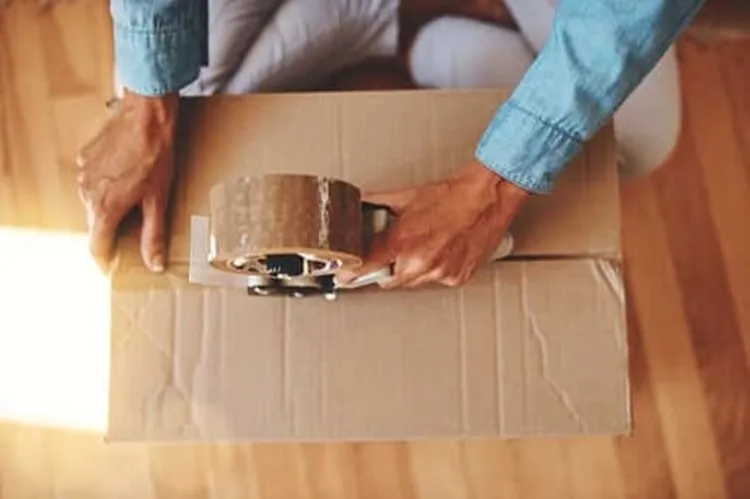
With the front of the dishwasher lowered, gently pull the dishwasher forward onto the cardboard until you can comfortably access and adjust the two rear leveling legs, lowering them as well. Once all four legs are lowered and clear of the cabinet opening, you can carefully slide the dishwasher completely out of the cabinet. Seal the door closed with packing tape.
Securing and transporting the dishwasher
It’s important to handle the dishwasher carefully before moving it, keeping it upright at all times to protect the internal motor and pump. Avoid tipping it completely onto its side.
Then, gather your equipment, including an appliance dolly, ratchet straps, moving blanket and packing tape. After ensuring all cords and lines are secured tightly to the side of the dishwasher with duct tape, wrap the entire appliance in a heavy moving blanket and secure the blanket with packing tape.
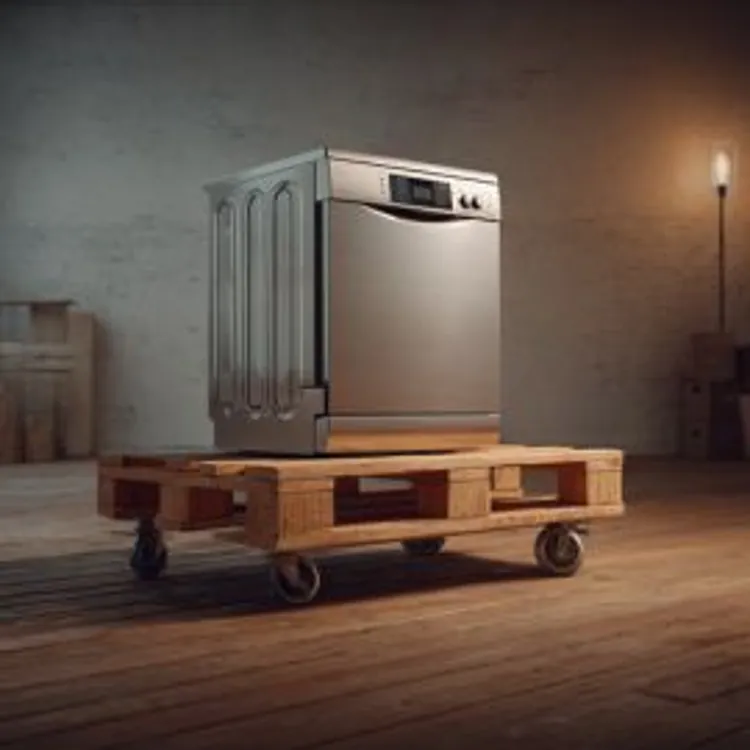
Next, gently tilt the dishwasher back slightly to place the dolly underneath it, then secure the appliance tightly to the dolly using the dolly's ratchet straps. Pull back slightly on the dolly's handles to move the dishwasher carefully, using a ramp to load it onto the moving truck. If you need to navigate stairs, consider using a sheet of plywood to create a stable ramp for rolling the dolly down.
Once inside the truck, place the dishwasher near the front, directly against the wall closest to the cab for maximum protection, and use heavy-duty ratchet straps to securely tie it down to the truck wall.
» LEARN: How to pack for a move
Reinstalling the dishwasher
Always refer to the manufacturer’s manual for your dishwasher before attempting to reinstall. In general, the process may include:
- Turn off the water and power supply before installing.
- Remove the front access panel and attach a 90-degree elbow fitting to the water valve to help ensure a proper seal to the water line.
- Using a piece of cardboard placed under the dishwasher, gently slide it into the space under the counter.
- Connect the new water supply line to the 90-degree fitting. Turn on the water supply and immediately check all connections for leaks, tightening as needed.
- Connect the drain hose, ensuring it is routed to form a loop and secured to the rear of the sink cabinet.
- Plug in the unit or complete the electrical connections as outlined in the installation guide.
- Turn the electricity back on at the circuit breaker and run a brief cycle to test that the unit is working properly before securing it.
- Use a level while adjusting the bottom leveling legs to ensure proper drainage.
- After leveling, secure the unit to the countertop with brackets, then replace the front access panel.
FAQ
How do you slide out a dishwasher?
To safely slide out a dishwasher, you must first disconnect the power and water supply lines, remove the mounting screws, and lower the leveling legs to clear the countertop.
Do you need a plumber to move a dishwasher?
You generally don’t need a licensed plumber just to disconnect and move an existing dishwasher, as long as you are comfortable with basic plumbing and electrical safety procedures (like turning off the circuit breaker and water supply).
Is it difficult to relocate a dishwasher?
It can be difficult to move a dishwasher if you don’t have any plumbing or electrical experience. In that case, it may be best to hire a licensed plumber. Or, you can ask a friend with experience to help. Just be sure to refer to the installation guide for your specific dishwasher.
How heavy is a dishwasher in pounds?
A standard dishwasher typically weighs between 60 and 100 pounds, though some models can be heavier, exceeding 100 pounds.