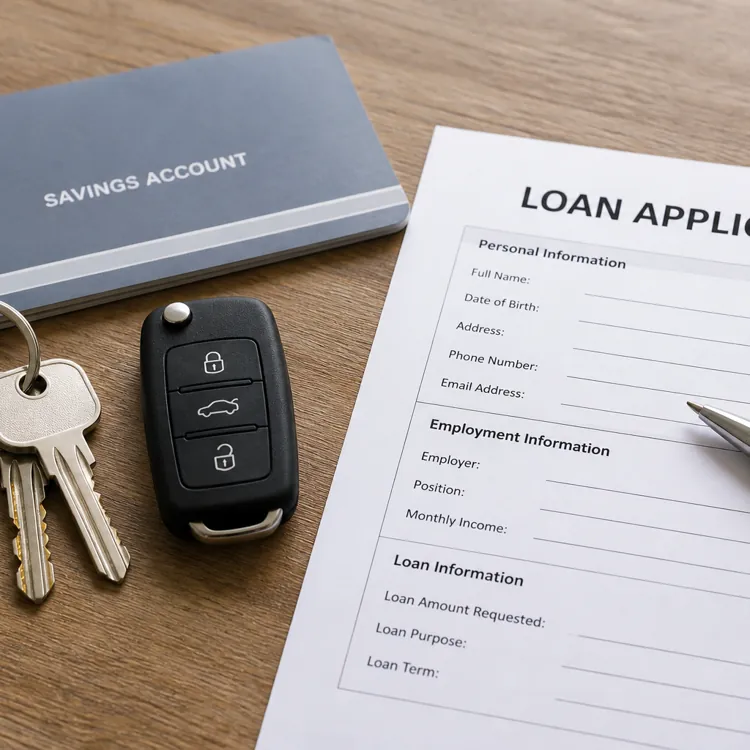


Can you use a personal loan for rent?
Yes, you can use a personal loan for rent since most of these loans don’t restrict how you spend the money. The real question isn’t whether you can, but whether you should — and whether lenders will approve you.
Generally, lenders approve applicants if they meet these financial requirements:
- Credit score above 600
- Steady employment and income
- Debt-to-income (DTI) ratio below 40%
Russell Graves, executive director of the National Foundation for Debt Management, notes the catch-22 here: “The same financial challenges that cause missed rent payments often make it hard to qualify” for loans in the first place.
If you do qualify, you’ll choose between secured and unsecured loans. Secured loans require collateral like a car title, which can improve your approval chances and lower your interest rates. Unsecured loans skip collateral but compensate with higher interest rates.
Meeting eligibility requirements doesn’t mean borrowing makes financial sense, though.
“If you can’t afford to pay your rent without a loan, you can’t afford to rent that apartment,” warns Todd Christensen, housing counseling and education manager at Money Fit by Debt Reduction Services, Inc. Borrowing for recurring expenses creates a dangerous cycle where loan payments stack on top of your rent, making each month harder than the last.
... High interest rates and repayment obligations can make next month’s bills even harder.”
Christopher L. Stroup
Pros and cons of using a personal loan for rent
Taking out a personal loan for rent might solve an immediate problem. But experts emphasize that it creates long-term consequences worth understanding.
Weigh these personal loan pros and cons before committing:
Pros
- Fast access to funds: Get same-day or next-day funding to avoid eviction, late fees and damage to your rental history.
- Bridges temporary gaps: If you’re between jobs or waiting for a delayed paycheck, a loan can cover a short-term income shortfall.
- May improve credit: Consistent repayment “can improve your credit mix and payment history, both of which benefit your credit score,” Graves says.
Cons
- High interest rates: Most personal loans for people struggling with rent carry rates between 10% and 30%, according to Christensen. This increases your rent by the same percentage.
- Compounds financial strain: Christopher L. Stroup, a certified financial planner and president of Silicon Beach Financial, warns that “high interest rates and repayment obligations can make next month’s bills even harder.” You’re paying rent plus loan payments plus interest.
- Temporary fix for recurring problem: “Borrowing to pay rent is a bandage covering a symptom, not a cure fixing the illness,” Christensen explains. A one-time loan doesn’t solve ongoing rent obligations, often leading to repeated borrowing.
Alternatives to taking out a personal loan for rent
Before you borrow money for rent, explore options that don’t add to your debt burden. Many resources exist to help people in your situation, and some are free.
Talk to your landlord first
“Many landlords are open to working out temporary payment plans, deferring rent or waiving late fees — especially if you’re upfront about your financial situation,” Graves explains.
Before approaching your landlord, Christensen advises creating a budget that shows how much you can afford. “Showing the landlord that you’ve done your due diligence will give them more confidence that any negotiated repayment plan will be more successful,” he said.
Seek rental assistance programs
Government and nonprofit programs often provide grants or short-term aid that you don’t need to repay. Organizations such as the Salvation Army, Catholic Charities and United Way partner with communities to help renters stay in their homes. You can find local resources by calling 211 or visiting a Department of Housing and Urban Development-approved housing counseling agency.
These programs do more than cover emergency payments. “When available, rental assistance programs also come with required housing counseling to help renters improve their household budget and better manage their monthly spending,” Christensen notes.
Liquidate assets you don’t need
“Any household already paying storage fees shouldn’t borrow money for rent,” Christensen emphasizes. Instead, “they should look at downsizing and getting rid of their storage unit first.” Selling possessions you don’t use can generate quick cash without creating debt.
Avoid payday loans
Payday loans might seem like a quick fix, but they’re a trap. Graves cautions that these loans often carry annual percentage rates (APRs) exceeding 300%, making them extremely costly to repay. If you can’t pay back the full amount by your next paycheck, you’ll roll the loan over, paying more fees and falling deeper into debt.
Can student loans be used for rent?
Yes, both federal and private loans cover housing costs, though you should confirm terms with private lenders. Loan funds go to your school first for tuition and fees. Then, any leftover money gets refunded to you for rent and living expenses. “Your total borrowing can’t exceed your school’s cost of attendance, which varies based on your living situation,” Graves says.
Keep in mind that “using student loans to pay for rent turns it into long-term debt, with interest,” says Graves. “You’ll be repaying those costs for years after graduation.” That luxury apartment might feel worth it now, but you’ll still be making payments on it long after you’ve moved out.
Questions to consider before taking a loan for rent
Before borrowing money, step back and examine why you need a loan in the first place.
Ask yourself these questions:
- Can I afford the loan payments plus rent? Review your budget to confirm repayment fits within your income without cutting essential expenses, such as food and utilities.
- What’s my debt-to-income ratio? “A high DTI can limit your ability to borrow in the future or signal financial stress,” warns Graves.
- Why do I need this loan? If it’s unemployment, have you secured new work that covers both rent and loan payments? If it’s overspending, have you addressed the root causes? A loan won’t fix ongoing budget problems.
- Does my monthly rent fit my budget? “If rent costs consistently exceed earnings, consider downsizing,” Stroup advises. Splitting expenses with roommates or moving to a more affordable location can also help make rent more affordable.
Christensen recommends working with a HUD housing counselor or nonprofit credit counselor to review your complete financial picture. This step can help you create a realistic budget and determine whether a loan makes sense or if other solutions would work better.
FAQ
How can I get money for rent right now?
To get money for rent right now, start by calling your landlord to explain your situation and ask about a payment plan or extension. If that doesn’t work, lean on your network or check with local community organizations that offer emergency help. Side gigs can bring in quick cash, but steer clear of payday loans that charge steep interest rates.
Is it smart to take out a loan for an apartment?
No, taking out a loan for rent generally isn’t smart because you’ll owe interest and fees while covering your rent. This creates financial strain that often worsens the situation. It’s better to look into rental assistance programs, negotiate with your landlord or find more affordable housing options.
Can I get a loan for rent-to-own?
Yes, you can get a home loan to buy a rent-to-own property once your lease ends. During the rental period, part of your rent may go toward a down payment, helping you save and prepare for that mortgage. Keep records of rent payments, as lenders often require proof of consistent payment history.
How do rental assistance programs work?
Rental assistance programs work by providing tenants with financial help for rent, utilities or past-due bills to prevent eviction. They have eligibility requirements based on income and hardship. You can apply through local government websites or nonprofit organizations.
Article sources
ConsumerAffairs writers primarily rely on government data, industry experts and original research from other reputable publications to inform their work. Specific sources for this article include:
- United Way, “Community Resources to Help with Housing.” Accessed Oct. 21, 2025.
- U.S. Department of the Treasury, “Emergency Rental Assistance Program.” Accessed Oct. 21, 2025.
- Center on Budget and Policy Priorities, “What is federal rental assistance?” Accessed Oct. 21, 2025.
- National Association of Consumer Advocates (NACA), “Predatory Lending.” Accessed Oct. 21, 2025.
- Weber State University, “Talking with your landlord about late payments and repayment plans.” Accessed Oct. 21, 2025.