NEWS    RECALLS    COMPLAINT FORM    SCAM ALERTS   RESOURCES  
Small Claims Guide   Class Actions   Lemon Laws   FAQ   Newsletters  
Share


Complain about a product or service

Automotive    Education    Employment    Electronics    Family    Finance    Health    Homeowners    Insurance    Pets    Shopping    Travel     Print This     Email This    


NEWS   Latest |  Archives |  Auto |  Cells, etc. |  Computers |  Financial |  Health |  Homeowners |  Parents |  Privacy |  Scams |  Seniors |  Travel

Comcast to Cap Internet Usage for Customers

Residential users top out at 250 gigabytes per month under new policy


By Martin H. Bosworth
ConsumerAffairs.com

August 29, 2008

Broadband Access

Federal Court Tosses Out FCC Rule On Cable Caps
New Bill Gives FTC Veto Power Over Broadband Caps
Time Warner Cable Changes Contracts To Favor Bandwith Caps
Time Warner Cable Backs Down On Bandwith Caps
Time Warner: Metered Broadband Will Prevent "Internet Brownouts"
FCC Launches National Broadband Internet Plan
Time Warner Doubles Down on Metered Broadband Plans
FCC Pressed To Defend Wireless Open Internet
Time Warner Expands Metered Broadband Billing
New Jersey Sues Verizon Over Deceptive FiOS Marketing
Government Reveals First Steps For Broadband Plans
House Committee Slams FCC Chairman for "Deception and Distrust"
Obama Promises to "Renew Information Superhighway"
Dell Introduces "White Spaces" Capable Laptops
FCC Votes to Open "White Spaces" for Use
Congress Passes Broadband Data Improvement Act
Report: Metered Broadband Bad For Consumers, Businesses
FCC Votes to Punish Comcast for Content Blocking
Comcast Tries to Polish Its Image
Communications Industry Urges Congress to Act on Broadband
Comcast Cuts Deal With Vonage on Internet Traffic
Court Upholds FCC's Video Rules
Report: U.S. Broadband Adoption Slowing
Critics: FCC Inaction Slows Economic Development
Few Are Neutral in Net Neutrality Battles
Google Petitions FCC Over Verizon's Use of Wireless Spectrum
---
More ...

The era of unlimited Internet usage for a flat monthly price is one step closer to its end, as cable giant Comcast officially announced today that residential subscribers would top out at 250 gigabytes (GB) per month of data bandwith availability, beginning October 1.

The new policy, announced on Comcast's network management site, codifies the company's practice of canceling or limiting customers' access once they go over a specific amount of usage. Comcast had previously refused to disclose its caps for fear of driving customers to competitors who still offered flat-rate prices for Internet access.

"This is the same system we have in place today," Comcast said in the announcement. "The only difference is that we will now provide a limit by which a customer may be contacted. As part of our pre-existing policy, we will continue to contact the top users of our high-speed Internet service and ask them to curb their usage."

According to the company, in order to exceed a cap of 250 GB, a user would have to:

• Send 50 million emails (at 0.05 KB/email)

• Download 62,500 songs (at 4 MB/song)

• Download 125 standard-definition movies (at 2 GB/movie)

• Upload 25,000 hi-resolution digital photos (at 10 MB/photo)

Comcast spokesperson Charlie Douglas emphasized that the policy change would be "not relevant to 99 percent of our customers...only the less than 1 percent who use an extreme amount of bandwith."

"We are calling people and letting them know when they are going over the limit, and most people voluntarily moderate their usage on the first call," Douglas said. Those who continued to exceed the cap after being warned would face suspension of their account for one year, he said, "but that hasn't really been a factor...most people change their habits after the first warning. They really just wanted to know the number [of the cap]."

Douglas also emphasized that the network policy change would be advertised on several Comcast sites, including the Comcast.net customer portal, and that mailed announcements would be sent to customers along with their next bill.

Karl Bode, editor of BroadbandReports.com, was among the first to report Comcast's plans to officially cap users' bandwith. Bode told ConsumerAffairs.com that the 250 GB cap was "more than generous for the majority of users."

"For going on half a decade Comcast customers have complained that the company employed a glass ceiling limit while marketing their service as 'unlimited.'," Bode said. "When customers crossed this limit they were told they could see their connection terminated if they didn't scale back usage, but were never told how much consumption was too much. This new approach looks to simply clarify an existing but murky monthly consumption limit, and in that sense is actually good for consumers."

Several Internet providers, such as Time Warner and Frontier Cable, have been testing or implementing "metered" broadband plans, where users would pay excess usage charges if they went over a specific caps--many of which are considerably lower than Comcast's 250 GB.

Critics of metered broadband say that the plans offer too little bandwith for too high a price. Customers will shy away from using high-speed Internet's full potential, such as uploading or streaming videos, if they are afraid of going over their limits in doing so, and that companies who are supporting metered plans do so to protect their own video channels and hamstring competitors such as YouTube.

Comcast's plan was originally rumored to include charges for exceeding the bandwith cap, but the official announcement did not do so. The company had previously announced that it would employ new network management systems to slow down Internet speeds for the heaviest users in order to prevent congestion.

"While I think caps are fair if reasonable (the 5GB or even 40GB limits being tested by Time Warner Cable are absurd), I've generally been strongly opposed to the overage fee system and metered billing, given the potential for abuse by carriers looking to protect TV revenues," Bode said. "I think there's strong pressure from the investment community to begin metered billing."

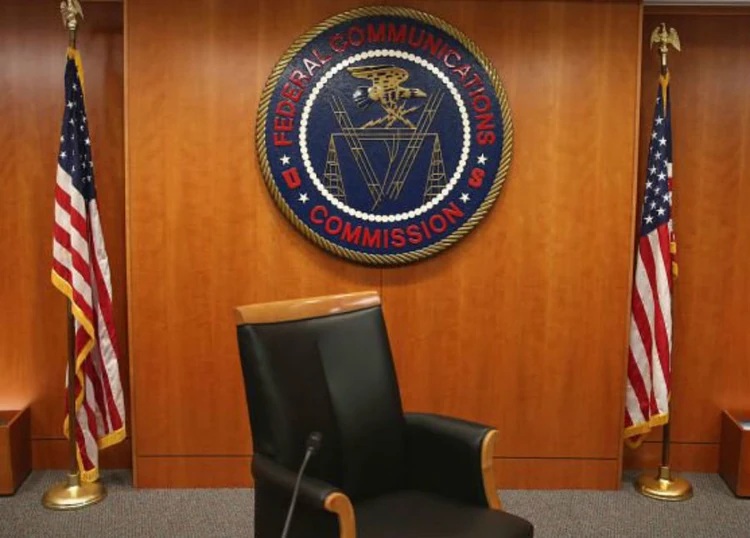
Comcast's policy changes come in the wake of the Federal Communications Commission (FCC)'s ruling penalizing the company for its blocking access to the BitTorrent file-sharing service. Under the terms of the FCC's order, Comcast must provide detailed explanations of how it will manage its networks without denying customers access to services.

Media watchdog group Free Press, which had pushed the FCC to rule against Comcast, said that while the cap was a better solution than blocking customers' access, "[i]t remains unclear how the cap announced today helps solve Comcast's supposed congestion problems -- or how the cap will work with other usage limits Comcast has been considering."

"If the United States had genuine broadband competition, Internet providers would not be able to profit from artificial scarcity -- they would invest in their networks to keep pace with consumer demand," said Free Press' research director S. Derek Turner. "Unfortunately, Americans will continue to face the consequences of this lack of competition until policymakers get serious about policies that deliver the world-class networks consumers deserve."


Report Your Experience
If you've had a bad experience -- or a good one -- with a consumer product or service, we'd like to hear about it. All complaints are reviewed by class action attorneys and are considered for publication on our site. Knowledge is power! Help spread the word. File your consumer report now.

Share

Follow us on Twitter.

FREE CONSUMER NEWSLETTERS

The Daily Consumer
Afternoons M-F

Sign up now!


Consumer News & Alerts
Every Sunday

Sign up now!


CONSUMER NEWS

SAFETY RECALLS

Back to the top |

Advertisement


Custom Search
AUTOMOTIVE
• Dealers
• Manufacturers
• Service
• Extended Warranties
• Lemon Laws
• Recalls
• Tires
• Transporters

FAMILY
• Aging
• Children, Parenting
• Recalls
• Dating
• Education
• Entertainment
• Pets
• Weddings
FINANCE
• Annuities
• Banks
• Credit Cards
• Debt Collection
• Debt Counseling
• Insurance
• Investing
• Loans
• Mortgages
• Payday Loans
• Student Loans
• Tax Prep

HEALTH
• Doctors
• Drugs, Pharmacies
• Health Clubs
• Hearing Care
• Hospitals
• Nursing Homes
• Nutrition, Diets
• Vision Care
• Weight Loss
HOUSE & HOME
• Appliances
• Cookware
• Furniture
• Home Improvements
• Lawn & Garden
• Movers
• Pools & Spas
• Realtors, Rental Agents
• Recalls
• Utilities

ELECTRONICS
• Cable TV/DBS
• Cameras
• Cell Phones
• Computers
• Home Electronics
• Internet Access
• Local Phone Service
• Long Distance
• VoIP
SHOPPING
• In-Home
• Online
• Retail Stores
• Sporting Goods
• Supermarkets
• Telemarketers

TRAVEL
• Airlines
• Bus Lines
• Car Rental
• Cruises
• Hotels
• Travel Agents
• Trains

RESOURCES
• Class Actions
• Complaint Form
• Small Claims Guide
• Lemon Laws
CONSUMER NEWS
• Latest News
• Automotive
• Telecom
• Financial
• Health
• Homeowners
• Scams
• Seniors
• Travel
• More ...

RECALLS
• Automotive
• Children's Products
• Drugs
• Food
• Household Products
• Sporting Goods

ABOUT US
• FAQ
• Privacy Policy
• Advertise With Us
• Newsroom
• Syndication
• Terms of Use

Terms of Use Your use of this site constitutes acceptance of the Terms of Use

Advertisements on this site are placed and controlled by outside advertising networks. ConsumerAffairs.com does not evaluate or endorse the products and services advertised. See the FAQ for more information.

Company Response Welcome If complaints about your company appear on our site, we welcome your response. Please see the Response Form for more information.

For more information, see the FAQ and privacy policy. The information on this Web site is general in nature and is not intended as a substitute for competent legal advice.  ConsumerAffairs.com Inc. makes no representation as to the accuracy of the information herein provided and assumes no liability for any damages or loss arising from the use thereof. 

Copyright © 2003-2009 ConsumerAffairs.com Inc.  All Rights Reserved.    The contents of this site may not be republished, reprinted, rewritten or recirculated without written permission.