CONSUMER NEWS    RECALLS    COMPLAINT FORM    SCAM ALERTS  


Complain about a product or service

Small Claims Guide | Class Actions | Lemon Law | FAQ | Resources | Newsletters | Spanish
Automotive    Education    Electronics    Family    Finance    Health    Homeowners    Shopping    Travel   
NEWS   Latest |  Archives |  Auto |  Cells, etc. |  Computers |  Financial |  Health |  Homeowners |  Parents |  Privacy |  Scams |  Seniors |  Travel

Emergency Regs Needed for Tracking Produce, Food Groups Say

Traceability would speed response to outbreaks


July 7, 2008

Food Safety
pepper photoCDC Gives "All Clear" On Salmonella Outbreak
One Death Reported in Oklahoma E. coli Outbreak
Feds Approve Irradiation of Spinach, Lettuce
FDA Issues Warning About Frozen Seafood
Whole Foods Extends Beef Recall
Whole Foods Recalls Fresh Ground Beef
Six New E. coli Cases Reported In Massachusetts
FDA Says It Found Salmonella Source In Mexico
U.S. Peppers Get Clean Bill Of Health
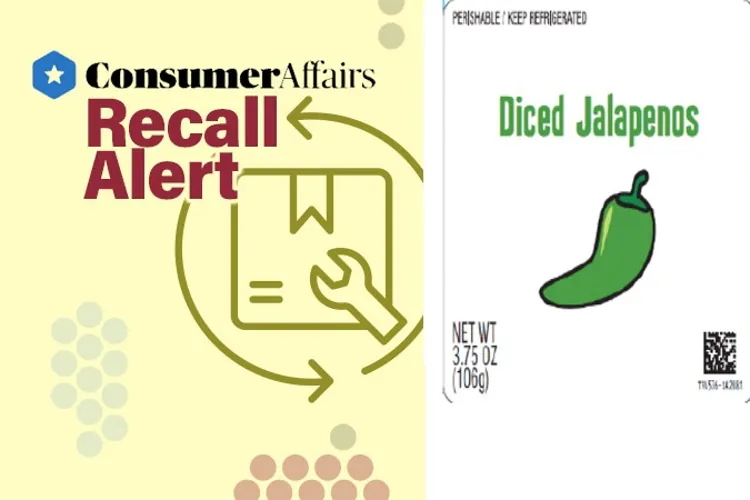
Jalapeño Peppers from Mexico Recalled
Tomatoes Get the All-Clear From FDA
Salmonella Toll Quietly Climbs
USDA to List Retailers in Meat Recalls
Emergency Regs Needed for Tracking Produce, Food Groups Say
Nebraska Beef Recall Expanded to 5.3 Million Pounds
Consumer Group Presses Feds to Fix Food System
Kroger Expands Ground Beef Recall
Salmonella Outbreak is Biggest Ever Tied to Produce
E. coli Outbreak May Be Linked To Kroger Ground Beef
Salmonella: Trickier Than Imagined
Congressional Report Faults FDA Inaction
Tomatoes Off the Menu as Feds Search for Source
FDA 'Inaction' Blamed for Salmonella Outbreak
Restaurants Shun Tomatoes In Wake Of Salmonella Outbreak
FDA Warns Of Tomato-Linked Salmonella
USDA Bans Downer Cow Slaughter
CDC Links 2006 Salmonella Outbreak to Dog Food
---
More ...

Using the same system that allows a supermarket cashier to identify a piece of produce at the checkout counter could also allow investigators to trace the origin of unsafe food, two consumer groups say.

The pointed to the latest salmonella crisis, in which investigators' attention has recently shifted from tomatoes to jalapeño peppers after hundreds of consumers were sickened and millions of tomatoes were destroyed.

The Center for Science in the Public Interest and the Consumer Federation of America, in a letter to the commissioner of the Food and Drug Administration (FDA), argue that if fruits and vegetables can be tracked back up through the supply chain back to the farm, investigators would have an easier time nailing down the source of outbreaks of Salmonella, E. coli, and other dangerous pathogens.

"Effective traceability labeling must encompass the multiple steps along the path from farm to table, including farm-of-origin, packer, distributor, and retailer," the groups wrote in a letter to Dr. Andrew von Eschenbach.

"Such a system should use a standardized code for all FDA-regulated items to streamline investigations and ensure effective record-keeping by all entities along the production chain," the groups said.

Simple system

The groups say the system could be very simple: placing little stickers on fruits and vegetables at the point of origin. The industry already has standard price look-up codes, or PLUs, that retailers can use at the register. Tomatoes that bear a sticker with the number 4087 are red Roma tomatoes, for instance.

Similar standardized codes could let retailers, food safety investigators, or even curious consumers know exactly what farm a given bunch of asparagus or bag of spinach hails from, the say.

"Each outbreak causes huge losses, both for the consumers who become severely ill and for the growers, who often can't sell their products," said CSPI food safety director Caroline Smith DeWaal. ""Unfortunately, as this investigation has dragged on, the produce industry is reaping what it sowed when it sought and received special exemptions that allowed the industry to avoid the country of origin labeling requirements Congress passed in 2002."

"While new requirements are scheduled to go into effect later this year, FDA needs to go beyond country of origin labeling and give public health officials the ability to trace produce from the fork back to the farm," DeWaal said.

Wider net

Although the FDA and the Centers for Disease Control are casting a wider net to locate the food source responsible for the current Salmonella outbreak, CSPI says the public should still follow the FDA's current advice which tomatoes to eat and which to avoid.

"If FDA had put a traceability system in place two years ago following the spinach outbreak, this current investigation might be moving more quickly," said Chris Waldrop, Director of the Food Policy Institute at Consumer Federation of America.

"This latest outbreak demonstrates very clearly the need for the federal government to quickly and easily trace an implicated food to its source," he said.

The letter from CFA and CSPI also urges the agency to require growers and packers to implement written food safety plans, similar to the hazard control plans that have proved successful in reducing bacterial contamination of fresh meat and poultry. CSPI has been encouraging the FDA to require such plans since 2006.

When distributors mix and match produce from different sources, a practice called "repacking" in the industry, they should be required to maintain the identifying marks or labels that would allow FDA to determine the origin, according to the food safety groups.

Since 1990, CSPI has tracked over 700 outbreaks of foodborne illness linked to produce items, including two dozen outbreaks linked to tomatoes that have caused more than 3,000 illnesses. While 869 have been sickened in the current outbreak, foodborne illness is dramatically underreported, so the actual number of illnesses is likely many times higher.

Focus shifts

Over the weekend, federal health officials said that maybe tomatoes weren't to blame for the odd strain of salmonella that has sickened hundreds of consumers after all.

Stores pulled tomatoes off the shelves, restaurants filled dumpsters with them and shoppers shunned them, all as the U.S. Food and Drug Administration (FDA) and the Centers for Disease Control and Prevention (CDC) said they were trying to find the tomatoes that were causing the problem.

But now, the CDC thinks that perhaps it's been something else causing trouble all along, the Wall Street Journal reports. Jalapeño peppers, maybe. Or maybe cilantro and Serrano peppers.

The current theory making the rounds is that salsa prepared in restaurants may be the common thread that ties all the incidents together. After all, salsas is made with tomatoes. And jalapeño peppers. Cilantro too, come to think of it.

The reason the CDC thinks this is that it has been interviewing people who got sick, asking them what they ate and when, and then looking for a common element that might explain the outbreak of the Saintpaul strain of salmonella, a relatively rare and rather virulent version of the disease.

Consumer advocates have been irate for years with the apparently declining state of food safety in the U.S. Now restaurants and tomato growers are angry as well. They've lost millions of dollars and thrown away mountains of what may have been perfectly good produce.

The FDA has been hedging its best for the past few weeks, saying it couldn't be certain tomatoes were the problem. The biggest clue? Although tomatoes had been taken off the table, people were still getting sick.

So now, the prevailing theory is that maybe it's something that is commonly eaten with tomatoes. Salsa, after all, is made with tomatoes and other produce like, oh, jalapeño peppers.

CDC is hedging its bets this time around, saying it is looking at "certain restaurants" but refusing to name them. It's dropping little hints, though, saying it's not looking at chain restaurants.

All of this frustrates restaurateurs no end.

"To blame salsa brings nothing to the table," a Texas Restaurant Association executive told the Journal. "There's all kinds of salsas."

Symptoms of salmonella include bloody diarrhea, abdominal pain and fever.

It can cause serious and sometimes fatal infections particularly in young children, frail or elderly people, and those with weakened immune systems. Healthy people often experience fever, diarrhea, nausea, vomiting, and abdominal pain. In rare circumstances, the organism can get into the bloodstream and produce more severe illnesses.


Report Your Experience
If you've had a bad experience -- or a good one -- with a consumer product or service, we'd like to hear about it. All complaints are reviewed by class action attorneys and are considered for publication on our site. Knowledge is power! Help spread the word. File your consumer report now.


Consumer News

September 5 2008

Recent Recalls & Safety Alerts


FREE CONSUMER NEWSLETTERS

The Daily Consumer
Afternoons M-F

Sign up now!


Consumer News & Alerts
Every Sunday

Sign up now!


Knowledge is free.
Knowledge is power.


Back to the top |

Advertisement


Home | Complaint Form | News | Recalls | FAQ |
Consumer Resources | Small Claims Guide | Lemon Law | Newsletter | Contact Us
Advertise With Us | Testimonials | Newsroom | RSS Feeds |


Terms of Use Your use of this site constitutes acceptance of the Terms of Use

Advertisements on this site are placed and controlled by outside advertising networks. ConsumerAffairs.com does not evaluate or endorse the products and services advertised. See the FAQ for more information.

Company Response Welcome If complaints about your company appear on our site, we welcome your response. Please see the Response Form for more information.

For more information, see the FAQ and privacy policy. The information on this Web site is general in nature and is not intended as a substitute for competent legal advice.  ConsumerAffairs.com Inc. makes no representation as to the accuracy of the information herein provided and assumes no liability for any damages or loss arising from the use thereof. 

Copyright © 2003-2008 ConsumerAffairs.com Inc.  All Rights Reserved.    The contents of this site may not be republished, reprinted, rewritten or recirculated without written permission.