NEWS    RECALLS    COMPLAINT FORM    SCAM ALERTS   RESOURCES  
Small Claims Guide   Class Actions   Lemon Laws   FAQ   Newsletters  


Complain about a product or service

Automotive    Education    Employment    Electronics    Family    Finance    Health    Homeowners    Pets    Shopping    Travel   


NEWS   Latest |  Archives |  Auto |  Cells, etc. |  Computers |  Financial |  Health |  Homeowners |  Parents |  Privacy |  Scams |  Seniors |  Travel

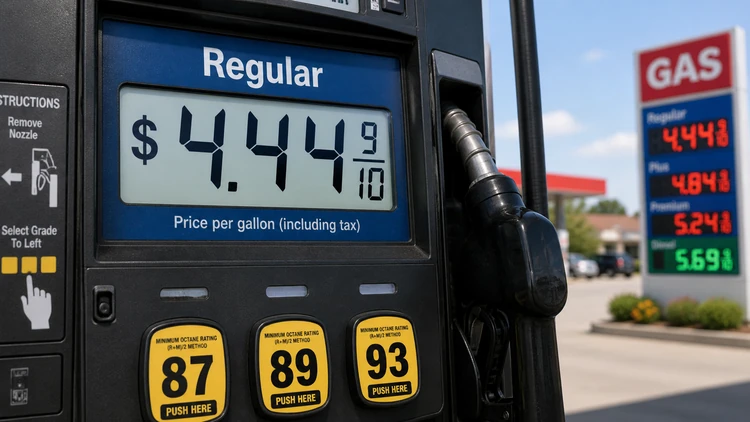
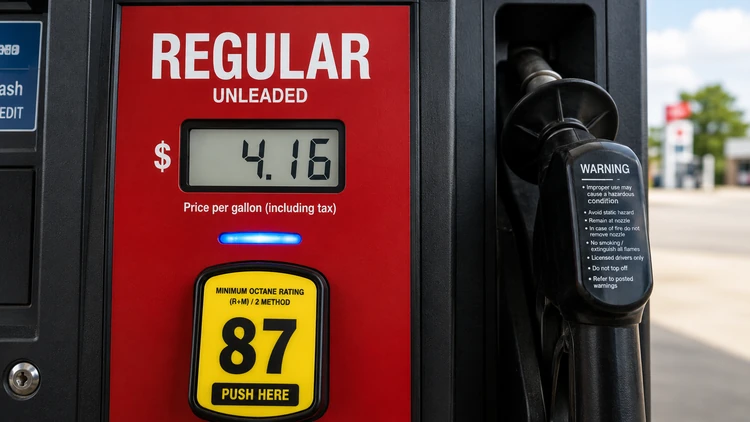
Americans Alarmed about Dependence on Oil Imports, High Gas Prices

Survey Finds Support for Tougher Fuel Economy Standards


Advertisement

May 24, 2007


In a recent national survey commissioned by the Consumer Federation of America (CFA), a large majority of Americans expressed great concern about the nation's dependence on oil imports.

They see this dependence as increasing gas prices, threatening future gas supplies, and funding terrorism.

This concern about oil dependence is a major reason why a large majority of Americans support increases in federal corporate average fuel economy standards (CAFE) -- by one mpg per year over the next ten years -- even when these higher standards increase the price of cars.

Surprisingly, there is significantly more support for these increases in the auto-dependent North Central region of the country than in the other three regions. Legislation in both houses of Congress, which is gaining support, would mandate these improvements, annually reducing gas consumption by 46 billion gallons and saving more than $125 billion at current prices.

At the same time, most Americans greatly overestimate the nation's domestic oil reserves and ability to substantially increase production.

More than half (55%) of Americans mistakenly believe the nation holds more than twenty percent of the world’s oil reserves. In fact, the U.S. has less than 3% of this oil. Those who overestimate domestic oil reserves also are most likely to think “we can produce enough oil to reduce our dependence on oil imports.”

Fuel-Saving Tips

As well as supporting increases in CAFE, Americans can reduce the nation's dependence on oil imports by taking fuel-saving actions. Two of the most effective, which don't involve changes in driving, are replacing dirty air filters and making sure tires are aligned.

Drivers who take these two steps can reduce their gas consumption by nearly 20%, effectively reducing the price of gas by over $.50 per gallon. A recent analysis released by CFA reveals that consumers are paying $1,000 more annually for gasoline than five years ago.

Oil Imports

Americans are aware of the nation's dependence on oil imports. When asked what percentage of the oil consumed in the United States is imported from other countries, more than two-thirds gave percentages between 40 and 80, and only 14% said less than 40. The actual percentage is a little more than 60.

Over four-fifths (84%) of Americans are concerned about this oil import dependency, with more than one-half (52%) expressing great concern. When asked why they were concerned, large majorities expressed concern about future gas prices and supplies, and funding unfriendly foreign governments and terrorism, with majorities expressing great concern about each.

"Americans clearly understand the relationship between oil imports and not only future price hikes but also funding of terrorism," said Stephen Brobeck, CFA's Executive Director. “They are also clearly feeling the pinch of rising gasoline prices,” added Brobeck, “since average household expenditures on gasoline have increased $1,000 over the past five years.”

Auto Fuel Efficiency

The survey asked three kinds of questions about the public's support for mandated increases in motor vehicle fuel efficiency (CAFE). In response to a question about "supporting required increases in motor vehicle fuel economy," four-fifths (80%) said yes.

In response to a question about support for specific legislation requiring auto companies to increase new car gas mileage by about one mile per gallon a year for ten years, over four-fifths (81%) said they favor, with over half (55%) saying they favor strongly.

Then in response to the same question, with a statement that the legislation would "increase the cost of cars somewhat," but these costs would be offset by lower costs from lower gas consumption, support for the legislation remained high, at 73% (with 41% strongly favoring it).

Surprisingly, there is significantly more support for these increases in the auto-dependent

North Central region of the country than in the other three regions. In the region stretching from Ohio to the Dakotas and from Minnesota to Missouri, where the facilities of U.S. auto companies are disproportionately located, 88% of Americans support CAFE increases compared to only 82% support in the Northeast, 78% support in the South, and 79% support in the West.

The legislation moving through Congress (S.357, Inouye-Stevens in the Senate and H.R.1506, Markey-Platts in the House), which aims to increase new vehicle fuel efficiency by 10 miles per gallon in ten years, sets appropriate goals for increasing CAFE standards.

"Support for the legislation mandating higher fuel economy is very strong and undoubtedly related to concern about oil import dependency," said Travis Plunkett, CFA Legislative Director. “But the devil is in the details,” Plunkett cautioned. “Unless the standards are mandatory for at least a decade and the criteria for evaluating progress thereafter rigorous, we could end up where we have been for the past decade, stuck in neutral.”

Too Optimistic

Slightly more than half of Americans (51%) think "we can produce enough new oil in the U.S. to reduce our dependence on oil imports,” with 46% disagreeing.

This optimism is clearly related to the widespread belief that the nation contains far larger oil reserves than it in fact has. More than half (55%) of Americans think we hold at least one-fifth of the world's oil, with nearly one-third (32%) thinking we hold over 30%. Only 3% of Americans think that we hold less than 5% of the world's oil reserves, which is the correct answer, since the nation holds less than 3% of the world's oil reserves.

Domestic U.S. oil reserves equal just three years of current annual U.S. consumption and 12 years of current annual U.S. production.

Those who overestimate our oil reserves tend to be the most optimistic about domestic production. Well over half of those who believe we have at least 20% of the world's oil think we can cut oil import dependence through increased U.S. production. But only one-fifth (20%) of those saying we hold less than 5% of the world's oil reserves think we can reduce oil dependence through domestic production.

"Most Americans are sorely misled when it comes to how much oil America controls. If they truly understood how little we have, they would know we cannot drill our way out of oil dependency. The only way to energy independence is through greater efficiency and alternative fuels," said Mark Cooper, CFA's Director of Research.

“To appreciate the tough spot we are in,” added Cooper, “if we compare our remaining reserves in the U.S. to current levels of consumption and production, we find that proven reserves equal just three years of current consumption and just 12 years of current production.”


Report Your Experience
If you've had a bad experience -- or a good one -- with a consumer product or service, we'd like to hear about it. All complaints are reviewed by class action attorneys and are considered for publication on our site. Knowledge is power! Help spread the word. File your consumer report now.

Asterpix

CONSUMER NEWS

SAFETY RECALLS


PRINT, ETC.

Print This

Email This


FREE CONSUMER NEWSLETTERS

The Daily Consumer
Afternoons M-F

Sign up now!


Consumer News & Alerts
Every Sunday

Sign up now!

MOST-VIEWED PAGES

NEW COMPLAINTS

Hey there! ConsumerAffairs.com is using Twitter.
Twitter is a free service that lets you keep in touch throughout the day. Join today to start receiving ConsumerAffairs.com's updates.


Back to the top |

Advertisement


Custom Search
AUTOMOTIVE
• Dealers
• Manufacturers
• Service
• Extended Warranties
• Lemon Laws
• Recalls
• Tires
• Transporters

FAMILY
• Aging
• Children, Parenting
• Recalls
• Dating
• Education
• Entertainment
• Pets
• Weddings
FINANCE
• Annuities
• Banks
• Credit Cards
• Debt Collection
• Debt Counseling
• Insurance
• Investing
• Loans
• Mortgages
• Payday Loans
• Student Loans
• Tax Prep

HEALTH
• Doctors
• Drugs, Pharmacies
• Health Clubs
• Hearing Care
• Hospitals
• Nursing Homes
• Nutrition, Diets
• Vision Care
• Weight Loss
HOMEOWNERS & RENTERS
• Appliances
• Cookware
• Furniture
• Home Improvements
• Lawn & Garden
• Movers
• Pools & Spas
• Realtors, Rental Agents
• Recalls
• Utilities

ELECTRONICS
• Cable TV/DBS
• Cameras
• Cell Phones
• Computers
• Home Electronics
• Internet Access
• Local Phone Service
• Long Distance
• VoIP
SHOPPING
• In-Home
• Online
• Retail Stores
• Sporting Goods
• Supermarkets
• Telemarketers

TRAVEL
• Airlines
• Bus Lines
• Car Rental
• Cruises
• Hotels
• Travel Agents
• Trains

RESOURCES
• Class Actions
• Complaint Form
• Small Claims Guide
• Lemon Laws
CONSUMER NEWS
• Latest News
• Automotive
• Telecom
• Financial
• Health
• Homeowners
• Scams
• Seniors
• Travel
• More ...

RECALLS
• Automotive
• Children's Products
• Drugs
• Food
• Household Products
• Sporting Goods

ABOUT US
• FAQ
• Privacy Policy
• Advertise With Us
• Newsroom
• Syndication
• Terms of Use

Terms of Use Your use of this site constitutes acceptance of the Terms of Use

Advertisements on this site are placed and controlled by outside advertising networks. ConsumerAffairs.com does not evaluate or endorse the products and services advertised. See the FAQ for more information.

Company Response Welcome If complaints about your company appear on our site, we welcome your response. Please see the Response Form for more information.

For more information, see the FAQ and privacy policy. The information on this Web site is general in nature and is not intended as a substitute for competent legal advice.  ConsumerAffairs.com Inc. makes no representation as to the accuracy of the information herein provided and assumes no liability for any damages or loss arising from the use thereof. 

Copyright © 2003-2009 ConsumerAffairs.com Inc.  All Rights Reserved.    The contents of this site may not be republished, reprinted, rewritten or recirculated without written permission.