CONSUMER NEWS    RECALLS    COMPLAINT FORM    SCAM ALERTS  


Complain about a product or service

Small Claims Guide | Class Actions | Lemon Law | FAQ | Resources | Newsletters | Spanish
Automotive    Education    Electronics    Family    Finance    Health    Homeowners    Shopping    Travel   
NEWS   Latest |  Archives |  Auto |  Cells, etc. |  Computers |  Financial |  Health |  Homeowners |  Parents |  Privacy |  Scams |  Seniors |  Travel

Crash Risk Four Times Higher When Driver Is On the Phone


Advertisement


Cheap Car Insurance
Insurance companies on TV can’t compete with our multi-quote system.
Click here for your quote!

July 12, 2005
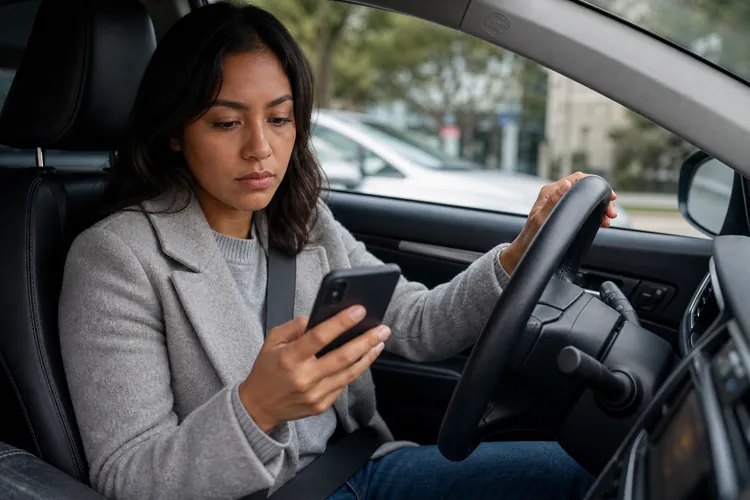
A study of of Australian drivers reports that the use of any cell phone, hands-free or otherwise, carries a four-fold higher risk of serious accidents. It's the latest in an accumulating body of evidence that finds cell phone user a major factor in highway accidents.


California Motorists Cope With New Hands-Free Law
More Teens Using Cell Phones While Driving
Drivers Impaired Just by Listening to Cell Phone
Driving While Phoning Gums Up Traffic, Study Finds
Study: Drivers Using Cell Phones As Bad As Drunks
Survey: Outlaw Cell Phone Use While Driving
Cell Phone No. 1 Driver Distraction
More Drivers Talking While Driving
Listening, Talking, Driving Don't Mix
Poll Finds Motorists Irked At Other Drivers
Crash Risk Four Times Higher When Driver is On the Phone
Cell-Phoning Drivers Get Failing Grade from Johns Hopkins
Study: Eight Percent of Drivers Are On the Phone
Feds Say Hands-Free Cell Phone Ineffective
Hands-Free Phones Safer, Study Finds
Make a Call, Get a Ticket
---

Cell Phone Hazards
Cell Phone Hazards
Study Finds Little Short-Term Cell Phone Health Risk
Cell Phones Linked to Bee Decline
Mayo Clinic Finds Cell Phones Safe in Hospitals
Origin of California Cell Phone Fire Disputed
Cell Phone Ignites, California Man Severely Burned
Study: Cell Phone Users Have Lower Sperm Counts
Study: Drivers Using Cell Phones As Bad As Drunks
Doctors Warn Against Cell Phone Use In Storms
Cell Phones Cleared in Gas Fire
Sleep With Your Cell Phone? Don't Forget the Dog
Feds Warn of Cell Phone Battery Hazards
Risk of Cell Phone Explosions Growing
Cell Phone Catches Fire
Battery Recall
Traffic Tickets
Gasoline Fires
Radiation Fears
---
Consumer Complaints

The study was conducted in Australia because American cell phone carriers refused to cooperate.

The increased risk was estimated by comparing phone use within 10 minutes before an actual crash occurred with use by the same driver during the prior week. Subjects were drivers treated in hospital emergency rooms for injuries suffered in crashes from April 2002 to July 2004.

The Insurance Institute for Highway Safety study, "Role of cellular phones in motor vehicle crashes resulting in hospital attendance," was published in the British Medical Journal.

"The main finding of a fourfold increase in injury crash risk was consistent across groups of drivers," said Anne McCartt, Institute vice president for research and an author of the study. "Male and female drivers experienced about the same increase in risk from using a phone. So did drivers older and younger than 30 and drivers using hand-held and hands-free phones."

Weather wasn't a factor in the crashes, almost 75 percent of which occurred in clear conditions. Eighty-nine percent of the crashes involved other vehicles. More than half of the injured drivers reported that their crashes occurred within 10 minutes of the start of the trip.

The study was conducted in the Western Australian city of Perth. The Institute first tried to conduct this research in the United States, but U.S. phone companies were unwilling to make customers' billing records available, even with permission from the drivers. Phone records could be obtained in Australia, and the researchers got a high rate of cooperation among drivers who had been in crashes.

Another reason for conducting the study in Australia was to estimate crash risk in a jurisdiction where hand-held phone use is banned. It has been illegal while driving in Western Australia since July 2001. Still one-third of the drivers said their calls had been placed on hand-held phones.

Hands-free versus hand-held

IIHS-Auto Safety

Acura TSX Luxury Sedan Top Safety Pick
Nissan Murano Leads SUV Safety Test
Lexus EX35, Cadillac CTS Named Top Safety Picks
Nissan Quest Worst Performer in Minivan Bumper Test
Study: Crash Tests Predict Fatalities In Cars, Not Trucks
Top Safety Awards Go to 34 Cars, SUVs and a Pickup
Midsize SUVs Perform Poorly in Side Impacts
BMW 5 Series Performs Poorly in New Impact Test
Luxury Cars a "Mediocre Lot" in Low-Speed Collisions
Light Trucks Vulnerable to Whiplash
---
More IIHS Tests

The results suggest that banning hand-held phone use won't necessarily enhance safety if drivers simply switch to hands-free phones. Injury crash risk didn't differ from one type of reported phone use to the other.

"This isn't intuitive. You'd think using a hands-free phone would be less distracting, so it wouldn't increase crash risk as much as using a hand-held phone. But we found that either phone type increased the risk," McCartt says. "This could be because the so-called hands-free phones that are in common use today aren't really hands-free. We didn't have sufficient data to compare the different types of hands-free phones, such as those that are fully voice activated."

Evidence of risk is mounting

The findings of the Institute study, based on the experience of about 500 drivers, are consistent with 1997 research that showed phone use was associated with a fourfold increase in the risk of a property damage crash. This Canadian study also used cell phone billing records to establish the increase in risk. The Institute's new study is the second to use phone records and the first to estimate whether and how much phone use increases the risk of an injury crash.

Taken together, the two studies confirm that the distractions associated with phone use contribute significantly to crashes.

Other studies have been published about cell phone use while driving, but most have been small-scale and have involved simulated or instrumented driving, not the actual experience of drivers on the road. When researchers have tried to assess the effects of phone use on real-world crashes, they usually have relied on police reports for information. But such reports aren't reliable because, without witnesses, police cannot determine whether a crash-involved driver was using a phone.


Report Your Experience
If you've had a bad experience -- or a good one -- with a consumer product or service, we'd like to hear about it. All complaints are reviewed by class action attorneys and are considered for publication on our site. Knowledge is power! Help spread the word. File your consumer report now.


Consumer News

July 9 2008

Print, mail, etc.


Recent Recalls & Safety Alerts


FREE CONSUMER NEWSLETTERS

The Daily Consumer
Afternoons M-F

Sign up now!


Consumer News & Alerts
Every Sunday

Sign up now!


Knowledge is free.
Knowledge is power.


Back to the top |

Advertisement


Home | Rogues Gallery | Good Guys | Complaint Form | News | Recalls | Search | Video | FAQ |
Consumer Resources | Small Claims Guide | Lemon Law | Newsletter | Contact Us
Advertise With Us | Testimonials | Newsroom | RSS Feeds | Radio | Job Postings


Terms of Use Your use of this site constitutes acceptance of the Terms of Use

Advertisements on this site are placed and controlled by outside advertising networks. ConsumerAffairs.com does not evaluate or endorse the products and services advertised. See the FAQ for more information.

Company Response Welcome If complaints about your company appear on our site, we welcome your response. Please see the Response Form for more information.

For more information, see the FAQ and privacy policy. The information on this Web site is general in nature and is not intended as a substitute for competent legal advice.  ConsumerAffairs.com Inc. makes no representation as to the accuracy of the information herein provided and assumes no liability for any damages or loss arising from the use thereof. 

Copyright © 2003-2008 ConsumerAffairs.com Inc.  All Rights Reserved.