How ConsumerAffairs uses cookies

This website utilizes technologies such as cookies to enable essential site functionality, as well as for analytics, personalization, and targeted advertising. To learn more, view the following link:

Online Dating Scams

This topic covers the growing concern of online dating scams, which predominantly target seniors by exploiting their loneliness and trust. It includes real-life stories of victims who have lost significant amounts of money, often to scammers posing as romantic interests from abroad. The content emphasizes the difficulty of tracking and prosecuting these criminals due to their international operations and the impersonal nature of large dating sites. It offers practical advice on how to avoid becoming a victim, such as abstaining from sending money to strangers and seeking social connections through safer, offline avenues.

Latest

Why romance scams can be so hard for victims to recognize

A new documentary shows how these schemes work

Featured Tech News photo

Romance scammers cultivate trust through frequent contact, flattery and carefully tailored stories before asking for money.

The new documentary “Super Scam Me” examines those tactics by putting investigative journalist Mariana van Zeller in a potential victim’s position.

Consumers can protect themselves by keeping trusted people involved and refusing to send money to an online love interest they have never met.

Romance scams start innocently enough. Two lonely people meet o...

Read Article
Featured Tech News photo
2025
2015
2014
2013
Article Image

Researchers: dating sites have it all wrong

While it is true that some people successfully find good, lasting relationships on online dating sites, it is also true that many end up frustrated and disappointed.

Rochelle, a Match.com user from Irvine, Calif., says she has found a troubling pattern with the men she has met online: they aren't telling the truth, she says.

“I've noticed that a lot of men are lying about their age,” Rochelle writes in a ConsumerAffairs post. “I set my age limit at 45 and about a quarter of the men contacting me are no way even close to 45. Try 55-65! Also, a lot of men use very old pics. Sorry, but any picture older than 2-3 years is irrelevant.”

Disconnect

Researchers at the University of Iowa (UI) think Rochelle might unknowingly be onto something. Not that people are dishonest when they use an online dating site but there's a disconnect -- what they say doesn't really match what they truly want.

Kang Zhao, assistant professor of management sciences in UI's College of Business, and UI doctoral student Xi Wang are part of a team that has developed an algorithm for dating sites that uses a person's contact history to recommend partners with whom they may be more romantically compatible.

Netflix model

It's similar to the model Netflix uses to recommend movies users might like by tracking their viewing history. For example, you might not pick a particular movie to watch but Nexflix, analyzing the movies you've watched in the past, says “hey, you might like this one.” In a way, it's putting the computer in computer dating.

Dating sites are taking notice. Zhao says he's had preliminary discussions with two dating services who have expressed interest in learning more about the model. Since it doesn't rely on profile information, Zhao says it can also be used by other online services that match people, such as a job recruiting or college admissions.

The system was developed with the help of a popular commercial online dating company whose identity is being kept confidential. The research team looked at 475,000 initial contacts involving 47,000 users in two U.S. cities over a 196-day span. Of the users, 28,000 were men and 19,000 were women, and men made 80 percent of the initial contacts.

The data showed that just 25% of those initial contacts were actually reciprocated. To improve that results, Zhao's team developed a model combining two factors to recommend contacts: a client's tastes, determined by the types of people the client has contacted; and attractiveness/unattractiveness, determined by how many of those contacts are returned and how many are not.

Better predictor

Zhao believes those two factors, taste and attractiveness, do a better job of predicting successful connections than relying on information that clients enter into their profile, because what people put in their profile may not always be what they're really interested in. And from Rochelle's observation, they could also be intentionally misleading.

Zhao goes a step further, suggesting the average user of an online dating site might not really know themselves well enough to know their own tastes in the opposite sex. A man who says on his profile that he likes tall women may in fact be approaching mostly short women, even though the dating website will continue to recommend tall women.

"Your actions reflect your taste and attractiveness in a way that could be more accurate than what you include in your profile," Zhao says.

Another way of saying, actions speak louder than words. Zhao says that eventually, the algorithm will notice that while a client says he likes tall women, he keeps asking out short women, and will change its recommendations to start suggesting that he contact short women.

If it works for movies, it should work for dates, Zhao says.  

Article Image

Online dating site reveals HIV/STD status, suit charges

So let's say just for argument's sake that you are HIV-positive, or perhaps you have a sexually-transmitted disease. Makes it kind of hard to find a date, no?

Ah, but there's an online dating site that caters to folks in your situation. It's called PositiveSingles.com and it lures clients by painting itself as a "warm-hearted and exclusive community for singles and friends with STDS." It also promises confidentiality.

And therein lies the problem, a class action lawsuit claims. The suit charges that PositiveSingles.com is in fact part of a vast miasma of dating sites run by SuccessfulMatch.com.

That would perhaps by OK except that user profiles are shared among the many SuccessfulMatch-affiliated sites, the suit charges, according to Courthouse News Service.

When the profiles of users from PositiveSingles show up on the other dating sites, their HIV and STD status is there for all to see, say the two plaintiffs, unidentified women from Canada and Washington state.

The PositiveSingles site promised a free -- and "fully anonymous" -- profile in a "100 percent confidential and comfortable community," according to the complaint. And the registration page assured that it would not disclose, rent or sell personally identifiable information to third parties.

The lawsuit seeks class action status. The attorney for the plaintiffs is Robert Green, of Green & Noblin, Larkspur, Calif.

Article Image

Technology makes online cheating easier

We're living in an interconnected world. We've gone from surfing the Internet at our desk at home to connecting with friends through social media on the go, using a growing array of mobile devices.

All this technology may make us more productive and plugged-in, but it may also be leading us astray, making it easier to cheat on a spouse or partner – and it makes us more subject to betrayal.

Let's start with Facebook. The social networking site, with nearly a billion members, allows us to keep up with what our friends are doing. But it has also put us in touch with old friends from our past and provided a seemingly private, back-channel way to communicate with them.

According to Divorce Online, social media has become a factor in one in three divorces in the UK. The site says what people post not only causes marital friction but can be used as evidence in a divorce trial.

Seeds of an affair

While there are no hard numbers to confirm this, it can be safely assumed that all that chatting, flirting and interacting online can sow the seeds of an affair, a virtual one at first but perhaps later, the real thing.

The British website MyCheating reports a huge spike in female membership on UK “cheating” websites among married women over 30. It links the spike to another technology trend, the 2012 “Fifty Shades/Mummy Porn” e-book phenomenon.

"The Internet, and specifically social networks, have changed the way we interact with each other,” said Victoria Coxen, co-founder at MyCheating. “And one of the negative consequences is that it has become easier for people to cheat. Social media and technological advancements have put temptation at our fingertips, and this is demonstrated by the meteoric rise in extra-marital encounters.”

Recipe for disaster

Which brings us to online dating. When married people go to a dating website and post a phony bio in hopes to starting a relationship, it is usually a recipe for disaster.

A spouse hoping to meet someone for a romantic affair can do so from the privacy of his or her computer, though sometimes a misdirected email can be their undoing. In 2011 ConsumerAffairs received a complaint from a woman who said an online dating site had emailed her husband recommendations for potential dates. She was angry at the dating site's “mistake” and hadn't quite figured out it might not be a mistake.

Online dating sites can be used to cheat another way. Dating scams abound on most dating websites when one of the parties pretends to be something they are not. Barbara, of Central, S.C., recently reported meeting a man on Match.com and carrying on what seemed like a normal online relationship for four months.

More and more money

“He needed to go to Malaysia on business, and when he came back, we were to get married,” Barbara wrote in a ConsumerAffairs post. “He got over there and things were more than Michael expected so he needed $1,000 till he got back, then another $1,000. Then finally, he came home but he needed more money. I didn't think much about it then; supposedly he was at the airport and had a heart attack and was in the hospital for two weeks. Now, he can't leave. They kept his passport because he couldn't pay the bill.”

So Barbara gave “Michael” her credit card, which ended up getting maxed out. When she went back to the dating site to look for his profile, she said it was gone.

Are fraud and infidelity on the rise because of technology? It seems that way. As the use of social media becomes second nature, individuals may be forgetting its very public nature. You aren't just sharing private thoughts with online friends. It's more public than you realize.

So, be careful what you write on your wall!

Article Image

You met him on the Internet? Check your bank account

Looking for love in all the right places? The Internet may not be one of them.

That guy or gal who professes to be your soul mate or the love of your life may, according to Oregon Attorney General Ellen Rosenblum, be a con artist on the make for cash.

One popular scam involves supposed romantically minded members of the U.S. military. In one recent case, a Hillsboro, Ore., woman lost more than $750,000 to someone she thought was a lonely soldier.

And the G.I. con job is just one of many scams out there. Over the years ConsumerAffairs has received a large number of reports from dating site users who became emotionally involved with someone online, only to find out they were being scammed.

David, of Loveland, Colo., said he fell for a romance scam when he thought he was helping a young Russian woman stranded in a foreign country.

"Since then I have been approached on every dating site I have joined by supposed women who are stranded in Nigeria or Ghana," David wrote in a ConsumerAffairs post. "When the dating sites are notified they are scammers they do nothing about it."

What to do

Rosenblum advises consumers to be skeptical of any Internet claim. The web's anonymity means that you cannot be sure of the real name, age, marital status, nationality or even gender of your new “paramour.”

Many times these con artists are in foreign countries using untraceable email addresses. Once a connection is made, they begin asking for money for any number of things ranging from medical bills to the cost of a wedding.

Accounts are routed through numerous locations utilizing pay-per-hour Internet cyber cafes, which makes finding the crook and getting money back difficult, if not impossible.

Safety tips

Here are a few tips to help you stay safe:

  • Do not wire money to someone you have not met in person. Be wary of warp-speed proclamations of love, particularly if they are accompanied by pleas for cash.
  • Be suspicious if you never get to actually speak with the person on the phone or are told they will not receive letters in the mail. Legitimate servicemen and women serving overseas will often have an APO or FPO in their mailing address.
  • Do not send money or ship property to a third party or company, especially to parties or companies in an African country.
  • If you think you have been scammed by an individual claiming to be a member of the U.S. military, contact your local law enforcement agency or the FBI.
Article Image

Despite the pitfalls, more relationships starting online

If you've had a bad experience with online dating, here's some more bad news. A relationship expert suggests it's the way people get together now. The numbers are in online dating's favor.

“There are 54 million single Americans today,” said Wichita State University’s Deborah Ballard-Reisch, who has researched the subject of communication and relationships for about 20 years. “Forty million of them are online in one way or another. You have a better chance of meeting Mr. or Ms. Right today than you ever have.”

So far, Viola, of South Carolina, isn't convinced, after signing up with a dating site.

“The few guys I did chat with were clearly looking for flings,” she wrote in a ConsumerAffairs post. “Also, I have noticed that since signing up, they don't send emails telling me when someone has flirted or sent emails like before I signed up (I guess they have my money now). I wish I had spent my $80 on a new pair of shoes!”

Maybe Viola would have better luck if she joined activities at church or took a class. You might meet someone with common interests but that universe is small compared to the online world.

Less in-person contact

“We used to develop romantic relationships with people we went to school with or knew through church, or family or friends introduced us to, and now we supplement that by meeting people online,” Ballard-Reisch said. “And the world of people available to us has exploded exponentially because of that.”

But that's not always a good thing. While the opportunity to get to know others has increased because of online dating, Ballard-Reisch says people need to be aware of some of the risks. One of the biggest, mentioned frequently in ConsumerAffairs posts about dating sites, is fraud.

“This site is full of scammers,” complained Chris, of Milwaukee. “I have been asked for money by subscribers several times. I see the same members posting under a different username.”

“There are a number of international consortiums that get on online dating sites and pretend to be someone they’re not in order to get money out of people,” Ballard Reisch said. “So if someone asks you to send them money, especially out of the country, run.”

Language clues

Sometimes it's obvious you are being scammed. Sometimes, there are more subtle tell-tale clues.

“One of the things to look out for in online dating is that, when people claim language fluency and then they have grammar and syntax and spelling errors, if their language doesn’t seem right, it likely isn’t,” Ballard-Reisch.

Even if you are convinced the person you are striking up a relationship with is who they appear to be, it's wise to take nothing for granted. Sadly, it's guilty until proven innocent.

“This might sound coarse, but so much information is available to us online now, if you’re thinking of meeting someone you have met only online, Google them,” Ballard-Reisch said. “Use multiple search engines. Consider seeking criminal background checks. Make sure that people are who they say they are.”

Safety tips

She has other online dating safety tips; If you decide to meet someone in person that you’ve spoken with only online, always meet in a public place the first few times. Drive yourself. Let your friends and family know where you’re going, with whom and when you plan to return. Have a panic word in case you have a quick second to call them if you need help. And keep your phone online so you can be tracked through GPS if necessary.

That might sound a little extreme, but Balland-Reisch says it's simply a prudent precaution. Just last month a Las Vegas woman sued Match.com after she said she was stabbed by a man she met on the dating site. We used to be able to rely on our support networks — our family and friends — to vet people for us. When we meet people online, we can’t do that anymore.

And more and more, we are meeting people online. Despite all the nightmare stories and bad experiences, Ballard-Reisch says an estimated one in five romantic relationships start online today.

Article Image

Woman sues Match.com after being stabbed by her date

We hear from lots of consumers who say their Match.com dating experience was poor but few can top Mary Kay Beckman's complaint.

The 50-year-old Las Vegas woman is suing Match.com for $10 million, saying she was brutally stabbed and beaten by a man the dating site set her up with.

Other consumers have told ConsumerAffairs that sexually-menacing and deceptive men remain on Match.com even after they are repeatedly reported to the site's managers.

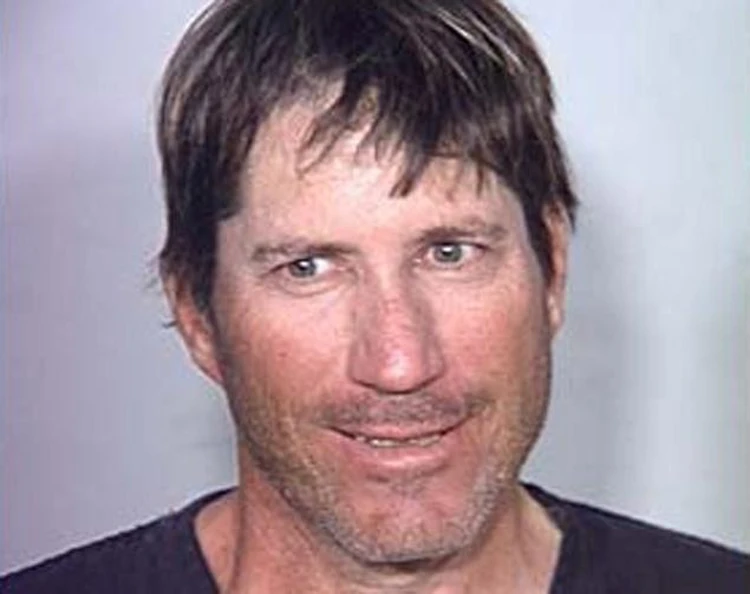
Beckman said she and Wade Ridley, 53, dated for eight days in September of 2010 before she called it off. But a few months later, an enraged Ridley broke into Beckman's house and stabbed her several times with a butcher knife while stomping on her head and neck, according to Fox 5 Las Vegas.

Beckman said Ridley told police he had intended to kill her, not just hurt her. While being questioned by police, he allegedly admitted to killing 62-year-old Anne Simenson, an Arizona woman he’d also met on Match.com, in early 2011. She was stabbed with a butcher knife and a machete.

Inadequate warnings

Beckman's suit argues that Match.com does not adequately warn clients that it may pair them up with people who are dangerous.

The company called the suit “absurd” and said it will argue that it can't be held responsible for what its members do on their own time.

Consumers rate Match.com
"The many millions of people who have found love on Match.com and other online dating sites know how fulfilling it is," the company said in a statement. This is about a sick, twisted individual with no prior criminal record, not an entire community of men and women looking to meet each other."

Could be, but that's not how Sandy of Nottingham, England, remembers her Match.com experience.

She said she was hounded by sexually expicit emails from a man in  London insisting that he wanted to marry her. A meeting was arranged at a bar but Sandy said the man looked "disgusting" and she left quickly.

"I then sent him a message and told him that I thought he was too old for me. However, when I got back, he would not take rejection and tried again to meet me," she said. "I decided to report it to Match.com and he is still on the website now. The Match team did not do anything to remove this man from the site but I think he is sexually harassing and abusing women.

"He brags that he can get sex on the website 7 days per week if he wanted to. I decided to immediately remove myself from the site," she said. "Despite complaining on numerous occasions to Match.com, no one did anything about it. I felt very angry and disappointed with the Match.com team and moreover that there is no policing of these emails, etc. How can Match.com not do anything to protect vulnerable women?"

Not alone

Sandy is not alone. Ellie of St. Audries, England, had a similar experience with the same man.

"This man was on the face of his profile a responsible man and supposed to be a 55-year-old gentleman, who ran his own business. He turned out to be nothing more than a sex pervert who was clearly not using the site to date but made it clear that he could get sex on the website 7 days per week," Ellie said. "I reported this man as a concern but he is still allowed on the site even now."

Karen of Ajax, Ontario, said she met a man who claimed to live in her area and to be single and 40. In fact, she said, a background check found that he lived in San Francisco, was 50 and married.

"His entire profile was a lie," Karen said. "I reported him to Match.com so that his profile can be removed because there were too many discrepancies in the information he provided."

But Karen said the same man kept reappearing under different user names.

"I called Match.com and they told me that they can't do anything about the situation because they only look at the username and deal with the username alone for the issue," she said. "So basically, if this guy was a rapist or sexual offender, the user can come back again and again on the website even if Match.com checks their current Match.com predators with the sex offenders list as they say they will."