
Compare our picks for the best solar phone chargers
| Product | Weight | Capacity (milliamp-hours) | Wattage | Compatibility | Price* |
|---|---|---|---|---|---|
| Hiluckey Solar Charger | 1.21 lbs. | 25,000 mAh | 15 watts | USB-A, USB-C | $37.99 |
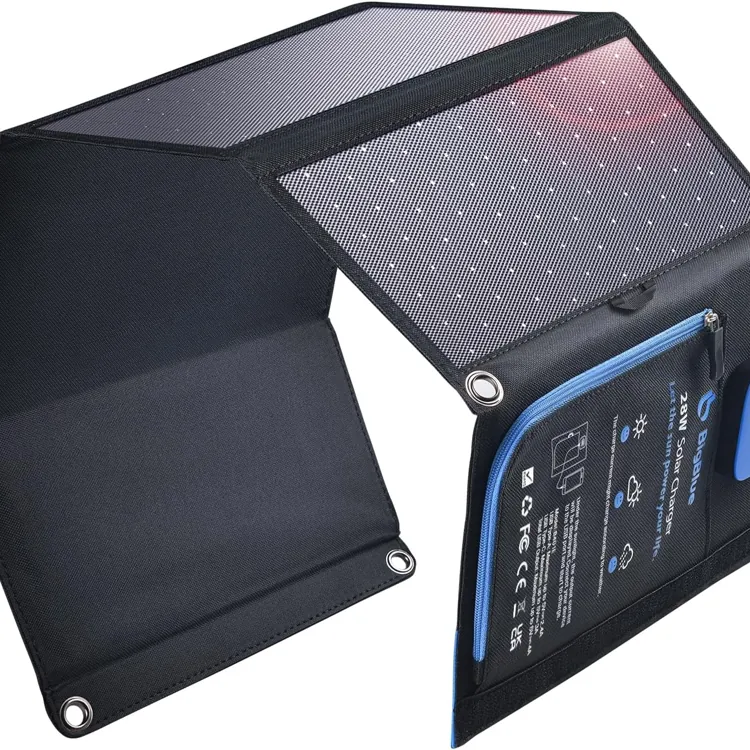
| BigBlue Portable Solar Charger | 1.47 lbs. | N/A | 28 watts | USB-A, USB-C | $72.99 |
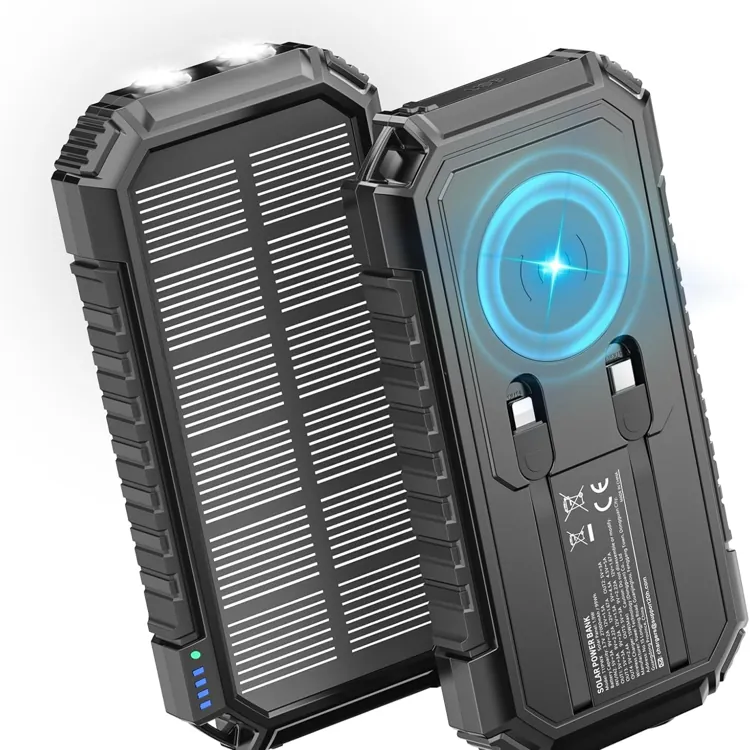
| Riapow Solar Charger Power Bank | 1.06 lbs. | 27,000 mAh | 22.5 watts | USB-A, USB-C | $33.99 |
Our top picks for the best solar phone chargers
To create our list of the best solar phone chargers, we compared popular options on Amazon and looked at factors such as configuration, capacity, device compatibility, pricing and reviews.
Our top picks for best solar phone chargers are:
All prices and Amazon ratings are accurate as of March 10, 2026.
Hiluckey Solar Charger
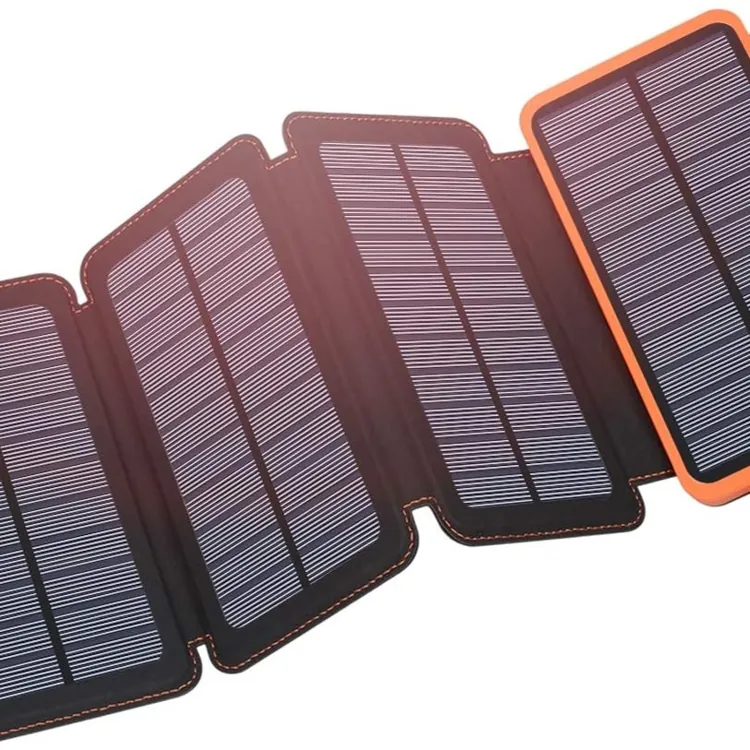
BigBlue Portable Solar Charger
Riapow Solar Charger Power Bank
How do solar phone chargers work?
Solar phone chargers work like traditional solar energy generators. They take energy from the sun, store it and turn it into usable energy that can charge a device via a USB-A or USB-C cable. For these portable solar panels, the mAh will help determine how many times you can charge your phone before you need to charge the solar charger again. The higher the mAh, the longer it lasts between full solar charges.
The higher a solar charger’s mAh, the longer it’ll last between full solar charges.
Solar phone chargers are usually the size, weight and shape of a smartphone. They’re easy to pack and to use. In some cases, they may include a charging cable for charging the solar charger through a wall outlet before a trip. To charge a device, you can simply plug your own USB-C or USB-A cords into the appropriate holes and let the sun do the rest.
However, note that these chargers are generally best for topping off a device’s charge since it may take significant time to bring a dead device to a 100% charge.
» MORE: What is solar energy?
What should you look for in a solar phone charger?
With so many solar phone chargers on the market today, it can be hard to choose the best one. Some of the factors you should consider when comparing solar phone chargers are:
Price
Most solar phone chargers range between $20 and $100, though there are some really cheap ones and some more expensive ones, depending on your needs. Generally, though, you should expect to spend around $30 to $50 for a typical solar charger.
Size
Generally, a bigger solar charger will hold more of a charge because it has more surface space to absorb energy from the sun. If you’re going on a hiking trip, you may only have a small amount of space available to pack a charger. If you’re keeping a solar charger in your car or home for emergencies, size may not be as much of an issue.
Capacity
Storage capacity is measured in milliamp-hours, which refers to how much a bank can hold before it needs to recharge. Not all solar chargers offer significant capacity, but it can be handy for people who are off the grid and need reliable energy at all times.
Wattage
Wattage is equally as important as capacity, if not more so. Wattage tells you how quickly and efficiently you can charge your device. Ten to 15 watts is usually considered good for charging one or two phones, but higher-wattage devices will charge even faster. Still, the increased cost may not be worth it for people who just need to charge one or two devices.
Compatibility
Most chargers are equipped with USB-C and USB-A ports, which should support most devices. Some chargers may only have one or the other, so it’s good to check what type of port(s) you need before buying.
Backup battery
Most, but not all, solar chargers have backup batteries that can store the sun’s energy to use later, like at night. If you’re heading somewhere where rain or cloud coverage is likely, this is a necessity.
» MORE: Solar energy pros and cons
FAQ
Are solar-powered phone chargers any good?
Solar-powered phone chargers tend to work fairly well, though how well your specific charger works will depend on the one you choose. Many chargers can charge a phone up to 50% or 65% within about 30 minutes. Plus, most chargers are available for around $20 to $75, making them relatively affordable if you plan to use them a lot or long term.
Is it good to charge your phone with solar?
Charging your phone with solar power can be a good option if you’re hiking or camping outdoors, or if you experience a power outage at home or work. It won’t harm your phone in any way.
What are the disadvantages of solar mobile chargers?
One of the disadvantages of solar mobile chargers is the initial cost, since these chargers generally cost more than regular phone chargers. Also, some chargers might not store energy for later use, and other chargers may not last long before they need to be recharged.
Article sources
ConsumerAffairs writers primarily rely on government data, industry experts and original research from other reputable publications to inform their work. Specific sources for this article include:
- U.S. Department of Energy, “Solar Energy.” Accessed March 10, 2026.