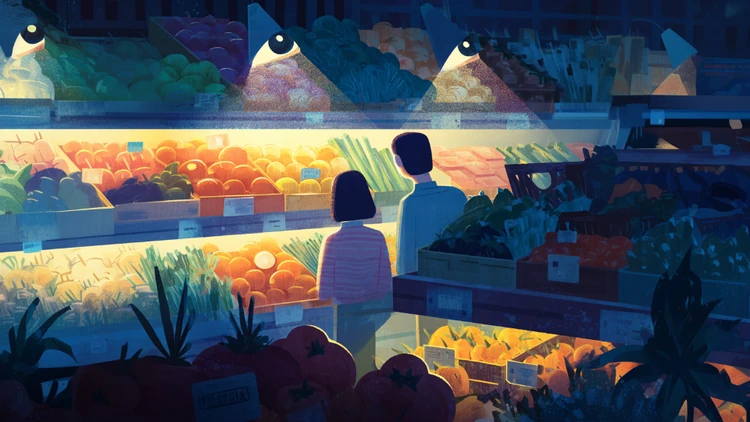

- Grocery loyalty apps don’t just give you discounts, they track who you are, what you buy, and how often you shop, then use it to target you or sell to advertisers
- Stores do this because grocery margins are tiny, so personalized "deals", repeat offers, and targeted advertising makes you more profitable
- You can still get the deals without oversharing by using a shopping-only email, not linking payment, limiting location tracking, and opting out of data sharing
Grocery stores aren’t just selling you milk and eggs these days, they’re selling your data too. Every time you punch in your phone number, scan a loyalty card, or open a grocery app for a “digital-only” price, the store learns a little more about you. What you buy. When you buy it. How much you’re willing to pay. And in a lot of cases, that information doesn’t just sit there. It gets analyzed, used to target you, and sometimes shared with partners.
Here's what's really happening and how you can limit the personal information you give out and still score deals.
What’s actually being tracked
The store can track the following when you use a loyalty card or app:
- Your identity (name, email, phone)
- Your purchase history (every item, size, brand, and price)
- Your visit patterns (Sundays at 10am, every 6–8 days, big trip before holidays)
- Your coupons and offers (which ones made you buy and which ones you ignored)
- Your device/app behavior (you opened the app near the store, clicked on the weekly ad, loaded offers, etc.)
Put all of this together and they start to get a pretty clear picture of your household and spending habits. For example, if you always buy gluten-free, they know it. If you switched from a national-brand cereal to a store-brand, they know you’re price-sensitive. If you only buy baby products once a month, they can guess what stage you’re at raising your family.
Why grocery stores care so much
The profit margin on groceries is thin and so stores want as much data on you as possible to maximize their profits.
Here’s how they use the data they collect to try and get you to pay more.
1. Price discrimination (the legal kind): they can show you a deal in their app to keep you loyal, while another shopper potentially pays full price.
2. Offer optimization: if a $2 off yogurt coupon got you to switch brands, they know to hit you with it again in 30 days.
3. Ad money: many grocery chains now sell “audiences” to specific brands. So if you’ve bought pasta in the last 30 days, a pasta brand can pay to show you a targeted ad. That’s why your shopping history makes you more valuable.
4. Shrink and forecasting: by knowing what people actually buy, store by store, it helps them stock products that will sell, price them competitively, and reduce overall waste.
So no, it’s not just for “rewards.” Your data is part of the business model.
Where the privacy creep happens
Here are the privacy concerns that shoppers don’t always notice:
“Personalized offers” in the app: sounds friendly and useful, but in actuality it usually means a profile of your shopping behavior has been created.
Location permissions: you let the app see where you are, so it can ping you in-store or confirm visits. All info that can be used to track how often you shop, which stores you prefer, and the products to get in front of your eyeballs.
Linked payment or credit card: once you save a card to your grocery account (usually via their app), the store can connect you to every trip, not just the ones where you typed your phone number. This means your name, the card you used, and what you bought can all be tied to the same profile.
How to get the deal without oversharing
Keep in mind that you don’t have to pay a higher “non-member” price to keep some of your privacy. You just have to think a little differently when it comes to how you share your information.
Create a separate “shopping only” email address
Use a separate email address that is just for shopping and don’t give the store extra demographic info when signing up for their loyalty program. Many stores should let you sign up with only a phone number and ZIP.
Don’t link everything
If the grocery store app asks you to link a credit card “for faster checkout,” skip it. I recommend paying separately, thereby keeping your payment information private. The more systems you connect, the clearer the picture they have on you.
Turn off location and background tracking
In your phone settings, set the grocery app to “While Using” or “Never.” You can still load digital coupons without giving them 24/7 location. Also, avoid using a store’s Wi-Fi as it can easily track your movements in-store, including which aisles you tend to browse the longest.
Opt out of data sharing and marketing
Most big grocery chains have a privacy page on their website where you can opt out of targeted ads or the “selling” or “sharing” of your data. Takes only a couple minutes, worth it.
Use the deals, not the personalization
Keep in mind that you can open the weekly ad and clip the public digital coupons, then just simply close the app. You don’t need to browse for 30 minutes, favorite a ton of items, and in the process let them build a profile on every brand you like. Just clip the digital offers and get out.
Pay attention to receipts
Some chains print “Because you bought…” offers on their receipts. Use these receipts to figure out exactly how closely they’re watching you. This serves as a good reminder to go tighten your privacy settings on their app or website.
When to think twice about sharing your purchase history
There are a few situations where handing over your shopping data is definitely not worth the coupon.
Here are some three examples worth considering:
Health-related buys: specialty diet products, OTC meds, and personal-care products. If you don’t want these purchases tied to you, don’t buy with a loyalty account.
Shared households: if multiple people use the same loyalty number, you’re all in one shopping profile. So your coupons and “recommended” deals may be based on someone else’s shopping patterns which is not always helpful.
Cross-app logins: signing into the grocery app with Google/Apple/Facebook can connect more dots than you realize. I get that it’s convenient, but it can also link your shopping activity to a broader profile that’s harder to untangle later.