• RSV is the leading cause of infant hospitalization in the U.S.
• Health officials urge vaccination for pregnant women, seniors, and people with medical risks.
• Cases are climbing nationwide as flu and COVID also circulate.
A wave of respiratory syncytial virus (RSV) infections is sweeping across the United States, sending more babies and toddlers to hospitals as the country enters its annual respiratory virus season.
According to data from PopHIVE, a Yale School of Public Health project, about 1.2% of emergency room visits among infants younger than one year were caused by RSV for the week ending Oct. 11 — triple the rate from a month earlier. Epidemiologists Katelyn Jetelina and Hannah Totte wrote in their blog Your Local Epidemiologist that “an RSV wave is starting to take hold.”
Risk is highest for babies and older adults
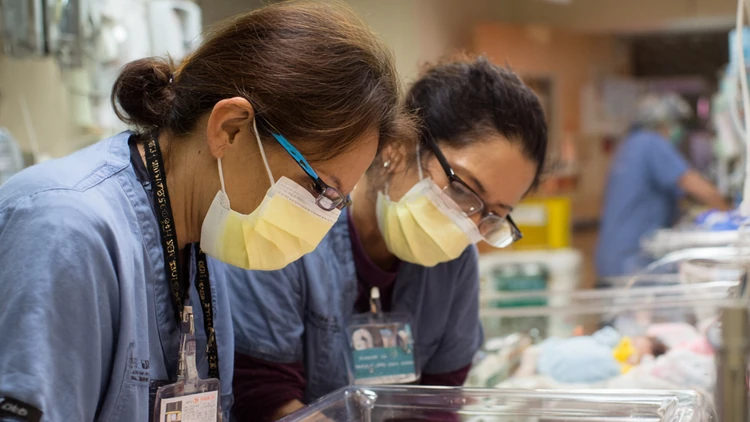
RSV is the nation’s leading cause of infant hospitalizations, responsible for severe pneumonia and bronchiolitis — inflammation of the lungs’ small airways. The U.S. Centers for Disease Control and Prevention (CDC) estimates that 2% to 3% of infants are hospitalized with RSV each year, and many were previously healthy.
Infants with severe cases may require oxygen, IV fluids, or mechanical ventilation. Older adults and people with chronic illnesses such as heart disease, asthma, cancer, or diabetes are also at elevated risk.
Unlike flu and COVID-19, there are no antiviral drugs to treat RSV once infection sets in.
Health officials urge vaccination now
“This is the perfect time to get your vaccine for RSV if you have never gotten one,” the Los Angeles County Department of Public Health said.
Health experts recommend RSV vaccination for:
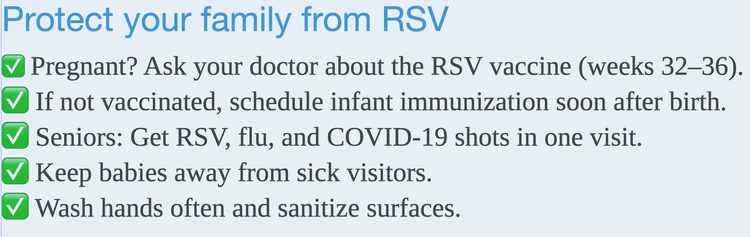
Pregnant women between 32 and 36 weeks of gestation (one to two months before delivery)
Adults age 75 and older
Adults 50 to 74 with chronic medical conditions
Residents of nursing homes and long-term care facilities
If a pregnant woman wasn’t vaccinated, health officials advise immunizing her newborn soon after birth.
What to do if your child gets RSV
Recognize the symptoms early
RSV often starts with cold-like symptoms — runny nose, cough, and mild fever. But if your baby or toddler develops rapid breathing, wheezing, flaring nostrils, chest retractions (skin pulling in between ribs), or blue lips, seek medical attention immediately.
Supportive care at home
For most cases, treatment focuses on comfort and hydration. Use saline drops to clear nasal passages, run a humidifier, and offer fluids frequently. Avoid over-the-counter cough medicines unless prescribed by a doctor.
When to call the doctor
Call your pediatrician if your child is under six months old and has difficulty feeding, sleeping, or breathing — or if symptoms worsen after a few days.
Prevention for families
Wash hands frequently and disinfect surfaces.
Keep infants away from anyone who’s sick.
Avoid crowded indoor gatherings during peak season.
Don’t share cups, utensils, or pacifiers.
Make sure eligible family members are vaccinated.
Three vaccines now available
RSV vaccinations were introduced in 2023 after decades of research. Three vaccines — Moderna’s mResvia, Pfizer’s Abrysvo, and GSK’s Arexvy — are approved for older adults. Only Pfizer’s Abrysvo is authorized for pregnant women.
Infants can also receive protection through monoclonal antibodies, which function similarly to vaccines. Older adults who received an RSV shot last season typically don’t need another this year.
California seeing early signs
In California, respiratory virus activity overall remains “very low,” but signs of RSV spread are emerging. Wastewater monitoring in Santa Clara County shows “medium” levels in San José, Palo Alto, and Sunnyvale.
“We are starting to see the beginnings of respiratory virus season,” the L.A. County Department of Public Health said. Orange County Health Officer Dr. Regina Chinsio-Kwong added, “Now is exactly the time to get vaccinated if you haven’t already — especially before respiratory virus activity potentially increases later.”
Vaccines can be given together
Health officials emphasize that RSV, flu, and COVID-19 vaccines can be administered during the same visit. Annual flu shots are recommended for everyone over six months old, while updated COVID-19 vaccines are urged for older adults, babies, unvaccinated children, and others at higher risk.
“Receiving all eligible vaccines at once is considered best practice,” said Dr. Chinsio-Kwong. “It helps avoid missed opportunities due to scheduling challenges.”