

• COVID levels in Bay Area now exceed this past winter’s peak
• New “Nimbus” subvariant driving 55% spike in statewide wastewater data
• Health officials brace for possible late-summer wave, urge vaccinations
California is facing a sharp summer spike in COVID-19 cases, with viral activity in parts of the state now surpassing last winter’s peak. Health officials say the rise is being driven by a newly identified subvariant, NB.1.8.1—nicknamed “Nimbus” or “razor blade throat” for the severe symptoms it can cause.
Bay Area wastewater monitoring indicates the virus is spreading more widely there than during the state’s previous seasonal high in the colder months. While the increase has been less pronounced in Southern California so far, experts warn it may be just a matter of time.
“We definitely are seeing an uptick in the summer,” said Dr. Erica Pan, state epidemiologist and director of the California Department of Public Health (CDPH). “But it’s still relatively low compared to, for example, last year around this time.”
Over the past three weeks, coronavirus levels detected in statewide wastewater samples have surged by 55%, according to CDPH data. The dominant strain in California is currently NB.1.8.1, while XFG (dubbed “Stratus”) is gaining ground nationally.
Early signs point to an August peak
Dr. Pan said she expects at least a minor COVID wave in California this summer, likely peaking in late August. That would mirror last year’s trend, when a strong summer wave swept the state driven by FLiRT variants.
Federal data from the Centers for Disease Control and Prevention shows the West currently leads the nation in COVID activity based on wastewater surveillance. At the state level, California is now seeing “high” levels of viral presence, per the latest CDPH assessments.
“It’s been a longer time since a lot of people got infected,” said Dr. Peter Chin-Hong, infectious disease expert at UC San Francisco. “And just like last year, there are new variants afoot.”
Chin-Hong added that waning immunity may also be fueling the uptick, with many Californians more than a year removed from their last infection or booster.
Though hospitalizations and deaths remain low, the current strains are not mild for everyone. “Just because you had an easy case the last time doesn’t mean that you’ll have an easy case this time,” Chin-Hong warned. “A lot of people I’ve talked to who’ve gotten COVID this year, it was a pretty vicious case that lasted a long time.”
He noted an increase in people reaching out for advice on how to stay safe, as the virus circulates more widely again.
Dr. Elizabeth Hudson, regional infectious disease chief for Kaiser Permanente Southern California, said the surge that began in Northern California is now spreading south.
“I suspect it will be coming to Los Angeles soon,” she told the Los Angeles Times. “We’ll know over the next couple of weeks which direction things are going.”
Vaccination still advised for all Californians
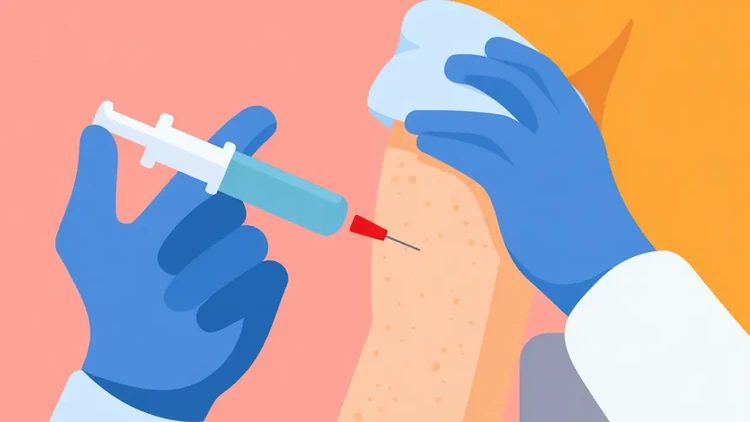
The California Department of Public Health continues to recommend that all residents ages 6 months and older stay up to date on their COVID vaccinations, especially ahead of the anticipated late-summer peak.
Dr. Pan said officials are watching closely to determine whether a winter wave will follow this summer surge or whether the state may experience a single seasonal spike.
“We had a relatively mild winter [of] COVID activity,” she said. “We’re still trying to learn what COVID seasonality is going to look like. It’s just been a little bit different every year.”
Bottom Line: While California’s summer COVID surge remains moderate for now, the growing dominance of new, fast-spreading variants like Nimbus has health officials on alert. With high wastewater activity and signs of rising transmission, residents are being urged to take basic precautions and stay vaccinated as the state navigates another unpredictable COVID season.