2023 Understanding and Navigating Insurance

Article Image

Lawsuit claims UnitedHealth uses flawed AI to deny needed treatment

Nearly every industry is trying to learn how artificial intelligence (AI) can improve workflow and profits. As the technology quickly develops there are bound to be conflicts.

One such conflict has arisen in a lawsuit filed against UnitedHealthcare. The plaintiffs – the estates of two elderly men who recently died – claim the health insurance giant used AI to review their relatives’ claims and to wrongly deny them.

The complaint, filed in federal court in Minneapolis, claims UnitedHealth wrongfully denied claims filed by the two patients, both of whom had Medicare Advantage Plans. As a result, the two families said they were forced to pay $210,000 for the men to receive treatment ordered by their doctors.

The plaintiffs contend that UnitedHealth began routinely denying these types of claims in 2020 when it acquired Navihealth, a company that provides post-acute care management services.

STAT News Investigation

A recent investigation by STAT News reported that Navihealth uses a computer algorithm to predict the length of treatment required for acute illnesses and injuries, such as those treatments provided in rehab centers and nursing homes. According to the investigation, the algorithm makes its predictions by accessing 6 million similar cases.

The plaintiffs further contend that the algorithm is prone to mistakes. In fact, the complaint claims the AI tool overrules patients’ physicians 90% of the time. Many times, the plaintiffs say, the denials have been overruled on appeal.

UnitedHealth denies the claims made in the lawsuit. Optum Health, a UnitedHealth subsidiary, released a statement to Ars Technica saying the tool is not used to make coverage decisions.

“The tool is used as a guide to help us inform providers, families, and other caregivers about what sort of assistance and care the patient may need both in the facility and after returning home,” a spokesperson said. “Coverage decisions are based on CMS coverage criteria and the terms of the member's plan. This lawsuit has no merit, and we will defend ourselves vigorously."

Article Image

Insurance is harder to get and more expensive. Here's why.

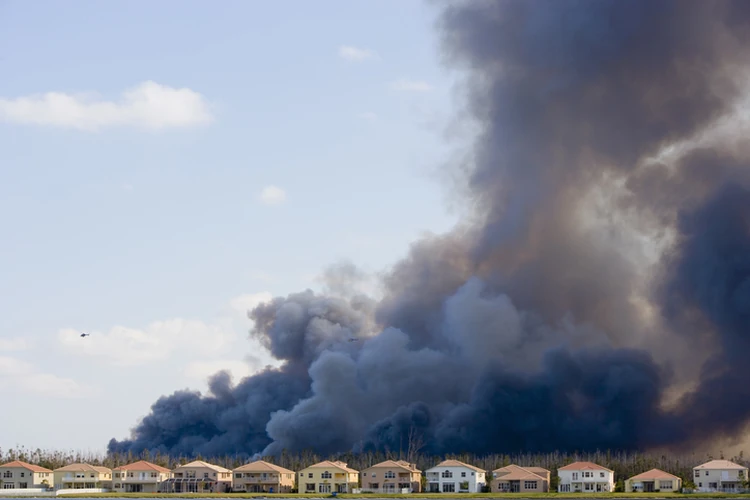
In the middle of having to deal with tornadoes and hurricanes, consumers may have to deal with another storm – one from insurance companies.

The Consumer Financial Protection Bureau (CFPB) says that in response to the extreme weather events and natural disasters we’ve been facing, some home insurance companies are going out of business.

In California – hit the hardest by these calamities – several insurers have stopped selling home policies completely. California was such a lose-lose proposition that State Farm pulled out. 

Farmers recently pulled out of Florida, too. Still, others have hiked the price of insurance to a breaking point that homeowners can’t afford. 

“A notice from your insurer dropping your home insurance policy can feel like your largest investment is at risk,” the agency said.

“And, problems with getting the right amount and type of insurance can make your home more difficult to sell. Changes in the insurance business across the country are making these problems more common for homeowners.”

Is this you?

It is up to the homeowner to choose their own insurer, but if they cease payments or let their insurance expire, their mortgage lender can purchase coverage and charge them for it.

This “force-place insurance” protects the lender, though – not the homeowner. The CFPB says the cost back to the homeowner can be twice as much as they would regularly pay for insurance.

Under federal law, a mortgage servicer has to notify you at least 45 days before it charges you for force-placed insurance. If the clock is ticking on your policy, the agency offers suggestions on how to deal with these various situations. 

Check your current insurance policy’s renewal date. The CFPB says at a minimum of one to three months before a policy renews, your insurer should notify you if it decides not to renew your coverage. That window may seem short, but it’s enough time to shop for another policy.

“Even if the insurer renews your coverage, the cost can still go up – for some properties, the increase could be $100 a month or more. About a month before the renewal date, your insurer tells you the cost for the next year,” the agency says.

Ask your insurer to reconsider. If you receive a notice from your insurer informing you that your coverage won’t be renewed, you should ask why. The CFPB says asking won’t hurt and, depending on the situation, the insurer might reverse their decision and renew your policy after all.

Shop around for the right coverage. To keep force-placed insurance off your stoop, keep in mind that any coverage you buy has to match the unique requirements of your specific property.

For example, if you’re in a flood plain, you’ll need coverage for that. Some mortgages require policies to have other risks such as fire, so make sure those boxes are checked, too. 

State insurance regulators may be able to help

Fortunately, the state in which you live is on your side thanks to state insurance regulators approving which companies can offer policies to homeowners in their states. Find out what companies are available in your state by contacting your state's insurance department. That list is available here. 

Choose insurance through your state’s FAIR plan. All states in the U.S. have some form of a FAIR plan – Fair Access to Insurance Requirements. However, how FAIR is constructed and regulated varies from state to state. Through these plans, every homeowner can have a basic level of protection from natural disasters, but note that it generally costs more than a standard policy.

Notify your mortgage servicer. The CFPB’s last word to the wise is that once you have gotten your own coverage, you need to inform your mortgage servicer about the change.

“You have the right to remove force-placed insurance once you have your own insurance policy,” the agency asserted, suggesting anyone in this situation review its guide on removing force-placed insurance.

Looking to lower your insurance costs?

If you're simply looking for a way to lower your outlay for homeowner's insurance, there are several ways as ConsumerAffairs' Mark Huffman recently discovered.

Experts that Huffman spoke with explained how consumers can reduce the cost of insurance while still maintaining some coverage, even in the event of major damage. 

You can find those tips out here.

Article Image

Allstate becomes the second home insurer to pull out of California

The question must now be asked. Will California homeowners be able to buy insurance coverage for their homes?

Allstate has become the second major insurance company to announce it will stop writing homeowners insurance policies in the state. Because of wildfires and other natural disasters, the company says the risk is too great. In fact, the company confirmed it stopped writing new policies at the end of 2022.

Last week State Farm announced it is pulling out of California for the same reason. It also pointed to the high cost of rebuilding and repairing homes in California.

State Farm was the largest home insurance provider in California. Allstate was the fourth-largest.

Amy Bach of the consumer group United Policyholders says California homeowners shouldn’t panic, pointing out there are still more than 100 carriers offering coverage. But she told KSFN-TV in Fresno that it’s a worrisome trend.

"State Farm's announcement is definitely not helpful news, but we have to keep it in perspective,” she told the station. "Ever since the fires, I talk to insurance executives, they're all worried about wildfires in the west... They don't take blind risks anymore because they can buy data and they can see the pine needles in your gutter."

Prop 103

In March, United Policyholders sent an alert to state legislators, warning that Proposition 103, which controls insurance premium rate hikes in the state, could cause the insurance industry to push for less regulation.

“Lawmakers are being bombarded by complaints from constituents who’ve been dropped by their insurers, (even after making risk reduction improvements), and unable to find replacement coverage outside the last-resort, expensive, bare-bones protection California Fair Plan, so they are all ears and seeking solutions,” the group said. 

The group also noted that from the time Prop 103 was enacted, California insurers have been vocal about wanting less regulation generally, and have dramatically intensified their campaign in recent months.

Article Image

What is deposit insurance -- and are you covered?

The failure of a couple of banks last month sent a case of the jitters through a lot of folks. Not to the point where they started putting their money under the mattress, but still...

So, the logical questions that were raised include, is my money safe, how do I know, and what should I be doing?

The answer to the first question is, if your money -- up to $250,000 -- is in a bank insured by Federal Deposit Insurance Corporation (FDIC), you can be confident that it's safe.

What's covered and what's not

FDIC deposit insurance is backed by the full faith and credit of the United States government, and covers the following:

  • Checking accounts
  • Negotiable Order of Withdrawal (NOW) accounts
  • Savings accounts
  • Money Market Deposit Accounts (MMDAs)
  • Certificates of Deposit (CDs)
  • Cashier’s checks
  • Money orders
  • Other official items issued by an insured bank

On the other hand, FDIC deposit insurance does not cover:

  • Stock investments
  • Bond investments
  • Mutual funds
  • Life insurance policies
  • Annuities
  • Municipal securities
  • Safe deposit boxes or their contents
  • U.S. Treasury bills, bonds, or notes
  • Crypto assets

It's important to understand that non-bank companies and financial institutions that offer various banking services but do not have a banking license are never FDIC-insured.

Even if they are partners with insured banks, the money you send to a non-bank company is not FDIC insured unless the company deposits it in an insured bank.

What if my bank fails?

If your money in a failed bank is covered by FDIC and your account is less than $250,000, you should get full reimbursement from Uncle Sam.

You don’t really have to do anything to get your money as it'll be transferred to another FDIC bank and you’ll be notified about your new account.

More than $250,000 in a failed bank? You’ll be reimbursed that amount but you may or may not get the rest.

If you want to protect yourself from that $250,000 limit, here are a couple of suggestions from banking experts:

  • Split up your money by opening an account at a second FDIC member bank.
  • If you're using accounts that earn interest at a bank with only FDIC insurance, be sure your deposits are low enough that your balance with interest will be within that limit. Once an account reaches the $250,000 limit, you can open another new account at another institution.

While single, individually owned accounts are insured up to $250,000 total at FDIC member banks, joint accounts — with two or more owners — are insured up to $500,000 total. So to double the insured amount in deposit accounts at a single bank, you can add another owner.

Article Image

Seniors are making changes to what their travel insurance covers. Here's what you should know

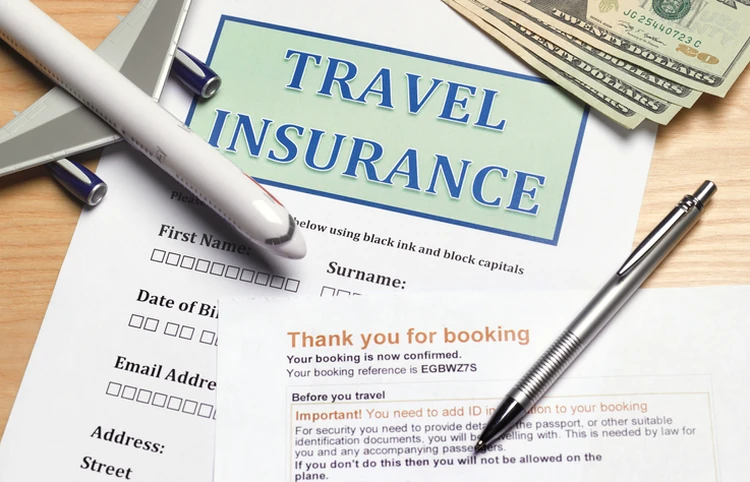
Don’t expect to see grandma and gramps much this year. After dropping from nearly 50% of all travelers in 2019 to 16% in COVID-ridden 2020, people aged 60-plus seem to be buying up all the trips they can.

According to statistics from travel insurance marketplace Squaremouth.com, the share of seniors hitting the road has risen by 125% and now account for the largest travel demographic for the first time since the start of the pandemic – double those 50-59 and nearly double those 35-49.

And with that, what those consumers want from a travel insurance policy is changing, too. Not only do the insurance companies have to address health issues that COVID-19 may have created, but older travelers are looking for assurances that their trip insurance will cover everything that’s especially important to them. 

Topping the list these days are more searches by seniors for policies with medical coverage. Seniors remain the most concerned demographic when it comes to contracting COVID-19 while traveling, despite a 21% drop in searches for COVID-related coverage over the past year.

What things are other seniors looking for in their travel insurance?

ConsumerAffairs asked Squaremouth’s analysts to dig into its study a little deeper to find out specifically what seniors are looking for in travel insurance so their demographic peers could have a better idea of what to look for.

The biggest increase in the types of searches is for Cruise insurance – up 76% year over year. Logging a 45% uptick from 2022 are popular medical-related benefits – Emergency Medical, Medical Evac, Pre-Existing Condition and Primary Medical. Next on the checklist of coverages is a 20% increase in searches for Travel Delays -- which, in a situation like Southwest's recent cancellation downfall, may have covered some parts of a person's trip.

Overall, Squaremouth’s total searches break out like this for seniors:

  • Contracting COVID-19: 30.18%
  • Emergency Medical: 17.50%
  • Medical Evacuation: 13.90%
  • Trip Interruption: 13.73%
  • Cancel for Any Reason: 11.36%
  • Pre-Existing Condition Coverage: 8.92%
  • Primary Medical: 8.55%
  • Travel Delay: 8.32%
  • Quarantine Coverage: 6.29%
  • Cruise: 6.28%
Article Image

State Farm reports its website is back up and operational after an outage

State Farm’s website and app are reportedly back up and running after several days of outages that prevented many customers from accessing their accounts and paying bills.

The internet monitoring site, IsItDownRightNow.com, reported Thursday morning that the website is up and reachable. But some customers posting their experiences on the site reported issues as recently as 24 hours earlier.

A customer named Janine posted “Still unable to log in” on Wednesday. In another Wednesday post, Kelly reported “Error with login. Need to pay my bill.” Other users reported getting a “403 error” message when trying to log in.

In a statement to ConsumerAffairs, a State Farm spokesperson said the system experienced interruptions that limited some customer account access, including bill pay. 

“We are taking action and customer access has been restored,” the spokesperson said. “We apologize for any inconvenience this may have caused. Our State Farm agents and customer care teams are available to assist with customer questions.”

The experts at IsItDownRightNow.com offered some suggestions to State Farm customers who are still unable to access the website. They say the issue may lie in the customer’s web browser.

“Force a full refresh for the site,” they advise. “This can be achieved by pressing CTRL + F5 keys at the same time on your favorite browser. “Try alternative URLs such as online2.statefarm.com.”

Also, it’s a good idea to clear the temporary cache and cookies on your browser to make sure that you have the most recent version of the web page.