2022 Understanding and Navigating Insurance

Article Image

Consumers say its getting harder to settle a car insurance claim

Auto insurance premiums are rising for a number of reasons linked to inflation, but that’s not the only aspect of the industry that is wearing on customers.  Consumers say the real trouble starts when they file a claim.

The J.D. Power 2022 U.S. Auto Claims Satisfaction Study shows customer satisfaction with the auto claims process has dropped seven points on a 1,000-point scale from 2021 as customers start to lose patience with the process of getting their vehicles repaired.

As we recently reported, car insurance premiums are rising because it costs more to repair or place vehicles that have been in an accident. Medical costs associated with auto accidents are also surging.

“Insurers are in a tight spot with their own profitability strained and a host of external factors causing their customers to grow increasingly disillusioned with the entire claims experience,” said Mark Garrett, director of global insurance intelligence at J.D. Power. 

Consumer frustration

Satisfaction is down across nearly all factors in the study but the J.D. Power study shows satisfaction with the repair process registered a 9-point year-over-year decline. Consumers have expressed growing frustration with the slow pace.

Maryam, of Scottsdale, Ariz., said she was in a recent car accident and didn’t enjoy the Geico claims experience.

“No adjuster was assigned to my claim and no one contacted me to process the claim,” she wrote in a ConsumerAffairs review. “The claim representatives are extremely unprofessional and unknowledgeable of how to answer questions regarding an insurance claim.”

Empathy helps

The study found that when insurance companies provided customers with an accurate time cycle for a claim to be settled their satisfaction score rose. The authors also found that a little empathy goes a long way.

“In a world that seems to have become rude and disingenuous, the customer service department at Progressive, in my experience, are (sic) their Greatest Brand Ambassadors,” Bryan, or Corpus Christi, Texas, wrote in a glowing ConsumerAffairs review. “I will look at Progressive for business based solely on the respect EARNED by the employees I have had the pleasure to interact with.”

Who’s handling the claims process the best? None of the Big 5 companies show up in J.D. Power’s top 3. Amica Mutual ranks highest in overall customer satisfaction with a score of 903. NJM Insurance Co. ranks second and Erie Insurance ranks third.

The study also concludes that insurance companies’ effort to manage expenses by pushing customers to use digital channels of communication is counterproductive, noting that not all customers are comfortable using them.
Article Image

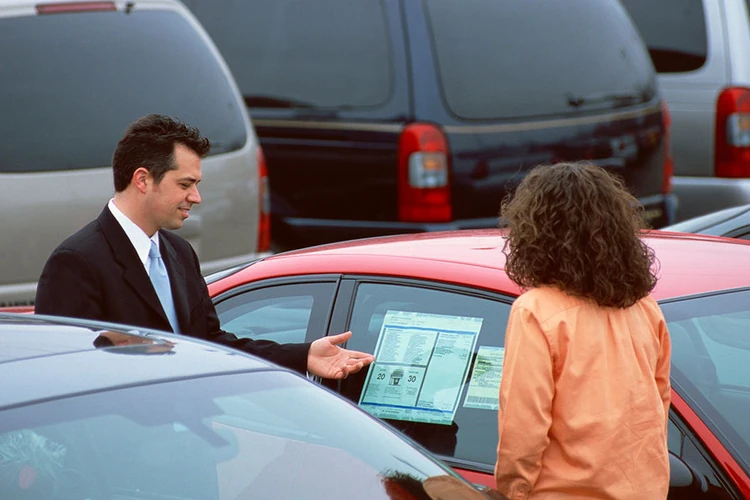
Here are the cars that are cheapest to insure

Just about every car-buyer is taking fuel economy into consideration. That’s why sales – and prices – of electric and fuel-efficient vehicles are rising.

But the cost of insuring the vehicle is an important, but often overlooked consideration. After all, fuel prices rise and fall. Insurance premiums usually just move in one direction – up.

CarInsurance.com, an online source of insurance information, has analyzed car insurance rates for all cars in all 50 states. It found there is a wide variation between the costliest vehicles to insure and the cheapest.

Insurance for the priciest cars ranges from $4,000 to more than $5,000 per year on average, while rates for the cheapest cars to insure run around $1,300 per year. Lots of other factors can make the rate higher or lower but those numbers are about average.

According to the analysis, the Subaru Forrester Wilderness is the most cost-effective when it comes to finding an insurance policy. The average premium is $1,353 per year, or almost $112 a month.

With a combined city/highway 29 MPG, the Forrester also saves at the gas pump. With its low cost of insurance, the Subaru Forester has been a multiple recipient of the Kelley Blue Book 5-Year Cost to Own title.

Insurance companies like small engines

The Hyundai Venue SE is second on the list, with an average annual insurance cost of $1,360, or just over $113 a month. Its super low starting MSRP of $19,000 certainly helps keep insurance costs low as does its smallish 1.6L DPI 4-cylinder engine ⁠that puts out only 121 HP.

“The Hyundai is not particularly powerful. The power-to-weight ratio is such that an experienced driver should be able to handle the car in a variety of situations,” said Brian Moody, executive editor for Autotrader and Kelley Blue Book.

The Honda CR-V LX also has a low annual insurance premium, placing third on the list. The average annual premium is $1,366, or nearly $114 a month.

In fourth place is the Mazda CX-30 S. Its average annual insurance premium is $1,379, or nearly $115 a month.

Rounding out the top five is the Toyota CH-R XLE. It’s average annual premium is $1,384, just over $115 a month.

Compare those rates with the annual cost of insuring a Maserati Quattroporte, which if you can afford, then insurance premiums might not be a consideration. Still, CarInsurance.com estimates it costs $5,176 a year, or $431 a month to insure.

Article Image

Poor security has opened the door for crypto thieves, report finds

A mid-year report from Chainalysis revealed that just under $2 billion has been stolen in cryptocurrency hacks in the first seven months of 2022. This is a significant increase from this same point in 2021, as experts found that crypto hacks were at $1.2 billion last July. 

The report points to decentralized finance (DeFi) as the primary reason for this increase in cryptocurrency hacks. Rather than going through trusted banks, DeFi programs allow consumers to make crypto transactions with blockchain technology. These programs don’t typically have strong security and privacy measures, which makes them susceptible to hackers. 

“...DeFi protocols are uniquely vulnerable to hacking, as their open source code can be studied ad nauseum by cybercriminals looking for exploits (though this can be helpful for security as it allows for auditing of the code), and it’s possible that protocols’ incentives to reach the market and grow quickly lead to lapses in security best practices,” wrote Eric Jardine in the Chainalysis report. 

Crypto experts have reason to believe that many of these hackers are from North Korea. So far this year, North Korean hackers have stolen a total of $1 billion in crypto. This includes $625 million that came from the video game Axie Infinity. 

Crypto scams are declining

Though crypto hackers are stealing more and more money, the Chainalysis report also found that fewer consumers are falling for crypto scams. Both money generated from crypto scams and the number of scams that consumers fell prey to are 65% lower than what they were at this point last year. 

Experts speculate that as Bitcoin prices have steadily declined over the course of the year, fewer people are interested in taking the risk with potentially volatile crypto investments. While this helps in losing large sums of money, it also helps protect consumers from potential scams – which could cause them to lose even more money. 

Because crypto remains unregulated, investors don’t have the support of a traditional bank to fall back on in case of emergencies. Consumers are encouraged to do their own research before investing, while lawmakers are urged to continue interfering in stolen crypto cases. 

Article Image

FTC secures $100 million in refunds from predatory health insurance company

Anyone who has ever looked for a health insurance provider knows that it’s anything but easy. The Federal Trade Commission (FTC) says some unprincipled companies may be feasting on that confusion by trying to convince consumers that they have an easy, clear-cut answer.

Officials say they have discovered a trick used by one insurer that involves deliberately misleading consumers into signing up for insurance or health products that don't deliver. To make matters worse, canceling those products and services was very difficult once a victim became ensnared. 

On Monday, the FTC announced that its investigation into Benefytt Technologies Inc. has resulted in $100 million in refunds for consumers who were tricked into sham health plans. Officials say the company also charged exorbitant junk fees that continued to plague victims after they requested cancellation. 

“Benefytt pocketed millions selling sham insurance to seniors and other consumers looking for health coverage,” said Samuel Levine, Director of the FTC’s Bureau of Consumer Protection. “And we’re holding its executives accountable for this fraud.”

A valid cancellation policy is a must

The FTC says consumers need to beware of companies that conduct these kinds of schemes. It suggests taking the following steps to avoid becoming a victim:

Compare plans, coverage, and prices at a trusted source. Instead of doing a simple internet search, the FTC says consumers should go to something more objective and comprehensive. It suggests HealthCare.gov and state marketplaces as the first stop for information about comprehensive, ACA-compliant health insurance coverage.

Ask for info in writing. Is the plan really comprehensive health insurance? Before signing on the dotted line, ask these three questions: Does it offer the coverage you need? What’s the total cost? Are there caps or limitations to coverage?

Research any company offering health coverage or products. If a consumer finds an insurance provider that has an interesting pitch, take the time to search online for the name of that company plus “complaint,” “scam,” or “fraud.” Read reviews and see what others have to say. Check with your state insurance commissioner’s office to find out if there are complaints. 

Consumers can check out reviews on sites like ConsumerAffairs and the Better Business Bureau (BBB) to read specific reviews about companies. ConsumerAffairs also has an overview of health insurance companies for consumers who want to learn more.

Article Image

Homeowners’ insurance premiums are rising faster than inflation

You can add the cost of homeowners’ insurance to the list of life’s necessities that keep getting more expensive.

We recently wrote that homeowners should review their insurance policies to ensure they have enough coverage to offset the effects of inflation. Now, it turns out the cost of the insurance policy itself is going up.

A new report from Policygenius shows that the cost of a home insurance policy outpaced the inflation rate from May 2021, to May of this year. While the official inflation rate clocked in at 8.6% during that time, home insurance premiums rose much faster – at 12.1%.

The study found that the cost increase for the typical policy increased faster than inflation in all but one state. Thirteen states saw the average premium rise more than 50% higher than the current inflation rate.

From May 2021, to May 2022, 90% of homeowners saw their quoted annual premium increase. For those whose premiums went up, the average increase was $134.

Higher building and repair costs

Reasons for the sharply escalating premiums vary. One reason is the staggering rise in building and repair costs over the last few years. Many policies offer some inflation adjustment protection, and insurance underwriters are raising premiums to reduce their risk.

The study also found the following:

  • In multiple states, home insurance costs have increased at more than double the rate of inflation. Over the past 12 months, home insurance premiums are up as much as 18.5% in Arkansas, 18.1% in Washington, and 17.5% in Colorado, increasing by more than twice the rise of inflation during that same period.

  • New York was the only state in Policygenius' analysis with a premium increase that was lower than the inflation rate, at 8%. Homeowners in New York saw the lowest increases at renewal since last year, with an average premium hike of just $56.

  • Oklahoma saw the largest premium increases, with policyholders seeing their premiums go up $257 on average.

Shop around

Pat Howard, a licensed property and casualty insurance expert at Policygenius, points out that home insurance coverage and premium amounts are based on the rebuild cost, which considers the price of lumber, roofing, contractors, and anything else that goes into building a home.

"It's important for consumers to know there are multiple ways to lower your premium, including regularly re-shopping your home insurance, bundling insurance policies, or installing smart home devices," he said.

An easy way to compare your current home insurance premiums with the most competitive in the industry is to check out the ConsumerAffairs Buyer’s Guide to Best Homeowners Insurance Companies.

Article Image

Home insurance rates have risen in most states since last year

The price of a home is not the only thing going up. The cost of insuring a home is also rising in most states.

A new report from QuoteWizard, an online insurance marketplace, found that the average premium has risen by as much as 34% in some states since last year. To make that determination, the company analyzed homeowners insurance rates from every major insurance company in all 50 states. 

Insurance coverage is regulated by each individual state, so rates can differ across the country. QuoteWizard found that rates are up just 2% on a nationwide basis, but the premiums surged much higher in some states.

"Prices have changed wildly in the last year,” said Nick VinZant, a senior research analyst at QuoteWizard. “Depending on where you live you could be paying a lot more or a lot less. We've seen everything from a 25% decrease in Kentucky to a 34% increase in Idaho." 

Sherece, of Nashville, Ind., told us she has seen her State Farm homeowners insurance premium fluctuate from month to month, even though she bundled her homeowners and auto policies to get a discount.

“Downside, the rates change by a few dollars every month,” Sherece wrote in a ConsumerAffairs review. “Wish it was consistent but it’s only a few dollars and goes up and down. Evens out in the end I believe.”

Oklahoma is the most expensive state

The QuoteWizard analysis found that the average cost of homeowners insurance is now $1,766 nationwide, which works out to about $147 a month. Oklahoma is the most expensive state for homeowners insurance, with the average homeowner paying $3,735 a year. Hawaii is the cheapest at only $412 annually.

In the last 12 months, homeowners insurance premiums have increased in 30 states but have gone down in 16 states. Inflation is at least partly to blame in states where rates are rising.

Even though many consumers are paying more for their coverage, they may be underinsured. As we recently reported, building costs have skyrocketed since the start of the pandemic. Replacement costs are much higher than they were two years ago, and most carriers have adjusted their rates to account for that.

"It now costs around $40,000 more to build the same home and if you haven't updated your coverage that extra cost is going to come out of your pocket," said VinZant.

Article Image

Report identifies biggest car insurance myths

If you own a car, you almost certainly have an auto insurance policy. You write a check each month and have the peace of mind that, in case of an accident, you’re protected from a major loss.

For the most part, that’s true. But how much do you really know about what your auto insurance covers and what it doesn't? A new survey from Insurify has found that there are at least four major myths about car insurance.

The biggest myth is that everything is covered if you have comprehensive coverage. The survey found that 78% of policyholders believe that to be true.

It’s not. Despite the name, comprehensive coverage doesn’t cover all damage suffered in an accident. In reality, comprehensive coverage covers damage unrelated to a car accident like theft, vandalism, or a tree falling on your car in the driveway.

Bodily injury liability

Bodily injury liability coverage is also poorly understood. Nearly every state requires drivers to have this coverage. In the event of an accident in which the insured driver is at fault, the insurance pays medical bills for those in the other car.

But 52% of people in the survey believe this coverage also pays for their medical bills. It doesn’t. Bodily injury liability will not cover the at-fault driver’s medical expenses if they also get injured.

Maybe you’ve heard that if you drive a flashy vehicle – perhaps red or bright yellow – you are more likely to be pulled over by a police officer for a moving violation. That may or may not be the case, but many people make the assumption that these colors also raise insurance rates.

In fact, 36% of survey respondents said they would expect to pay a higher premium for a brightly colored vehicle. Car color, however, is not a factor used to set rates. Insurance companies establish rates based on a driver’s record, location, and personal profile, as well as their vehicle’s age, make, and model.

Discounts

Finally, there is a widespread belief among auto policyholders that car insurance is basically a “one size fits all” situation. Once an insurance company quotes a rate, 33% of drivers believe there is no way to pay less.

But nearly every insurance provider offers discounts. Safe driver discounts are based on the insured’s driving record. There may be other discounts for not driving many miles or for bundling home and auto insurance.

Katrina, of Newark, N.J., is aware of insurance discounts because she got one, at least temporarily, from State Farm.

“My premium was discounted due to the pandemic,” Katrina wrote in a ConsumerAffairs review. “It increased because the world opened back up. They offer many discounts to assist you with the lowest possible rate.”

Article Image

Shopping around for car insurance almost always saves consumers money, survey finds

There are many ways to deal with rising inflation, but saving money on things you already pay for is a good place to start. For example, a new survey shows that shopping around for a better rate on car insurance almost always pays off.

The survey by ValuePenguin shows that 92% of consumers who switched to another company saved money.

“This impact was limited, however, as 65% of policyholders didn’t seek additional quotes during their renewal period,” the authors write, suggesting that they might have saved more if they did more legwork.

Even so, some of the savings were substantial. The survey found that 26% of those who recently switched to a new insurer saved $200 or more per year.

Rate optimization

If you haven’t shopped around, chances are you are paying more than you should. The survey found that nearly 40% of auto insurance policyholders saw their rates increase during their most recent renewal period. According to ValuePenguin’s "State of Auto Insurance," rates were expected to increase by an average of 0.6% across the U.S. in 2022.

There can be many reasons for that, but one of them may be something called “rate optimization.” In the past, some car insurance companies have slowly raised the rate on their long-time customers because they believe these people won't shop around.

Jacqueline, of Queens, N.Y., told us she started shopping for a new provider when her Geico bill began to go up.  

“They increase insurance rates rather than drop them for long-term customers,” Jacqueline wrote in a recent ConsumerAffairs review. “I am shopping around now to get the best deal because Geico is super expensive compared to other auto insurance companies. I have a good driving record and do not see the benefit.”

For consumers who want to lower their car insurance bills, ConsumerAffairs has compiled some helpful advice here. The first thing we suggest is getting multiple quotes. You may be surprised at how the rates vary.

How to lower your bill

Another thing consumers should do is determine how much and what coverage they need. Liberty Mutal has incorporated this into its marketing strategy with the tagline “only pay for what you need.” However, nearly all insurance companies now tailor policies to customer needs.

Many insurance companies offer a number of discounts, including safe driver discounts. When pricing a policy, ask what discounts are available. They may also offer lower prices when you bundle insurance policies. If you are a homeowner, it probably pays to have your homeowners insurance and car insurance with the same company.

Consumers should also consider raising their deductible – the amount of money you will pay for a covered repair before the insurance kicks in. If you have ample savings and are willing to take on more risk yourself, you can save money each month by raising your deductible from $500 to $1,000.

Finally, all consumers should take steps to raise your credit score. That’s one of the factors car insurance companies consider when they set rates. Paying all of your bills on time every month is the best and easiest way to raise your credit score and it will probably result in a more attractive rate on car insurance.

Article Image

Inflation could make your homeowner's insurance inadequate

When was the last time you looked at your homeowner’s insurance policy? If you haven’t checked it in a while, it may be wise to do so. That’s because inflation is rapidly increasing building costs. If your house is damaged or destroyed, having inadequate coverage might result in a significant loss.

For example, if your dwelling is insured for $300,000 but the cost of rebuilding your home is $375,000, you would have to make up the difference in the event of a total loss. 

To get around this issue, most insurance companies now offer something called “replacement cost guarantee,” although different carriers may use different terminology. That provision covers the entire cost to repair or replace your home, even if the amount exceeds your coverage.

Sometimes called "RCV," the replacement cost value is what would be required to replace your damaged or destroyed home with the exact same or similar home in today's market. 

“This is generally the most recommended option, since it gets homeowners closest to their living situation before a covered peril occurred,” ValuePenguin advises.

Inflation guard endorsement

P.J. Miller, a partner with Ohio-based Wallace & Turner Insurance, says the forerunner of the current day “guaranteed replacement cost” was the “inflation guard endorsement.” While it’s not known if all carriers provided this option, he says most did and for various reasons.

“An example would be the simple fact that you don’t have to remember to contact your carrier to increase coverage and the peace of mind knowing that it’s done automatically,” Miller told ConsumerAffairs. 

But Miller says it’s important to understand how your policy’s inflation adjustment works. Some policies might increase the coverage only for the policy term and then reset it to the prior term’s coverage amount. 

“Typically, this form would offer an increase of a small amount, maybe 2% per quarter, so by the end of the policy term you could potentially have 8% more coverage than you started with on that policy term,” Miller said. “Some carriers include this coverage, others charge a very nominal premium, $10, for example.”

Miller says the recent California wildfires exposed gaps in many homeowners’ insurance coverage. 

Replacement costs are rising

Bill Martin, president and CEO of Plymouth Rock Home Assurance Corporation, says homeowners should be prepared for much higher repair costs when they make a claim. In short, he says it will probably cost more to provide adequate insurance coverage.

“Most insurers will offer an option to buy extra coverage for the current cost to repair your home,” Martin told ConsumerAffairs. “The amount of insurance coverage available to repair or replace a house is tied to the dollar amount it would take to rebuild, not market value.”

Martin’s advice is to check with your insurance agent or insurer to see if you can afford to buy the extra coverage for what a replacement will cost as opposed to its insured or actual depreciated value, which is included in most base policies. In the event of a major claim, the extra cost will be worth it.

“I recommend you boost your coverage, especially ‘Coverage A,’ which is the part of a homeowners policy that may help to rebuild or repair the physical structure of your home if it’s damaged by a covered hazard,” Martin said. “The majority of damage doesn’t destroy your entire house, which makes it relatively inexpensive to increase your coverage in the event of needing to replace the whole house and its contents.”

Article Image

EpiPen maker settles class-action suit for $264 million

Drugmaker Viatris has agreed to settle a class-action lawsuit over the pricing of its EpiPen allergy device by paying $264 million. The suit was brought by a coalition of consumers and health insurance providers.

The company, which recently changed its name from Mylan, got caught up in the debate over prescription drug prices in 2008 when it hiked the cost of the EpiPen, which is used to treat severe allergic shock, from $100 to $600.

The plaintiffs brought a lawsuit against the drug company, charging that it engaged in a scheme to pay generic drugmakers to put off production of a generic version of the Epipen. Originally, the plaintiffs sought $1 billion in damages.

A large part of that case was dismissed in court last year. The judge, however, left intact the suit’s claim that Mylan’s 2012 patent litigation settlement with generic drugmaker Teva Pharmaceutical included a “pay-for-delay” agreement. 

Seventeen price increases

The 2017 suit claimed that Mylan increased the list price of the EpiPen 17 times after acquiring the rights to market and distribute it, increasing prices from  $90.28 to $608.62. This caused some patients to resort to carrying expired EpiPens or using syringes to manually inject epinephrine, the drug that helps counteract severe allergic reactions.

The plaintiffs charged that this once-affordable drug that has been available for more than 100 years and costs pennies to produce is now out of reach for many patients. Since then, the company and its widely used product have been at the forefront of a consumer backlash about the high cost of prescription drugs.

Viatris said in a statement that by agreeing to the settlement, which is pending court approval, the company does not admit any liability.

Article Image

Consumers are less satisfied with the property insurance claims process

Last year was a tough one for property insurers and the consumers they cover. A wave of natural disasters and routine accidents resulted in skyrocketing claims.

According to the J.D. Power 2022 U.S. Property Claims Satisfaction Study, insurance companies were challenged by slower settlement times, along with growing pains associated with the transition to digital servicing channels.

As a result, J.D. Power reports that overall satisfaction scores for property and casualty insurers declined to a five-year low.

“Insurers really struggled last year, partly due to circumstances beyond their control,” said Mark Garrett, director, insurance intelligence at J.D. Power. “Longer cycle times, material shortages, and personnel availability put added pressure on insurers to keep customers informed and expectations managed.”

The push toward digital communication

Increasingly, consumers were encouraged to use digital tools to communicate with their insurance companies. Customers were told to upload photographs and received estimates in return.

“Unfortunately, these digital tools are not always meeting expectations, resulting in support staff needing to get involved,” Garrett said. “That disconnect creates a major drag on customer satisfaction.”

Dean, of Scottsdale, Ariz., might be a prime example. He told us he recently switched to State Farm when a bathroom leak flooded a bedroom in December, resulting in a substantial claim.

“Claim still has not been resolved, the internal and field adjusters for State Farm are rude and unexperienced and I am beginning to think this is by design,” Dean wrote in a ConsumerAffairs review in mid-February. “I cannot get any answers on a small $13k claim or updates.”

In general, smaller claims appear to be handled more smoothly. David, of Murfreesboro, Tenn., filed a claim with Allstate when the dehumidifier on his furnace stopped working.

“I took pictures of the code that came up on it then I sent an email and Allstate responded to that,” David told us. “Within just a few days, I had the money in the bank. It was a good experience.” 

Problems are industry-wide

According to J.D. Power, the problems are industry-wide and not limited to one or two companies. Its study shows that every company’s score went down in 2021. It found that the claims process is more complicated than before, and it takes longer to settle claims.

On average, it took 17.8 days for claimants to have their repairs completed in 2021, up 2.9 days from a year earlier.

The study also found that many consumers don’t like the push toward digital communication and away from human interaction. The study found that consumers who fully embraced digital channels had faster claims settlements and reported a better experience.

Article Image

Many Americans don't have life insurance or a will, survey finds

No one wants to think about it, but as they say, “nothing is certain in life except death and taxes.” Of the two, taxes are probably easier to deal with.

Death, on the other hand, exacts both an emotional and financial toll on a family. That’s why financial advisers highly recommend that couples prepare for the unexpected through life insurance.

The issue may have taken on added importance during the COVID-19 pandemic, which has claimed nearly 1 million lives in the U.S. The evidence suggests that more people are considering adding the protection.

Research conducted by ConsumerAffairs found that 65% of respondents to a survey had both a will and a life insurance policy. Fifty-two percent said they created a will to avoid a financial crisis for their family — the most common motivation for doing so.

However, 38% of the sample of over 1,000 people said they don’t have life insurance because they can’t afford it.

More affordable than you think

In actuality, a life insurance policy can be very affordable depending on your age, your health, the amount of coverage, and the type.

The least expensive coverage is a “term” policy, meaning the coverage is only for a set term, usually 10 or 20 years. The cost is lower because the risk for the underwriter is lower. The odds of someone dying during that time period are fairly low.

Research conducted by LIMRA and Life Happens found that more than half of Americans believe a life insurance policy costs three times its actual rate, with that belief especially strong among young people. According to Fidelity Life, a healthy 30-year-old woman can buy a 10-year, $100,000 term life insurance policy starting at $13 a month, about the cost of a streaming subscription.

Lots of options

Because so many companies now offer life insurance coverage, the competition has kept premium rates in line. Debbie, of Channahon, Ill., told us she found an affordable policy through Haven Life.

“I have never had an easier time purchasing life insurance,” Debbie wrote in a ConsumerAffairs review. “Usually it would take weeks and I would have to send documents and have multiple calls. I was able to secure life insurance in 30 minutes and it didn't cost me any more than other life insurance. Also, really liked how simple and easy the website was."

According to Fidelity Life, a number of important factors besides age and health will affect what you pay for life insurance. Women tend to pay less than men, and smokers pay quite a bit more than non-smokers.

High-risk jobs and hobbies will also result in higher rates, meaning life insurance typically costs more for first-responders and construction workers and less for accountants.

Article Image

Drivers likely to face higher car insurance rates in 2022

It seems the price of everything is going up because of inflation, and car insurance is no exception. A new report from ValuePenguin predicts that auto insurance rates will rise by 0.6% this year after going down a bit last year.

According to the report, drivers in 22 states will face higher premiums in 2022, with the average motorist nationwide paying $1,935 a year.

The survey found that COVID-19 has very little to do with the anticipated rate hikes. Researchers also point out that insurance companies are not likely to give out COVID-19 discounts to drivers unless there is another nationwide lockdown.

It predicts that drivers in Michigan, Florida, and Louisiana will pay the highest auto insurance premiums this year. Drivers in Maine, Texas, and Wisconsin should get the lowest car insurance premiums in the year ahead.

"Prior to 2020, we saw premiums increase anywhere from 5% to 6%. Rates increased every year from 2011 to 2020," said Divya Sangam, insurance spokesperson at ValuePenguin.com, "While Insurers may not be giving out COVID discounts, there are still ways to save. 76% of Americans who shopped around for insurance say they saved hundreds of dollars doing so."

Consumers give low ratings to major insurance companies

In fact, if you have been with the same insurance company for five years or more, you are probably paying more than you should. Previous research has shown that the industry as a whole tends to increase rates for longtime policyholders, saving the best rates for new customers.

Car insurance advertisements are sometimes funny and entertaining because auto insurance rates are determined by a lot of things that can’t be covered in a thirty-second commercial. So consumers should do their homework, starting with consulting online reviews that show what other consumers like and dislike about various companies.

When we analyzed reviews posted at ConsumerAffairs, we discovered that the big four insurance companies are not that popular. On a 5-star rating system, the average rating was only 1.95 stars.

Here’s how the big four stack up:

  • State Farm: 3.4

  • Geico: 1.6

  • Allstate 1.5

  • Progressive: 1.3

State Farm was the highest-rated car insurance company of the four we studied. Jacqueline, of Alexandria, La., gave State Farm 5 stars, mainly because she thought she received fair rates.

“You can get discounts for multi-car, safe driving etc.,” Jacqueline wrote in a ConsumerAffairs review. “Whenever I have had a claim they paid promptly and my rates did not increase. I have been insured with State Farm for about 20 years. I have gotten quotes from other auto insures and the rates were higher with less coverage.”

The ConsumerAffairs research team has done a deep dive into the policies offered by a number of different carriers, vetting 50 car insurance companies that are rated by more than 28,754 customers.