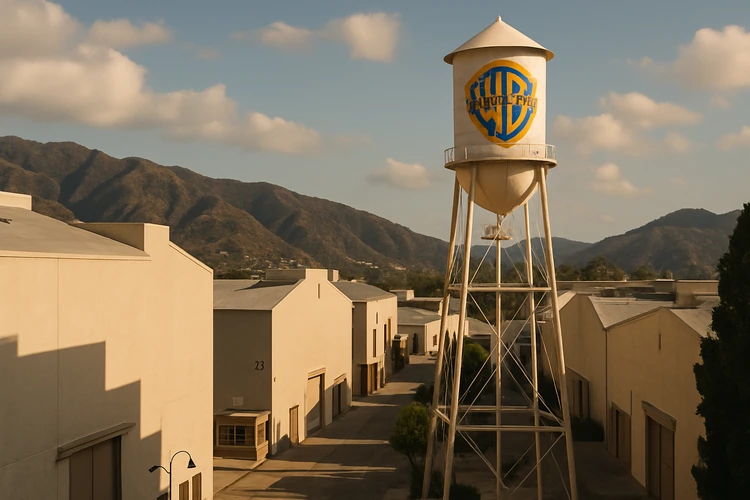

Netflix has a deal in place to buy Warner Bros. Discovery’s studio and streaming assets, including HBO/HBO Max, but regulatory hurdles loom.
Paramount Skydance has launched a hostile takeover bid with a higher all-cash offer for the entire company, directly challenging Netflix’s agreement.
The bidding war is likely to stretch into 2026 — and its outcome could reshape streaming prices, content libraries, and competitive dynamics.
Warner Bros., the film studio, is for sale. That much is certain. Who will end up owning it is still very much up in the air.
What began as a definitive deal between Netflix, Inc. and Warner Bros. Discovery (WBD) has spiraled into one of the most dramatic corporate showdowns in Hollywood’s recent history.
On Dec. 5, Netflix and Warner Bros. announced an agreement for Netflix to acquire a large portion of WBD’s studio and streaming business — including HBO, DC Entertainment and the HBO Max platform — in a deal valued at roughly $82.7 billion in enterprise value.
But just three days later, Paramount Skydance — the newly merged studio led by David Ellison — tore up the industry rule book by announcing a hostile takeover bid of its own, offering shareholders up to $108.4 billion in cash for all of WBD. Paramount’s aggressive move directly challenges Netflix’s arrangement, setting the stage for a prolonged and complex bidding war.
Political and regulatory scrutiny
This isn’t just about money. Paramount’s bid includes traditional cable networks like CNN and Discovery, assets that Netflix explicitly chose to leave out of its offer, making the two bids structurally very different.
Industry watchers expect the battle — already intensified by political and regulatory scrutiny — to stretch well into 2026, as Paramount tests whether a higher offer or legal maneuvers can pry the deal away from Netflix.
How this could change what you watch
What makes this different from a routine business story is the potential impact either outcome could have on viewers. The result of this corporate duel could ripple across the entertainment landscape for years:
Content libraries and availability
If Netflix wins: HBO content, iconic franchises like DC Comics, and Warner’s film slate could become part of Netflix’s global platform — potentially exclusive to one service.
If Paramount prevails: Warner Bros. content may blend with Paramount’s franchises, possibly appearing across Paramount+ and Pluto TV, but under a single super-studio roof.
Subscription costs and choices
Consumers may see higher subscription prices. Larger conglomerates often need to offset the huge debt from mega-acquisitions. Critics argue consolidation tends not to reduce prices, and a combined Netflix/WBD or Paramount/WBD could wield enormous market power.
Fewer independent studios could mean fewer diverse creative voices. Labor and consumer advocates warn that consolidation might reduce risky artistic projects that don’t promise huge returns — and may even lead to job cuts or less competition overall.
Netflix must still obtain antitrust approval from U.S. regulators — a process that industry leaders acknowledge could take 12 to 18 months or longer. Paramount argues its all-cash proposal reduces regulatory uncertainty, though both bids are likely to face scrutiny over market dominance.