How ConsumerAffairs uses cookies

This website utilizes technologies such as cookies to enable essential site functionality, as well as for analytics, personalization, and targeted advertising. To learn more, view the following link:

Marijuana

Latest

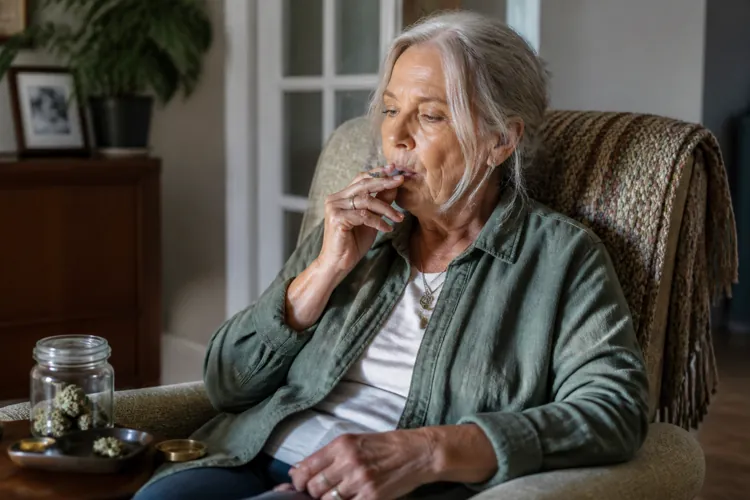
Cannabis use disorder may affect more older adults than expected

New research finds more than one in nine older cannabis users met criteria for the disorder

Featured Political News photo

About 8.9% of Americans age 65 and older reported using cannabis in the past year.

Among those older adults, 11.4% met the criteria for cannabis use disorder.

More frequent cannabis use was linked to a greater likelihood of developing the disorder.

Cannabis use is becoming increasingly common among Americans age 65 and older. But a new study suggests that some older adults who use cannabis may also be experiencing a pattern of use that can interfere with daily life.

Research...

Read Article
Featured Political News photo
2025
2022
Article Image

Recreational marijuana may reduce demand for prescription drugs, study finds

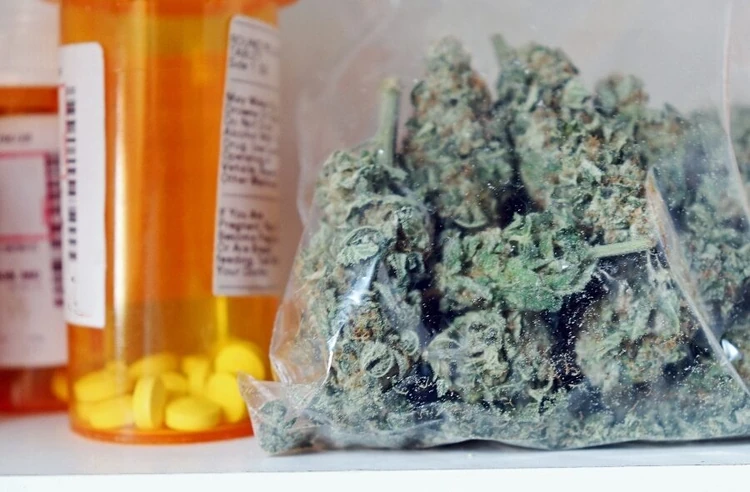
A new study conducted by researchers from Cornell University explored how access to recreational marijuana may affect the pharmaceutical industry. According to their findings, consumers who have legal access to marijuana may ultimately lower their demand for prescription drugs. 

“These results have important implications,” said researcher Shyam Raman. “The reductions in drug utilization that we find could lead to significant cost savings for state Medicaid programs. The results could also indicate an opportunity to reduce the harm that can come with the dangerous side effects associated with some prescription drugs.” 

Trends with prescription drugs

The researchers analyzed data from 2011 through 2019 from the Centers for Medicare and Medicaid Services in all 50 states for the study. They looked at states that had legalized marijuana during that time period and what effect that had on requests for prescription drugs. 

The researchers learned that 20 states across the country had legalized marijuana for personal use during the study period. However, 40 states had legalized medical marijuana for adults with doctors’ prescriptions. 

In states where marijuana is legal for personal reasons, the need for prescription drugs dropped. The team found that medications prescribed for pain, sleep, depression, anxiety, seizures, and psychosis were all much lower when consumers had legal access to marijuana. 

Ultimately, the researchers hope consumers don’t abandon primary care check-ups or other doctor visits in exchange for legal marijuana use. However, reducing the demand for prescription medications may also lower Medicaid costs over time. 

2021
Article Image

New York legalizes recreational use of marijuana

On Tuesday, lawmakers in New York approved a bill legalizing recreational marijuana for adults 21 and older. The bill was also signed into law by Gov. Andrew Cuomo on Tuesday, meaning it’s now legal for consumers in the state to possess and use it. 

Under the bill, New Yorkers aged 21 and older can now legally: 

  • Possess up to three ounces of cannabis for recreational use; 

  • Possess up to 24 grams of concentrated cannabis, such as oils derived from a cannabis plant; 

  • Use, smoke, ingest, or consume cannabis products; 

  • Give cannabis products to others who are 21 and older; and 

  • Store up to five pounds of cannabis at home as long as they take “reasonable steps” to ensure that it’s stored in a secure place. 

The law makes it legal for consumers in the state to smoke marijuana anywhere it’s legal to smoke tobacco; it is not permitted in workplaces, schools, or inside a car. Smoking publicly in any of those areas could result in a civil penalty of $25 or up to 20 hours of community service.

Impaired driving still illegal 

In the bill, lawmakers clearly state that it remains illegal to drive under the influence of marijuana. Police will be able to pull people over if they suspect they are driving under the influence of marijuana and will be able to use the smell of cannabis to back up their suspicion. 

Police won’t, however, be allowed to search parts of the vehicle that aren’t accessible to the driver. For example, an officer wouldn’t be allowed to search the trunk for marijuana.  

Since there’s currently no tool to tell whether a person is under the influence of cannabis, the new law instructs the Health Department to look into potential devices that could detect whether a driver is high through a saliva sample. 

Retail licenses

As far as retail sales go, the law opens the door for dispensaries to let people purchase products. Officials must still set certain regulations -- for example, rules determining how the industry will operate, how sales will be taxed, and how licencing will work for cultivators and others in the industry. The first sales are expected sometime in 2022. 

New Yorkers will also soon be able to get cannabis delivered to their homes since the law makes it legal to establish cannabis delivery businesses. 

2020
Article Image

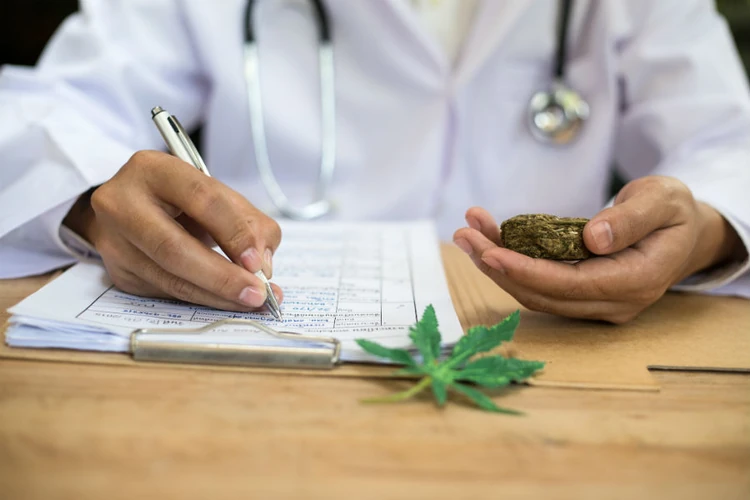
Health care providers should talk to patients about their cannabis use, researchers say

A new report published by researchers from Washington State University is encouraging health care providers to get candid with their patients about cannabis use. According to the researchers, being open and honest about this can only help patients receive the best medical care. 

“We want providers to ask people about their cannabis use and we want patients to feel comfortable talking about it, but right now many don’t,” said researcher Marian Wilson. 

Patients opening up about their needs

Recently, more and more consumers have been using cannabis to help treat a variety of medical issues, including chronic pain and illness and mental health concerns. By creating an open dialogue between health care providers and patients, medical professionals can better tailor their recommendations to their patients’ needs. The researchers say cannabis use could be an integral part of that. 

“Central to patient-centered conversations is understanding the top priorities of patients,” said Wilson. “Researchers have suggested that clinicians should ask ‘What matters to you?’ as well as ‘What is the matter?’” 

A recent study found that these types of conversations are happening more frequently between health care providers and their patients -- particularly with older adults. Cannabis use is on the rise among the older demographic, as it has been beneficial in treating everything from insomnia to chronic pain. 

Widespread use

Despite this progress, Wilson explained that the stigma associated with cannabis can be a roadblock for patients to be totally honest with their doctors. However, marijuana legalization -- for both recreational and medical use -- in the 2018 and 2020 elections is expected to ease some patients’ discomfort or uncertainty in broaching the topic with their health care providers. 

The popularity of CBD products has also helped ease some of the worries patients have about divulging their cannabis use. Consumers can find CBD products in popular stores like Walgreens and Dollar General, and products like drinks and snacks can discreetly provide the necessary benefits. 

While patients need to feel that they can trust their doctors to have these kinds of conversations, Wilson also explained that doctors need to be armed with the necessary medical information to help guide their patients in the best way. Moving forward, she’s hoping that experts create a resource that could be referenced in doctor-patient interactions and ensure that patients are getting the most accurate, beneficial information about cannabis use. 

“We want this paper to guide providers in how they can start opening up this conversation and normalizing it,” Wilson said. 

Article Image

Many older adults are using cannabis to treat common health conditions, study finds

As more and more states legalize marijuana, consumers are reaping the medical benefits of cannabis-based products. 

Now, a new study conducted by researchers from the University of California at San Diego has found that older adults are really taking advantage of these products -- particularly for medical purposes. Their work revealed that consumers over the age of 60 have started using cannabis for a wide variety of conditions, including chronic pain and sleeping troubles. 

“Surprisingly, we found that nearly three-fifths of cannabis users reported using cannabis for the first time as older adults,” said researcher Kevin Yang. “These individuals were a unique group compared to those who used cannabis in the past.” 

A new wave of cannabis users

The researchers surveyed nearly 570 participants over the age of 65 to understand how often they were using cannabis products and the reasons they preferred them. The survey revealed that more than half of the participants used cannabis-based products on a regular basis for medical purposes, though more than 60 percent hadn’t started using cannabis until they were over the age of 60. 

“Pain, insomnia, and anxiety were the most common reasons for cannabis use and, for the most part, patients reported that cannabis was helping to address these issues, especially with insomnia and pain,” said researcher Christopher Kaufmann, PhD. 

According to the researchers, there are several reasons why cannabis use has become so widespread among older adults. For starters, CBD products are made without THC, which is the active ingredient in marijuana. This makes them more approachable to some consumers since they can use products like lotions or oils and get pain or anxiety relief without any of the added side effects. Additionally, the large variety of these kinds of products makes them easier than ever to access. 

“New users were more likely to use cannabis for medical reasons than for recreation,” said Yang. “The route of cannabis use also differed with new users likely to use it topically as lotion rather than by smoking or ingesting edibles. Also, they were more likely to inform their doctor about their cannabis use, which reflects that cannabis use is no longer stigmatized as it was previously.” 

Better outcomes reported

Though the survey participants reported better physical and mental health outcomes with the use of cannabis, the researchers want to do more work in this area to better understand the best ways that this plant-based approach can continue to benefit consumers. 

“There seems to be potential with cannabis, but we need more evidence-based research,” Dr. Kaufmann said. “We want to find out how cannabis compares to current medications available. Could cannabis be a safer alternative to treatments, such as opioids and benzodiazepines? Could cannabis help reduce the simultaneous use of multiple medications in older persons? We want to find out which conditions cannabis is most effective in treating. Only then can we better counsel adults on cannabis use.”