2023 Car Buying and Maintenance Advice

Article Image

$23,000 no longer buys a three-year-old used car

Used car prices may have fallen from their record highs, but your money still doesn’t go nearly as far as before when you visit a used car lot.

A new study from automotive marketplace iSeeCars.com found $23,000 could purchase a three-year-old used car in 2019, the year before the pandemic. But today, $23,000 doesn’t even buy a six-year-old used car in good condition.

The study’s authors call it a “hangover” from the COVID-19 pandemic, when supply chain issues vastly reduced the supply of new cars and trucks, sending used car prices to record highs. While used car prices have fallen for three straight months, they apparently still have a long way to go.

Researchers at iSeeCars.com analyzed over 21 million used cars sold in 2019 and 2023 and found that the average age of used cars sold increased from 4.8 years to 6.1 years, while the average price across all ages increased 33 percent, from $20,398 to $27,133.

“Plant shutdowns and limited new car production during the pandemic is still playing havoc with the used car market,” said iSeeCars Executive Analyst Karl Brauer. “With 28% fewer one- to three-year-old used cars today compared to 2019, today’s buyers have to shop 6-year-old – or older – cars to find a comparably priced vehicle.” 

Not as many three-year-old cars

Not long ago there were plenty of three-year-old used cars on lots, mainly because that’s the typical length of a new car lease. However, a decline in auto leases has reduced the number of three-year-old cars and trucks hitting the used car market.

“The impact of restricted new car production during the pandemic has come home to roost in the used car market,” said Brauer. “With one- to three-year-old used car supply down between 20% and 45%, buyers that previously shopped for late model year used cars now have to spend much more or consider much older vehicles.”  

And now we have an auto workers strike that, if lengthy, will sharply reduce the number of new cars available for purchase, sending more consumers to the used car market. An increase in demand could send used car prices back up again.

According to iSeeCars.com, the average price of a three-year-old used car in 2019 was $23,048. Today, the average price is $32,493. To purchase a vehicle for less than $23,000, buyers have to shop for 2016 models, according to the study.
Article Image

What would an autoworker strike mean for consumers?

The United Auto Workers Union (UAW) has set a Thursday strike deadline against the three U.S. auto manufacturers – Ford, GMl and Stellantis (Chrysler).

The union has reduced its demand for a 40% pay raise to a 36% increase but the two sides are still said to be far apart. A strike against all three companies would essentially shut down auto manufacturing in the U.S., though some foreign car companies with plants in the U.S. would continue to operate.

But after a pandemic that snarled supply chains, reducing vehicle output and raising prices, Karl Brauer, executive analyst at iSeeCars.com, says a strike would likely impact consumers in the market for a car or truck.

“Domestic brands make up 40% of U.S. market share, meaning a lengthy strike will undoubtedly impact market prices,” Brauer told ConsumerAffairs. “If inventory levels drop substantially at domestic dealers, prices for those models will rise, likely pulling competitive pricing up. Higher costs could further slow sales, with consumers already pushing back against today’s high car prices by seeking value in the used market.”

And that, no doubt, would cause used car prices to rise as well. During the pandemic used car prices hit a record high and only began falling in June. A shortage of new cars would probably lead to more used car sales, pushing prices back up again.

Car prices could go higher

Even if there isn’t a strike – or just a short one before a contract is reached – carmakers will have to pay union employees a lot more than they do now. The contract will cover the next five years but the union is demanding a large portion of the increase to be front-loaded.

After demanding 20% of the increase in the first year of the contract, the union now says sit would accept an 18% increase in the first year. Some of the higher labor costs would likely end up in the sticker price, though domestic manufacturers would have to be mindful of foreign competition.

New car prices are already as high as they have ever been. Kelly Blue Book reports the average transaction price (ATP) of a new vehicle in July of $48,334.

Article Image

How to avoid buying a car that’s been in a flood

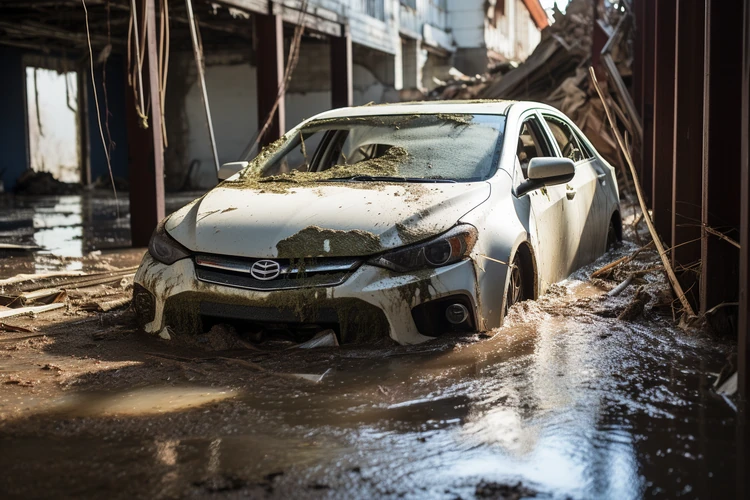
It's been a summer of wild weather, from a major hurricane in Florida to floods in Missouri, Kentucky and Tennessee. Lots of cars ended up under water and used car buyers better watch out – many will probably end up for sale.

With used cars already in short supply, the temptation to buy a vehicle with a questionable history may be stronger than usual. But selling a car that has been in a flood without disclosing it is illegal in most states and buying one is nothing but trouble.

According to Carfax, there are more than 450,000 flood-damaged vehicles still on the road. Carfax says these vehicles usually have mechanical defects, such as corroding metal and engine issues.

A flooded vehicle is also likely to have electrical short circuits and computer malfunctions. It can also have rusted brakes and rotors and an airbag system failure.

Red flags

Buying a car that has been in a flood for even a short time is something to avoid, but how can you tell? There are a number of red flags.

Start with the vehicle’s history by looking closely at the title. Was it recently transferred from a state that has experienced flooding? Does the title say “salvage?” If it does, it means the insurance company has written it off.

Check the interior fabrics for signs of fading or mildew. If there is a musty odor that’s a good sign of water damage. Look in the trunk and under the seats for signs of mud, rust, or water damage.

Finally, make sure all systems are in working order. Start the engine and and check all instrument panel lights to make sure they illuminate. Test the interior and exterior lights, air conditioning, windshield wipers, radio, turn signals, and heater repeatedly.

A history report could help

You can view the full Carfax Vehicle History Report to check for reported flood damage or signs of salvage title fraud. The National Insurance Crime Bureau’s (NICB) free database lists flood damage and other information, but only for vehicles that have been covered by insurance.

Thousands of consumers buy flood-damaged cars each year without knowing it. Most states have laws requiring that flood-damaged vehicles be “branded,” meaning that the damage must be disclosed to the buyer in a signed statement which must be attached to the title.  

The new title to the vehicle is then “branded” with this information.  However, there are some states that do not have brands on titles, and many totaled vehicles may be temporarily titled in states without this requirement to “wash” the titles.

If the title shows a number of recent registrations in different states, that is usually another big red flag.

Article Image

These used cars give buyers some bargaining power

For the last three years, car dealers have been in the driver’s seat when it comes to negotiating price. Shortages of cars for sale led to record high prices for both new and used cars.

Some new car dealers still charge buyers thousands of dollars over the sticker price on the most popular models. But consumers who aren’t wedded to a particular brand or model now have new negotiating power.

A study by automotive marketplace iSeeCars.com has identified the makes and models of both used and new cars that take a relatively long time to sell. Dealers may be more eager to move them and therefore, may be more flexible on the sale price.

For example, the Tesla Model S sits on the lot for an average of 88 days before it sells. When it does sell, the average price is still pretty high, a little over $65,000. The 2023 Tesla Model S starts at $78,490.

If that stretches your budget, you might consider the Buick Envision. It sits on a dealer’s lot for an average of 82 days and sells for an average price of $29,057.

Other vehicles on the slow-selling list are more expensive, at least for now. The Ford Mustang Mach-E takes about 75 days to sell while the Cadillac XT4 sells in about 72 days.

Most used cars sell a lot faster

In comparison, the average used vehicle sells in 49 days. After that, dealers start to get a little anxious and buyers may find they have a little more leverage.

“Used car prices were initially driven up by a lack of new car inventory,” said iSeeCars Executive Analyst Karl Brauer. “Now there are plenty of new cars on dealer lots, but consumers aren’t rushing out to buy them. The new car average time-to-sale is down by more than 25 percent even as used cars are selling 6.1 percent faster. This shows buyers are continuing to seek value in the used car market – despite a wide range of new car options.”

If an electric vehicle (EV) is on your shopping list it appears to be an ideal time to buy. Brauer says EV sales have slowed to a crawl, with new EVs moving from 25.2 days to sell to 50 days over the past year. 

Used EVs are selling even slower, shifting from an average of 26.4 days a year ago to 57.8 days now, a 120 percent increase. These EVs are selling slower despite major price drops over the past year.

The slowest-selling new car is the Jeep Cherokee, which sits on the lot for an average of 128 days and sells for an average price of $39,238.

Article Image

Auto sales and service topped 2022 consumer complaints

Some things never change. For the seventh year in a row auto sales and repair produced the most consumer complaints in 2022, according to an analysis by the Consumer Federation of America (CFA).

Some complaints are about the cost of repairs while others cite the quality of the work. Dwight, of Bayshore, N.Y. told us his car seems to be constantly in need of repair.

“I purchased a Ford Escape in 2017,” Dwight wrote in a ConsumerAffairs review. “For the past three years, I’ve been dealing with multiple manufacturing defects and repairs that have rendered my vehicle unusable for extended periods of time. This has had a deleterious effect on many aspects of life, as I have no alternate means of transportation and live in an area where a car is necessary for work.” 

CFA compiled the list of top consumer complaints by looking at the nearly 600,000 consumer complaints filed with various state and local consumer agencies. CFA says these agencies recovered around $743 million on behalf of these consumers.

“It is no surprise that auto sales and repair are the number one complaint category, now for the seventh year in a row,” said Erin Witte, CFA’s director of Consumer Protection. “Consumers rely on cars to get to work, school, doctor’s appointments and more, and these agencies serve a critical role to help consumers when they have suffered harm at the hands of dealers and repair shops.”

Home repair issues

Home repairs and contractors also drew a large number of complaints last year, moving that category into second place on the list. jumped to the number two category. The agencies also field a large number of reports of fraud and scams.

Here are the top 10 complaints in order: 

  1. Auto Sales & Repair

  2. Home Improvement Repairs and Contractors

  3. Consumer Debt & Credit

  4. Retail Purchase Issues

  5. Landlord Tenant 

  6. Frauds and Scams

  7. Healthcare/Wellness

  8. Home Furnishings & Appliances

  9. Utilities

  10. Travel & Moving

In addition to responding to consumer issues, CFA says many consumer agencies were able to provide help last year in other ways. For example, Los Angeles Department of Consumer & Business Affairs created a consumer protection education website hub for foster youth, helping them make good decisions and avoid scams. 

CFA also says the San Francisco District Attorney’s Office helped resolve a $300,000 cryptocurrency scam, and the Florida Department of Consumer & Agriculture Services resolved nearly $1 million in travel-related complaints alone. 

Article Image

Dealers are still selling new cars for more than the sticker price

Most pandemic-era supply chain issues have been resolved and inventory levels have risen, but many new car dealers continue to sell cars and trucks for thousands of dollars above the manufacturer’s suggested retail price (MSRP).

A new report from iSeeCars.com found the average new car continues to be priced 8.8% above the sticker price. But that’s just the average. When iSeeCars identified the 10 models priced the most above MSRP, the gap surged to as much as 27%.

“There’s no denying it – new cars are expensive,” said Karl Brauer, executive analyst at iSeeCars. “The manufacturers keep raising their prices and then the dealers raise them again, to the point where the average new car is priced above $45,000.” 

Priciest models

If you are in the market for a new car, it may be helpful to know which models are, in some people’s minds, overpriced. According to the study, these are the cars that are priced the most above the sticker price:

  1. Genesis GV70   +27.5%
  2. Jeep Wrangler   +23.9%
  3. Mercedes-Benz GLB   +22.9%
  4. Porsche Taycan    +22.7%
  5. Jeep Wrangler Unlimited  +21.9%
  6. Cadillac CT4-V  +21.1%
  7. Genesis GV80  +21%
  8. Porsche Macan  +20.6%
  9. Cadillac CT5  +20.3%
  10. Lexus RH 350H  +20.3%

The news is not all bad for car shoppers. The study suggests the average sticker prices appear to have either peaked or plateaued in January, with prices dipping slightly last month.

At the same time, dealer markups above MSRP hit a high back in July and have been on the decline since. In July, sale prices were 10% above the sticker prices. Now, it’s 8.8%. So for consumers, the trend is moving in the right direction.

“The difference between dealer pricing and MSRP should continue to fall as the supply chain improves, though getting back to MSRP for most models may not happen this year," said Bauer.

Some models sell for less than MSRP

While many popular models are selling above the sticker price,  buyers are able to find new cars that are going for less than the MSRP. Brauer says the study identified at least four models where dealers are actually dealing.

“Chevrolet recently halted production of the Silverado, suggesting supply for this full-size truck is in the unique post-pandemic status of outstripping demand,” said Brauer. Other models priced right at MSRP include the Volkswagen Arteon, Cadillac Lyriq, and the Infiniti QX80.”

Brauer notes the Lyriq is a newly introduced electric SUV, so it’s surprising to see it priced right at MSRP. A popular full-size pickup, the GMC Sierra 1500, is selling just slightly above the sticker price.

Article Image

Ever been yo-yo’ed? The next time you go to buy a car, make sure you aren't

A deal is a deal is a deal, right? Apparently not in the eyes of some unscrupulous auto dealers.

Gradually over the past couple of years, auto dealers have started leveraging so-called “yo-yo’ing” – a scenario where a consumer buys a car, gets it home, and then a few weeks later, gets a call from the dealership saying that their financing wasn’t approved. The kicker is that the consumer could reapply, but at a higher interest rate and monthly payment.

In a new survey conducted by NPR News, 40 consumer attorneys who work on auto cases said they've gotten calls from nearly 900 car buyers in just the past year who say they felt double-crossed by a yo-yo car sale.

And when that happens, the consumer who bought the vehicle could find themselves without the car they bought and without the vehicle they traded in. In the NPR story, a family that was reportedly yo-yo’ed by a Hyundai dealer in Orlando said the experienced left them with no car for a year and dependent on family and friends for rides to doctor’s appointments and getting to and from work.

Yo-yo? No – whoa you!

As ConsumerAffairs found out, there’s not much in the way of blanket protection for the consumer in these situations. The Federal Trade Commission (FTC) has proposed a rule to stop dealerships from employing tactics that can plague consumers throughout the car-buying experience, but that’s not a done deal yet.

In the meantime, protections are a state-to-state thing. According to research done by Lawrence Hodge at Jalopnik, an automotive industry opinion website, different states have different notification timeframe requirements for dealers.

As examples, Hodge points to Maryland where a dealer has just four days to notify a customer if they’re approved or not. In California, it’s just over two weeks.

Without federal protection, a lot of the onus falls on the consumer to make sure they’re not going to be yo-yo’ed. The Auto Fraud Legal Center points out that if someone buys a car that is financed through the dealership, the dealer can cancel the contract, but only if it notifies you within 10 days of the date on the purchase contract.

Still, before anyone puts their John Hancock on a car loan agreement, they need to look at their purchase contract to find out what things could go wrong.

“That’s the long yellow document that says ‘RETAIL INSTALLMENT SALES CONTRACT’ at the top. Turn to the back of the purchase contract, and find the box that says ‘Seller’s Right to Cancel.’ [usually at the bottom of the second column],” the Center wrote.

Fight fire with fire

The FTC suggests that consumers fight fire with fire. For one thing, they can tell the offending dealership that they will report the dealer to the attorney general if they don’t make things right. 

The Auto Fraud Legal Center adds that if the dealership cancels within 10 days, consumers can get either their down payment or trade-in back.

“The purchase contract requires the car dealer to return to you all consideration (i.e., everything) given for the purchase. This includes your trade-in vehicle. If you give a $2,000 down payment and a car as a trade-in, the car dealer must give you back both the $2,000 and the trade-in when you return the car you purchased,” the Center suggested.

And if the dealership says it’s already sold the trade-in? The Auto Fraud Legal Center says that’s another potential problem the buyer needs to ask upfront.

If the language of the purchase contract allows that, the dealership may only have to pay back the value of the trade-in as listed on the purchase contract, (2) the fair market value, or (3) what the car dealer received when it sold your trade-in.

Even though a dealership may turn out to be the bad actor in situations like these, car manufacturers don’t want any part of it. Before buying a car, it may be wise to do a web search for "retail installment sales contract plus the brand name. ConsumerAffairs found that Volkswagen and Ford both offer explanations of those contracts. It’s a safe assumption that other major automakers do, too.

Article Image

Buying a new car? Your timing is excellent say automotive experts

If you’ve been considering the purchase a vehicle, but waiting on prices to come down, your patience is starting to pay off.

Used car prices fell 5% over the last two months bringing the average used car price down more than $1,000 in December, the first substantial drop in more than two years. Tesla’s been getting rid of its Model 3 vehicles at prices 17% lower than they were in September, too. 

“We’re still a long way from ‘normal’ but there are clear signs the elevated prices of the past two-plus years are coming to an end,” said Karl Brauer, executive analyst at iSeeCars.com. “It was easy to predict, given the macroeconomic factors we’ve seen over the past six months. With everything from inflation to interest rates hitting peak numbers, there was no way the upward pressure on car values could continue. The next big question is: how far and how fast will car prices fall?”

Who’s got the most affordable cars?

Over at Cars.com, its analysts decided to see how much the major automakers are taking the consumer’s quest for affordability to heart. What they found is that the car-buying market is chock full of cost-conscious consumers ready to buy.

Cars.com’s first-ever Affordability Report suggests that Kia, Chevy, and Ford offer the most affordable new cars for 2023, with Chevy leading the pack when it comes to trade-in value. Chevy was also recently found to be a brand that provides the best value. 

Competitive Category

Median Category Price 

BEST VALUE

Model/Trim

Median Price

Small Car

$25,745

2023 Kia Rio S with Technology Package

$20,240

Small SUV

$34,195

2023 Chevy Trailblazer LS with Driver Confidence Package 

$23,440

Small Pickup Truck

$43,070

2023 Ford Maverick XL with Co-Pilot 360 Package 

$26,660

EV/Plug-in Hybrid

$59,670

2023 Chevy Bolt EV 1LT with Driver Confidence Package

$28,330

What things should consumers concern themselves with?

ConsumerAffairs spoke with Jane Ulitskaya, Cars.com's editor to find out what things consumers need to focus on when they’re on their car shopping journey. Her bottom line? Budget, current interest rates, warranty options, and whether you have a car you are trading in. 

“Take a hard look at your budget and compare how different vehicles you’re considering would impact your monthly budget, Ulitskaya said.

“Shoppers need also to consider how much money they want to put down and how long they will need to save for the down payment. According to a recent survey from Cars.com, two-thirds of new and used shoppers aim to save between three and 12 months for a vehicle and plan to save 10-\% to 25% of the final price before purchasing.”

Interest rates are a factor

Ulitskaya emphasized that consumers should spend some serious time thinking about interest rates, simply because they’ve jumped so much in the last year and the run-off of that is that a buyer could be looking at a higher monthly payment and pay more over the course of the auto loan. 

Maintenance is another factor, but one that’s a softer concern for new cars than it is for used ones. Ulitskaya said there are three automakers who have gone all-out to beat the competition in the warranty arena: Hyundai, Genesis, and Kia which all offer 10-year powertrain and 5-year or 60,000 miles bumper-to-bumper warranties, much longer than those of other brands. 

As far as trading in a car, Ulitskaya suggests shopping around with various dealers and getting offers in writing. “What most shoppers don’t think about is that you don’t have to sell to the same dealership you are buying your next car,” she said, noting that a brand dealership may be willing to pay more to keep the vehicle in the “family.”

Article Image

Buying a car isn't as much fun as it used to be

Buying a car has proven to be difficult in the last few years, and consumers aren’t happy. 

According to the Cox Automotive 2022 Car Buyer Journey Study, last year marked the second consecutive year that consumers expressed frustration and general disappointment related to the car buying process. 

“...We think it is more important than ever to showcase the current state of vehicle buying in America,” said Isabelle Helms, vice president of research and market intelligence at Cox Automotive. “While buying a vehicle is a complicated transaction, with financing required, trade-in valuations to consider, and plenty of research required, it does not have to be frustrating for the consumer. With the right digital tools and systems in place, car buying can be a highly satisfying activity, and as efficient and streamlined as consumers want it to be.” 

What went wrong? 

Overall, consumer satisfaction with the car buying process dropped from 66% in 2021 to 61% in 2022. Both years are a significant drop from the 72% consumer satisfaction rate in 2020. However, new car sales were likely to yield greater satisfaction from consumers than used car sales. 

So, what went wrong? Experts identified three primary factors that influenced how consumers felt about the car buying process: limited inventory, the time it took to make the purchase, and high prices. 

Because cars were so hard to come by, sticking to a beloved brand or dealership wasn’t possible for many consumers. Instead, car shoppers were forced to go wherever the inventory was. Nearly 40% of all new car shoppers bought from a brand they had never used before, which was up from just over 30% in 2021. 

The time commitment necessary to buy a car also went up by nearly 20% between 2021 and 2022. That included both research time and time spent in dealerships.

From start to finish, the process took about two full hours longer this past year than in the year before, while time at the dealership went up roughly 20 minutes, and research time went up more than an hour. 

Prices of cars also created frustration for shoppers. Overall price satisfaction was under 50% in 2022, while it was over 60% in 2021. Similarly, nearly 65% of car shoppers said that they spent more on cars than they intended this year. 

Were there any bright spots? 

The survey did uncover some positives. The greatest area of satisfaction came from car shoppers who ordered their vehicles online. 

Not only did online orders of cars increase between 2021 and 2022, but the process was easier and more streamlined than those who went into dealerships. These shoppers typically got their cars faster, were able to track their orders, and were able to be more specific with the type of car they purchased. 

This trend was not only more popular this year, but those who went through the process online said that they’d likely repeat it again in the future. 

To read Cox Automotive’s full report, click here.