
Key insights
Prepare before you pack. Clear out your wardrobe, assemble the necessary supplies, make sure everything is clean and categorize your clothes accordingly.
Jump to insightUse wardrobe boxes or garment bags to make packing clothes on hangers easier, and fold or roll non-hanging clothes to minimize wrinkles and save space.
Jump to insightProtect your shoes by padding and wrapping them with soft materials.
Jump to insightPacking prep
Ensuring your clothes stay in great condition requires smart preparation — this step simplifies the process and helps preserve your clothes throughout the move.
- Declutter: Before you start packing, take the opportunity to declutter your wardrobe. Go through each item of clothing and decide what you want to keep, sell (see our tips for a successful garage sale), donate or discard. This will help lighten your load before you move.
- Gather supplies: Gather all your packing supplies, including sturdy moving boxes in various sizes, wardrobe boxes, packing paper or bubble wrap, packing tape and tape dispenser, plastic bags or garment bags, labels and markers, hangers, twist-ties or rubber bands, and vacuum-sealed bags.
- Sort and categorize: Sort clothes by material, season, pieces and person. Make sure to clean them before packing to avoid stains or odors while moving. Create a detailed list of your clothing items for reference and possible insurance claims.
Labeling and organizing tips while packing
When you get to your new location, you'll want to know exactly where each bag or box needs to go. As you start packing, make sure to label everything with the person's name and which room the box belongs in. That way, you'll easily know exactly which bedroom or closet to unpack the items in.
It's also a good idea to separately pack any clothing items you'll need right away at your new place. Keep a few days' worth of clothing unpacked, or put in a bookbag or suitcase, so you won't have to go searching through boxes to find clothes to wear.
» MORE: Where to find moving boxes
Packing for short-distance vs. long-distance moves
We'll go over many options for packing your clothes for a move, but the best options for your stuff may depend on whether you're making a nearby or a long-distance move. It's a good idea to pack more securely if your items will be stored away for a bit or need to travel a far distance.
Let's review your best packing options for clothes on hangers, folded clothes and shoes, depending on the length of your move.
How to pack hanging clothes
Hanging clothes are particularly susceptible to wrinkles and damage during a move. Many garments are designed to hang freely, and a lack of care during packing can lead to loss of shape, stretching or even tearing.
With a little care, though, you can simplify packing (and unpacking) and keep your clothes in good condition as you move. If you can safely keep the clothes on the hangers, you'll save time from removing them, folding them, and rehanging at your new place.
Packing hanging clothes for a long-distance move
If you have a long way to go, consider these options to better prevent wrinkles.
Wardrobe boxes
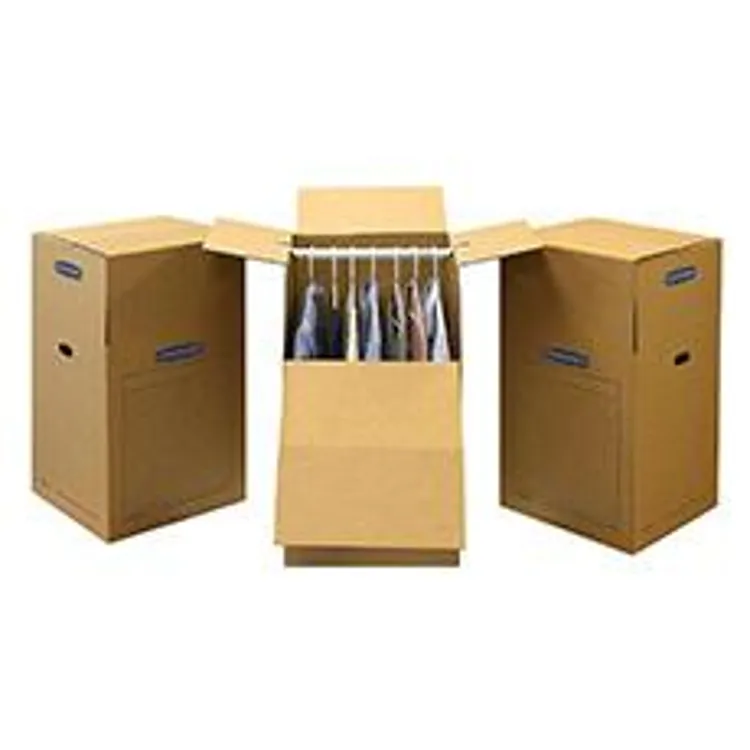
Wardrobe boxes are designed specifically for moving clothes on hangers. Here's how to use them:
- Gather your hanging clothes.
- Hang them on the built-in hanging rod and secure it in place to prevent clothes from shifting during transit.
- Close the box and seal it with packing tape.
Make sure not to overpack the box (this can cause wrinkles and make the box too heavy to carry).
» MORE: Where to buy wardrobe boxes
Garment bags
Garment bags are another solid option for packing hanging clothes. They’re used a bit differently than wardrobe boxes:
- Keep your clothes on their hangers.
- Slip the clothes into garment bags one by one, securing the hangers on the provided hooks.
- Close the garment bag and zip it up.
Once the clothes are inside the bags, gather the bottom of the bags around the hangers and secure them with twist-ties or rubber bands to keep the clothes from sliding out.
Packing hanging clothes for a short move
If you don't have far to go, you may consider using a clean trash bag instead of buying garment bags or wardrobe boxes. Cut a hole at the bottom of a large, clean bag to slip the handles through. Make sure to secure it so nothing falls out.
Of course, this method doesn't provide as much protection as dedicated garment bags, but may work for your situation if you're only moving a short distance.
How to pack non-hanging clothes
Non-hanging clothes can take up a lot of space when not packed effectively. By using space-saving packing techniques, you can maximize the capacity of your moving boxes or containers.
Packing folded clothes for a long move
If you're moving far or may have your clothes in storage or a moving truck for a while, consider vacuum sealing them in bags to maximize space and prevent odors.
Use vacuum-sealed bags
Vacuum-sealed bags are a game-changer when it comes to maximizing space. These bags use a vacuum to remove excess air, making your clothes significantly smaller. These are fairly simple to use:
- Place a few folded or rolled clothes into the vacuum-sealed bag. Be mindful not to overfill.
- Seal the bag using the provided closure mechanism. Some bags require you to slide a clip or use a zipper.
- Use a vacuum cleaner or the manual pump provided to remove the air from the bag. As the air is removed, you'll notice the bag compressing and your clothes becoming more compact.
- Once the air is removed, quickly seal the vacuum opening.
- Place the vacuum-sealed bags in an easy-to-move container.
Fold your clothes
Folding is one of the most common and straightforward methods for packing non-hanging garments. It helps to minimize wrinkles and keeps your clothes organized. Follow these steps for effective folding:
- Lay the clothing item flat on a clean surface. Button up shirts and blouses, and zip up pants to maintain their shape.
- Fold sleeves and pant legs inward, toward the center. Fold shirts vertically in half by bringing one arm over the other.
- Fold the garment into a smaller rectangle or square shape (the size will depend on the dimensions of your suitcase or bag).
- Stack folded clothes vertically in your luggage or boxes — imagine a filing cabinet — to maximize space and prevent excessive wrinkling.
Roll your clothes
Rolling clothes not only conserves space but also minimizes creases. Here's how to roll your non-hanging clothes:
- Lay the item facedown on a flat surface.
- Fold sleeves or pant legs inward to create a streamlined shape.
- Starting from the bottom, roll the garment tightly toward the top. This creates a compact cylinder shape.
- Place rolled clothes in your luggage or boxes side by side.
Packing folded clothes for a short move
Fill your luggage
Another effective packing option is to use any suitcases and duffle bags you have. These items are well-suited for transportation, of course, but be mindful of the weight as you pack, especially when dealing with fragile belongings.
And make sure to stay organized with how you pack if you use luggage so you can easily find what you need when you get to your new location.
» MORE: How to pack for a move
How to pack shoes
Your shoes need care, too. To protect them during transport, especially during a long move, gently stuff each shoe with packing paper or socks. This maintains their shape and prevents any potential deformities during transit. To prevent scuffing and scratches, wrap each shoe individually with packing paper.
To maximize packing space, place shoes toe-to-heel or sole-to-sole as you pack them. This arrangement minimizes friction and potential damage during the move. Arrange heavier shoes at the bottom of the packing container and lighter ones on top to prevent heavier shoes from pressing down on delicate pairs.
You can pack your shoes in all kinds of containers — it just depends on what you have on hand:
- Original shoeboxes
- Moving shoeboxes
- Large plastic boxes
- Cardboard boxes
- Storage containers
Tips for packing shoes for a long move
If you're moving a long distance, it's especially important to make sure your shoes are stuffed with packing paper to keep their shape. Don't overstuff any boxes to prevent your shoes from getting squished if they're packed away for a while. It's a good idea to use the original shoeboxes if you still have them to move your shoes safely.
FAQ
Should I leave clothes in dresser drawers during the move?
Leaving clothes in dresser drawers during a move is possible and could work well if the dresser is sturdy and the drawers aren’t overly heavy or filled to the point of strain. Keep in mind, though, that this could make the dresser heavier and more difficult to move.
How can I prevent wrinkles during the move?
To prevent wrinkles during a move, try these tips:
- Fold carefully.
- Use wardrobe boxes.
- Wrap delicate fabrics in tissue paper or bubble wrap.
- Roll your clothing (especially for casual clothes).
- Avoid overpacking.
Can I use garbage bags to pack clothes?
You can pack your clothes in garbage bags, but it's not the most recommended option. Garbage bags aren’t designed for moving and can easily tear, exposing your clothes to dirt, moisture and other potential damage. If garbage bags are your only option, make sure to reinforce them and use caution.
Can I pack clothes with other items?
Packing clothes with other items can be done, but be mindful of what you're combining. Avoid packing clothes with sharp or heavy objects that could damage the fabric. It's better to pack clothes separately or use designated clothing boxes to prevent potential harm.
» MORE: How to pack picture frames
How do I label clothing boxes?
To stay organized when moving your clothing, write the name of the room where the clothes will go ("Bedroom" or "Main closet," for example). You can also briefly describe the type of clothing.
If you have delicate clothes, mark the box as "Fragile" so movers handle it with care. For any clothes you’ll need immediately, label the boxes as "Essentials" or "Open first."