

Are storage units covered by renters insurance?
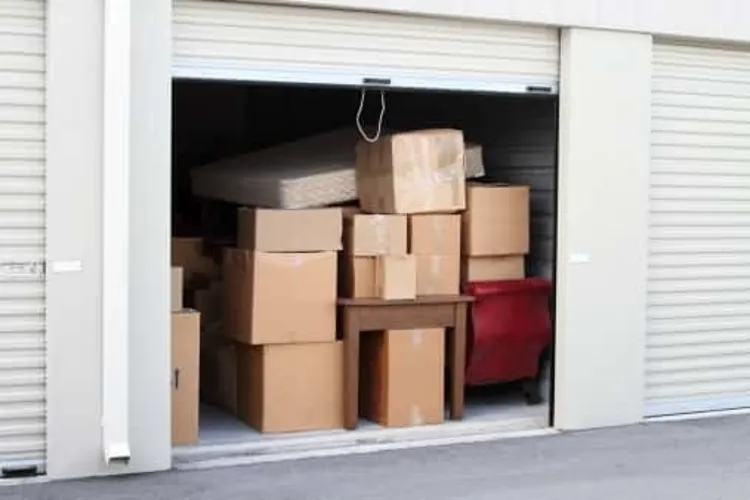
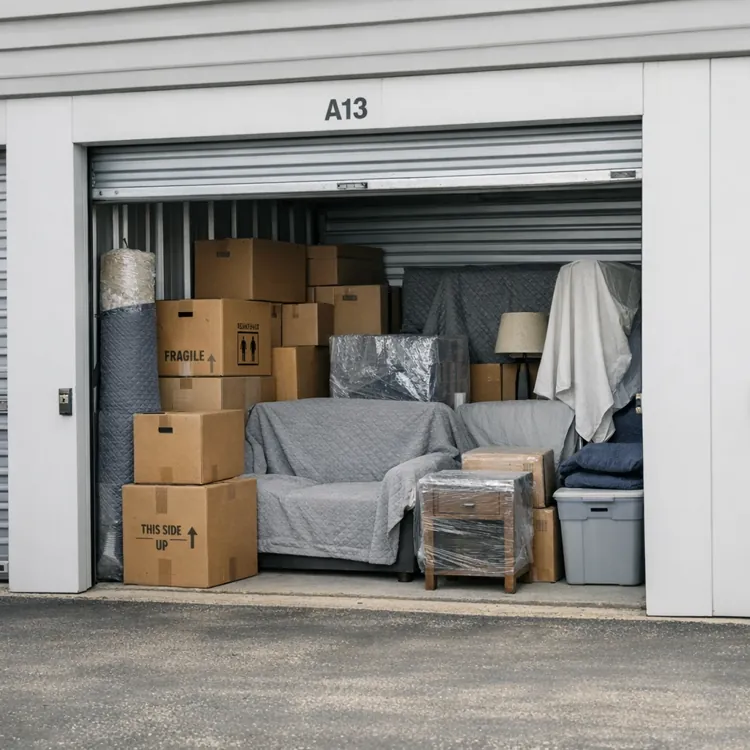
Renters insurance policies usually include built-in coverage for personal property stored off premises. However, the average policy includes coverage in the amount of 10% of your policy limit. This means the risk of not having sufficient coverage to pay for personal property replacement is high. Keep in mind that renters policies differ, so coverage isn’t guaranteed.
Even if you have sufficient coverage to pay for property replacement, you’ll still have an insurance deductible, which means you’ll pay out-of-pocket costs. Renters insurance can insulate you from high replacement costs for items in storage units, but it rarely eliminates them, even if you have a dedicated storage unit insurance policy.
If your policy includes coverage for off-premises belongings, check the coverage type. A package insurance policy that covers theft and includes general personal property insurance for damage is ideal.
Coverage for property in a storage unit ends when you or a mover removes the property from the unit. In transport, the Federal Motor Carrier Safety Administration requires that movers insure your property. With a renters insurance policy and a reliable, certified mover, you’ll have at least a small amount of protection for items in a storage unit.
Renters insurance storage unit coverage limits
Look out for a few key things to ensure you fully understand your policy and what it covers.
Coverage limits and storage location
As mentioned above, many renters insurance policies provide 10% of your standard coverage limit for personal property kept in an off-premises storage unit. Average coverage might be higher for on-site storage units.
State regulations drive both of these limits, so check coverage amounts in your policy or with the department in your state that regulates renters insurance to verify what yours is. Below are some examples of different policies across select states.
- California: You get the typical 10% coverage for on-premises storage units, but you can pay for additional coverage for higher payouts.
- Connecticut: The state doesn’t appear to have specific regulations for minimum coverage for storage units. Check your insurer’s policy for coverage caps.
- New York: There’s the standard 10% coverage on off-premises storage units, but the limit bumps up to 50% of your total coverage for on-site units.
- Virginia: You get coverage equal to a minimum of 50% of your total coverage for all personal property, regardless of where you store it. That means on-site and off-site storage units have this higher coverage cap.
Valuation techniques: actual cash value vs. replacement cost
It’s important to understand the different coverage and payout options: actual cash value (ACV) and replacement cost (RC). Policies that guarantee the ACV will pay out on the value of your items minus depreciation. Those that guarantee the RC will pay out the actual cost to replace them, meaning they come with higher dollar values and don’t consider depreciation.
Sub-limits for high-value items
In many cases, policies have sub-limits for valuables such as jewelry, money, firearms and artwork. These individual categories have their own payout maximums, beyond which you’re responsible.
Specific items that qualify as “high-value” vary from state to state, as do coverage limits. Below are some common belongings you’ll see with sub-limits. New York has state-guided maximums for these items, so we’ve included them for reference, but many other states leave the limits up to the insurer. Check your policy for details.
- Jewelry: $1,500 in New York
- Money: $200 in New York
- Firearms: $2,500 in New York
- Antiques: No stated limit in New York
- Furs: $1,500 in New York
- Collectibles: No stated limit in New York
- Fine art: No stated limit in New York
- Silverware: $2,500 in New York
- Silver and gold: $200 in New York
- Precious/semi-precious stones: $1,500 in New York
If you have valuables in any of these categories that you plan on moving into storage, it’s a good idea to take out a separate storage unit insurance policy for each.
Renters insurance storage unit exclusions
Having coverage for items in a storage unit directly through your renters insurance is great, but there are exclusions and limitations that cause coverage gaps.
For example, many policies exclude special conditions, which usually also affect the dwelling itself. These can include damage from:
- Flooding
- Pest infestation
- Mold and mildew (since it’s preventable)
- Earthquakes
- Negligence
- Property you use for business
If you need coverage for any of these perils, consider taking out a stand-alone storage unit insurance policy. Some self-storage facilities sell insurance directly, but you can choose your insurance company, even if your facility requires insurance on all of your belongings.
You can reduce the risk of some of these damages by packing your belongings securely and caring for them while in storage. That can mean the following:
- Using sealed plastic bags or vacuum bags to protect clothes, bedding and other fabrics from dirt, moisture and pests
- Securing important documents in fireproof safes
- Choosing a climate-controlled storage unit
- Elevating absorbent materials and high-value items off the floor
- Inspecting your storage unit regularly
Storage unit insurance vs. renters insurance
Renters insurance focuses on the belongings in your apartment and usually covers the following:
- Theft
- Fire damage
- Water damage from leaks
- Vandalism
- Some living and legal expenses
- Some protection for personal property in off-site storage units
Storage unit insurance provides similar protections, but focuses on the property you have in an on-site or off-site storage unit.
When you need storage unit insurance
If the coverage for your stored belongings through renters insurance isn’t sufficient, you may need to consider taking out a separate storage unit insurance policy. Self-storage companies sometimes sell these directly, but you can also ask your renters insurance company about additional coverage, or seek out a stand-alone policy to bridge any coverage gaps.
Some self-storage companies require you to have insurance for the belongings in your storage unit, and this information should be in your contract. You may need to hold a specific amount of coverage, which means your renters insurance policy may not be sufficient. Provide the storage unit company with a breakdown of your policies to confirm the coverage is sufficient.
You may also want to consider a separate storage unit policy if you have high-value items in storage, as the capped coverage included in your renters insurance is unlikely to cover a loss.
How to avoid duplicate coverage
Since your renters insurance covers some portion of the value of your stored items, you should pay attention to duplicate coverage and avoid paying twice for your insurance. Here are some tips to avoid wasting money on a separate storage unit insurance policy.
- Note the value of your stored items and pass on an additional policy if your renters insurance coverage for storage units (usually 10% of your total coverage) is sufficient.
- Speak with your insurance company about included coverage and ask if you can add a rider or an endorsement for extra protection rather than purchasing a separate policy from a third party.
- Consider increasing your coverage limit on your primary policy rather than trying to stack multiple policies.
FAQ
What insurance do you need for storage units?
Your renters insurance policy likely includes protection for your storage unit, even if it’s off-site, so you may not need additional coverage. Consider purchasing a stand-alone storage unit insurance policy if you have high-value items in your unit, if your renters insurance coverage is insufficient or if your storage unit company requires more coverage than your primary policy includes.
How much does storage unit insurance cost?
Storage unit insurance costs between $6 and $10 per month, on average. But prices vary widely depending on your location, the policy and coverages you choose, and the company you use to insure your belongings. Monthly costs can climb much higher if you have high-value items in your unit.
Does my renters insurance cover my storage unit if I no longer live at the insured address?
Renters insurance is tied to a specific address, and your coverage, including protection for items in your storage unit, will lapse if you move. Your policy should include information about what happens if you relocate. In many cases, you’ll get a grace period of 30 days or more to update your policy with your new address, so you can keep coverage while you move and for a little while as you settle into your new home.
Are items in basement storage or outdoor sheds covered by renters insurance?
Yes, items in basement storage and outdoor sheds are covered by renters insurance, but coverage may vary, depending on your policy. Items in basement storage are considered to be in the primary building and should get total coverage. Sheds are outbuildings; some policies have reduced coverage rates, sometimes as low as 50% of your total coverage, for belongings in outbuildings. Review your policy for coverage details about items in your shed or other outbuildings.
Article sources
ConsumerAffairs writers primarily rely on government data, industry experts and original research from other reputable publications to inform their work. Specific sources for this article include:
- New York State Department of Financial Services, "Homeowners & Tenants Insurance: What Consumers Need to Know." Accessed Mar. 18, 2026.
- Texas Department of Insurance, "Do I need insurance for my self-storage unit?." Accessed Mar. 18, 2026.
- Federal Motor Carrier Safety Administration, "How do I insure my belongings during a move?" Accessed Mar. 18, 2026.
- Federal Motor Carrier Safety Administration, Department of Transportation, "§ 387.9 Financial responsibility, minimum levels." Accessed Mar. 18, 2026.
- California Department of Insurance, "Residential Insurance: Homeowners and Renters." Accessed Mar. 18, 2026.
- Storage.com, "How Much Does Storage Unit Insurance Cost? What To Know Before You Rent." Accessed Mar. 19, 2026.
- USInsuranceAgents.com, "Storage Unit Insurance: A Complete Guide (2026)." Accessed Mar. 19, 2026.
- Complete Storage Insurance, LLC, "Storage Unit Insurance." Accessed Mar. 19, 2026.
- SnapNSure, "Traditional Self Storage & Mobile Storage." Accessed Mar. 19, 2026.
- LegalClarity, "Does Renters Insurance Transfer When You Move?." Accessed Mar. 19, 2026.