

Where to place security cameras outside
You’ve picked the best DIY security cameras; now it’s time to place them for optimal coverage. Consider traffic patterns, weather exposure, lighting conditions and field of view. The front door, porch, back door, patio, side gates, alley, garage, driveway and street approaches are high-priority outdoor security camera locations.
Front door and porch camera placement
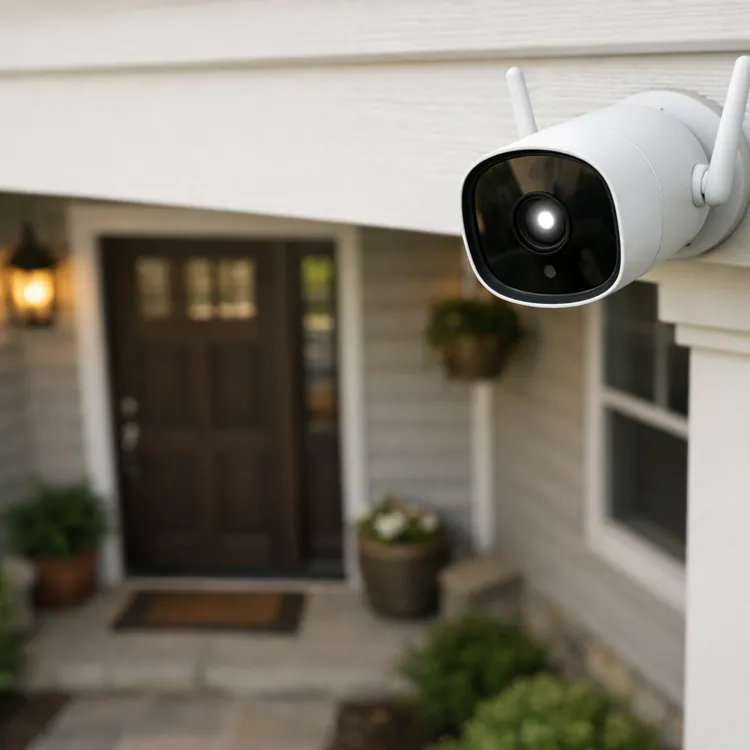
Place your front door and porch camera where any approach to the door is easily seen, but check where the sun hits on a typical day to ensure it won’t blind the camera at any time of day. Also include ground-floor windows for the front and sides of your home.
With easy street access and packages left unattended, the front door and porch are prime targets for thieves. In fact, nearly 50% of thieves use an unlocked door or window to gain entry into homes. Plus, your front door camera helps provide information and access for repair workers.
Back door, patio and yard security
Start your backyard security with cameras covering your back door(s), patio and the yard approaches to your home. Since back doors are often hidden from the road, burglars may feel safer attempting entry there.
Be sure to include any ground-floor windows in the camera's field of view, since windows are inherently less secure than doors.
Side gates and alley coverage
Less-used entry points to your property, such as alleys and side gates, are easily overlooked by you, but not by intruders. Set security cameras to cover these access points, but avoid recording any neighbors’ legally protected private areas.
Garage and outbuilding cameras
Your garage offers excellent options for visible placement of security cameras. Cameras can usually be placed high enough to avoid tampering while giving a good view of street approaches, your yard and driveway.
Outbuilding protection
Outbuildings are frequent targets for burglary. Be sure to include a camera that covers access points (doors and windows) to your outbuildings when setting your perimeter coverage. Remember, you may need extra light if the building is at the edge of your property.
Pro tip
Get one camera for the overall viewpoint and another optimized for license plate capture.
» RELATED: How much do home security systems cost?
Where to place security cameras inside
While the best security systems for renters and homeowners may be different, indoor camera placement is the same. Indoor security camera locations focus on preserving privacy, remaining unobtrusive and monitoring entry points and high-value items. The most commonly covered indoor areas are entryways and mudrooms, living rooms, kitchens, upstairs landings and stairways, basements and garage interiors (including interior doors).
Entryways and mudroom coverage
Cameras recording the interiors of entryways work with exterior coverage, improving the chances of a clear ID of an intruder. Front and back doors, doors to the garage or mudroom and windows are primary focus areas for coverage.
Main common areas security
Indoor cameras are generally placed in the corners of common areas such as kitchens, living rooms and dining rooms to show the room entrances as well as the room itself. Be careful of rooms that may change purpose. While you might want a camera in your office now, if you later convert it into a bedroom or add a guest bed, video could be problematic.
Upstairs landings and stairways camera placement
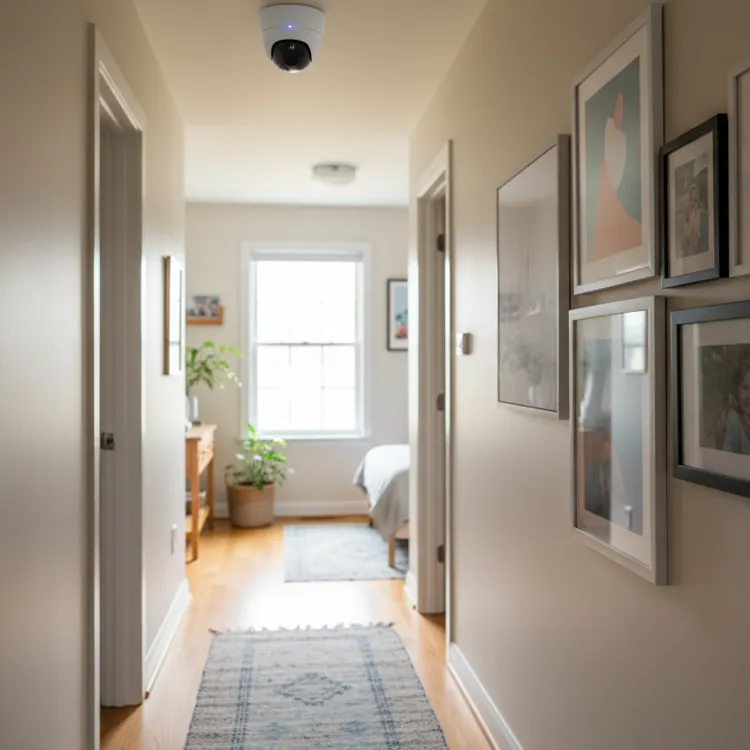
Common pathways through your home are great options for security without placing cameras in private areas like bedrooms and bathrooms. Hallways, upstairs landings and stairways are areas that anyone must pass through to reach other areas of the home. Do be careful not to position cameras so they record through open doors into private areas.
Garage interiors and door monitoring
Garages are common access points: some thieves steal door openers from cars to open garages, and more sophisticated groups hack garage door openers. A security camera that covers your garage interior and the door leading from the garage into your home is highly recommended.
Basement cameras
If your basement has an outdoor access point, such as a window well, it is vulnerable. Even without external access, it could serve as a hiding place for an intruder. A security camera that covers the door between the basement and the home, as well as the basement itself, is a good idea.
Where not to place security cameras
Part of picking the best security camera locations is knowing where not to place security cameras, such as private areas, spots with poor lighting and locations blocked by obstacles. Keeping private areas out of view helps protect you from legal and hacking risks. Avoiding poor lighting and obstacles ensures better video quality and coverage.
Bedroom and bathroom camera placement problems
Bedrooms (including guest bedrooms) and bathrooms are considered privacy-protected areas, and recording them carries legal risks. Because of their intimate nature, these areas also pose greater risks if the camera is hacked.
Neighbors’ property and privacy
Avoid recording your neighbors’ property with your security cameras. Most states allow security camera coverage to spill onto neighbors’ property in areas with no expectation of privacy, such as front yards. However, fenced backyards are more likely to be considered private. Be careful when placing security cameras high up to avoid recording a neighbor’s property in the background.
Voyeurism can be prosecuted as a federal felony.
Many states have voyeurism, invasive recording laws or other laws restricting video recordings. If you record a neighbor in a state of undress, say through their open bedroom window, you could face fines or even jail time depending on the situation. Always check your local and state ordinances before placing cameras.
Camera obstructions
Avoiding obstructions when placing security cameras is vital for a good video result. Obstructions may be obvious, like large hedges, but they can be less obvious, like windows. Placing security cameras that look out through windows sounds like a great idea, but it often leads to PIR (passive infrared) motion-detection failures and glare.
Common camera obstructions
- Tree branches: They might be fine in winter, but summer leaves block views.
- Landscaping plants: Those new planters look fabulous, but they can block the line of sight for your security.
- Doors: Even when interior doors are open, they can create blind spots and block views of other room entry points.
- Large furniture: Large items like bookcases can create blind spots in rooms.
- Vehicles: Vehicles can provide an unintentional blind approach for burglars to work their way down a driveway.
- Lighting issues: Glare from the sun, your pool or even parked cars can render footage unusable. Those lighting issues often create silhouettes or otherwise obscure details. Check your camera specs for light needed and if a hooded design is available to reduce glare.
Rental property concerns
If you rent out your property, you may face additional restrictions on where you can install security cameras to protect tenants’ privacy. For example, hallways of apartment buildings or external areas of an Airbnb may be fine, but internal cameras, even in kitchens or living rooms, may be unlawful.
Security camera placement tips for clear video
Where you place your cameras has a big impact on the quality and clarity of recordings. Clear video is essential for your security cameras to be useful to law enforcement in case of a problem, whether you use a self-monitored security system or a monitoring service. Security video needs to clearly capture faces and license plates to make identification easier.
Top placement factors affecting security camera video quality
- Lighting: Glare, haze and low light can degrade the quality of security video. Even with good night-vision ratings, you may need to add lighting in some areas.
- Distance: Even with high megapixel ratings and great resolution, distance is the enemy of video suitable for identification. If your cameras are all placed on your home exterior, the entrances to your property may be too far away for quality video.
- Field of view: Maximize the coverage area per camera by mounting one at your home’s corners to allow for an unobstructed field of view. Likewise, plan small overlaps in coverage areas to avoid blind spots.
- Extreme angles: Avoid placements that result in large angles, such as roof placements, to prevent distortions and poor-quality video.
- Weather: Outdoor security cameras have weather resistance ratings that indicate protection for the power pack and the camera's interior. While IP65 or higher is recommended, strong storms or extreme heat and cold can still impact camera operation. Likewise, fog, rain, snow and dust can obscure visibility.
- Visibility: Visible security cameras act as deterrents but also give potential burglars notice of areas to avoid when approaching. A mix of visible and hidden cameras helps improve the quality of footage for identification.
Best security camera mounting height
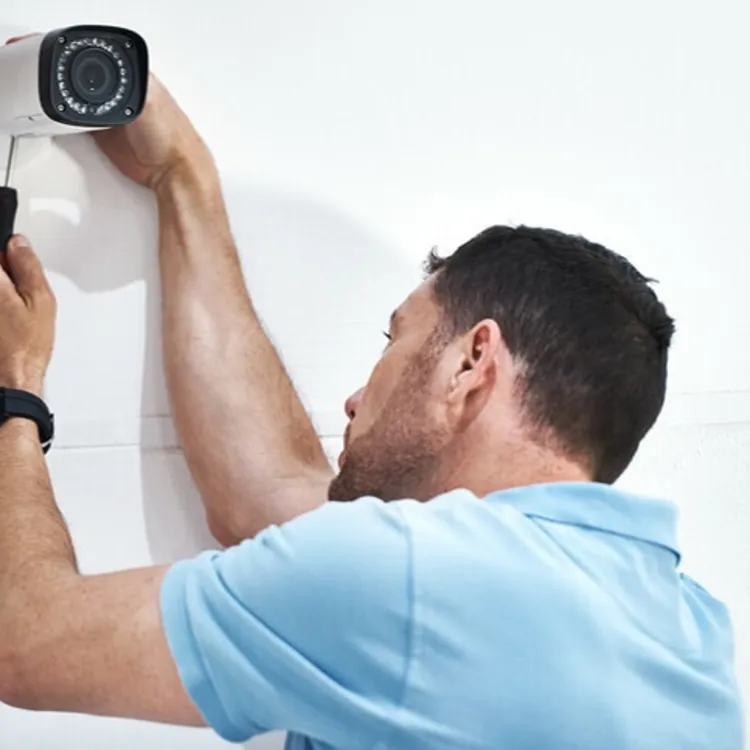
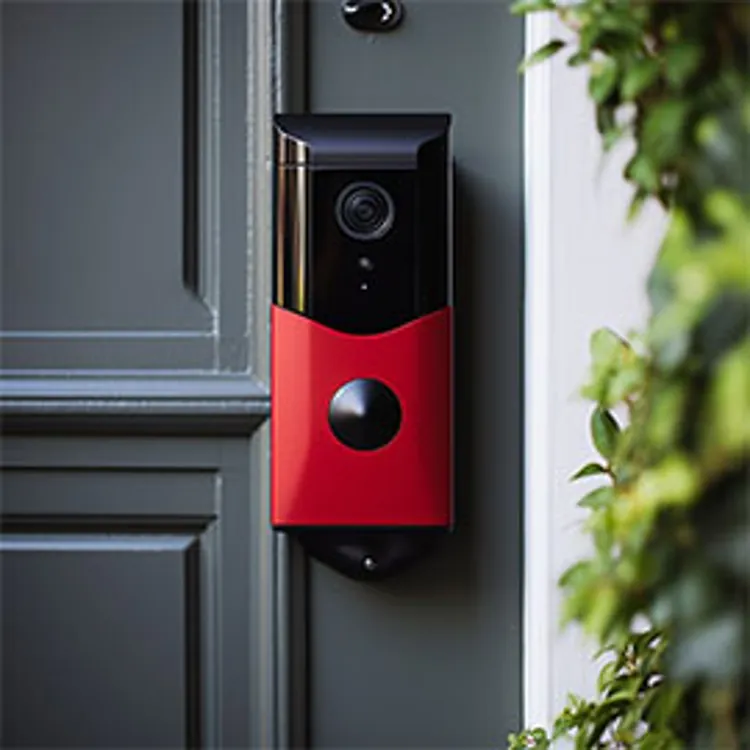
The best height to mount your home security cameras varies by purpose. Direct facial recognition cameras, such as doorbell security cameras, are generally mounted at 48 inches (four feet) high to avoid angle distortion and obstructions, like hats.
For other external cameras, eight to 10 feet is generally recommended to reduce tampering while still providing reasonable identification footage. For indoor cameras, seven to eight feet (at the corner where the ceiling and wall meet) is more common.
Where to mount your security cameras for the best lighting
Place security cameras where the lighting is behind the camera and shining toward the subject. Avoid locations where bright light shines directly at the camera or where brightly lit windows may throw off automatic exposure controls.
For night recording, consider locations of existing nighttime safety lights and add landscaping lighting as needed to provide adequate illumination. Indoors, consider strategically placed nighttime lighting to illuminate entry points into each covered room.
Protecting security cameras from weather hazards
Consider placing outdoor security cameras under roof overhangs or sourcing weather shields and light hoods to provide additional protection from rain, wind, snow and hail. For foggy areas, check weather seals often. If near a pool, be sure to place the camera outside of any splash zones. Likewise, avoid areas that catch water from sprinklers or overflow from gutters.
FAQ
Where should I avoid installing security cameras in my house?
Don’t install security cameras in privacy zones, such as bedrooms and bathrooms, or where cameras point directly at backlit windows.
Can a neighbor have a security camera pointed at my house?
Yes, a neighbor can generally have a security camera that captures areas of your property with no expectation of privacy, but they cannot point a security camera at private areas or the inside of your home through windows.
What camera locations provide the best deterrence for burglars?
Easily visible locations that are not within reach, such as above the garage door, the porch and the front door, provide the most deterrent.
Should security cameras be visible or hidden?
Security cameras should be both visible and hidden. While some home security cameras should be hidden for effectiveness, leaving some visible can deter would-be thieves.
Article sources
ConsumerAffairs writers primarily rely on government data, industry experts and original research from other reputable publications to inform their work. Specific sources for this article include:
- Aurora Police Department, City of Aurora, Illinois, “Lock a Door, Stop a Thief.” Accessed April 16, 2026.
- Oregon State Legislature, “EPD warns: Keep garage door remote control, car registration away from thieves.” Accessed April 16, 2026.
- Continental Door Company, “How to Prevent Garage Door Hacking.” Accessed April 16, 2026.
- KOMO News, “Seattle police discover man living secretly in basement of woman's home.” Accessed April 16, 2026.
- Backstreet Surveillance, “State Laws Regarding CCTV and Audio Recording.” Accessed April 16, 2026.
- Eisner Gorin LLP, “Federal Crime of Video Voyeurism - 18 U.S. Code § 1801.” Accessed April 16, 2026.
- American Apartment Owners Association, Inc., “The Rights and Wrongs of Security Cameras.” Accessed April 16, 2026.
- International Electrotechnical Commission, “IP ratings.” Accessed April 16, 2026.