

Fiberglass vs. vinyl windows overview
Frame material greatly impacts the cost and performance of your window, and fiberglass and vinyl are two popular considerations.
Fiberglass is generally the most durable and energy-efficient of the two, and comes at a higher price point. Vinyl is more cost-effective and doesn’t last as long, though it still performs well overall.
Ultimately, which one you choose largely depends on whether you’re optimizing for immediate cost savings or long-term value.
| | Fiberglass | Vinyl |
|---|---|---|
| Durability | High | Moderate to high |
| Cost (including installation) | $800 to $3,500 | $500 to $1,800 |
| Energy efficiency | High | Moderate to high |
| Air leakage | Low | Moderate (depending on construction) |
| Maintenance | Low | Low |
| Lifespan | 40 to 60 years | 20 to 30 years |
| Climate | Performs well in extreme climates | Performs best in moderate climates |
| Color options | Fewer color options, but can be refinished | More color options, but generally can’t be painted |
Fiberglass and vinyl manufacturing process
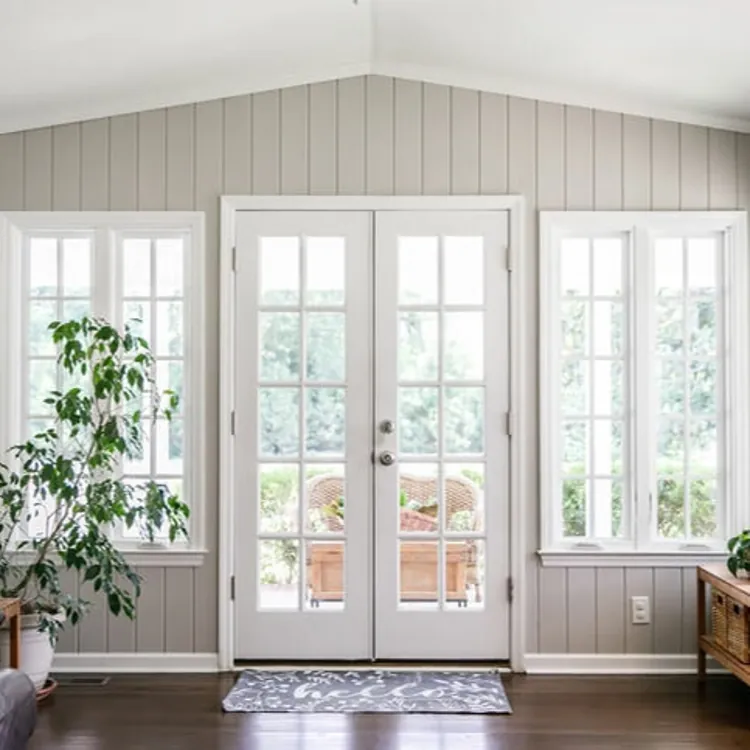
Vinyl windows are made using a PVC compound. This vinyl compound is heated and pushed through a mold to create long frame profiles. These profiles are then cooled, cut to size and fusion-welded together at the corners before the glass and hardware are added.
Fiberglass windows tend to be more expensive in part because they have a more complex manufacturing process. These frames are made by soaking thin glass fibers in a resin bath. The fibers are then heated and cured in a mold before being cut and assembled.
Fiberglass vs. vinyl cost and value
Fiberglass has a higher upfront cost than vinyl, but it can offer better long-term value thanks to its extended lifespan and superior energy efficiency.
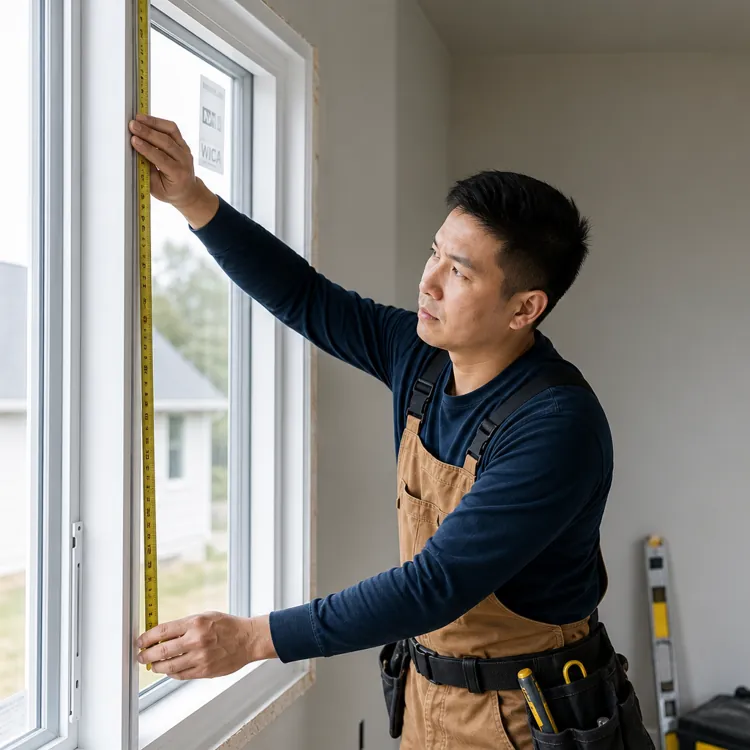
Fiberglass window installation costs can also be higher. That’s because vinyl windows are more flexible and easier to cut to size and adjust in rough openings. Since fiberglass is more rigid, it requires more precise measurement and alignment during installation.
| Cost factor | Fiberglass | Vinyl |
|---|---|---|
| Total upfront cost | $800 to $3,500 | $500 to $1,800 |
| Installation labor | Higher | Lower |
| Repairs | Can be more complex | Generally lower-cost |
| Maintenance | Minimal | Minimal |
Lifespan and long-term value
While fiberglass windows have a higher upfront cost, they last 40 to 60 years, significantly longer than vinyl’s 20 to 30 years. And while both materials are relatively low-maintenance, fiberglass can also be more durable and weather-resistant.
Therefore, fiberglass can offer more value than vinyl in the long run because you don’t need to replace or repair it as frequently.
Resale value considerations
Many homeowners wonder if new windows will significantly improve their property’s resale value. It’s true that premium brands and materials, such as Marvin fiberglass, can signal quality to buyers. That said, the condition and age of your windows usually matter more for resale value than the material itself. So, ultimately, whether you choose vinyl or fiberglass frames will likely have little impact on resale prices.
Fiberglass vs. vinyl durability and stability
Naturally, temperature fluctuations and exposure to the elements can impact the performance of your windows. While both vinyl and fiberglass are relatively durable, fiberglass generally holds up better over time.
Expansion and contraction
Vinyl tends to expand when hot and contract when cold. Over the years, this cycle can lead to more warping and reduced seal performance. This reduces energy efficiency and window performance. On the other hand, fiberglass expands and contracts at a significantly lower rate thanks to its highly stable construction.
Warping, sagging and cracking
Along the same lines, vinyl can soften in direct sunlight and become brittle in very cold temperatures. This can lead to warping, sagging or cracking.
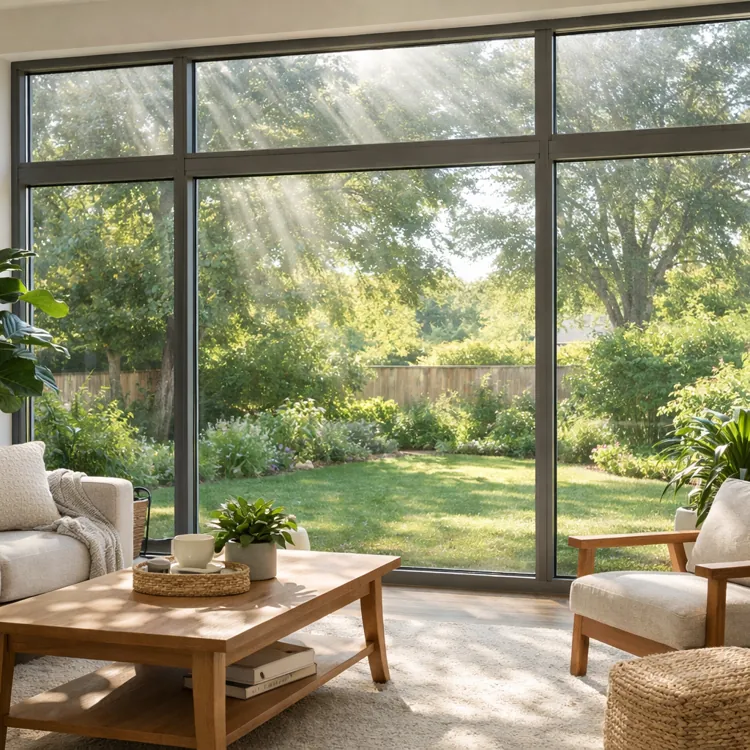
Fiberglass is resilient under extreme conditions because its manufacturing process makes it so strong. This helps these frames maintain their shape and perform well over time. That also makes it easier for fiberglass to accommodate thinner frames and larger glass areas.
Best climates for each material
For the above reasons, vinyl performs better in moderate or mild climates. On the other hand, fiberglass holds up better in areas that experience very high or very low temperatures (or fluctuations between the two). Vinyl and fiberglass are both non-porous and do not absorb moisture, making them both strong choices for humid climates.
Fiberglass vs. vinyl energy efficiency
Frame material does have an impact on a window’s energy efficiency, but it’s only one part of overall window performance. Several other factors, such as Low-E coatings, gas fills and glass type, are also significant when determining how well a window filters out UV rays and prevents heat transfer.
Glass package vs. frame material for energy efficiency
Frame material represents only a portion of a window’s total energy efficiency. In fact, glass features like Low-E coatings, gas fills and multiple panes tend to have the greatest impact on window performance. These features can improve performance metrics like the U-factor and solar heat gain coefficient (SHGC) that help you save on heating and cooling costs:
| Performance rating | What it measures | Features that improve it |
|---|---|---|
| U-factor | How much heat escapes through the window | Low-E coatings, double- or triple-pane glass, gas fills, frame insulation, warm-edge spacers |
| SHGC | How much solar heat enters through the window | Low-E coatings, double- or triple-pane glass, glass tinting, glass fills |
| Air infiltration | Resistance to air leaks and drafts | Frame material, corner construction, weatherstripping |
| Condensation resistance | Resistance to moisture buildup | Warm-edge spacers, double- or triple-pane glass |
Air infiltration and corner construction
The corners of vinyl windows are fusion-welded during the manufacturing process, while fiberglass window corners are often screwed together and sealed with an adhesive.
While this can mean that fiberglass joints allow for more air leaks, minor construction differences rarely make a large difference in air infiltration. In reality, manufacturing and installation quality, as well as window style, make a larger impact. Additionally, because fiberglass actually warps and changes less over time, it generally has less air infiltration over its lifespan than vinyl.
How to compare NFRC window labels
National Fenestration Rating Council (NFRC) labels help you compare a window’s energy performance with standardized ratings. For instance, U-factor measures how well a window prevents heat transfer, and solar heat gain coefficient (SHGC) measures how the sun’s heat passes through the glass. Lower numbers indicate better insulation for these ratings.
Visible transmittance and condensation resistance measure how much natural light will enter through the window and how well the window prevents moisture from forming. Higher ratings are better for these categories.
The climate zone map on the label helps buyers decide which windows perform best in their region. For instance, the Northern Zone focuses more on retaining heat for cold winters, while the South Zone focuses on blocking heat gain in hot and sunny climates.
FAQ
What is better, fiberglass or vinyl windows?
Vinyl windows are cheaper, but fiberglass windows typically perform better overall and last longer.
Why are fiberglass windows not popular?
Fiberglass windows are not as popular as vinyl windows because they cost more upfront and are not as widely available.
Which windows are more energy efficient, vinyl or fiberglass?
Fiberglass is generally more energy efficient than vinyl, though other factors, such as the type of glass used, also impact efficiency.
Do fiberglass windows warp?
Fiberglass windows are highly resistant to warping.
Article sources
ConsumerAffairs writers primarily rely on government data, industry experts and original research from other reputable publications to inform their work. Specific sources for this article include:
- Office of Energy Efficiency and Renewable Energy, United States Department of Energy, "Guide to Energy-Efficient Windows." Accessed May 11, 2026.
- National Fenestration Rating Council, "What Does the NFRC Label Tell You?" Accessed May 11, 2026.
- National Fenestration Rating Council, "ENERGY STAR® Windows." Accessed May 11, 2026.