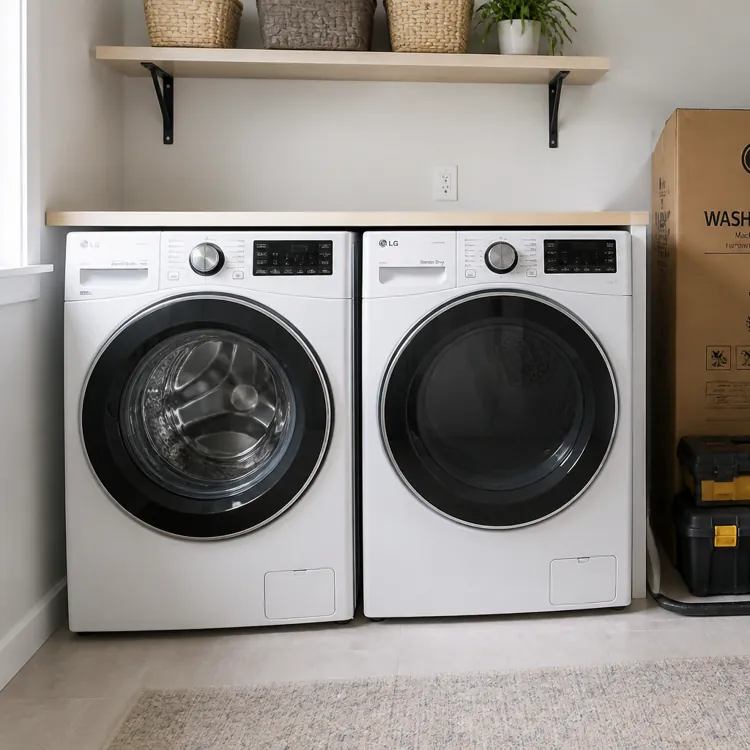




Our 4 picks for appliance home warranty companies
- Best for appliances overall: Regency Total Warranty
- Best for appliance-only plan: Cinch Home Services
- Best for high coverage limits: Old Republic Home Protection
- Best for customer service: American Home Shield
Compare the best home warranties for appliances
| Company | Customer rating | Our pick for | Monthly starting cost | Service fee(s) | |
|---|---|---|---|---|---|
 Regency Total Warranty | Learn More | 3.2 | Appliances overall | $45.75 | $60 |
 Cinch Home Services | Get a Quote | 4.1 | Workmanship guarantee | $27.99 | $100 to $150 |
 Old Republic Home Warranty | Learn More | 3.7 | High coverage limits | $50 | $100 or $125 |
 American Home Shield | Get a Quote | 3.6 | Customer service | $29.99 | $100 or $125 |

- Monthly premium cost
- $45.75 to $57.92
- Service call fee
- $60 to $100
- Labor guarantee
- None specified
- Availability
- 49 states

- Monthly premium cost
- $27.99 to $77.99
- Service call fee
- $100, $125 or $150
- Labor guarantee
- 180 days
- Availability
- 48 states

- Monthly premium cost
- $50 to $75
- Service call fee
- $100 or $125
- Labor guarantee
- 30 days
- Availability
- 25 states

- Monthly premium cost
- $29.99 to $89.99
- Service call fee
- $100 or $125
- Labor guarantee
- 30 days
- Availability
- 48 states
Home warranty providers for appliances: a guide
Repair and replacement costs add up when your fridge stops cooling or your dishwasher breaks mid-cycle. A home warranty for appliances protects your budget by covering these costs for a monthly fee. This guide walks you through choosing the right coverage, understanding what warranties include and deciding if appliance protection fits your needs.
Key insights
Choose a warranty by assessing your appliances' age, comparing quotes and reviewing contracts for coverage limits and exclusions.
Jump to insightWarranties cover major appliances but exclude countertop items, cosmetic damage and maintenance-related problems.
Jump to insightWarranties offer predictable costs and can help pay for repairs, but service fees apply and you typically can't choose your contractor.
Jump to insightTotal warranty costs depend on claim frequency, with monthly premiums of $30 to $50 plus service fees per visit.
Jump to insightHow to choose a home warranty for appliances
Choosing the best home warranty for appliances requires a strategic look at your home’s inventory and a clear understanding of plan structures. Start by identifying what you own and assessing your coverage needs. Then, compare providers, read reviews and check contracts to find reliable protection.
1. List your appliances and assess their condition
Walk through your home and make note of every major appliance — your refrigerator, dishwasher, oven, washer, dryer and any others you want protected. Note how old each one is, since age is a good predictor of when breakdowns might happen.
2. Consider what coverage you want
Once you have a clear picture of what needs coverage, you can choose the plan type that makes the most sense:
- Appliances-only plan: Works well if your HVAC and plumbing are in good shape
- Combination plan: Gives you full coverage when appliances and systems need protection
3. Get quotes
Reach out to three to five home warranty companies to get a realistic view of what coverage will cost. The monthly premium is just part of the picture — you'll also pay a service fee each time a technician comes out to fix something. This service fee may also be called a deductible or service call fee.
What to look at when comparing total costs:
- The monthly premium for the plan you're considering (expect to pay $30 to $50 per month)
- Service fees per visit, which usually run $75 to $150
- Coverage limits that cap how much the company pays per appliance
- Extra costs for add-ons like a second refrigerator or a standalone freezer
Plans with higher service fees typically have lower monthly premiums, which can work in your favor if you don't expect many repairs. If you think you'll need several service calls, a lower service fee might save you money, even with a higher monthly cost.
4. Check customer reviews and company reputation
Reading what other customers have experienced gives you insight into how a company handles claims and service. Look for common themes about whether companies approve claims fairly, send skilled contractors and respond quickly to issues.
Here's what matters most in reviews:
- Overall satisfaction ratings on consumer review sites
- How fast companies process claims and send out technicians
- Whether contractors show up on time and fix problems correctly
- How responsive customer service is when you have questions or concerns
5. Read sample contracts before signing
Some companies make sample contracts available on their websites, or you can request one from customer service. Read the full document, including the fine print, to know what's covered and what's not.
Pay close attention to these sections:
- Exclusions that rule out pre-existing conditions
- Coverage caps that limit payouts for specific appliances
- Waiting periods that delay when you can file your first claim
- The claims process and how quickly technicians get dispatched
Don't hesitate to ask questions if anything seems unclear. You might find out, for example, that a plan covers your refrigerator but treats the ice maker as a separate item that's not included.
Pro tip
Before you commit to coverage, check if any of your appliances still have active manufacturer warranties. There’s no sense in paying twice for the same protection.
» RELATED: Are appliance warranties worth it?
Warranty coverage for appliances
A home warranty covers repairs or replacements when major appliances give out due to normal wear and tear. This includes internal parts, such as motors, switches and heating elements that fail over time.
Most plans protect common household appliances:
- Refrigerator
- Washing machine and dryer
- Dishwasher
- Oven, range or cooktop
- Built-in microwave
- Garbage disposal
- Trash compactor
- Standalone freezer
Common exclusions
Small countertop appliances, like toasters, blenders and coffee makers, typically don’t qualify for coverage. Home warranties also exclude damage from poor maintenance, accidents or natural disasters.
For instance, if you ignored warning signs that your dryer needed cleaning and it caught fire, the warranty can deny repair claims.
Besides these, watch for these warranty exclusions:
- Pre-existing conditions before coverage started
- Damage from improper installation
- Cosmetic issues (e.g., scratches or dents that don’t affect functionality)
- Components still under manufacturer warranty
And keep in mind that home warranties cap payouts at a certain amount per appliance, which may not cover full replacement costs for high-end models. Review your contract to understand what protection you’re getting before you need to file a claim.
Don't confuse home warranties with homeowners insurance
Insurance covers sudden disasters, like fires or theft. Warranties handle everyday appliance failures. Most mortgage lenders require insurance, but warranties are optional. Consider getting both for comprehensive home protection.
Pros and cons of a home warranty for appliances
Home warranties for appliances offer convenience and potential savings. They also have important limitations to consider.
Pros
- Predictable costs: Pay a fixed service fee instead of surprise bills that can exceed $500 when appliances break.
- Simplified repairs: The warranty company finds contractors and schedules appointments so you don't waste time calling around.
- Peace of mind: Warranties help you avoid financial stress when aging appliances fail multiple times in one year.
Cons
- Service fees add up: Each contractor visit costs up to $150.
- Coverage gaps: Warranties exclude malfunctions from skipped maintenance or pre-existing problems.
- Limited control: The company chooses your contractor and decides which replacement brands you get.
How much is a home warranty for appliances?
Appliance-only home warranties usually cost less than comprehensive plans that cover systems as well. Your total investment depends on monthly premiums, service fees and any extra coverage you add.
Monthly premiums
You can expect appliance coverage to run between $30 and $50 per month, though costs vary. Plans covering only kitchen appliances cost less than those including laundry room equipment, for instance.
Some companies offer discounts of $50 or more if you can pay yearly instead of monthly.
Service call fees
Each time you file a claim, you pay a service fee ranging from $75 to $150 per visit. This fee works like a deductible — you pay it whether the repair costs $200 or $800. If your dishwasher breaks in April and your dryer fails in September, you’ll pay two separate service fees.
Add-on coverage
Many companies let you add protection for items beyond standard coverage. Common add-ons include second refrigerators, standalone freezers and garage door openers. These extras can cost $50 to $200 per year per item, depending on the appliance.
Other cost factors
These factors also influence your total home warranty cost:
- Location: Labor and parts costs vary by region. More urban areas are typically more expensive than rural locations.
- Coverage level: More appliances covered means higher monthly premiums.
- Company discounts: Some providers offer savings for military members, seniors or multiproperty owners.
Cost example
Here’s what you might pay each year for appliance coverage:
- Monthly premium ($40): $480 per year
- Two service calls ($100 each): $200
- Add-on for second refrigerator ($10 per month): $120
- Total: $800 per year
FAQ
Are home warranties on appliances worth it?
A home warranty for appliances can be worth it if you own older appliances or can’t afford large repair bills. However, warranties come with limitations and service fees that may cost more than the repairs you need. Consider the ages of your appliances and your financial situation before making a decision.
Which is the best warranty for home appliances?
Regency Total Warranty stands out as the best option for home appliances with strong coverage and excellent customer service. On ConsumerAffairs, it has a solid satisfaction rating for overall service and claims handling.
What factors should I consider when choosing a home warranty?
When choosing a home warranty, review what’s covered and check for limits on specific appliances. Compare total costs, including monthly premiums and per-visit service fees. Finally, research the company’s reputation by reading customer reviews and learning about its claims process.
How do service fees work with home warranties?
Each time you file a claim and a technician visits your home, you pay a service fee that works like a deductible. Most companies charge between $75 and $150 per visit, which you pay to the technician. The warranty doesn't waive this cost even when repairs fall outside your coverage.
Methodology
To find the best home warranty companies for appliances, the ConsumerAffairs Research Team used a data-driven approach guided by our expert editors.
We researched 49 home warranty companies and scored them using measurable criteria grouped into two main categories:
1. Key home warranty company features
Companies earned higher scores for offering:
- Appliance-only plans
- Higher number of appliances covered
- More service call fee options
- Longer service guarantees
- Extra benefits
2. Customer satisfaction metrics
We conducted sentence-by-sentence sentiment analysis of thousands of verified reviews to measure customer satisfaction with:
- Coverage
- Pricing fairness
- Refunds and payout experience
- Customer service quality
- Claims handling
- Punctuality and speed
- Service technicians
Each company received a score from 1 to 10 for every metric, with 10 awarded to the top performer in that category. Metrics are weighted differently for each award calculation.
The company with the highest score in each category’s uniquely weighted formula was given the “Our pick for” designation. In some cases where a single company received the top score across multiple categories, the company with the second-highest score was named the winner.
Article sources
ConsumerAffairs writers primarily rely on government data, industry experts and original research from other reputable publications to inform their work. Specific sources for this article include:
- TDECU Your Credit Union, “The Pros and Cons of a Home Warranty.” Accessed May 15, 2026.
- California Department of Insurance, “Home Protection Contracts.” Accessed May 15, 2026.