

Steps to take after a data breach
If you think you’re a victim of a data breach, it’s critical that you act immediately.
“After a data breach is discovered, emotions are high and clear thinking is at a low point,” said Brad Lassiter, CEO of LastTech, a cybersecurity company in New York. “It's important to keep a cool head.”
These steps can help you secure your data and file official reports while implementing preventive measures to avoid future breaches.
1. Secure your accounts
The first step is to secure your accounts to prevent further damage or loss. The process can vary, depending on the type of personal data affected.
Social Security number (SSN)
Check if someone is using your SSN for employment by visiting your online Social Security account or your local SSA office. Lock your SSN with an E-Verify account from the U.S. Department of Homeland Security and the Social Security Administration.
Bank, credit card and investment accounts
Contact your bank, credit card company or brokerage to report fraud. Cancel your old card and request a new one. Cancel also any existing automatic payments, and set up arrangements for your new card.
Review your account activity and statements regularly to check for transactions or withdrawals you do not recognize.
Driver’s license and passport
If your driver’s license has been compromised, contact the Department of Motor Vehicles to report the breach and ask about next steps. For passports, report your lost or stolen passport to the U.S. State Department by filing an online report or calling 877-487-2778.
Medicare, Medicaid and health insurance
Contact the appropriate contact to file a report and request new cards as necessary.
- Medicare: Call 800-MEDICARE (800-633-4227).
- Medicaid: Contact your local state office.
- Insurance company: Check your insurance statements for specific company contact information.
SNAP benefits
Report stolen SNAP benefits by contacting your local SNAP office. Don’t forget to request a replacement card.
» DISCOVER: How to prevent identity theft
2. Monitor financial activity
Regardless of the type of data breach, you should always check your credit score and report. You can obtain a free credit report from AnnualCreditReport.com.
“Bank and financial accounts should be checked frequently for suspicious charges, unexpected loan demands, or unfamiliar activity,” said James Turgal, VP of global cyber risk and board relations at Optiv.
If there are any accounts that don’t belong to you, report them immediately at IdentityTheft.gov.
3. Place a fraud alert or credit freeze
You can also place a free fraud alert or credit freeze on your account. For extra protection, you can initiate both a credit freeze and a fraud alert simultaneously.
Fraud alert
A fraud alert requires creditors to confirm new credit with you before approving or opening any accounts. However, creditors can still see your credit report.
There are three types of fraud alerts:
- Initial fraud alert: An initial fraud alert lasts one year. However, it can be renewed without cost.
- Extended fraud alert: An extended fraud alert lasts seven years and requires you to file either an FTC identity theft report or a police report. It requires credit bureaus to remove you from marketing lists for unsolicited credit and insurance offers for five years.
- Active-duty fraud alert: An active-duty fraud alert is for members of the military who are on active duty. It prevents any new credit in your name and removes you from marketing lists for unsolicited offers for two years. It’s free and lasts only one year but is renewable.
After a data breach is discovered, emotions are high and clear thinking is at a low point. It's important to keep a cool head.”
Credit freeze
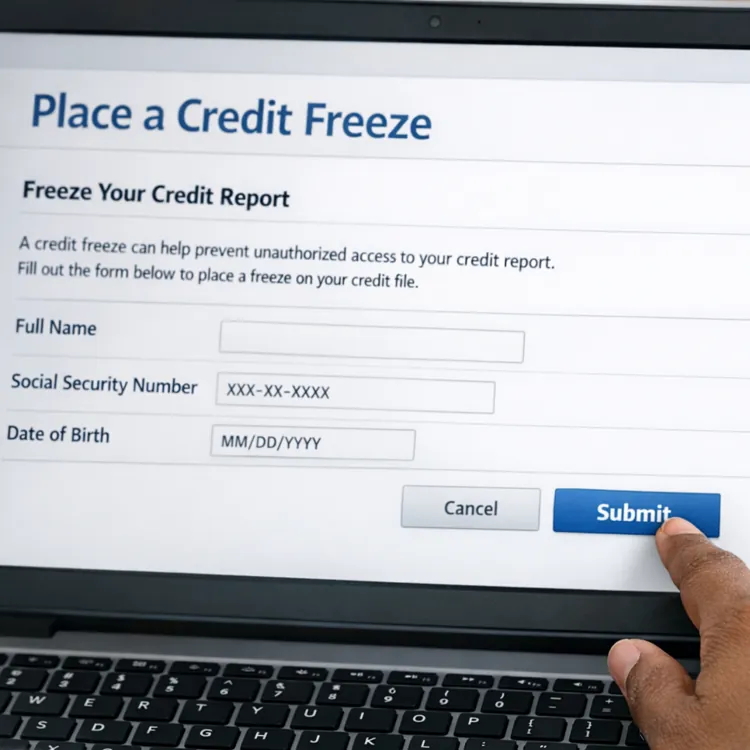
A credit freeze prevents any new lines of credit from being opened in your name. It also prevents access to your credit report.
However, a credit freeze also prevents you from obtaining any new credit. Therefore, you must remove the freeze before applying for credit, such as a new credit card, home mortgage or even a rental home.
A credit freeze lasts until you lift it. Simply contact each credit bureau to place or lift the freeze.
To file a dispute and place a fraud alert or credit freeze, contact the major credit bureaus.
Contacts for Data Breach Reporting
| Online | Phone | ||
|---|---|---|---|
| Experian | Online Fraud Alert | Experian P.O. Box 9554 Allen, TX 75013 | 1-888-EXPERIAN (1-888-397-3742) |
| Equifax | File a Dispute | Equifax Information Services LLC P.O. Box 740256 Atlanta, GA 30374 | 1-888-Equifax (1-888-378-4329) |
| TransUnion | Online Filing | TransUnion Consumer Solutions P.O. Box 2000 Chester, PA 19016-2000 | 1-800-916-8800 |
4. Protect your identity
It’s also critical that you take steps to prevent identity theft in the future. There are several ways to lower your chances of being affected by a data breach again.
Avoid scams. To avoid scams, never share your personal information with any unexpected calls, texts or emails. Also, don’t click any links or open attachments from emails you don’t recognize.
File your taxes early. By filing your taxes early, you lower the chance of tax identity theft. This happens when scammers try to use your SSN to steal your tax refund or get a job.
Use strong passwords. Create long passwords that combine letters, numbers and special characters to make it harder to guess. Don’t repeat passwords on multiple sites in case one becomes compromised.
“Password refreshes, multi-factor login, and closing open vulnerabilities make a stronger foundation,” explained Rafay Baloch, CEO of RedSecLabs.
Enable multi-factor authentication. Enable multi-factor authentication on all accounts. This requires additional authentication beyond a password for access.
“By enabling multi-factor authentication, you can essentially mitigate credential-stuffing attacks,” said Adam Govier, founder of Exploitr, “where cyber attackers will attempt to login with passwords they’ve obtained from previous data breaches on different platforms.”
Update programs and sign up for notifications. Be sure to update all software and apps regularly to ensure the strongest security protocols. Sign up for the Notify Me service provided by HaveIBeenPwned.com so you can receive automatic notifications if your email is found in a data breach.
Turgal adds another consideration: child identity theft. “Parents and guardians should be especially alert for warning signs of child identity theft,” he said. Be mindful of collection calls for debts incurred in a child’s name, unexplained insurance bills or medical records, or IRS notifications indicating a child’s Social Security number was used on another tax return.
5. Consider credit monitoring
Credit monitoring can help you stay on top of your credit by sending notifications when your credit is accessed. This can include a credit card company, a mortgage company or a personal loan lender. It can also include late payments that may affect your credit score and history.
You may already have access to free credit reporting through a credit card company, but if not, you can access your credit report at AnnualCreditReport.com. You can also sign up for credit monitoring services from reputable services like Experian, TransUnion and Credit Karma.
“There are several dozen steps you can take to reduce the likelihood of a data breach, but it is not a one-time fix,” warned Lassiter. “It's an ongoing battle against criminals and awareness. With concerted effort, breaches can be reduced in frequency and impact.”
» COMPARE: Best identity theft protection services
FAQ
What should you do immediately after a data breach?
After a data breach, immediately contact the FTC to report the breach, as well as the three credit bureaus. Then, be sure to change your passwords to block any future access.
Should I freeze my credit after a data breach?
It’s always a good idea to freeze your credit after a data breach to prevent any additional damage. Just remember, you’ll need to lift the freeze before applying for new credit.
What do you do if your SSN is breached?
If your Social Security number is breached, immediately file a report by accessing your online Social Security account or visiting your local SSA office. You can also place a lock on your SSN by signing up for an E-Verify account from the U.S. Department of Homeland Security and the Social Security Administration.
How can you check if your personal information has been compromised?
Regularly check your credit report and account statements for activity you don’t recognize. Also, sign up for credit monitoring to receive alerts immediately if your information is compromised.
Article sources
ConsumerAffairs writers primarily rely on government data, industry experts and original research from other reputable publications to inform their work. Specific sources for this article include:
- Experian, “2026 Data Breach Industry Forecast.” Accessed Feb. 10, 2026.
- Federal Trade Commission, “Credit Freezes and Fraud Alerts.” Accessed Feb. 10, 2026.
- Federal Trade Commission, “Protect Your Personal Information From Hackers and Scammers.” Accessed Feb. 10, 2026.
- IdentityTheft.gov, “What To Do if Your Information Was Lost or Stolen, or Part of a Data Breach.” Accessed Feb. 10, 2026.
- Verizon, “2025 Data Breach Investigations Report.” Accessed Feb. 10, 2026.