


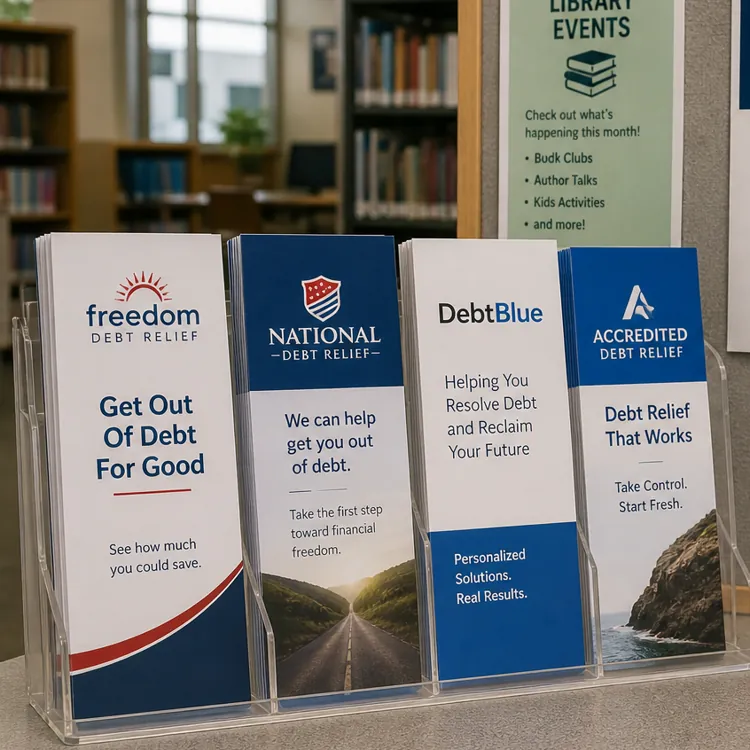
Compare our top debt settlement picks
| Company | Customer rating | Best for | Fees | Settlement timeline | Availability | |
|---|---|---|---|---|---|---|
 Freedom Debt Relief | Get Started | 4.5 | Best overall | 15% to 25% | 24 to 48 months | 40 states |
 National Debt Relief | Get Pricing | 4.8 | Best customer satisfaction | Up to 25% | 24 to 48 months | 45 states |
 DebtBlue | Learn More | 4.7 | Best for a quick, free quote | 25% | 32 months | 40+ states |
 Accredited Debt Relief | Get Started | 4.9 | Best for small debt amounts | 15% to 25% | 24 to 48 months | 50 states |
Freedom Debt Relief

- Debt minimum
- $7,500
- Types of debt covered
- Unsecured debt
National Debt Relief

- Debt minimum
- $7,500
- Types of debt covered
- Unsecured debt
Partner Disclosures
National Debt Relief disclosures
Average program completion time is 24-48 months; not all complete. Results vary. Clients who complete the program and settle all debts typically save around 45% before fees or 20% including fees over 24-48 months, based on enrolled debts.
DebtBlue
- Debt minimum
- $7,500
- Types of debt covered
- -
Accredited Debt Relief

- Debt minimum
- $5,000
- Types of debt covered
- -
Methodology: How we chose the best debt relief companies for seniors
The ConsumerAffairs Research Team compared debt settlement companies for seniors using verified customer reviews, program details and company policies. To qualify, companies needed verified reviews submitted between May 1, 2023, and April 30, 2026. We scored each company in three areas:
Customer experience: Satisfaction with staff, customer service, the settlement process and fee transparency
Program terms: Minimum debt required to enroll, maximum fee as a share of enrolled debt and maximum program length
Recent engagement: Review volume in the past six months and company response rate
Each company received a score from zero to 10 for every metric. The top performer earned a 10, and the other companies were scored relative to it. We used different weightings for each award. For example, the customer satisfaction award emphasized service and process ratings.
Senior debt relief buyers guide
When choosing a debt relief program, look for an option that offers an affordable rate and efficient timeline. It’s also important to pick an agency with a good reputation and that maintains ongoing communication from start to finish.
Key insights
Ensure you choose a program that suits your situation and debt type.
Jump to insightConsider your debt amount, as many programs require a minimum enrolled debt balance.
Jump to insightIn most cases, debt relief programs lead to savings, even with the fees.
Jump to insightWhat seniors should look for in a debt relief company
Look for a debt relief company that will work with you to choose the best approach for your financial situation. Also choose a program with a manageable rate and timeline, with transparent communication throughout the process.
Accessibility and plan options
Each debt relief agency on our list offers two primary debt-relief program types: debt consolidation or debt settlement, also called debt resolution. Depending on the debt relief company, certain types of debt may not be eligible for certain programs. For example, most debt resolution programs only work for unsecured debt, like credit card debt and medical bills. These programs won’t work for debt tied to collateral, such as mortgages or auto loans.
» LEARN MORE: How does debt consolidation work?
Before choosing a debt relief company, make sure it offers programs suited to your situation and the nature of your debt. During your initial consultation, the debt relief company will discuss your options to ensure you pick a plan that fits your situation.
Fees and timeline
With every debt settlement program, the debt relief company charges you a fee in exchange for its negotiation services. This fee, usually collected at the time of settlement, is usually between 15 and 25% of your enrolled debt amount. Since debt settlement programs often negotiate a final settlement amount that’s closer to 50% of your original enrolled debt, you still end up saving around 32% of your total debt amount, even after fees.
Generally, during your initial consultation, debt relief companies provide an upfront quote that includes your fee. They will also provide a timeline, typically 24 to 48 months. The timeline is just as important as your fees because a shorter timeline means less risk of a negative impact on your credit score.
Coverage and eligibility
Each debt relief company and program has its own eligibility terms. Generally, debt settlement programs have a minimum debt requirement, which your enrolled debt must exceed in order for you to have eligibility.
All of the providers on our list, except for Accredited Debt Relief, require you to have a debt amount of at least $7,500 in order for you to be eligible for debt resolution programs. Accredited Debt Relief requires only $5,000 in unsecured debt for eligibility.
If your debt amount falls below $5,000, you may qualify for a debt consolidation program, such as the one offered by DebtBlue.
Accessibility and communication
Before committing to a program and debt relief company, ask the organization about the communication process during your debt-management plan. You should be able to contact an agent daily if questions arise.
During the settlement process, you should be able to track your payment history, due dates and progress through a secure portal on your debt relief agency’s website.
Debt relief cost
The total cost of your debt relief program varies depending on the company and program you choose, the state where you live, your enrolled debt balance, your settlement timeline and your fee percentage.
All the providers on our list advertise a fee that ranges from 15 to 25% of your enrolled debt, so you won’t end up paying any more than that. Debt relief companies don’t collect the fee until settlement happens. Further, debt relief programs are often able to negotiate a settlement as low as 40 to 50%, which means you can ultimately save thousands of dollars, even after fees.
Pros and cons of working with a debt relief company
Whether you choose a debt consolidation or settlement program, working with a debt relief company has pros and cons. On the plus side, you may be able to reduce your total settlement amount and reach debt-free status sooner. On the other hand, these programs risk affecting your credit score and don’t guarantee a reduced settlement.
Pros
- Can reduce total debt amount
- Can expedite time to settlement
- Professional negotiation
- Can lower your interest rates
Cons
- May lower your credit score
- May risk a lawsuit from your creditor
- Debt relief company may not be able to settle all of your debts
FAQ
Is there really a debt relief program for seniors?
There is no debt relief program specifically tailored for seniors, but seniors can join debt relief programs.
How can senior citizens stop paying credit card debt without damaging their finances further?
While senior citizens likely can't stop paying credit card debt without further damaging their finances, debt relief programs can reduce monthly payments, speed up the timeline to settlement and save money in the long run.
How can a senior citizen get out of debt?
Senior citizens can get out of debt by settling the enrolled debt balance. Using debt relief companies and programs can accelerate the process with a lower total cost.
What is a senior debt relief program?
A senior debt relief program is a debt relief program that serves seniors. However, these are the same as regular debt relief programs because no programs are designed specifically for seniors.
What are the eligibility requirements for senior debt relief programs?
To be eligible for a debt relief program, you typically must have a minimum debt balance that exceeds $7,500. You also must reside in a state served by a debt relief company.
Guide sources
ConsumerAffairs writers primarily rely on government data, industry experts and original research from other reputable publications to inform their work. Specific sources for this guide include:
- Achieve.com, "What's the minimum debt amount for consolidation and when is it worth it?" Accessed Sept. 2, 2026.
- Accredited Debt Relief, "How We Help." Accessed Sept. 2, 2026.
- Consumer Financial Protection Bureau, "What is a debt relief program and how do I know if I should use one?" Accessed Sept. 2, 2026.
- Debt.org, "Debt Relief Companies." Accessed Sept. 2, 2026.
- Money Group, "How Much Does Debt Settlement Really Save?" Accessed Sept. 2, 2026.
- National Debt Relief, "Debt Resolution Programs Explained: Pros, Cons, and How to Enroll." Accessed Sept. 2, 2026.
- United Settlement, "Debt Settlement Timeline: How Long Does Debt Settlement Take?" Accessed Sept. 2, 2026.