

About tax forgiveness in Pennsylvania
For the past 50 years or so (since 1974, to be exact), the state of Pennsylvania has offered certain tax provisions to low-income residents. Today, if you meet certain qualifications, you can apply for tax forgiveness. This means you might lower your tax obligation, or even receive a refund on your state taxes.
What to know about tax credits
Pennsylvania’s tax forgiveness program operates like a tax credit. How does a credit differ from a tax deduction? A tax credit has more impact on your bottom line, reducing your tax bill on a dollar-for-dollar basis. For example, a $1,000 tax credit reduces your taxes by $1,000.
Owing taxes can be a stressful financial burden.
A deduction, on the other hand, is calculated based on your tax rate. For example, if you are at a 22% tax rate, a $1,000 tax deduction would equate to $220 instead of $1,000.
Residents might wonder how this tax relief program differs from other tax credits, like the Earned Income Credit or the Child Tax Credit. While those credits provide tax relief to eligible taxpayers, PA Tax Forgiveness is specifically designed to reduce or eliminate state income tax liability for qualifying low-income residents.
If you qualify, PA Tax Forgiveness can reduce or eliminate the amount of state income tax you owe and may result in a refund of taxes withheld from your paycheck.
PA Tax Forgiveness eligibility requirements
Pennsylvania’s tax forgiveness program operates on income eligibility. A single person qualifies with income up to $6,500, with partial forgiveness up to $8,750. Married couples with combined income of $13,000 or less qualify, with partial forgiveness up to $17,500. The income threshold for a family of four is $34,250 and $27,750 for a single parent with two children.
Different rules may apply to students, dependents and nonresidents.
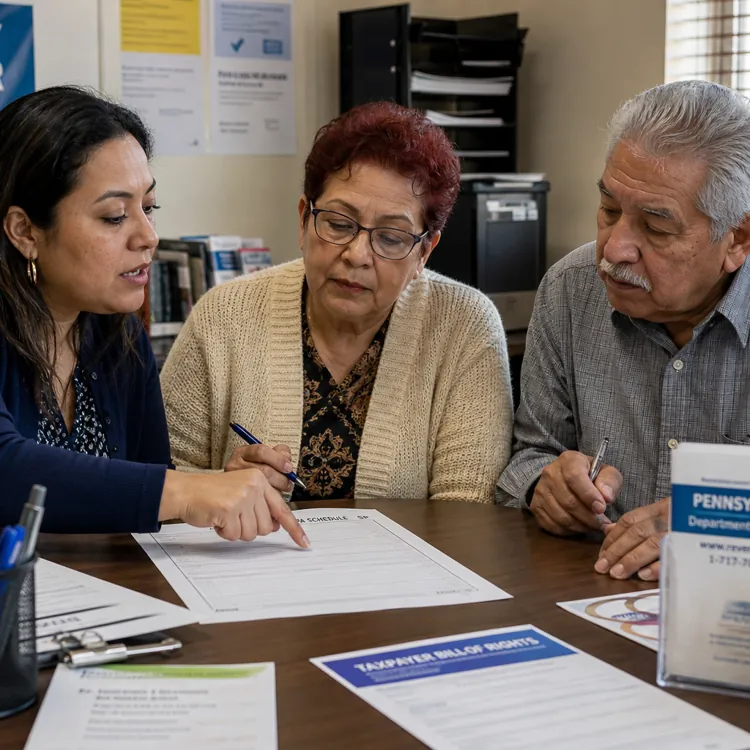
It’s estimated that as many as one in five Pennsylvania households qualify for the state’s tax forgiveness program. So, it’s important to know the eligibility requirements to see if you qualify for this beneficial program. To do so, you should include PA Schedule SP when you file your state taxes.
Do you qualify for PA Tax Forgiveness?
The following groups of individuals are automatically disqualified:
- Dependents: Taxpayers who can be claimed as dependents generally cannot claim tax forgiveness on their own return.
- Institutionalized individuals: Those who reside in prison, a hospital or a boarding school for 6 of the last 12 months are not eligible.
- High-income earners: See above for income limits.
- Those who don’t file Schedule SP: Failure to file this form along with your state taxes will prevent you from receiving tax forgiveness, even if you’re eligible.
Pennsylvania Schedule SP and PA-40 filing
To get tax forgiveness from the state of Pennsylvania, you need to fill out and submit both Form PA-40 and Schedule SP. PA-40 is the standard state income tax form, while Schedule SP is specifically for claiming tax forgiveness.
Below, we’ve included brief instructions on filling out Form PA-40, which is divided into four parts.
Part A
Here, you indicate your filing status: married, single or separated. The first “single” oval is for those who are unmarried, widowed or divorced. The second “single” oval is for those who can be claimed as dependent on another’s taxes.
Part B
In Part B, record the name, age and Social Security number for each of your dependent children. A dependent is a minor or adult child you have claimed on your federal tax return.
If you don’t have dependent children, skip to Part C.
Not sure whether a person is your dependent? According to the Commonwealth of Pennsylvania website, “You may claim any son, daughter, grandchild or foster child as a dependent for PA Schedule SP if you can claim the child as a dependent on your federal income tax return.”
However, the website states the following circumstances do not qualify as dependents:
- The dependent is not your child, as defined above
- You cannot claim the child on your federal tax return
- You are unmarried and your former spouse may claim your child as a dependent for federal and PA purposes
Part C
This section is where you enter your income to determine whether you’re eligible for the tax forgiveness program.
First, record the taxable income from Line 9 of your PA-40 form. Further down, add in nontaxable income in the form of interest, dividends and bonds, and income you received as the beneficiary of an estate or trust.
Part D
Part D is where you calculate the amount of tax forgiveness you’re eligible for. Afterward, you return to your PA-40 state income tax form and record the following information from your Schedule SP form: filing status, number of dependents and eligibility income.
Tax forgiveness refund and tax reduction
Pennsylvania’s tax forgiveness program offers a generous credit meant to relieve economic burden for low-income taxpayers who would otherwise struggle to afford basic necessities while paying state income tax. If you meet eligibility requirements, you can take advantage of this credit, even if it means you’ll get a refund when you file your taxes.
However, this isn’t the only program the state has put in place to reduce the tax burden of its residents. You might also qualify for the Property Tax/Rent Rebate (PTRR) program. This supports eligible older adults and people with disabilities (age 18 and older) across Pennsylvania with a rebate ranging from $380 to $1,000.
In addition to credits and tax forgiveness, you can often work out payment arrangements with the IRS, like an offer in compromise or a monthly payment plan.
» COMPARE: Pennsylvania’s best tax relief companies
FAQ
What qualifies you for tax forgiveness in Pennsylvania?
Income. Pennsylvania’s tax forgiveness program has strict income requirements which determine eligibility. Income limits are based on filing status and number of dependents.
What is PA-40 Special Tax Forgiveness?
Pennsylvania's PA-40 Special Tax Forgiveness program helps offset tax burdens for its residents (regardless of how long they have lived in the state). This program is available to all residents of Pennsylvania who meet the income eligibility requirements.
How do I know if I qualify for the tax forgiveness credit on my Pennsylvania return?
Visit the Commonwealth of Pennsylvania’s tax forgiveness website for a complete list of income tables to determine your eligibility.
Article sources
ConsumerAffairs writers primarily rely on government data, industry experts and original research from reputable publications to inform their work. Specific sources for this article include:
- Commonwealth of Pennsylvania, “Tax Forgiveness.” Accessed March 22, 2026.
- Commonwealth of Pennsylvania, “Property Tax/Rent Rebate Program.” Accessed March 25, 2026.
- Commonwealth of Pennsylvania, “Special Tax Provisions for Poverty.” Accessed March 24, 2026.
- Law Offices of Nemesh & Flores, “What’s the Difference Between Tax Deductions and Tax Credits?” Accessed March 24, 2026.
- Congress.gov, “The Earned Income Tax Credit: How it Works and Who Receives It.” Accessed March 25, 2026.