
What is a front differential?
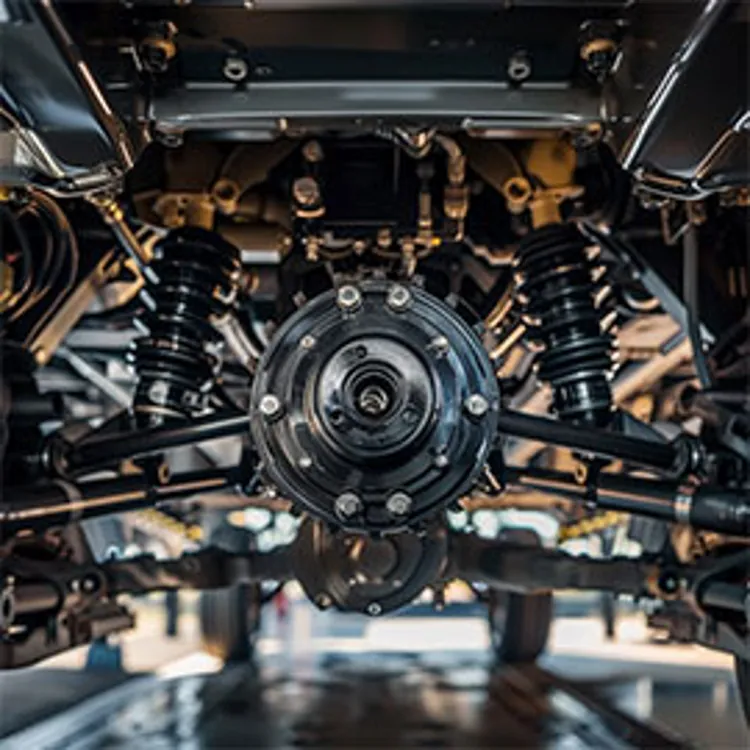
A front differential is a component found in front-wheel drive (FWD), all-wheel drive (AWD) and four-wheel drive (4WD) vehicles. It allows the front wheels to rotate at different speeds, which is essential when turning corners. Without this capability, tires would slip and wear unevenly and handling would be compromised.
The differential works by distributing engine power to the wheels while allowing them to spin at different rates. This function is especially important during turns, where the outside wheel needs to travel farther than the inside wheel. In many FWD vehicles, the front differential is built into the transmission, whereas in AWD and 4WD setups, it is often a separate unit.
Signs of a failing front differential
Identifying early signs of a failing front differential can help prevent further damage:
- Grinding noises: You may hear grinding or whining noises coming from the front of the vehicle, especially when turning or accelerating.
- Vibrations: Excessive vibration felt through the steering wheel or floorboard can indicate internal damage within the differential.
- Difficulty steering: If your vehicle is harder to steer or doesn’t respond predictably, the differential may be struggling to distribute power.
- Fluid leaks: Leaking differential fluid near the front axle area could signal a failing seal or internal issue.
- Uneven tire wear: A malfunctioning differential can lead to inconsistent torque distribution, causing uneven tire wear.
- Burning smell: Overheating components or low fluid levels might produce a noticeable burning odor.
How much does it cost to replace a front differential?
The cost to replace a front differential can range from $2,000 to $8,000-plus, depending on whether you drive a front-wheel-drive (FWD) or four-wheel-drive/all-wheel-drive (4WD/AWD) vehicle. (Rear-wheel-drive vehicles only have rear differentials.)
Front differentials are only found on vehicles that send power to the front wheels.
On FWD vehicles, the cost to replace a front differential can be particularly expensive because the diff is often part of the transmission itself.
“Typically on most cars that aren’t front-wheel drive, the transmission and the differential are two totally separate pieces,” said Sean Kim, an experienced mechanic in the Atlanta area. “But on a front-wheel drive car like the Honda Civic, the differential is built into the transmission.”
As a result, if the front differential fails on a FWD car, you may have to replace the entire transmission, too. That cost could range anywhere from $2,000 on an economy car (like a Honda Civic) all the way to $8,000-plus on a foreign luxury car (like the Mercedes-Benz CLA).
On 4WD/AWD vehicles, the front differential and the transmission are separate pieces. That means the cost to replace the front differential is often lower, but not by much. We were quoted $2,500 to replace the front diff on a Ford F-150 and $5,000 to replace one on a BMW 740i xDrive.
| Vehicle | Drivetrain | Parts cost* | Labor cost* | Total cost* |
|---|---|---|---|---|
| Honda Civic | Front-wheel drive (requires new transmission) | $1,000 | $1,000 | $2,000 |
| Mercedes-Benz CLA | Front-wheel drive (requires new transmission) | $4,500 | $3,500 | $8,000 |
| Ford F-150 | Four-wheel drive | $1,200 | $1,300 | $2,500 |
| BMW 740i xDrive | All-wheel drive | $2,500 | $2,500 | $5,000 |
Itemized cost breakdown
The total cost to replace a front differential is made up of several line items, each of which can vary based on your vehicle, location and whether new, rebuilt or used parts are installed. Understanding these components helps you spot inflated charges and compare estimates more accurately.
- Parts: The differential assembly is the biggest expense. A used or rebuilt front differential typically costs $800 to $2,000, while a brand-new OEM unit can run $2,500 to $4,000+, especially for luxury or AWD vehicles.
- Labor: Labor usually ranges from $700 to $1,800, depending on vehicle design and local labor rates. Front differentials are more complex than rear units on many AWD vehicles, which can increase labor time.
- Fluids: Fresh gear oil is required after installation. This typically adds $30 to $100, depending on fluid type and capacity.
- Miscellaneous fees: Additional charges may include shop fees, disposal fees, taxes or optional services like alignments, adding $50 to $200.
Regional and geographic variation in cost
Where you live plays a major role in how much you’ll pay for a front differential replacement. Urban repair shops typically charge higher labor rates due to increased overhead, higher wages and stronger demand. In large metro areas, hourly labor rates commonly range from $140 to $200, which can significantly increase total repair costs. Parts pricing may also be higher, especially if shops rely on local suppliers with limited inventory.
In contrast, rural and smaller-market shops often charge lower labor rates, sometimes $90 to $120 per hour, and may be more flexible with sourcing used or aftermarket differentials. However, fewer local options can mean longer wait times or added shipping costs if parts must be ordered from outside the area.
Because pricing varies so widely, it’s smart to use online estimate tools from repair marketplaces or auto service platforms. These tools help compare local averages, identify outliers and give you a realistic baseline before visiting a shop. Getting multiple regional quotes can prevent overpaying.
Impact of vehicle age, mileage and condition
A vehicle’s age, mileage and overall condition directly affect front differential replacement costs. Older vehicles may require additional labor due to rusted bolts, worn mounts or outdated designs, increasing both time and expense. High-mileage vehicles often show secondary wear that must be addressed during replacement.
For example, a 10-year-old SUV with 150,000 miles may need new axle seals, CV joints or bearings during the repair, adding several hundred dollars. By contrast, a newer vehicle under 80,000 miles may only require a direct replacement with minimal add-ons.
Poor overall condition also raises costs. Leaking fluids, neglected maintenance or drivetrain vibration can signal internal damage that complicates installation. Shops may recommend replacing related components to prevent repeat failures. Vehicles with detailed service records and clean undercarriages generally cost less to repair.
Basic differential repairs and their costs
Not every front differential issue requires full replacement. Early intervention can often resolve problems at a fraction of the cost. Common minor repairs include:
- Differential fluid change: $80 to $200
- Axle or pinion seal replacement: $150 to $400
- Bearing replacement: $300 to $800
- Minor gear adjustments: $250 to $600
Addressing these issues early helps prevent overheating, gear damage and complete differential failure. For example, fixing a $200 seal leak can prevent fluid loss that might otherwise lead to a $3,000+ replacement. Regular inspections and prompt repairs are the most effective way to control long-term differential costs.
How much does a front differential rebuild cost?
You might assume that a front diff rebuild would be cheaper than a wholesale replacement, but the challenge is finding someone to do it.
For our part, we couldn’t even find someone to give us a quote. Of the six independent shops and two dealers we spoke with, none of them said they’d be willing to rebuild a front differential.
90% of shops don’t do rebuilds.”
“You can call around and ask for a rebuild,” Kim told us, “but we wouldn’t do it for you. 90% of shops don’t do rebuilds.”
Deciding between repair, rebuild or replacement
When a front differential shows signs of trouble, mechanics follow a structured evaluation to determine the most cost-effective and reliable solution. The goal is to balance repair cost, long-term durability and vehicle safety.
Step 1: Initial inspection and test drive
The technician listens for grinding, whining or clunking noises and checks for vibrations, fluid leaks and handling issues. A short test drive helps confirm when symptoms occur and how severe they are.
Step 2: Visual and fluid inspection
The differential housing, seals and mounts are inspected for leaks or damage. Fluid condition is critical. Burnt, metallic or contaminated oil often indicates internal gear or bearing wear.
Step 3: Internal damage assessment
If external checks suggest deeper issues, the mechanic evaluates internal components. Minor wear or seal failures may justify a repair, while worn bearings or damaged gears often point toward a rebuild.
Step 4: Cost-to-value comparison
Mechanics compare labor hours and parts costs against vehicle age and mileage. If rebuild costs approach replacement pricing, or if damage is extensive, a full replacement is usually recommended for reliability.
Step 5: Long-term risk evaluation
Shops prioritize solutions that minimize repeat failures, especially on high-mileage or daily driven vehicles.
Do car warranties cover front differentials?
Front differentials are among the few dozen components covered under most powertrain warranties. So, even if your factory bumper-to-bumper warranty has expired, your remaining powertrain warranty may still cover your new differential (and transmission, if necessary).
The catch is that warranties only cover damage due to factory defects. If your differential failed due to an outside cause, your claim will be denied. That means your warranty won’t pay to fix differentials that fail due to:
- Damage (like from weather, accidents or vandalism)
- Abuse and misuse (like racing or off-roading)
- Neglect (like failing to perform the recommended maintenance from your owners manual)
» LEARN: What does a car warranty cover?
If you plan to drive your vehicle well beyond the factory powertrain warranty period, an extended powertrain warranty can help you insure yourself against pricey engine, transmission and drive axle repairs, including failing differentials.
The catch is that you need to buy an extended warranty before your diff fails if you want the replacement covered. Extended warranties almost never cover preexisting conditions, so if you’ve already noticed your differential failing, it’s too late.
Preventative maintenance tips for front differentials
While front differential replacement is costly, regular maintenance can significantly reduce the risk of premature failure and help you avoid thousands in repair bills. Many front differential issues develop gradually, meaning early care can extend component life and protect your budget.
Schedule differential fluid checks and changes. Old or contaminated gear oil is one of the leading causes of differential wear. Follow your manufacturer’s recommended service interval, and inspect fluid more frequently if you tow, drive off-road or operate in extreme temperatures. Clean fluid reduces friction, heat buildup and gear damage.
Watch for leaks. Inspect the differential housing and axle seals during routine oil changes. Even minor leaks can lead to rapid fluid loss, overheating and bearing failure. Replacing a leaking seal early is far cheaper than replacing the entire differential.
Avoid excessive strain. Overloading your vehicle, aggressive driving or frequent hard launches place added stress on the front differential, especially in AWD systems. Driving within manufacturer limits helps preserve gears and bearings.
Listen for early warning signs. Whining, grinding or vibration during acceleration often indicates early wear. Prompt diagnosis can turn a potential replacement into a smaller, less expensive repair.
Maintain related components. Worn CV axles, driveshafts or suspension parts can transfer abnormal forces to the differential. Keeping these components in good condition helps prevent uneven wear.
By staying proactive with maintenance, you can reduce the likelihood of a $2,000 to $4,000 front differential replacement and keep long-term ownership costs under control.
FAQ
Can a differential be repaired instead of replaced?
Yes, a differential can sometimes be repaired instead of replaced, but it depends on the type and extent of the damage. Minor issues, such as leaking seals, worn gaskets, low or contaminated fluid or failing bearings, can often be addressed with targeted repairs. These fixes are typically less expensive and may restore normal operation if caught early.
Replacement is usually necessary when there is significant internal damage, such as broken or severely worn gears, excessive metal contamination or a damaged differential housing. In these cases, repairing individual components may not be reliable or cost-effective. Mechanics also consider vehicle age, mileage and labor costs; if a repair or rebuild approaches the price of a replacement, installing a new or remanufactured differential is often the safer long-term solution.
What is a front differential?
A front differential is a set of gears that allows the front wheels to rotate at different speeds from one another on FWD/4WD/AWD vehicles.
As your vehicle turns a corner, the outside wheel has to rotate faster than the inside wheel since it’s traveling a longer distance. (Think of a runner on the outside lane of a track trying to keep up with someone on the inside lane — they’re going to have to hustle.)
Now, if the two wheels can spin freely from one another, that’s not a problem. But if they’re connected by a drive axle, something has to let them spin at different speeds.
That’s what your differential is for.
Additional related repairs and their cost impact
When a differential fails, mechanics often identify other components that need attention to ensure a complete and reliable repair. These related fixes can significantly affect the total cost.
Common related repairs include:
- CV joints or axles: Worn or damaged joints are often replaced at the same time, adding several hundred dollars per side.
- Driveshaft repairs: Bent or worn driveshafts can increase costs due to additional labor and parts.
- Wheel alignment: Required after drivetrain disassembly on some vehicles, typically adding a modest fee.
- Seals and gaskets: Pinion and axle seals are commonly replaced to prevent leaks and usually add a smaller parts cost with minimal extra labor.
- Bearings and mounts: Excessive wear may require replacement to avoid noise or vibration after installation.
Addressing these issues during the initial repair helps prevent repeat labor charges and reduces the risk of premature failure.
Can you drive with a bad front differential?
Driving with a bad front differential could lead to loss of control, putting yourself and others in serious danger. If you suspect that your front differential is failing, it’s best to pull over and have the vehicle towed and inspected ASAP.
OEM vs. aftermarket vs. remanufactured: what’s the cost difference?
OEM parts are the most expensive option. Built to factory specs with the best fit and consistency, but often not cost-effective for older vehicles.
Aftermarket parts are usually the cheapest upfront. Quality varies by brand, so reliability and longevity can be less predictable.
Remanufactured parts midrange pricing. Rebuilt to factory tolerances, typically include updated components and a warranty, offering the best balance of cost and reliability for most drivers.
How do you maintain your front differential?
Have your differential(s) inspected and the fluids replaced as outlined in your owners manual.
Article sources
ConsumerAffairs writers primarily rely on government data, industry experts and original research from other reputable publications to inform their work. Specific sources for this article include:
- Kelley Blue Book, “Mercedes-Benz Transmission Repair and Replacement Prices.” Accessed Dec. 13, 2025.
- AutoNation, “Front Differential Replacement Cost in 2025 (+ Is It Urgent?)” Accessed Dec. 13, 2025.