2020 Political Commentary and Analysis

Article Image

President-elect Biden appoints COVID-19 advisory team

President-elect Joe Biden has quickly established his priorities, appointing a COVID-19 Advisory Board to work during the transition to establish a national response to the pandemic that is surging across America.

Members include Dr. David Kessler, who was Food and Drug Administration (FDA) commissioner in both the George H.W. Bush and Clinton administrations and Dr. Vivek Murthy, the surgeon general under the Obama administration, who will serve as co-chair.

They’re joined by Dr. Marcella Nunez-Smith, an associate professor of internal medicine at Yale University; Dr. Ezekiel Emanuel, who served as a special adviser for health policy during the Obama administration.

Biden was declared president-elect Saturday after the mail-in vote count in Pennsylvania gave him that state’s 20 electoral votes. President Trump has not conceded and announced plans to file a legal challenge to Pennsylvania’s results.

The Biden campaign, however, has already moved into a transition phase, preparing to take power on January 20. In a statement, Biden identified COVID-19 as one of the most important challenges faced by the incoming administration.

“The advisory board will help shape my approach to managing the surge in reported infections; ensuring vaccines are safe, effective, and distributed efficiently, equitably, and free; and protecting at-risk populations,” Biden said.

Possible nationwide mandate

The board may also recommend nationwide mandates, reversing the Trump Administration’s policy of leaving the management of the pandemic to individual states. Under that policy, some states initiated more aggressive mitigation measures than others.

But cases of the virus are surging all across America, even in states with more stringent mitigation rules. Over the weekend the U.S. recorded 237,000 new cases of the virus with the total number of cases approaching 10 million. More than 287,000 Americans have died from the virus.

U.S. health officials are once again worried about the rate of hospitalizations as institutions in the hardest-hit states are filling up quickly.

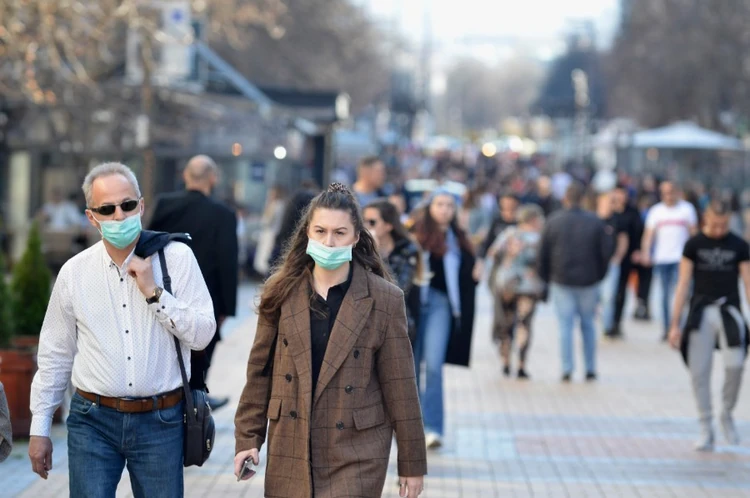
Biden made clear that any policy changes are likely to be instituted on a national level, and that could require an order that all Americans wear face coverings when gathered in public. The incoming administration said it plans to consult with state and local officials to determine what steps are needed to get the virus under control.

Article Image

Twitter restricts Trump campaign account for posting ‘hacked materials’

Twitter has temporarily restricted the Twitter account of President Trump’s re-election campaign, @TeamTrump. The step was taken after the account posted a video referring to a New York Post story from Wednesday which contained alleged details of presidential candidate Joe Biden’s son Hunter’s link to a Ukrainian energy company. 

After the account was barred from publishing new tweets, Republican lawmakers accused Twitter of being “speech police.” Donald Trump Jr. tweeted that Twitter’s ban represented “clear election interference.” 

Twitter said that it was within its rights to ban the account since its policies state that “hacked materials” and posts containing private information aren’t allowed. Facebook also limited the reach of the New York Post story. 

“We don’t permit the use of our services to directly distribute content obtained through hacking that contains private information, may put people in physical harm or danger, or contains trade secrets,” the company stated.

Not incentivizing hacking

Twitter said it took action against the account that posted the New York Post story because “the images contained in the articles include personal and private information — like email addresses and phone numbers — which violate our rules.” 

Twitter said its policy also prohibits users from distributing content obtained without authorization. 

“We don’t want to incentivize hacking by allowing Twitter to be used as distribution for possibly illegally obtained materials,” the company tweeted. 

Major outage

Shortly after restricting the president’s campaign account, Twitter’s website and mobile app experienced a widespread outage for an unknown number of users. Service was restored for most people by around 8 p.m. ET, and the platform explained that a change to its systems was to blame for the outage. 

“The recent issue was caused by an inadvertent change we made to our internal systems,” the company tweeted. 

Article Image

Consumers still have time to complete the 2020 Census

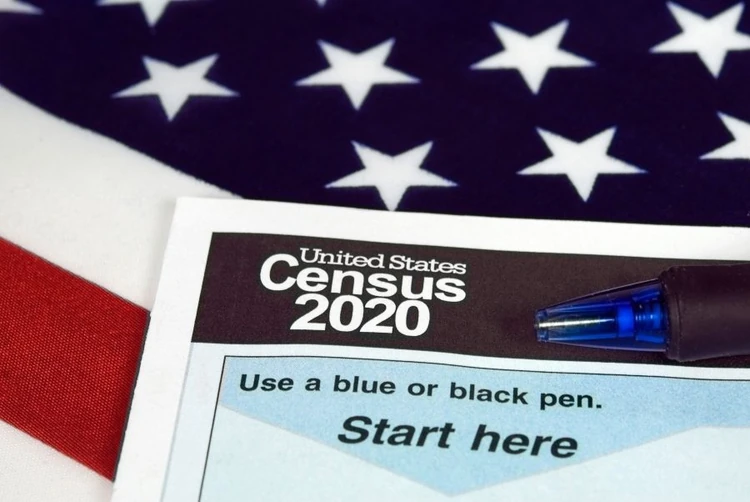
Although the original deadline to respond to the 2020 U.S. Census passed on Wednesday, consumers still have time to submit their answers to the mandatory questionnaire. 

With the coronavirus outbreak bearing down on the nation, the government has extended the deadline for completing the form and is strongly encouraging consumers to respond online via the Census Bureau’s website, by phone, or by mail. 

Completing the 12-question form now “will minimize the need for the Census Bureau to send census takers out into communities to follow up,” the Bureau notes. The self-response period of the census has been extended from July 31 to August 14 due to the COVID-19 pandemic.

Determines federal funding

Consumers are legally required to provide a tally of how many people reside in their household, regardless of their citizenship. Filling out the census helps shape a person’s impact on the government as a whole, as well as their community. Responses determine how many seats each state gets in the House of Representatives, how much federal funding will be given to your community, and more. 

For When We All Vote, a nonprofit civic engagement group launched in 2018 by Michelle Obama, released a video on Wednesday featuring famous faces encouraging people to participate in the census

“We can all take care of our communities – from the comfort of our couches!” said Tom Hanks, “Participate in the 2020 Census online, over the phone or by mail. These few minutes will make a difference and impact our democracy for years to come. Come on, everyone! Let's do it!”

Article Image

Young people are actively worrying about political issues, experts find

While it’s not uncommon for consumers to be stressed when it comes to political concerns, a new study found that adults aren’t the only ones expressing worry about the state of our country. 

According to researchers from American University, kids and teens are just as likely as adults to express concern over political issues -- particularly those that can affect their age group. 

“I was interested in finding out if worry about political issues extends to kids beyond those with anxiety disorders,” said clinical psychologist Nicole Caporino. “It turns out that it does. In our study, it was common for caregivers to report that their children have worried about political issues.” 

Are kids too worried?

To better understand kids’ attitudes about politics, the researchers had nearly 400 caregivers of children between the ages of six and 17 participate in the study. 

The participants went through a questionnaire that detailed 15 different voting measures and indicated if their child had expressed worry about the issue in the past. Participants were also required to indicate their political leanings. 

The researchers learned that worry related to political issues was common among young people, regardless of their mental health struggles or their caregivers’ political affiliation. However, most of the caregivers reported that their children expressed worry to some degree, political worry was heightened for those children who were already struggling with an anxiety disorder. 

Caporino says that some level of worry is expected and can actually be beneficial, but caregivers should be mindful of how concerned their children are on a regular basis. 

“...it’s not clear from these data that the worry experienced by the average kid is harmful,” Caporino said. “It may not be a problem that kids are worrying. We know that anxiety and worry, to a certain degree, are helpful because they motivate us to take action to improve what is troubling us.” 

Create a political dialogue

Moving forward, Caporino encourages parents to keep the political dialogue open with their children, as that is the best way to keep them informed and monitor their anxiety levels. 

“Youth are worrying about a wide range of issues, and especially those that disproportionately affect their generation,” said Caporino. “Talk to your kids to make sure that the information they’re getting is accurate, and that they’re not worrying unnecessarily because they’re making assumptions about political issues they don’t understand very well due to their development level.”