2024 Pet Care and Wellness

Article Image

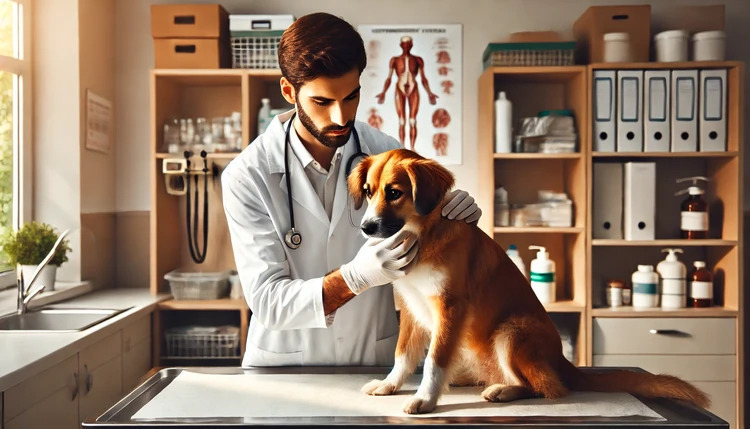
FDA cautions veterinarians about prescribing Librela for dogs

The U.S. Food and Drug Administration has warned veterinarians that an often-prescribed arthritis medication for dogs may be harmful.

In a cautionary letter, the agency said it had completed an evaluation of adverse events reported in dogs of various ages treated with Librela, an injected drug with the generic name bedinvetmab.

“The adverse events identified and analyzed include: ataxia, seizures, other neurologic signs, including but not limited to, paresis, recumbency, urinary incontinence; polyuria, and polydipsia,” the FDA said in the letter. 

It said that in some cases, death was reported as an outcome of these adverse events. 

The FDA approved Librela, a monoclonal antibody drug used for the control of pain associated with osteoarthritis in dogs, in 2023, and it was introduced to the marketplace later that year. 

Prior to approval, the FDA reviewed available studies and other data on Librela and determined Librela to be safe and effective for its intended use for control of pain associated with osteoarthritis in dogs. Librela is dosed by weight and labeled for subcutaneous injection once a month. 

The FDA advised veterinarians to report any adverse effects of the drug to Zoetis, the drug manufacturer. 

Article Image

Pet sales will soon be illegal in New York

If you were planning to buy a puppy as a holiday present in New York, you'll have to hurry, or find a shelter pet who needs to be rescued. Selling dogs, cats and rabbits through retail pet stores will be illegal in New York State starting December 15.

The pet sale ban is intended to stop dangerous large-scale breeding operations known as “puppy mills,” where animals are often mistreated and suffer from serious health issues. Puppy mills often misrepresent the health of the animals they breed and send retail stores sick pets that then cost families thousands of dollars in veterinary care.

Retail pet stores that continue to sell pets after December 15 can face penalties of up to $1,000 per violation. New Yorkers can still adopt pets from duly incorporated humane societies, animal rescues, or licensed breeders.

“Bringing a new pet into a family should be a time of excitement and joy, but often animals from ‘puppy mills’ suffer from serious medical issues and leave families heartbroken over their sick pet and with a heavy bill to pay,” said Attorney General Letitia James. “This pet sale ban will help put an end to the dangerous puppy mill to pet store pipeline that endangers pets and costs New Yorkers thousands of dollars in veterinary care."

Shake A Paw

Earlier this year, Attorney General James secured $300,000 from a Long Island pet store, Shake A Paw, for hundreds of consumers who were illegally and unknowingly sold sick puppies.

An OAG investigation revealed that Shake A Paw falsely advertised sick pets as healthy, failed to disclose the animals’ legitimate medical conditions, misrepresented puppies’ breeds, and refused to reimburse consumers for veterinary bills they incurred because the dogs they purchased were sick.

California was the first to ban retail pet sales

New York joins several states that have banned the retail sale of certain pets, particularly dogs and cats. As of November 2024, these states have implemented such bans:

  • California: In 2017, California became the first state to prohibit pet stores from selling dogs, cats, and rabbits unless they are obtained from shelters or rescue organizations.

  • Maryland: Enacted a similar law in 2018, banning the sale of dogs and cats in pet stores unless sourced from animal welfare organizations.

  • Maine: Passed legislation prohibiting the retail sale of dogs and cats in pet stores.

  • Washington: Banned sales of dogs and cats in pet stores. 
  • Illinois: Enacted laws restricting the sale of dogs and cats in pet stores.

  • Oregon: Enacted a ban on the sale of dogs and cats in pet stores.

  • Vermont: Implemented laws prohibiting the retail sale of dogs and cats in pet stores.

Cities & counties follow suit

In addition to state-level bans, numerous cities and counties across the United States have enacted local ordinances restricting or prohibiting the sale of certain pets in retail stores.

For instance, as of June 2022, over 400 cities and counties had passed such legislation.

It's important to note that laws and regulations can change over time. For the most current information, it's advisable to consult local government resources or reputable animal welfare organizations.
Article Image

Researchers develop algorithm to detect heart disease in dogs

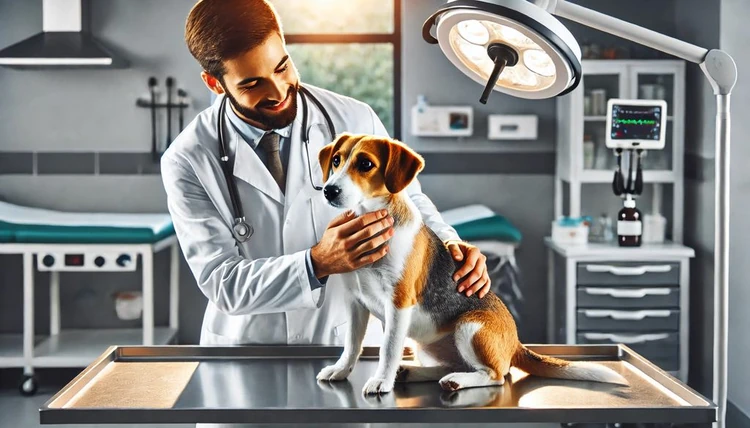
British researchers at the University of Cambridge have developed a machine learning algorithm to detect heart murmurs in dogs, which are a key sign of heart disease.

The algorithm, adapted from one used for humans, analyzes audio recordings from digital stethoscopes and can identify heart murmurs with 90% accuracy—similar to expert cardiologists.

Heart disease is common in dogs, especially in small breeds like King Charles Spaniels, making early detection important. This tool could help veterinarians catch heart problems sooner and provide timely treatment, improving dogs' quality of life.

Medication must be timely

“Heart disease in humans is a huge health issue, but in dogs it’s an even bigger problem,” said first author Dr. Andrew McDonald from Cambridge’s Department of Engineering. “Most smaller dog breeds will have heart disease when they get older, but obviously dogs can’t communicate in the same way that humans can, so it’s up to primary care vets to detect heart disease early enough so it can be treated.”

Professor Anurag Agarwal, who led the research, is a specialist in acoustics and bioengineering. “As far as we’re aware, there are no existing databases of heart sounds in dogs, which is why we started out with a database of heart sounds in humans,” he said. “Mammalian hearts are fairly similar, and when things go wrong, they tend to go wrong in similar ways.”

In humans with valve disease, the only treatment is surgery, but for dogs, effective medication is available. “Knowing when to medicate is so important, in order to give dogs the best quality of life possible for as long as possible,” said Agarwal. “We want to empower vets to help make those decisions.”

“So many people talk about AI as a threat to jobs, but for me, I see it as a tool that will make me a better cardiologist,” said Professor Jose Novo Matos. “We can’t perform heart scans on every dog in this country  – we just don’t have enough time or specialists to screen every dog with a murmur. But tools like these could help vets and owners, so we can quickly identify those dogs who are most in need of treatment.”

The findings were published in the Journal of Veterinary Internal Medicine.

Article Image

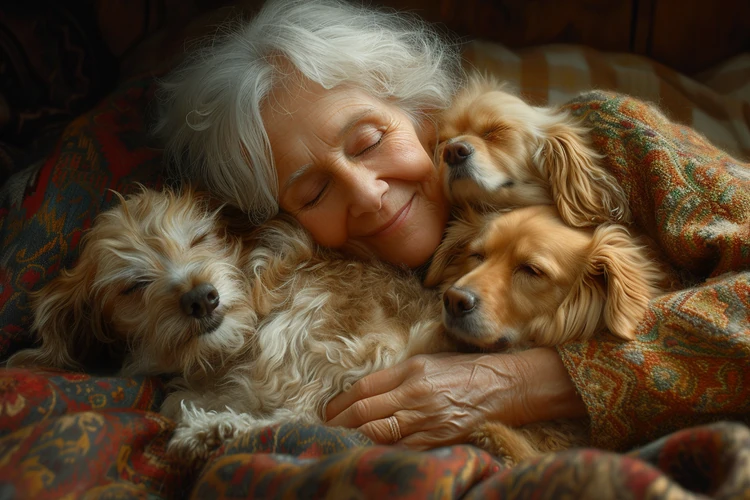
Do you sleep with a pet? There are pluses and minuses.

Is sleeping with your pet a good thing or a complete no-no? Animal experts say it’s not exactly an open and shut case.

Jacqueline Boyd, a senior lecturer in Animal Science at Nottingham Trent University, says that sharing your living spaces with a pet is one thing, but sharing beds is a much more personal proposition. 

“While it might be enjoyable and relaxing to share resting time with your pet, it could come with risks to pet and human health, not to mention impacts on sleep hygiene and human relationships too,” she writes.

Sleep – a dog with two heads

And if you’re having insomnia issues, Boyd said the risks may go higher.

“One challenge of sharing your bed with your pet could be disturbed sleep. The movement of sleeping partners -- two or four-legged -- may lead to reduced sleep efficiency,” she said.

If sleep disturbance affects your well-being, encouraging your pet to sleep elsewhere within the bedroom could also be beneficial. The same applies to our pets, so it may be beneficial for them to have their own sleeping space as well.

However, Boyd says that depending on the person, the pet, and the situation, things could change.

For example, if you have a bed large enough to accommodate everyone, that issue loses some of its steam. 

She also says that another possible positive is that pets can offer companionship, security – and if you get one big and wooly enough – even some warmth.

“More than 80% of dogs examined in studies preferred to be close to people at night, suggesting another mutual benefit,” she noted. “Different species of pets also appear to spend time resting together, so if you have a multi-pet household, all might enjoy shared sleeping.”

Bed bugs

Pets and bugs aren’t exactly strangers and, sometimes, Fido may bring a flea, tick, mite, or lice into your bed and, once there, those parasites tend to wander under the covers in search of fresh flesh to irritate. 

Much of the harm a bed bug can do isn’t that troubling, but there are parasites that can lay eggs and make humans sick and bacteria, viruses, and fungi like antibiotic-resistant bacteria such as MRSA that is often fatal. You can even share infections with your pets, too – including COVID-19 – so it’s not all one-sided.

What breeds are the worst in this regard? One of Boyd’s peers – British vet Ben Simpson-Vernon, says that dachshunds and Cavalier King Charles Spaniels are among the unhealthiest dog breeds.

Allergies? Emotional issues?

“Sharing intimate contact with pets does raise the potential for increasing allergic responses or injury risk,” Boyd said, pointing to minor, unintentional injuries such as scratches.

And if your allergist’s pinpricks uncovered the fact that you might have issues with dust and dander, your pet’s hair could make that worse than you might like. 

Boyd brought up the point that just like we can grow emotionally dependent on our pets for comfort, some pets may also develop behavioral concerns such as separation anxiety as a result of sharing intimate spaces and prolonged contact with their human. 

Here, again, she draws another line in the sand. “Conversely, some owners choose to allow their pet access to sleeping areas to reduce problem behaviors such as door scratching or nighttime vocalizing,” a problem she suggests best handled with consistent training. 

'Cleaning up' your act

Boyd suggests that if your answers to all her concerns fall in the good column, do yourself one last favor: keep things clean!

Her bullet points to ensure a clean and safe sleep environment for both you and your pet, are:

Regular bedding changes:

  • Everyone: Wash sheets weekly for a clean sleep. Pet owners: Launder bedclothes every 3-4 days to manage pet-related dirt and potential allergens.

Minimizing contamination:

  • Pets are furry dirt magnets: Their paws, especially after walks, can harbor bacteria and parasites. Clean paws with pet wipes or a damp cloth upon returning indoors.

Grooming for health and happiness:

  • Regular grooming and bathing will not only keep your pet clean and healthy but also strengthen your bond and minimize the spread of potential infections.

  • Consult your vet about Antiparasitic treatments. They effectively control internal and external parasites, protecting you, your pet, and other furry friends.

Additional tips:

  • Consider using a dedicated pet blanket on your bed.

  • Vacuum your mattress regularly to remove pet hair and dust.

  • Wash pet toys frequently.

  • Maintain good hand hygiene after interacting with your pet and before bed.

“With good hygiene and management, the choice to share your sleep with your pet might just give you both a great night’s sleep,” she concluded.