2023 Parenting Guidance and Tips

Article Image

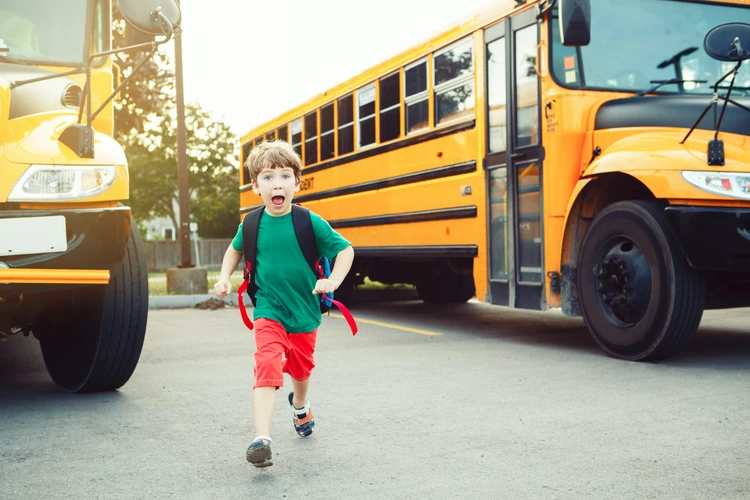
Would you want your kid's school bus tracked? Guess what – it happened.

Getting to and from school is supposed to be a safe activity – supposed to be. But, if your child rides the school bus, there may be more nonsense going on than them getting a noogie or getting their pigtails pulled.

Security company Tenable says it found security flaws in Edulog's Parent Portal, which thousands of K-12 districts use to enable parents to follow their students' bus routes. 

If you’re thinking it’s no big deal, think about this: If someone cunning enough wanted to pinpoint the names of students, what bus they’re riding on, how to contact their parents, the bus’s current location, pick-up and drop-off times, and notifications about delays or route changes, wouldn’t you be a little worried?

It's undetermined just how many kids and parents were at risk. Edulog doesn’t disclose an exact number of app users on its website and did not respond to a ConsumerAffairs request for such data, but those 7,500 school districts it works with are in 49 US states. 

Those include Henrico County Va., (Richmond) where school buses transport 28,000 students daily, Durham N.C., where 18,000 students ride the bus, and Jefferson Co. Public Schools (Louisville) where some 10,000 parents reportedly have downloaded the app after a massive bus issue that caused the school district to close school for a week. 

Edulog takes action – but was it enough?

Fortunately, this story’s ending is half good and half, hmm. When Tenable made Edulog aware of these gaffes, Edulog sat up, listened, and patched  the flaws, so they aren't exposed to cybercriminals anymore. 

The flip side of this is that ConsumerAffairs understands that Edulog has decided not to tell customers that there ever was a security issue, so it’s possible that parents will remain in the dark that their kids could have been tracked by bad actors unless school districts opt to go public with that information.

“Even without the vulnerabilities discovered in the Parent Portal services, there isn’t necessarily anything stopping a malicious actor from signing up for an account and obtaining a registration code for a given school through other means," Jimi Sebree, senior staff research engineer at Tenable said.

"The actor could ask another parent, call the school and pretend to be a parent or simply search for one on the internet."

ConsumerAffairs asked both Edulog and several school districts what was being done in light of the report. Only Peoria Unified (AZ) responded, saying it is working with Edulog on the issue and to its knowledge, there has not been any data breach of its students' data.

Parents, school districts need to take action

Getting to and from school is supposed to be a safe activity, and this is just one of the hundreds of apps and software schools use every day. However, app companies can play it loose with apps that school districts suggest their students use. One report found that 96% of educational apps share children’s personal information with third parties.

“This is a situation where all those involved – Edulog employees, agents for the school districts, and parents using the services – are responsible for making sure the data relating to these services is handled properly,” Tenable said.

Tenable says that any parent concerned about their child’s privacy should examine what data the app developer says it’s using.

The App Store and GooglePlay stores both require apps to list permissions used by the apps. They don't necessarily require any transparency regarding the types of data collected, but if you’re a parent and want something more definitive as to what kinds of information schools are able to share with private parties, FERPA is probably the best reference.


Article Image

CPSC shares information on toy-related injuries, deaths in 2022

The Consumer Product Safety Commission (CPSC) has released its 2022 Toy-Related Deaths and Injuries report for children aged 14 and younger in the United States. 

The data from the last calendar year highlight some of the toys that pose the biggest risk to children’s health and well-being. 

“For toy-related deaths and injuries, it is important to note that although a toy was associated with many of the incidents, the toy was not necessarily the cause of the death or injury,” the CPSC wrote. “Additionally, due to delays in death certificate reporting, fatality information is not yet complete, especially for 2021 and 2022.” 

Toy-related injuries 

Over the course of 2022, the CPSC received information of roughly 209,500 toy-related injuries that required emergency department attention. The report found that the head and face were the most commonly injured parts of the body and lacerations were the most frequent type of injury. 

As for what toys were the source of these injuries: non-motorized scooters. Among all age groups – four years and younger, 12 years and younger, and 14 years and younger – non-motorized scooters accounted for the largest percentage of injuries. 

The CPSC learned that older kids were more likely to experience serious toy-related injuries. Children aged 14 and younger experienced over 75% of such injuries. Comparatively, children aged 12 and younger experienced 69% of these injuries, while children aged four and younger experienced 38%. 

Toy-related deaths

Over the course of 2022, the CPSC learned of 11 toy-related fatalities, all of which were among children under the age of 12. In 2020, there were 12 toy-related fatalities, and in 2021, there were six. 

Balls and bouncy balls were found to be the riskiest toys when it came to children’s mortality in 2022, including both choking and blunt force trauma to the head. Choking was the culprit of the most toy-related fatalities, which was consistent over the last few years. 

There were also a few instances reported of children getting hit by cars while riding their bikes or tricycles, as well as asphyxia from mylar balloons and stuffed animals. 

For parents, it’s important to know what items in their homes might be the biggest risk to their kids’ lives. 

Toy-related injuries are declining

The CPSC report also found that toy-related injuries among all ages have been steadily declining since 2015. That year, the national estimate of toy-related injuries was at 244,400, compared to 209,500 in 2022. 

In the last several years, 2017 had the highest number of toy-related injuries (251,700), and 2020 had the lowest number of toy-related injuries (198,700). 

Article Image

Child fatalities from drowning remain high, says CPSC

Summer should be a carefree time for families enjoying the warmer weather and outdoor activities.

But that's not always the case.

According to the U.S. Consumer Product Safety Commission's (CPSC) annual drowning and submersion report, fatal child drownings and nonfatal drowning injuries for children under age 15 remain high.

Among the findings

  • There was an average of 371 pool- or spa-related fatal drownings reported per year between 2018 and 2020. The good news is the number of fatal drownings in 2020 was 340 -- down approximately 7% from previous year, when 367 children died.
  • The number of estimated non-fatal drowning injuries in 2022 was 6,400 -- statistically the same as in 2021.
  • Among children under 15, there were -- on average -- an estimated 6,300 pool- or spa-related, hospital emergency department (ED)-treated, nonfatal drowning injuries each year from 2020 through 2022. Seventy-six percent of these nonfatal drowning injuries involved children younger than five years of age.
  • Pool- or spa-related fatal child drownings involving children younger than five increased by 10% in 2020 with 279 fatalities reported, compared with 2019 when 254 fatalities were reported. Of the reported pool- or spa-related fatal child drownings, 75% involved children younger than five years of age.
  • Where location was known, 80% of reported fatal child drownings occurred in residential settings such as the victim’s home, or that of a family member, friend, or neighbor, with 91% of those drownings occurring in those younger than five years of age.
  • Child drownings continue to be the leading cause of death among children ages one to four years old. CPSC urges families with young children and those in historically excluded communities to make water safety a priority, particularly as they spend more time in and around pools during the summer.

Racial disparities in drowning fatalities

Out of the 63% of all drowning fatalities involving children whose race is identified, African American children made up 21% of all drownings.

For older children -- aged five to 14 with race identified -- 45% of drowning deaths involved African Americans. These data highlight the need to reach historically excluded communities with water safety information and support, said CPSC.

What you can do

“The fatalities from drowning and non-fatal drowning injuries are still high, so water safety vigilance remains crucially important this summer and all year,” said CPSC Chair Alex Hoehn-Saric. “CPSC urges parents and caregivers to follow Pool Safely safety steps.

Specifically:

  • Never leave a child unattended in or near water, and always designate an adult Water Watcher. This person should not be reading, texting, using a phone or being otherwise distracted. In addition to pools and spas, this warning includes bathtubs, buckets, decorative ponds, and fountains.
  • If you own a pool or spa, install layers of protection, including barriers to prevent an unsupervised child from accessing the water. Homes can use door alarms, pool covers, and self-closing, self-latching devices on fence gates and doors that access pools.
  • Learn how to perform CPR on children and adults. Many communities offer online CPR training.
  • Learn how to swim and teach your child how to swim.
  • Keep children away from pool drains, pipes, and other openings to avoid entrapments.
  • Ensure any pool and spa you use has drain covers that comply with federal safety standards. If you do not know, ask your pool service provider about safer drain covers.

A list of CPSC pool safety tips may be found here.

Article Image

Popular infant lounger may increase the risk of suffocation/injury, CPSC warns

Sleep is important for any child, but safe sleep is of the utmost importance for newborns and infants. 

While it’s not uncommon for parents to put infants in a sleeper or lounger, safety in these chairs continues to be the top priority. Now, the Consumer Product Safety Commission (CPSC) is warning consumers about the safety risks of a specific infant lounger: the Momaid lounger. 

“The loungers fail to meet the safety requirements of the CPSC’s Infant Sleep Products Rule because they do not have a stand,” the agency wrote. “In addition, the lounger fails to meet the side height, markings and labeling, and instructional literature requirements. These failures create an unsafe sleeping environment for infants.” 

As part of the CPSC’s Infant Sleep Products Rule, manufacturers are also required to print the manufacturing date, as this helps identify products that were sold before and after these safety rules were put into place. The Momaid loungers don’t have this information, or any kind of tracking label, making it difficult to know if the products were manufactured under previously unsafe regulations. 

According to the agency, failure to meet these standards increases infants’ risk of falling or suffocation. 

What to avoid

For consumers who may have one of these loungers at home or want to know what to avoid, Momaid is selling the loungers as follows: Baby Lounger Portable Infant Co Sleeping Bassinet Newborn Cocoon Snuggle Reversible Bed Nest Travel Crib. 

They typically list for $55 on Amazon and other popular websites, and they come in four different colors – Blue Palm Leaf, Pink Lychee Leaf, Blue Lychee Leaf, and Banana Gray Leaf – and they also come with a pillow. 

According to the CPSC, the product comes from Zhejiang Juster Trading LLC. At the time this warning was issued, the company had opposed formally recalling the product, disagreeing with the agency's conclusions. 

Should any parents have these loungers at home, the CPSC encourages you to stop using them immediately and dispose of them. The CPSC is working now to stop the sale of these infant sleepers. 

Promoting safe infant sleep habits

The CSPC released its Infant Sleep Products Rule in June of 2022 at the same time that the American Academy of Pediatrics released new guidelines to promote safe sleep among this vulnerable population. 

Below are some of the tips for parents to consider when preparing for naps or bedtime with infants: 

  • Keep infants flat on their backs and on level surfaces when sleeping 

  • Never have infants sleeping with stuffed animals, toys, blankets, or pillows 

  • Infants – especially those under four months old – shouldn’t be sleeping in their car seats or on any inclined surfaces 

  • Infants don’t need to be swaddled beyond three or four months old (this can be dangerous once babies become more mobile)

  • Be vigilant about any products marketed toward reducing the risk of SIDS (sudden infant death syndrome), as no official evidence has come out regarding specific products protecting infants’ health. 

Article Image

The Toy Association unveils its Summer Learning STEAM Toy List

With summer vacation right around the corner, it’s time for parents to start thinking about summer plans for their kids. While trips to amusement parks or days at the beach might be on your calendar, what happens when it rains? 

To help parents fill the summer days in ways that don’t involve TVs, tablets, or other avenues for screen time, the Toy Association has released its top 30 Summer Learning STEAM (Science, Technology, Engineering, Arts, and Math) Toys. 

To make it on the list, toys were required to pass the Toy Association’s STEAM Assessment Framework, which has three key factors: 

  • ‘Good Toy’ characteristics: fun and engaging, easy to use, supports skill development, and inclusive

  • Prime STEAM Attributes: real-world relevance, active involvement, arts, logical thinking, free exploration, and supports step-by-step learning

  • Specific STEM Categories: science, technology, engineering, and math 

“The new framework provides detailed, age-by-age criteria (2-3 years, 4-6 years, 7-9 years, 10-12 years, and 12+ years) for each STEM-specific category,” the Assessment Framework states. “It draws on child development milestones, a collection of U.S. learning standards, and an independent review of existing STEAM toys. 

“Working within the framework to be considered a STEAM toy, the toy must have: 

  • All four characteristics of a ‘Good Toy’ 

  • All six prime STEAM attributes

  • Potential to support at least two of the specific STEM categories

Which toys made the list?

The Toy Associations’ official Summer Learning STEAM Toy List is as follows: 

  • 92 Piece Ball Run Pack (Connetix)

  • Ant Mountain (Insect Lore)

  • Build-A-Bubble (South Beach Bubbles)

  • Builder Motor Set (Brio)

  • Carnival Plus Set (Magformers)

  • Cookie Festival (Weplay)

  • Cubendi (Fun in Motion Toys)

  • Curious Kingdom (Playper)

  • Deluxe Jumbo Cardboard Blocks (Melissa & Doug)

  • Discovery #MINDBLOWN Action Circuitry Electronic Experiment Set (Discovery)

  • Discovery #MINDBLOWN Dinosaur Construction Set (Discovery)

  • DUPLO My First Puppy & Kitten with Sounds (LEGO)

  • Freefall (ThinkFun)

  • Geomag 75pcs (Geomagworld)

  • Get Well Doctor’s Kit Play Set (Melissa & Doug)

  • Giant Tumbling Timber (Giantville Games)

  • Gravitrax Starter Set (Ravensburger)

  • Jumbo Circus (Weplay)

  • Marble Rush Tip and Swirl Set (VTech)

  • Mini Diamond 120pc + Figures + Car Set (Picasso Tiles)

  • National Geographic Dinosaur Terrarium (Blue Marble)

  • National Geographic Mega Craft Kit (Blue Marble)

  • National Geographic Mega Science Magic Kit (Blue Marble)

  • Snap Circuits Green Energy (Elenco)

  • Snap Circuits Junior (Elenco)

  • Stanley Jr. DIY Pull Back Airplane Kit (Red Toolbox)

  • STEM Master Builder 24pc Set (Magformers)

  • STEM Master Builder 14pc Set (Magformers)

  • Supercolor Panels 78pcs (Geomagworld)

  • Trestle Tracks Deluxe Set (Fat Brain Toy Co.)

“Each of the carefully curated STEAM toys on the list can offer children hours of educational fun,” said Anna Yudina, senior director of marketing at The Toy Association. “Parents can feel confident in knowing these are quality toys that will invite kids to be actively and independently involved in their learning, while teaching them fundamental STEAM skills in creative and exciting ways.” 

Article Image

Did you miss Mom’s Day? Not to worry – the federal government has a few $-saving gifts of their own to give her

If you blew it on Mother’s Day and didn’t get mom a gift, not to worry – the U.S. government has a few they’d like to give her, and all the stepmoms, grandmothers, and mother figures as thanks for all they do.

Nope, it’s not candy or flowers or a rebate check for being a good mom, but rather four little-known programs that financially support women and mothers who take care of themselves and their flock.

Child Care help

Anyone who has an infant knows that the cost of childcare is a runaway train. The median yearly childcare price for one child in center-based infant care now runs more than $8,000 in small counties to more than $17,000 in very large counties. Even the parents who opt for home-based infant care could be looking at anywhere from $6,000-$11,000 out of pocket. 

Luckily, the Child Care and Development Fund helps low-income families with children under 13 afford childcare. The program helps make sure that children are safe, healthy, and growing while their parents are working or attending school.

Additionally, the Child Care Resource and Referral Services program helps find childcare programs that meet a family’s needs. In order to qualify for this benefit program, you must be a parent or primary caregiver responsible for children under the age of 19 years or responsible for a child(ren) with a disability.

Nutrition help

The WIC program (Special Supplemental Nutrition Program for Women, Infants, and Children) provides supplemental foods, health care referrals, and nutrition education to women who are pregnant, nursing, postpartum, or with children feve years old or younger – if they are considered low income. Services are also available to infants and children up to age five who are nutritionally vulnerable. 

An added benefit of WIC is that it can be combined with other programs like the Supplemental Nutrition Assistance Program, Medicaid, or Temporary Assistance for Needy Families. 

The WIC’s How to Apply page has further information.

Women's Health Care Benefits for Veterans

Moms who have served in the military have the Department of Veterans Affairs (VA) to thank for six comprehensive medical services for women. These services include:

  • Health promotion and disease prevention

  • Primary care

  • Mental health services

  • Women's gender-specific health care (e.g., hormone replacement therapy, breast and gynecological care, maternity, and limited infertility

  • Acute medical/surgical, telephone, emergency, and substance abuse treatment

  • In-home, rehabilitation, and long-term care

This program is available at all VA Medical Centers and the only qualification is that an applicant has to be enrolled in the VA health care system or qualify based on one of the exceptions in the law. Anyone interested should check out the Basic Medical Benefits Package for Veterans to see the complete program requirements.

Family Planning Services

Several local clinics are operated by Family Planning Services to provide family planning and preventive health services to women and their families. To help you decide how many and how far apart to have children, these services include educational resources, medical screenings, and social services. The Clinic Finder will help you locate a clinic near you and how to apply.

And there are federal benefits for more than just parents, too

If you think that the only people who receive federal benefits are low-income Americans, you’d be wrong. Yes, a lot of public benefits go to senior citizens who’ve paid for those services over a lifetime of work, but many middle-class families are eligible for these programs. 

To find out what benefits and resources you might qualify for, check out the U.S. government's Benefit Finder. The form can take anywhere from 10 to 30 minutes to finish, but once you have completed the questionnaire, you will receive a list of government benefits you may be eligible for and where you can apply. By the way, all answers are kept confidential. 

Article Image

Infant death prompts Baby Trend stroller warning

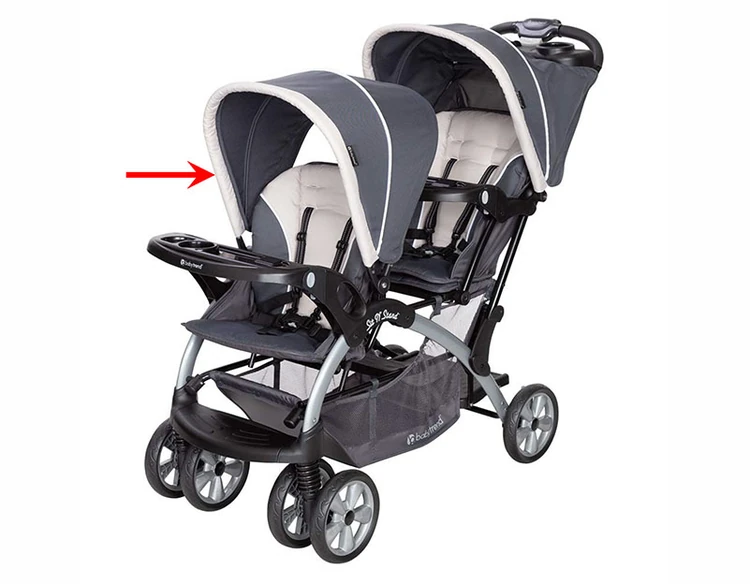
The U.S. Consumer Product Safety Commission (CPSC) and Baby Trend are warning parents about a risk of head or neck entrapment between the pivoting front canopy and the armrest or seat back of Baby Trend’s Sit N’ Stand Double and Ultra strollers.

Affected strollers have model numbers beginning with “SS76” or “SS66." The company has not issued a recall.

A child’s head or neck can become trapped by the canopy if another child climbs on the exterior of the stroller or when a child in the front seat of the stroller is not securely restrained in the seat using all five points of the harness. Entrapment could lead to a loss of consciousness, serious injury, or death.

Baby Trend has received one report of neck entrapment in the space between the front of the canopy tube and armrest of a Baby Trend Sit N’ Stand double stroller, resulting in the asphyxiation death of a non-occupant 14-month-old whose father was nearby but was unable to see the child. 

Baby Trend has also received one report of entrapment in the space between the back of the canopy tube and the seat back of the front seat, resulting in neck bruises to a 17-month-old child, who was partially secured. 

Remove the canopy

Consumers can mitigate the hazard by removing and separately storing the canopy when not in use, not allowing children to play on the strollers, and always fully securing children in the strollers with the built-in five-point harness. 

The Sit N’ Stand Double and Ultra strollers, model numbers beginning SS76 or SS66, have a black or silver frame and a black tray at the front with oval cutouts on the sides. “Sit N’ Stand” is printed in white on the sides of the frame. “Baby Trend” is printed on the side of the mesh basket under the seat. The model number is printed on a sticker located on the left inside rear of the frame, near the left rear axle. The Sit N’ Stand strollers have been sold nationwide since 2009.

The popular strollers have been and are sold online at www.babytrend.com, Amazon.com, bedbathandbeyond.com and other online retailers. They have also been sold in stores such as  Walmart, Target, Kohl’s, and buybuy BABY.

What to do

Instructions on how to remove the detachable canopy for Sit N’ Stand Double or Ultra strollers with model numbers beginning SS76 or SS66 are provided in the product manual.  Consumers are encouraged to report incidents or injuries associated with the Baby Trend Sit N’ Stand Double or Ultra strollers or with any product to CPSC at www.SaferProducts.gov. 

Consumers may also direct questions regarding Baby Trend products to Baby Trend at 800-328-7363 from 9 a.m. to 4:30 p.m. Pacific Time Monday through Friday or by email at info@babytrend.com.

Article Image

Lowe's could be the site of your kid's next birthday party

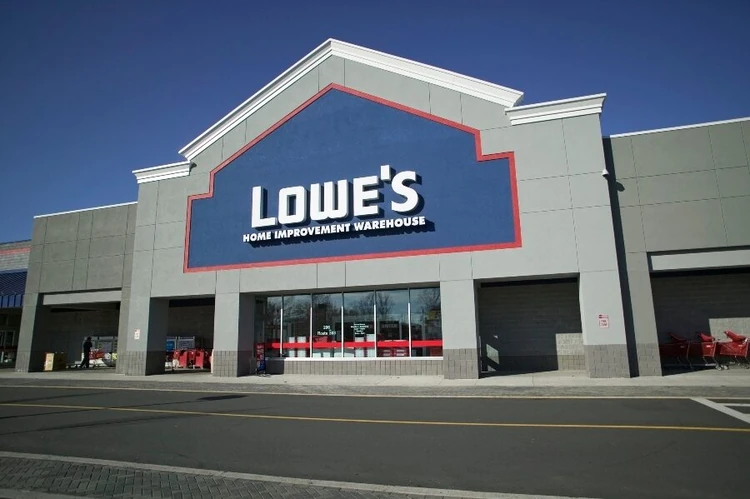
Are you looking for the location for your kid’s next birthday party? You may need to look no further than your local Lowe’s store. 

The home improvement store has announced that it will begin hosting kids’ birthday parties. The goal is to expose kids to building from a young age, while also supplying parents with everything they need for a successful birthday party. 

“Home improvement is about the whole family and that’s why we have Weekending at Lowe’s events every Saturday at our stores, including our kids’ workshops that help us feel connected to our littlest DIYers,” said Jen Wilson, senior vice president, enterprise brand and marketing at Lowe’s. “And this launch is a natural extension of that relationship – not only do we want to inspire future builders, but we want DIY – and Lowe’s – to be an integral part of family milestones and memories.” 

Getting creative with kids 

Lowe’s will kick off its Build a Birthday series in 10 markets across the country: 

  • Franklin, TN

  • North Peoria, AZ

  • Orem, UT

  • Central Dallas, TX

  • Brooklyn, NY

  • Naperville, IL

  • Eastlake, CA

  • North Bergen, NJ 

  • Huntersville, NC

  • Noblesville, IN

The parties are designed for kids ages five and older and can accommodate as many as 20 kids. The base party packages are for parties of 12 kids, and parents have the option to upgrade to include 20. 

Every child gets some Lowe's swag

Every child in attendance will receive a DIY project kit and a party favor from Lowe’s, which includes backpacks, water bottles, or t-shirts. Parents will have the opportunity to book their children’s birthday parties on Fridays, Saturdays, and Sundays, and they can upgrade their party package to include pizza, dessert, and drinks from Domino’s

The DIY projects include race cars, wooden castles, or even custom shelves, and all kids will receive the proper safety equipment to help prevent any potential injuries.

The group will also be assisted by a Lowe’s employee to guide them through the building project and teach them the ins and outs of these activities. 

For more information, click here. 

Article Image

Parents aren’t doing enough to protect their children against Frankenstein fraud, new report suggests

“Synthetic identity fraud” isn’t a term that’s batted about much in the news, but it may be the biggest problem facing Americans today. The Federal Trade Commission (FTC) says that nearly 85% of all identity theft cases are actually synthetic – meaning that a fraudster creates a new identity using a combination of real and fake information. 

This might include using a real Social Security number (SSN) along with a fake name and address or using a real name and address with a fake SSN. The goal is to create an identity that appears legitimate to financial institutions and government agencies, which can then be used to open new accounts, apply for loans, get a credit card, buy a car, collect unemployment, or commit other forms of fraud.

“Think of it as Frankenstein fraud since thieves piece together information from different people to create one new identity,” the Security.org team said in a new report covering the issue.

The biggest targets are children

Children are excellent targets for synthetic ID fraud because they are basically unmonitored in the world of consumerism, with no real credit history for a creditor to take a look at. 

“[Fraudsters] prefer numbers issued in the past 18 years since they’re likely to belong to minors. Children typically don’t apply for loans or credit until age 18, giving criminals ten or even 15 years to wreak havoc before anyone notices,” the researchers said.

The sad thing is that if a child’s SSN has been purloined by a fraudster, by the time they go out in the real world, their creditworthiness could be laid to waste. Student loan? Forget it. New home? Forget it. 

According to Security.org’s report, two out of every three parents are clueless about synthetic identity fraud. Most never check their children’s credit reports or use credit monitoring services to track their children’s credit activity. 

How the game is played

The moment an identity thief gains access to a Social Security number, they’re off to the races. Step number one is applying for credit online. And if they’re turned down? No biggie. And if they apply for $1,000 credit line and only get $500, no great loss there because they’re $500 richer, and if they’re smart, they pay the $500 off on time so they can start a credit history – one which will eventually bring in larger credit limits.

At a point where an ID thief amasses $10,000 to $15,000 worth of credit, a “bust out” occurs, and the perpetrators go on a shopping spree, then – poof! – evaporate from the credit scene, no longer worrying about debt. After all, those things they bought on their way out aren’t really attached to their credit history, but some 10-year-old kid in Paducah, Ky. whose SSN they stole.

And parents will know their child is a victim quickly, too. They’ll start to get documents relating to unemployment benefits you never applied for, credit card offers in the mail, and maybe even a letter from the IRS about delinquent taxes or notices that your government benefits application or student loan application has been denied.

How parents can protect their kids’ SSNs

The Security.org team said the first box parents should check is limiting the number of places where their child’s SSN appears. For example, you might keep the physical card with the number in a locked file drawer and perhaps keep a password-protected computer file with the number.

Other tips to protect your child’s data include:

  • Don’t give out SSNs whenever requested. Camps, caregivers, and schools must have a good reason to ask for kids' SSNs. Often, they do not, so leaving SSN fields blank is a parent’s right.

  • Be very selective about who can access personal data. The researchers said that more often than not, victims of synthetic identity theft know the perpetrator. It could be the parent of a friend or a weird uncle, but locking up a kid’s Social Security card and number can help protect their identity.

  • Check with your child’s school about their cybersecurity policies and encourage them to strengthen their standards. Also, find out how they protect your child’s data during online educational activities.

  • Teach your kids what’s appropriate to share when chatting with people online: Explain to your kids that they should not share home addresses, phone numbers, SSNs, and other data online, and monitor their online activities.

  • Check your child’s credit score – maybe even set up monitoring their credit. Better safe than sorry. And, remember, credit scores are free.

And if your child’s SSN is stolen and winds up in the hands of a synthetic identity thief? The first thing to do is to go to identitytheft.gov to get started on a recovery plan. There, you can pick and choose the situation that fits you best. For example, if someone files a federal tax return using your information or used your (or your child’s) details to file for unemployment insurance. 

Also, contact all the companies where you know fraud happened. “When contacting the company or firm where the fraud occurred, explain that someone stole your child's identity and opened fraudulent accounts,” the researchers suggested.

“Say your child is a minor and cannot enter legal contracts. Have the company close the account and send a letter confirming your child is not liable for the account, and always note who you talked to and the times of your conversations.”