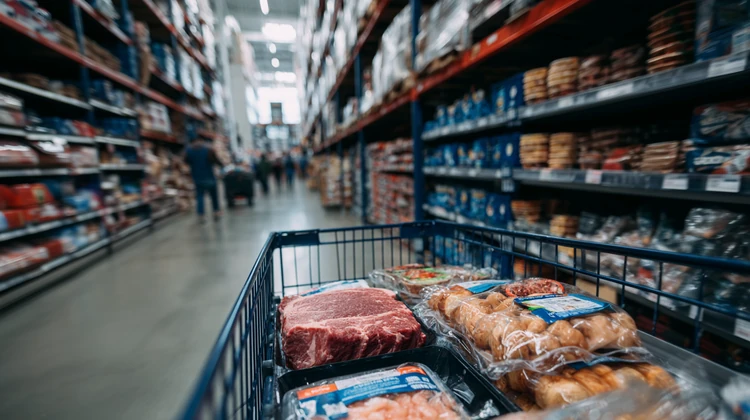

Plan before you go. Bulk only saves money if you’ll use it and the unit price actually beats your grocery store. Stick to staples and freeze meats right away.
Use the hidden tools. Scan & Go tracks your total and unlocks extra savings. Look for prices ending in .01 for clearance and a “C” on the tag for items being phased out.
Time it right. Shop Instant Savings events and always compare the price per ounce or count to make sure bulk is truly cheaper.
Warehouse clubs like Sam’s Club have one goal, to get you to buy more than you planned. Giant carts, bulk packaging, and “limited-time” signs are designed to make spending feel like saving.
The key is knowing where the real value is, where the traps are hiding, and how to use the club’s perks to your advantage. Here’s how to make your Sam’s membership pay for itself and then some.
Start with a plan (smart bulk buying)
The biggest mistake shoppers make at Sam’s Club is buying in bulk just because it looks like a deal.
Remember that bulk only saves you money if:
- You’ll use it before it goes bad.
- You have space to store it.
- The per-unit price is actually lower than your grocery store.
Before your trip, get in the habit of scanning your pantry, freezer, and bathroom cabinets.
Then make a list of items your household uses consistently every month. Think things like paper towels, trash bags, coffee, cereal, and frozen staples. These are your bulk sweet spots.
Impulse bulk buys like giant condiment bottles, oversized snack packs your kids will burn out on, or industrial-sized produce are where savings go to die.
Pro tip: If you haven’t already, you need to try their ‘Scan & Go’ feature. Via the Sam’s Club app, you scan items as you shop, pay for them, and actually skip the checkout line altogether.
Beyond the obvious convenience, it gives you a running total, which helps you keep your spending in-check. And as a bonus, there are items sprinkled around the warehouse that actually qualify for additional “Scan & Go Savings.” Just look for the yellow shelf tag that tells you what your Scan & Go discount is for that particular item.
Know what Sam’s Club does best
Not everything at Sam’s Club is the cheapest option. But some categories are consistently strong values and they include the following.
- Household Essentials: Paper goods, cleaning supplies, laundry detergent, and trash bags are often significantly cheaper per unit than supermarkets and even many big-box stores.
- Meat and Protein: Sam’s Club is known for good-quality meat at competitive prices, especially chicken breasts, ground beef, and pork. Buying larger packs and freezing portions can cut your cost per meal noticeably.
- Pantry Staples: Rice, pasta, flour, sugar, cooking oils, and canned goods often shine here. This is especially true for families who cook at home frequently.
- Over-the-Counter Medications: Pain relievers, allergy meds, and vitamins under the Member’s Mark label can be dramatically cheaper than drugstores.
- Where Sam’s is often not the best deal: Think small households buying fresh produce, trendy seasonal items, and name-brand snacks that rotate frequently at lower prices in grocery store sales.
Pro tip: Freeze like a pro. Consider buying large packs of meat, bread, and cheese then portion and freeze immediately.
Use a food saver or freezer bags and label with the date and flatten portions for easy stacking. This turns their bulk pricing into long-term savings and is the only way to go — especially for large families.
Learn to decode Sam's Club price tags
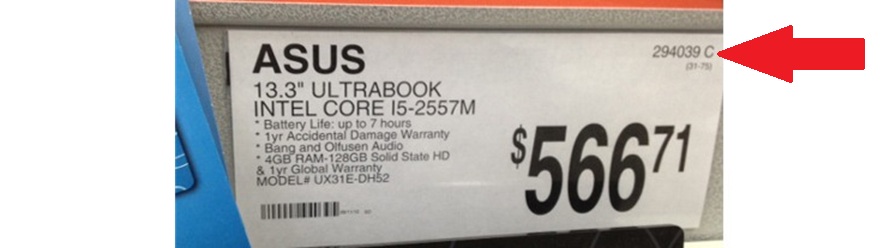
Shoutout to several Sam’s employees who’ve shown me how to read their price tags over the years. It's a great way to know exactly what type of deal you're getting.
Here’s how to look at the tag and quickly spot the deals without having to guess:
Prices that end in .01 (like $21.71)
When you see a price ending in 1, that signifies a clearance markdown.
These are final-sale type prices and often the lowest you’ll see. If it’s something you’ve been watching, and the price ends in 1, that’s your cue to grab it.
Decode the letters on the shelf tag
For this tip, you’ll want to check the corner of the price tag for a single letter. (Check out the red arrow in the picture above)
That little letter tells you quite a bit:
- A = Active (A regularly stocked item.)
- N = Never-Out (They try to always keep it in stock.)
- C = Canceled (It’s leaving soon. Often means a price markdown is likely coming or has already happened.)
- S = Seasonal (A limited-time item that may rotate back in.)
- O = One-Time Buy (Once it’s gone, it’s gone.)
Ask about display models
If an item is marked C for Canceled and the floor model is the last one left, don’t be shy — ask about a potential discount.
Managers want these items gone and will often give you an extra 10-20% discount to have you take it away.
Check the print date on the sign too
At the bottom of the price tag, there’s usually a small print date. That tells you when the sign was created.
If it’s a recent date, the markdown has just happened.
If it’s older, then another price drop should be coming soon. If there’s a lot of inventory, you’d be smart to wait a few days (even up to a week) to grab it after the price drops.
Compare price per unit…every time
Big packages are great at creating the illusion of value. But sometimes the regular grocery store sale still wins on price, especially when they have promos or coupons available.
For this reason, be sure to use the price per ounce, pound, or count listed on the shelf tag. If it’s not posted, do the quick math on your phone.
This is especially important for:
- Cereal
- Snacks
- Cheese
- Yogurt
- Condiments
- Paper products
Pro tip: Always shop the perimeter of the store first, as this is where your essential buys live. Then you can wander down seasonal or center aisles.
By filling your cart with planned items first, you leave less room (and budget) for those impulse buys towards the front of the store.
Time your big purchases around instant savings
Sam’s Club runs regular “Instant Savings” events that may shoppers still aren’t aware of.
Think of them as built-in coupons that come off automatically at checkout. They rotate them throughout the month and you tend to see them the most often with:
- Snacks and beverages
- Frozen foods
- Paper goods
- Health and beauty items
- Seasonal merchandise
If you know you’ll need a household item like paper towels or detergent soon, waiting for it to land in an Instant Savings event can shave several extra dollars off a purchase you were already planning to make.
Also, once you get familiar with these Instant Savings deals, you'll start to notice that many of them cycle through every four to six weeks.
And the discounts aren't always the same. For example, Tide Pods might be $4 off this month, then drop to $6 off the next cycle.
Take note of the savings on the stuff you buy all the time. Then when an item you need hits its max discount, stock up. Now you’re not just waiting for a sale, you’re actually timing the best version of the sale.