2019 Lawsuits and Class Actions

Article Image

Suit against major bottled water brand will go forward

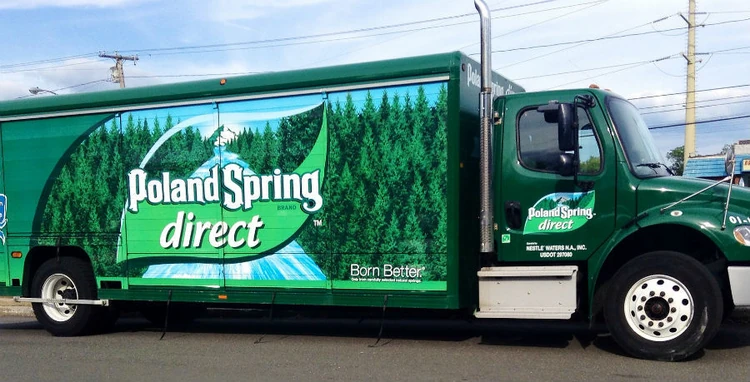
A federal court judge in Connecticut has ruled that a class action lawsuit against Nestle Waters can proceed.

The ruling comes nearly a year after the court dismissed a nearly identical lawsuit, which claimed Nestle’s Poland Spring bottled water is merely groundwater, not spring water as the company claims. The suit, filed by a dozen plaintiffs who reside in eight different states, accuses Nestle of misleading consumers with deceptive claims.

“Nothing in the court’s recent decision undermines our confidence in our overall legal position,” a spokesman for Nestle Waters told Fox News. “We will continue to defend our Poland Spring Brand vigorously against this meritless lawsuit.”

The company says an independent investigation by a law firm confirmed that Poland Spring water meets all the Food and Drug Administration’s definitions of “spring water.” In the wake of the court’s latest ruling the company is doubling down on its position that its product is “100 percent natural spring water.”

Previous suit was dismissed

Nestle thought it had put this matter to rest last May. At that time the same federal judge in Connecticut, where the company is based, dismissed a similar suit filed by 11 plaintiffs.

The court dismissed the complaint after reviewing the results of an independent investigation into whether Poland Spring meets the requirements of the federal spring water standard.

At that time the company released a statement from former U.S. Senator George Mitchell (D-Me.), chairman emeritus of the law firm of DLA Piper, saying Poland Spring brand water sources “satisfy the requirements of the federal spring water identity standard, and as a result, the use of the term ‘spring water’ on Poland Spring labels is both accurate and appropriate.”

Both cases hinge on regulations covering water products, which are specific. The standards include:

  • The water flows naturally to the surface of the earth    

  • The water is collected only at the spring or through a borehole tapping the underground formation feeding the spring

  • A natural force causes the water to flow to the surface through a natural orifice

  • The location of the spring is identified    

  • Water collected with the use of an external force shall be from the same underground stratum as the spring, as shown by a measurable hydraulic connection using a hydrogeologically valid method between the borehole and the natural spring, and shall have all the physical properties, before treatment, and be of the same composition and quality, as the water that flows naturally to the surface of the earth.

The plaintiffs in the latest lawsuit claim the company’s marketing is deceptive, alleging that Poland Spring water comes from “phony man-made wells."


Article Image

Facebook facing charges of housing discrimination in ad practices

The U.S. Department of Housing and Urban Development (HUD) on Thursday announced that it’s charging Facebook with “discrimination” in its advertising practices for housing.

In a complaint, HUD accused the company of violating the Fair Housing Act by "encouraging, enabling and causing" discrimination by excluding certain users from viewing housing ads on the platform.

The group charges that Facebook willfully allowed advertisers to exclude people from seeing housing ads based on their neighborhood, interests, religion, race, and color, including whether they were “classified as parents, non-American-born, non-Christian, interested in accessibility, interested in Hispanic culture, or a wide variety of other interests that closely align with the Fair Housing Act’s protected classes.”

“The Charge concludes that by grouping users who have similar attributes and behaviors (unrelated to housing) and presuming a shared interest or disinterest in housing-related advertisements, Facebook’s mechanisms function just like an advertiser who intentionally targets or excludes users based on their protected class,” HUD said in a statement.

Accused of audience-targeting

Last March, the National Fair Housing Alliance (NFHA) and three of its member groups sued Facebook over the same issue. The suit alleged that Facebook allowed landlords and real estate brokers to exclude certain groups from viewing advertisements for housing, despite being warned that targeting housing ads in this manner may violate fair housing laws.

In a statement, Facebook said it was “surprised” by HUD’s decision. A company spokesperson noted that Facebook has been “working with them to address their concerns and have taken significant steps to prevent ads discrimination.”

“Last year we eliminated thousands of targeting options that could potentially be misused, and just last week we reached historic agreements with the National Fair Housing Alliance, ACLU, and others,” the spokesperson said.

HUD is seeking unspecified damages for any person who was harmed by Facebook’s advertising policies, as well as “the maximum civil penalty” against the company for each violation of housing laws.

“Facebook is discriminating against people based upon who they are and where they live,” HUD Secretary Ben Carson said in a statement. “Using a computer to limit a person’s housing choices can be just as discriminatory as slamming a door in someone’s face.”

Article Image

Johnson & Johnson subpoenaed by federal agencies over baby powder litigation​

Johnson & Johnson disclosed in its annual report on Wednesday that it received subpoenas from two federal agencies related to litigation involving its baby powder line.

The Securities and Exchange Commission and Department of Justice have requested that the pharmaceutical giant produce documents that shed light on the safety of its baby powder products.

The inquiries came in response to a Reuters report from December about product liability lawsuits against the company.

Internal documents obtained by Reuters revealed that Johnson & Johnson had been aware since the 1970s that its talc and powder products occasionally tested positive for traces of asbestos -- a known carcinogen and lung irritant with no safe level of exposure. However, the company didn’t tell regulators or the public.

J&J said the subpoenas “are related to news reports that included inaccurate statements and also withheld crucial information.”

The company has denied the allegations presented in the Reuters report and argued that “decades of independent tests by regulators and the world’s leading labs prove Johnson & Johnson’s baby powder is safe and asbestos-free, and does not cause cancer.”

Johnson & Johnson has been sued numerous times by consumers who claim they got cancer after using the company’s products. The company said it intends to "cooperate fully” with the latest federal inquiries about the safety of its talcum powder products and that it will "continue to defend J&J in the talc-related litigation.”