2018 Lawsuits and Class Actions

Article Image

Woman sues Cabela’s for a crossbow lesson that ended with weapon recoiling into her eye

A Texas woman’s first attempt to shoot a crossbow went horribly wrong, according to a lawsuit she filed against the retail chain Cabela’s, where she had her botched lesson.

Tonya Kuykendall says in her lawsuit that she visited Cabela’s, the hunting and fishing store owned by Bass Pro Shops, in 2016 and asked to test out a crossbow equipped with a scope.

The employee at the Waco, TX location where she visited, identified in the suit only as “Austin,” took her to the store’s shooting range. Kuykendall says she told him that it would be her first lesson.

“In the range, as Ms. Kuykendall shot the bow for the first time, the bow recoiled and the equipped scope hit her left eye, causing her to scream in pain,” says the lawsuit, filed in the 74th State District Court in Texas and obtained by the Waco Tribune-Herald newspaper.  

The suit alleges that Austin ignored Kuykendall as she screamed in pain.

“In response to Ms. Kuykendall’s screams, ‘Austin’ began to laugh and asked if Ms. Kuykendall would like to shoot the bow again,” it says.

“Virtually no recoil”

Kuykendall says the injury required serious medical attention. She received a black eye, she alleges, and later needed to visit the emergency room to undergo a brain MRI and neurological exams. In addition to the eye injury, she says she also sustained nausea, headaches, and blurry vision, all symptoms of a concussion.

The lawsuit says that Cabela's employees did not provide proper training and failed to render medical aid after the accident. Store managers told the Tribune-Herald that they could not comment and deferred the paper to corporate headquarters.

The Bass Pro media line has not yet returned messages left by ConsumerAffairs.

Crossbows are often portrayed as the safer alternative to hunting with rifles. Recoil, or when a weapon is forced backward after firing off at a target, can potentially injure the shooter if they are not properly trained. But recoil is typically thought of something that only happens with certain firearms, not crossbows.

An owners manual put out by Cabela’s for one crossbow product claims that hunters should use the scope without worrying at all about any recoil.

“For optimum accuracy, follow through your shot by aiming and watching the arrow hit your target through your scope,” the owner’s manual says. “There is virtually no recoil in a crossbow, so relax and hold the crossbow comfortably.”


Article Image

Verizon blames employee error for firefighters' data interruption during California fires

When a fire department vehicle’s wireless service was interrupted in the midst of California’s biggest wildfire, the wireless provider -- Verizon -- pointed its fingers at a customer service error.

In a court filing this week, the Santa Clara Fire Department said one of its crews had its service significantly affected as it was fighting a wildfire at the Mendocino Complex.

“County Fire has experienced throttling by its ISP, Verizon,” Santa Clara County Fire Chief Anthony Bowden wrote in the filing. “This throttling has had a significant impact on our ability to provide emergency services. Verizon imposed these limitations despite being informed that throttling was actively impeding County Fire’s ability to provide crisis-response and essential emergency services.”

Recent issues with Verizon

The fire department paid for an unlimited plan with Verizon but allegedly experienced a great deal of throttling until the plan was upgraded.

“The internet has become an essential tool in providing fire and emergency response, particularly for events like large fires which require the rapid deployment and organization of thousands of personnel and hundreds of fire engines, aircraft, and bulldozers,” Bowden wrote.

Bowden noted that Verizon’s throttling affected “OES 5262” -- a control and command that aids in tracking and deploying resources for firefighters wherever the need is greatest around the state and country.

“In the midst of our response to the Mendocino Complex Fire, County Fire discovered the data connection for OES 5262 was being throttled by Verizon, and data rates had been reduced to 1/200, or less, than the previous speeds,” Bowden wrote. “These reduced speeds severely interfered with OES 5262’s ability to function effectively.”

After communicating with Verizon about the throttling, Bowden said the wireless provider’s representatives said the issue wouldn’t be resolved until the fire department switched to a new plan -- at double the cost.

Verizon released a statement earlier this week, admitting to being at fault for throttling the services. It labeled the issue as a miscommunication.

“Like all customers, fire departments choose service plans that are best for them. This customer purchased a government contract plan for a high-speed wireless data allotment set at a monthly cost. Under this plan, users get an unlimited amount of data but speeds are reduced when they exceed their allotment until the next billing cycle. Regardless of the plan emergency responders choose, we have a practice to remove data speed restrictions when contacted in emergency situations,” Verizon said.

“We have done that many times, including for emergency personnel responding to these tragic fires. In this situation, we should have lifted the speed restriction when our customer reached out to us. This was a customer support mistake. We are reviewing the situation and we will fix any issues going forward.”

Net neutrality

Earlier this week, 22 state attorneys general filed a brief asking the appeals court to reinstate the net neutrality laws that were founded under the Obama administration. Bowden’s declaration was submitted as an addendum to the brief that was filed with the states, the District of Columbia, Santa Clara County, Santa Clara County Central Fire Protection District, and the California Public Utilities Commission.

There was much speculation that Verizon’s service interference was a product of net neutrality regulations, as opposed to what they are calling a customer service error. The beginnings of Verizon’s service throttling was documented in fire department emails on June 29 -- just weeks after the repeal of net neutrality.

All major carriers implemented some form of network throttling -- even when net neutrality laws were in place -- when customers went over their data threshold on unlimited plans. While such instances were limited to times of network congestion, the Santa Clara Fire Department reported throttling at all times once going over their allotted 25GB a month.

Article Image

Tesla sues former employee, claiming sabotage

Tesla is suing a former employee it claims hacked company systems and revealed confidential information to outside sources. But the ex-employee, Martin Tripp, says he was simply a whistleblower who was alarmed at how CEO Elon Musk was running the company.

Tesla has been beset by problems in recent months, and on Monday Musk sent an email to employees that appeared to pin some of the blame on an unnamed employee that the executive accused of sabotage. On Wednesday, Tesla filed suit against Tripp without saying whether he was the unnamed employee mentioned in the email.

The suit accuses Tripp of writing software to hack into the company's system, transferring reams of data to “outside entities.” Among the information taken from the company, the suit alleges there were "dozens of confidential photographs and a video of Tesla's manufacturing systems."

The suit further claims that the ex-employee wrote computer code that would send Tesla data to people outside the company, in violation of Tesla policy. Tripp is also accused of making false statements about Tesla to the media – in particular, statements about the condition of batteries in some Tesla Model 3s.

Tripp denies

In an interview with the Washington Post, Tripp denied that he tampered with Tesla computer systems but confirmed that he gave information to a reporter for Business Insider because he was seeing “some really scary things” going on at Tesla.

Tripp said he told reporters that he saw “dangerously punctured batteries” being installed in Model 3s. Tesla has denied that charge.

The Business Insider article using Tripp as a source cast the company in an unflattering light, claiming it was using “an insane amount” of raw materials to make the Model 3, and still couldn't get it right.

The article claimed internal company documents it received showed that as much as 40 percent of the raw materials going into batteries and driving units had to be discarded or reworked before going to the company's assembly plant.

At the time, Tesla told the publication that a higher-than-normal scrap rate is to be expected in early stages of the production process. Tesla has struggled to meet production goals for the Model 3, a car it introduced in 2017, requiring customers to place a $1,000 deposit with their order.

Revenge?

Tesla's suit against Tripp claims a revenge motivation. It said the former employee became a problem early in his tenure with the company.

“Within a few months of Tripp joining Tesla, his managers identified Tripp as having problems with job performance and at times being disruptive and combative with his colleagues,” the suit alleges.

As a result, Tesla says Tripp was reassigned to a new role last month, after which he expressed anger at the company's action.

Article Image

Claim that Roundup caused man's cancer goes to trial in California

A trial is getting underway in California today in which a consumer who used Monsanto's weedkiller Roundup claims the product caused his cancer.

Forty-six year-old Dewayne Johnson is the first of hundreds of plaintiffs against the chemical giant to have his case heard in court. Johnson worked as a school groundskeeper and, during the course of his job, says he regularly used Roundup to keep grass and weeds under control.

Johnson's case was bumped to the top of the heap after his attorney informed the court that his client was near death. Under California law, dying patients have the right to an expedited court hearing.

The issue in the case is whether Roundup causes cancer, and if so, whether Monsanto adequately warned consumers. Monsanto has vigorously argued that its product does not cause cancer.

World Health Organization has doubts

The World Health Organization (WHO) isn't so sure. Three years ago it found that the main ingredient in Roundup, an herbicide called glyphosate, is "probably carcinogenic to humans."

A year ago the state of California officially classified glyphosate as a chemical known to cause cancer under the state's Proposition 65. That law requires Roundup sold in California to carrying a warning label to that effect.

Monsanto sought to block the move, calling it "unwarranted on the basis of science and the law," but a court dismissed the company's challenge.

Environmentalists have put Roundup under the microscope since the WHO finding in 2015. The Environmental Working Group (EWG) argued the state of California should have set much lower exposure limits than those that were finally adopted.

Shorter pregnancies

Earlier this year, a peer-reviewed study found that women in agriculture-intensive areas of Indiana tended to have shorter pregnancies if they had been regularly exposed to glyphosate, which is used in agriculture as well as to control weeds in suburban lawns.

“Glyphosate is the most heavily used herbicide worldwide but the extent of exposure in human pregnancy remains unknown,” researchers from Indiana University wrote in the journal Environmental Health.

For its part, Monsanto argues that its product has undergone rigorous testing and is the subject of more than 800 studies that have established its safety.

"We have empathy for anyone suffering from cancer, but the scientific evidence clearly shows that glyphosate was not the cause," said Scott Partridge, Monsanto's vice president of strategy, in a statement to the media. "We look forward to presenting this evidence to the court."

Article Image

Panera Bread to face jury trial for franchise that added peanut butter to allergic child’s sandwich

Panera Bread’s grilled cheese sandwiches don’t come with peanut butter, but as a precaution, Elissa Russo says she advised a Massachusetts store that her daughter has a severe peanut allergy -- twice. She was ordering the meal online and had left warnings about her daughter’s allergy throughout the “comments” sections in the delivery portal.  

After the food arrived, Russo’s six-year-old took one bite into her grilled cheese and said it tasted funny. Her parents opened the sandwich and saw about two tablespoons of peanut butter inside. The girl was hospitalized and suffered post-traumatic stress from her near-death experience, her family said in 2016.

Now, the lawsuit that the Russos originally filed two years ago is set to head to a jury after a Massachusetts judge on Thursday rejected Panera Bread’s arguments that it should not be responsible for what happens at its franchise locations.

“A jury could find that a national chain was negligent based on how a franchise served a child with a food allergy,” the family's attorney told the Boston Globe on Friday.

Confused by order

The girl's father John Russo had said that the franchise manager initially blamed a confused worker with a language barrier for the mix-up, but Russo was unconvinced, noting that the word for “allergy” in both Spanish and Portuguese is the markedly similar “alergia.”

However, at a deposition last year, the worker who was reportedly responsible for making the sandwich said, through a Spanish translator, that she was “really confused” by the online order.

She admitted to putting peanut butter in the sandwich but portrayed it as a genuine mistake.

The Russo family is suing both the Panera Bread corporate chain and the owner of the franchise, PR Franchise Group, for negligence, assault and battery, and intentional or reckless infliction of emotional distress.

“This ought to be a warning bell to restaurants that it could be considered civil assault and battery to serve an allergen to someone who has a severe allergy,” the family’s attorney added to the Globe.

Fatal allergic reactions

Lawsuits accusing restaurants of poisoning patrons with food allergies typically don’t get very far if the judge presiding over the case buys the food industry's arguments that restaurant patrons are responsible for their own health.

But in several lawsuits in recent years, people suing restaurants have successfully convinced juries that they or their loved ones had taken extra steps to warn restaurant workers about their allergies, only to get burned anyway.

In Canada, a hunter said he was assured by his waitress that the cheesecake he wanted did not contain any nuts. His resulting allergic reaction cost the waitress and the local Travelodge $25,000 after a jury determined that the waitress hadn’t bothered to check an ingredients list in the kitchen indicating that the cheesecake contained walnuts.

And in the United Kingdom, a 38-year-old bar manager was found dead in his home, near a food container that had “no peanuts” written on it. The restaurant he ordered take-out from had switched from using almond powder to a cheaper, peanut-based nut mix in its Tikka Masala and did not tell consumers. Restaurant owner Mohammed Zaman was charged with manslaughter and sentenced to six years in prison in 2016 for the patron’s death.

Research has shown that food allergies are on the rise in children. Anecdotally, some parents of children with severe allergies have described facing snarky comments or worse from people who apparently don’t believe that their children’s allergies are real.

One study in the journal Pediatrics found that “bullying is common in food-allergic children.”

Article Image

Court dismisses suit claiming Poland Spring water doesn't come from springs

A U.S. District Court has dismissed a lawsuit against Nestle Waters North America that claimed its Poland Spring brand water does not come from springs.

The company said the Connecticut-based court granted its motion to dismiss the suit, filed last August by eleven consumers who claimed the product is essentially filtered groundwater.

The court dismissed the complaint after reviewing the results of an independent investigation into whether Poland Spring meets the requirements of the federal spring water standard.

“We are pleased with the court’s decision to dismiss this meritless lawsuit,” said Charles Broll, Nestlé Waters Executive Vice President and General Counsel. “Poland Spring is what we have always said it is – 100% natural spring water, meeting all FDA regulations for spring water.”

The lawsuit, similar to one filed in 2003, claimed Nestle Waters was misleading consumers by labeling the Poland Spring product as “100 percent natural spring water.”

Investigation concludes it's properly labeled

Nestle says DLA Piper conducted an independent analysis of the Poland Spring product, determining that the water is properly labeled as “spring water.”

Former U.S. Senator George Mitchell, chairman emeritus of DLA Piper, said in a statement that Poland Spring brand water sources “satisfy the requirements of the federal spring water identity standard, and as a result, the use of the term ‘spring water’ on Poland Spring labels is both accurate and appropriate.”

The federal regulations covering water products, and whether they can be considered spring water, are specific. Below are the standards that must be met:

  • The water flows naturally to the surface of the earth    

  • The water is collected only at the spring or through a bore hole tapping the underground formation feeding the spring

  • A natural force causes the water to flow to the surface through a natural orifice

  • The location of the spring is identified    

  • Water collected with the use of an external force shall be from the same underground stratum as the spring, as shown by a measurable hydraulic connection using a hydrogeologically valid method between the bore hole and the natural spring, and shall have all the physical properties, before treatment, and be of the same composition and quality, as the water that flows naturally to the surface of the earth.

Article Image

CEO of Bumble Bee Foods indicted on price-fixing charge

Federal prosecutors have secured an indictment against Christopher Lischewski, the CEO of Bumble Bee Foods, on one count of price fixing.

The indictment, returned by a grand jury in San Francisco, claims that Lischewski conspired with others in the industry, from November 2010 to December 2013, to set prices for canned tuna.

Through his lawyer, Lischewski said he is innocent.

"When the facts are known and the truth emerges, Mr. Lischewski will be found not guilty, and that vindication will rightfully restore his good name," attorney John Keker said in a statement to the media.

Lengthy investigation

Prosecutors began investigating possible price collusion in the canned tuna industry during the Obama administration, focusing on three companies – Bumble Bee, StarKist, and Chicken of the Sea. Former StarKist executive Stephen Hodge entered a guilty plea to a price-fixing charge in 2017.

In a separate action, retail giant Walmart filed a civil suit last year claiming that the industry illegally set canned tuna prices over a five-year period.

“The Antitrust Division is committed to prosecuting senior executives who unjustly profit at the expense of their customers,” said Assistant Attorney General Makan Delrahim, of the Justice Department’s Antitrust Division. “American consumers deserve free enterprise, not fixed prices, so the Department will not tolerate crimes like the one charged in today’s indictment.”

Defrauding consumers

FBI Special Agent in Charge John F. Bennett said the indictment shows that corporate executives will be held accountable for actions that occur on their watch, especially when they “defraud American families.”

According to the National Fisheries Institute, U.S. consumers eat about 1 billion pounds of canned and pouched tuna a year. Only coffee and sugar exceed canned tuna in sales per foot of shelf space in grocery stores. In 2007, Americans ate 2.7 pounds of canned tuna per capita.

The one-count felony indictment claims that Lischewski, through meetings and other forms of communication, carried out a conspiracy by agreeing to fix the prices of packaged seafood.

The Justice Department says Bumble Bee Foods has already pleaded guilty and been sentenced to pay a criminal fine of at least $25 million as a result of the investigation.

Article Image

Fair housing group sues government over discrimination enforcement

A watchdog against discrimination in housing is suing the Department of Housing and Urban Development (HUD) after the agency suspended an Obama administration housing protection.

In its complaint, the National Fair Housing Alliance (NFHA) claims the Trump administration did not have the authority to suspend a federal requirement for state and local governments to show they were cracking down on housing discrimination in order to continue receiving money from HUD.

In January, HUD Secretary Ben Carson announced a five-year delay in implementing the “Affirmatively Furthering Fair Housing” rule, put in place by the Obama administration in 2015. Carson admitted to not being a fan of the rule, calling it “social engineering.”

Reason for the 2015 rule

The complaint alleges that HUD had never actively enforced a requirement, contained in the 50 year-old Fair Housing Act, requiring HUD to administer its programs in ways that support the aims of the Fair Housing Act, which was to end discrimination in housing.

“Although this Affirmatively Furthering Fair Housing (AFFH) requirement was of great importance to Congress in enacting the Act, for decades, HUD inadequately enforced it,” the group said in its suit.

“The agency has permitted more than 1,200 grantees—mostly local and state government entities—to collectively accept billions of dollars in federal housing funds annually without requiring them to take meaningful steps to address racial segregation and other fair housing problems that have long plagued their communities.”

NHFA says that was the rationale behind the Obama administration's 2015 rule, which was meant to force state and local governments to take meaningful steps to address housing segregation within their jurisdictions. By suspending the rule, the group says HUD is going back to a way of operating that has, in many ways, ignored the aims of the Fair Housing Act.

Why the rule was suspended

A HUD spokesman declined to comment specifically on the suit, but he referred reporters to the agency's January statement which explained that the rule was being suspended because it wasn't working very well.

As it observed the 50th anniversary of the Fair Housing Act last month, NHFA issued its 2018 Fair Housing Trends Report, noting that it had processed more than a half million housing discrimination complaints since 1996. It said there were more than 28,000 housing discrimination complaints in 2017 alone.

“The biggest obstacle to fair housing rights is the federal government’s failure to enforce the law vigorously,” the report concluded.

Article Image

Albertsons sued for allegedly barring Hispanic employees from speaking Spanish

The Equal Employment Opportunity Commission (EEOC) has filed suit against Albertsons supermarkets in federal court, claiming it implemented policies at its San Diego stores that discriminate against Hispanic employees.

Specifically, the suit alleges that Albertsons does not allow employees to speak Spanish when a non-Spanish-speaking customer is within earshot. The suit alleges that constitutes harassment and creation of a hostile work environment.

Albertsons has not yet responded to a ConsumerAffairs request for comment, but a spokesperson told the San Diego Union that the store does not require employees to only speak English.

Company responds

“Albertsons serves a diverse customer population and encourages employees with foreign language abilities to use those skills to serve its customers,” spokeswoman Jenna Watkinson told the newspaper.

But the lawsuit charges that beginning around 2012, the supermarket chain told Hispanic employees not to speak Spanish around non-Spanish speakers, including when they spoke to Spanish-speaking customers and during breaks.

The suit also alleges store managers at San Diego-area stores publicly reprimanded Hispanic employees when they heard them speaking Spanish. The EEOC also contends that no corrective action was taken, despite numerous employee complaints, forcing some employees to transfer.

Violation of the Civil Rights Act alleged

According to the EEOC, the alleged policy represents a violation of Title VII of the Civil Rights Act of 1964. The suit seeks injunctive relief, as well as monetary damages for affected Albertsons employees.

"Employers have to be aware of the consequences of certain language policies," said Anna Park, regional attorney for EEOC's Los Angeles District Office, which includes San Diego County in its jurisdiction. "Targeting a particular language for censorship is often synonymous with targeting a particular national origin, which is both illegal and highly destructive to workplace morale and productivity."

Albertsons is one the nation's largest grocery chains, operating under 19 trade names, including Albertsons, Vons, Safeway, and Pavilions. The company employs approximately 280,000 people in 35 states.

Article Image

Amazon, Netflix, and other movie studios sue streaming service over piracy

Amazon, Netflix, and several major Hollywood studios (including Disney, Fox, Sony, Universal, and Warner Bros.) are suing SET Broadcast over claims that its Set TV streaming service is used for piracy.

Set TV is a $20-per-month streaming service that comes with its own set-top box. For the low monthly fee, subscribers get access to over 500 live TV channels and “thousands” of on-demand shows. The service even gives users access to Netflix shows and movies that are still in theaters.

The lawsuit alleges that Set TV (d.b.a Setvnow) is promoting pirated material to consumers by relying on “third-party sources that illicitly reproduce copyrighted works and then provide streams of popular content such as movies still exclusively in theaters and television shows.”

“Defendants promote the use of Setvnow for overwhelmingly, if not exclusively, infringing purposes, and that is how their customers use Setvnow,” the complaint continues.

Plaintiffs want the service shut down

The suit was filed in a California district court on Friday by the Alliance for Creativity and Entertainment (ACE), a coalition of media companies dedicated to fighting piracy.

In addition to allegations of promoting pirated material, ACE claims that Set TV aimed to grow its subscriber numbers by paying for sponsored reviews on YouTube.

“You have new releases right there and you simply click on the movie … you click it and click on play again and here you have the movie just like that in 1 2 3 in beautiful HD quality’,” said one sponsored video posted by a popular YouTube user, Solo Man.

The suit seeks $150,000 per work infringed, which could add up to millions of dollars. In addition to monetary damages, the plaintiffs are asking the California district court to shut down the service and impound all of its set-top boxes.

SET Broadcast has not yet commented on the case.

Article Image

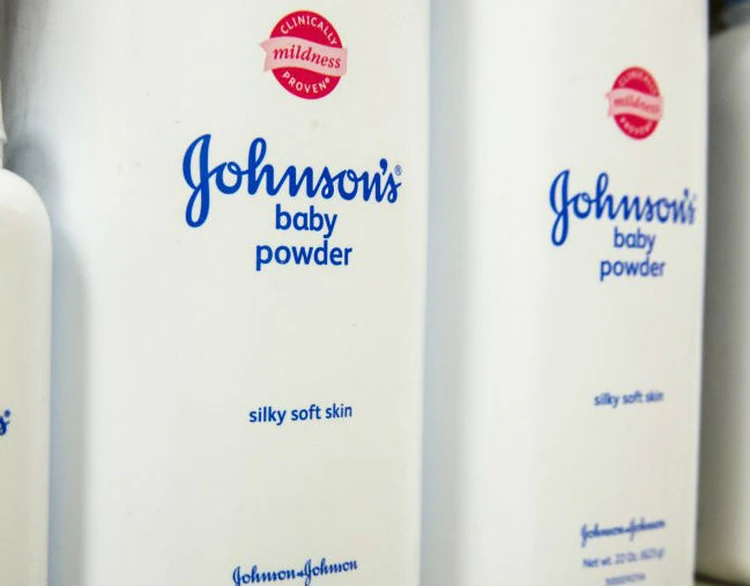
Johnson & Johnson ordered to pay millions in talcum powder lawsuit

Johnson & Johnson has been sued thousands of times over the past few years over its marketing of talcum powder. Many women have claimed the company knew of a link between ovarian cancer and talc use for decades.

Asbestos-related lawsuits are the most recent challenge for the pharmaceutical giant. The latest lawsuit to hit the company was filed by a man, Stephen Lanzo, who alleged that he developed mesothelioma after inhaling dust that was generated through his regular use of Johnson & Johnson talc powder products since his birth in 1972 to approximately 2003.

On Thursday, a New Jersey state court jury ordered Johnson & Johnson and Imerys SA to pay at least $37 million in damages in the case. The jury awarded Lanzo $30 million and his wife $7 million after finding Johnson & Johnson responsible for 70 percent of the damages and Imerys (the company’s talc supplier) responsible for 30 percent.

J&J denies claims

The second phase of the trial is set to begin next week. On Tuesday, the jurors will decide whether to award punitive damages. Johnson & Johnson said it was disappointed by the jury’s most recent decision.

“While we are disappointed with this decision, the jury has further deliberations to conduct in this trial and we will reserve additional comment until the case is fully completed,” Carol Goodrich, a spokeswoman for Johnson & Johnson, said in a statement.

Johnson & Johnson maintains that its products are not carcinogenic and have never contained traces of asbestos fibers.

“Since the 1970s, talc used in consumer products has been required to be asbestos-free, so JOHNSON’S talc products do not contain asbestos, a substance classified as cancer-causing. JOHNSON’S Baby Powder products contain only U.S. Pharmacopeia (USP) grade talc, which meets the highest quality, purity and compliance standards,” a statement on the company’s website reads.

More than 6,600 talcum powder lawsuits have been filed against the company by female plaintiffs who were diagnosed with ovarian cancer following years of genital talc use. The New Jersey verdict is the first trial loss for J&J in a lawsuit over claims that talc products contain cancer-causing asbestos, Reuters reported.

Article Image

Target reaches settlement in employment discrimination suit

Target has reached a settlement with plaintiffs who sued the retailer, claiming racial and ethnic discrimination in its hiring practices.

The company has agreed to pay $3.74 million and upgrade its hiring practices, although it did not admit to any wrongdoing.

The lawsuit alleged that Target's practice of using criminal background checks served to exclude racial minorities from its workforce. The plaintiffs charged that Target had "imported the racial and ethnic disparities" present in the criminal justice system into its hiring process. The result, the suit charged, was job applicants were rejected for convictions unrelated to the work they sought.

“Target’s background check policy was out of step with best practices and harmful to many qualified applicants who deserved a fair shot at a good job,” said Sherrilyn Ifill, president of the NAACP Legal Defense Fund. “Criminal background information can be a legitimate tool for screening job applicants, but only when appropriately linked to relevant questions such as how long ago the offense occurred and whether it was a non-violent or misdemeanor offense.”

Ifill said the Target process was overly broad, unfairly limiting opportunities for minority applicants due to widespread discrimination at every stage in the criminal justice system.

"We commend Target for agreeing to this settlement, which will help create economic opportunities for deserving Americans,” Ifill said.

In a statement to the media, a Target spokeswoman said the company no longer asks applicants to list a criminal history but still conducts criminal background checks late in the hiring process.

Plaintiffs sought jobs as stockers

The plaintiffs are black and charged Target didn't hire them for jobs as stockers after the company discovered prior convictions. The Fortune Society, an organization that assists former prisoners reenter society, was also a plaintiff in the suit.

The suit was filed under Title VII of the Civil Rights Act of 1964, which prohibits employers from discriminating based on race, gender, and other characteristics.

Under the settlement, which awaits a judge's approval, Target applicants who can show they were denied employment after a criminal background check may share $1.2 million of the settlement, or receive another chance at a job.

Non-profit groups that help people with criminal backgrounds reenter the workforce will receive about $600,000.

Article Image

Barclays to pay $2 billion to regulators for its role in the 2008 financial crisis

Ten years after the 2008 housing crisis triggered major losses in the world’s economy, a British banking giant accused of helping fuel the meltdown has finally reached a settlement with United States regulators -- and it’s about $3 billion less than what the feds originally asked for.

Barclays has agreed to pay $2 billion to the United States Department of Justice to settle a longstanding investigation into its subprime mortgage loans.

The housing crisis cost the United States economy an estimated $12.8 trillion, but banking institutions accused of fraudulent loan practices that led to the disaster have escaped criminal charges. The Department of Justice has instead leveled civil fines on financial institutions, though the penalties have made up a fraction of the financial damage that they said the banks caused.

“Pleased” by the outcome

Before the disaster, Barclays had sold $31 billion worth of mortgages to investors, half of which were later defaulted on, the DOJ said. The feds say that Barclays cost the American economy “billions” in losses.

Barclays has fared better than other banks ordered to pay civil penalties in the wake of the crisis.

The DOJ had originally asked for $5 billion, but Barclays refused to pay, sparking the agency to file a lawsuit in 2016.  From the beginning, Barclays said it would refuse to pay more than $2 billion, as Bloomberg reported in 2016.

The recent announcement indicates that Barclays finally got the DOJ to fold. As part of the settlement, Barclays is not admitting to any wrong-doing alleged in the government’s investigation.

“The settlement came at the bottom end of expectations and much sooner than expected,” Ian Gordon, an outside investment analyst, told Bloomberg News. He described the settlement as a “very happy Easter” for the bank.

“I am pleased that we have been able to reach a fair and proportionate settlement with the Department of Justice,” CEO Jes Staley told the Guardian.

Staley was recruited to head the bank in 2015 with a  $12.6 million compensation package. He recently praised the United States government for adopting a new tax policy that he says is “very business friendly.”