


Key insights
Home storage gold IRAs are marketed as a way to maintain control, but they violate IRS regulations.
Jump to insightIRS rules mandate that all precious metals in a self-directed IRA must be held by an approved custodian.
Jump to insightStoring IRA gold at home can trigger immediate taxation, early withdrawal penalties and more.
Jump to insightHome storage gold IRAs defined
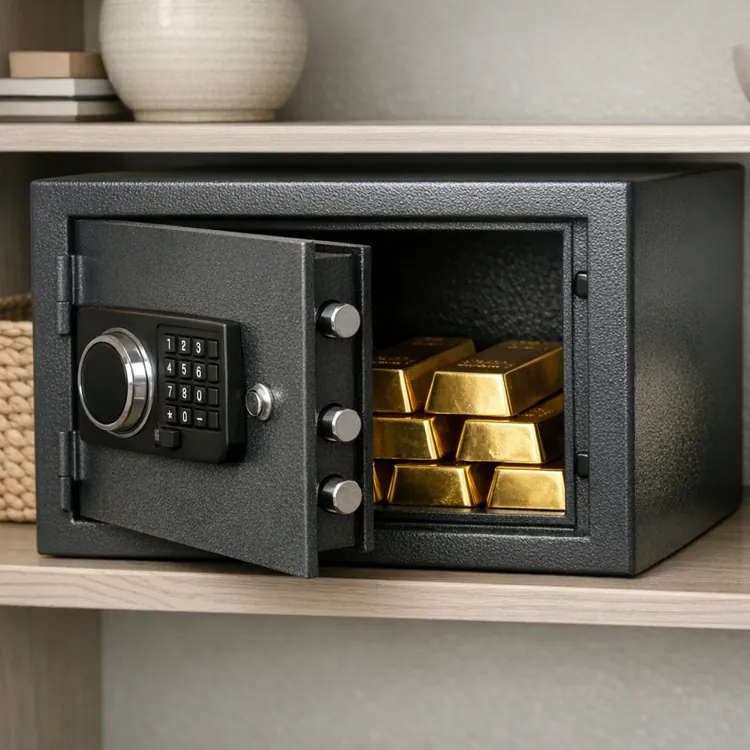
A home storage gold IRA is marketed as a self-directed IRA that allows you to buy physical gold for retirement and store it at home rather than in an approved depository. This option is framed as a way to maintain direct access to your precious metals without paying ongoing storage fees.
However, the IRS requires IRA-owned precious metals to be held by a qualified custodian or trustee, so the term “home storage gold IRA” is misleading. Marketing pitches may insist otherwise, but you can’t store gold and other metals in your IRA at home.
“When investing in precious metals through an IRA or 401(k), compliance comes down to two issues: what you buy and where you store it. If you get either wrong, the IRS can treat the transaction as a taxable distribution, which may also trigger penalties,” said Adam Bergman, a tax attorney and the founder of IRA Financial.
How home storage gold IRAs are marketed
Companies that promote home storage gold IRAs often target investors who are worried about inflation or losing access to their assets during a financial crisis. Marketing pitches are designed to lure you with the stated benefits of on-demand access to your gold or lower storage fees.
Despite how promising this sounds, home storage gold IRAs are not legal. In fact, they could violate federal tax law.
How home storage gold IRAs are supposed to work
Although home storage gold IRAs are often promoted, the process for setting up IRA-held gold at home — rather than in a traditional depository — is not permitted under IRS rules.
Forming an LLC doesn’t automatically exempt the account from IRA storage rules.
Here is how the process is typically described:
- You open a self-directed IRA with a custodian that allows alternative investments.
- You form an LLC with the IRA as the sole member.
- You appoint yourself as the manager of the LLC, giving you checkbook control.
- You use the LLC to buy IRA-approved gold coins or bullion.
- You store the gold at your home.
Why investors consider home storage gold IRAs
Investors often express interest in home storage gold IRAs because they want direct access to physical assets and more control over retirement investments. They also want to avoid annual storage fees.
However, there’s an important distinction between owning physical gold at home versus inside an IRA: When gold is held in an IRA, the IRS requires an approved custodian to store and administer it.
» RELATED: Gold IRA scams to avoid
IRS rules for home storage gold IRAs
The IRS has strict rules governing gold and other precious metals held in retirement accounts. Though self-directed IRAs can legally invest in gold, silver, platinum and palladium, the assets have to be under the control of an approved custodian and stored at a qualified depository.
Custodian requirements
The Securities and Exchange Commission requires that all IRA accounts be held by custodians, which include banks, credit unions, trust companies or any other entity approved by the IRS. Home storage of gold in a self-directed IRA is off-limits.
Approved depository storage rules
Physical metals owned by a gold IRA are usually stored in specialized depositories that meet IRS security and operational standards.
Advanced vault technology refers to high-security features that meet or exceed federal standards and resist prolonged burglary attempts.
In fact, the IRS requires that gold owned within an IRA be stored in an approved precious metals depository. These facilities come with multiple security layers, including:
- 24-hour surveillance
- Advanced vault technology
- Controlled access to vault areas
- Security procedures for handling metals
A home safe or personal vault does not meet the security requirements for IRA-owned metals.
Prohibited transactions and personal possession
The IRS prohibits what it calls “self-dealing.” This means you cannot buy gold, hold it in your safe, and call it an IRA. And if you take possession of IRA-held gold before reaching age 59½, the IRS treats it as a distribution.
If you take possession, you could face:
- Ordinary income taxes on the full value
- A 10% early withdrawal penalty if you are under age 59½
- Loss of future tax-deferred growth
» COMPARE: Pros and cons of gold IRAs
» EXPLORE: Best gold IRA companies
Home storage gold IRA risks
Home storage gold IRAs are often pitched to investors as a secure way to invest in gold in a qualified retirement account. But this is deceptive. There are many risks that come with home storage gold IRAs, including but not limited to:
- Immediate taxation if the IRS treats the gold as a distribution
- 10% early withdrawal penalty for investors under age 59½
- Loss of tax-deferred or tax-free IRA status
- Potential IRS audits and fines for improper asset handling
- Theft or burglary risk
- Damage from fire, flooding or natural disasters
- Lack of full insurance coverage for home-stored gold
- Potential legal disputes over IRA compliance
Gold IRA storage alternatives
If you want exposure to gold in your retirement portfolio, here are some legal and lower-risk alternatives to home storage gold IRAs.
Self-directed gold IRA
A self-directed IRA for gold or precious metals is an individual retirement account that lets you invest in physical gold, silver, platinum or coins. Though you’ll have to pay custodial and storage fees, self-directed gold IRAs align with IRS requirements and are completely legal.
Gold ETFs
Gold ETFs give you exposure to gold prices without having to own physical gold. Plus, trading gold ETFs is relatively simple since share prices are transparent. It’s important to note, however, this isn’t always true when buying or selling gold bullion.
Mining stocks
Buying shares in companies that mine and produce gold also provides exposure to gold without owning it.
Gold mining stocks often move in tandem with gold prices, and this can amplify gains when the metal rises. That said, gold mining stocks may carry risks that physical gold does not, such as stock market volatility.
Physical gold outside a retirement account
If your goal is to have physical possession of gold, you may be better off buying it outside of a retirement account. This lets you store the gold wherever you choose and avoid IRA compliance complications. The tradeoff is that you lose the tax advantages associated with IRAs.
Gold investment alternatives vs. home storage gold IRAs
The table below outlines how home storage gold IRAs differ from more traditional low-risk alternatives.
| Option | IRA compliant | Who holds metal | Storage location | Typical costs | Key tradeoffs |
|---|---|---|---|---|---|
| Self-directed gold IRA | Yes | Custodian | IRS-approved depository | Setup, storage and custodial fees | IRS compliant but less direct access |
| Gold ETF | Yes | Fund custodian | Institutional vaults | Expense ratios | No physical ownership |
| Mining stocks | Yes | Brokerage | N/A | Trading fees | Stock market volatility |
| Physical gold outside IRA | N/A | Investor | Home or private storage | Storage and insurance costs | No IRA tax benefits |
FAQ
Can I store my gold IRA at home?
No. The IRS prohibits the home storage of IRA-purchased gold and other precious metals. Doing so could disqualify it from receiving tax advantages provided by traditional or Roth IRAs as well as incur penalties from the IRS.
Is gold IRA home storage legal?
No, gold IRA home storage is not legal. IRS regulations require that you store precious metals in an IRS-approved depository.
What happens if I store IRA gold at home?
If you store IRA gold at home, the IRS will consider it a distribution of your IRA and will charge you taxes and penalties.
Why do companies promote home storage gold IRAs?
Companies promote home storage gold IRAs because the concept appeals to investors who want direct possession of their assets instead of relying on banks or third-party vaults.
Article sources
ConsumerAffairs writers primarily rely on government data, industry experts and original research from other reputable publications to inform their work. Specific sources for this article include:
- U.S. Securities and Exchange Commission, "Investor Alert: Self-Directed IRAs and the Risk of Fraud." Accessed May 7, 2026.
- Internal Revenue Service, "Retirement Plans FAQs Regarding IRAs." Accessed May 7, 2026.