

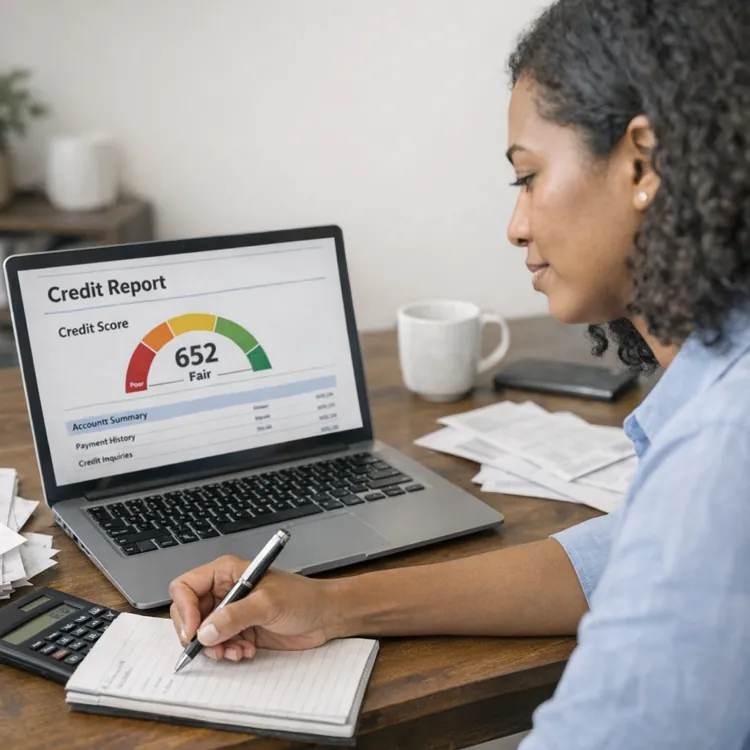
11 steps to improve your credit score
The good news about your credit score is that it isn’t permanent, and there are plenty of things you can do to raise it. Negative items, like judgments, bankruptcies, late payments and collections, fall off your credit report after a period of time, usually seven years.
Your newest credit habits have the biggest impact on your score, so as long as you are developing good habits — like making on-time bill payments and paying down debt — you’ll start to see improvements before your negative marks fall off.
1. Request copies of your credit report
You should check your credit score at least once a year to make sure it’s accurate. You are entitled to a free copy of your credit report every year from each of the three major credit reporting bureaus: Equifax, Experian and TransUnion. You can request your free copies from a credit report site.
Check your credit score once per year to ensure it’s accurate.
You can also enroll in a credit monitoring service, which will allow you more frequent access to up-to-date credit reports, plus additional monitoring for added protection. These services are ideal for anyone who is concerned that their accounts may have been compromised and are at risk for identity theft.
2. Check for and dispute credit reporting errors
When you get your reports, you’ll want to thoroughly check them for errors. Unfortunately, it’s not uncommon for mistakes to happen, like someone else’s bad credit history being tied to your name in error, which can negatively impact your credit score. Errors on your credit report — like unpaid accounts, judgments and collections — can be detrimental to your credit score.
If you’ve found an error on your credit report:
- Contact the credit bureaus either over the phone, online or through the mail.
- Provide evidence that your report is inaccurate, such as a receipt for a bill you paid that is marked unpaid on your credit report, to resolve the dispute relatively easily.
- For more complicated disputes, especially ones that suggest you’ve been the victim of identity theft, consider contacting a credit repair company to help you.
3. Remove negative marks
After you get errors removed from your report, you’ll also want to look for any negative marks that you may be able to get removed, like late payments.
While these marks are accurate, some creditors may be willing to remove them from your credit report if you ask them, provided you have had a good relationship with them in the past or have extenuating circumstances they are sympathetic to.
This may not always work, but it doesn’t hurt to ask. Call the account manager directly to discuss this option.
4. Deal with past-due bills
Overdue accounts can have a major impact on your credit score. It’s best to address these accounts first and as early as possible when attempting to fix your credit.
Collection marks take seven years to fall off your credit report.
However, if your debt is older than two years or is already in collections, just paying off these accounts will not improve your credit score significantly until the collections mark falls off your credit report, which generally takes seven years. Your efforts will be best served by making active accounts current before tackling debt that’s in collections.
5. Consider credit counseling or a DMP
If you’re in over your head, you may want to consider credit counseling, which can help you make sense of your debt. One potential outcome of credit counseling is entering into a debt management plan (DMP) to pay down your debts.
A DMP has pros and cons and isn’t the right choice for everyone. If you can take a DIY approach to improve your credit score, it’s recommended that you try that route first.
Important note: A DMP is not the same as debt settlement. Many debt settlement companies are for-profit and may recommend stopping payments while they negotiate with creditors, which can significantly damage your credit.
If you’re considering help, look for reputable nonprofit credit counseling organizations, such as those affiliated with the National Foundation for Credit Counseling (NFCC).
» LEARN MORE: What is a debt management plan?
6. Set up automatic bill payments
Paying bills on time, even just the minimum amount, is the single most important factor that impacts your credit score. Payment history can account for as much as 35% of your credit score.
A single late payment over 30 days can drop your score by as much as 100 points, according to FICO. Not to mention, you risk getting hit with late fees and penalties on your accounts and putting your relationship with your lender at risk.
Get organized by setting up automatic payments or a calendar reminder for recurring bills so you never make a late payment again.
7. Pay down your balances
Once your accounts are current, you’ll want to start paying down your large balances. Use one of the common debt repayment strategies, such as the snowball or avalanche method, to start paying off credit card debt. Having less debt means you have a higher credit utilization ratio.
Your credit utilization ratio is how much credit you’ve taken out compared with how much credit you have available. Pay off high-interest accounts first, and then work to bring high-balance accounts below your limit.
Your goal should be to bring all balances to less than 30% of your available credit. This will give you an optimal credit utilization ratio. Paying down your balances also demonstrates to creditors that you are capable of paying back your debt, which can help you qualify for credit in the future.
8. Increase your credit limits
Call your credit card companies to see if you can increase your credit limits to improve your credit utilization ratio. If you do this, it’s important not to use the new credit given to you — you want that ratio of available credit to used credit to be as big as possible.
Avoid taking out any new debts, including personal loans, auto loans, mortgages or credit cards while you’re working on fixing your credit. Creditors pull your report every time you take out a loan or apply for a credit card. These pulls are considered hard inquiries, which lower your credit score.
Use caution when opening new lines of credit, as this can hurt your credit score. It is best to increase limits on existing, older lines of credit. If you’re trying to build credit, look for a card without annual fees and one you’re preapproved for to avoid the hard inquiry on your credit report.
9. Don’t close old accounts
When you pay off an account, it can be tempting to close it and be done with it once and for all. But that may not be the best decision for your credit. Here’s why:
- Account age: The age of your open accounts affects your credit. Keeping your oldest accounts open, active and at the lowest balance possible will positively impact your score and indicate to new lenders that you’re a trustworthy borrower.
- Credit utilization: When you close paid-off accounts, you lose available credit. That can make your balances look higher relative to your limits, increasing your utilization ratio (the percentage of credit you’re using) and potentially lowering your credit score.
10. Build trust by becoming an authorized user
If you have a spouse or loved one with good credit, consider becoming an authorized user on one of their accounts. As an authorized user, you will receive the benefit of their positive credit history and diligent payments without having to be approved for a line of credit yourself. You’re basically using their good favor to build trust with lenders.
Being an authorized user does not make you liable for the primary user’s debt.
Becoming an authorized user is an exercise in trust, so have a conversation with the account holder and set appropriate boundaries about using their account. The good news is, you do not have to actively use the account to get the positive traction on your credit history — you can be an authorized user in name only.
While the responsibility of repayment will remain with the primary account holder, keep in mind that if the primary account holder misses payments or carries high balances, it could affect your credit negatively.
11. Consider working with a credit repair company
A credit repair company can help you fix your credit score via debt negotiation, item disputes and credit monitoring. Credit repair professionals have experience negotiating with creditors and know all of the opportunities, laws and restrictions impacting your options for credit repair.
There are pros and cons to working with a credit repair company, and you’ll want to consider them before moving forward:
- Partnering with a professional will save you the time and energy of having to go through the process yourself.
- Credit repair companies can help you see results in as little as 30 to 60 days, depending on why you have a bad credit score.
- Credit repair services are not free, and they’re not guaranteed, meaning you could pay for professional credit repair and still be left with a subpar credit score.
» LEARN MORE: How to negotiate credit card debt
FAQ
What is the quickest way to repair credit?
The fastest way to repair your credit is to bring past-due accounts current and pay down credit card balances to lower your credit utilization. Also, check your credit reports for errors and dispute any inaccuracies.
How do I clear a bad credit history?
You can’t “clear” accurate negative information, but you can rebuild your credit by making on-time payments, reducing debt, increasing your credit limits and keeping old accounts open. Most negative marks fall off your credit report after seven years.
Is it worth paying someone to fix your credit?
In most cases, no, it’s not worth paying someone, such as a credit repair agency, to fix your credit. You can dispute errors and build credit yourself for free. If you want help, consider a reputable nonprofit credit counseling agency rather than a for-profit credit repair company.
Can you raise your credit score 100 points in 30 days?
It’s technically possible but uncommon. Drastic improvements usually require paying down large balances or correcting major errors. Most credit rebuilding takes a few months or longer.
What hurts your credit score?
Late or missed payments, high credit card balances, collections accounts, defaults, frequent hard inquiries, closing old accounts and bankruptcy can all lower your credit score.
How often should I check my credit?
Check your credit reports at least once a year or more often if you’re actively building or repairing credit. Regular monitoring helps you catch errors and signs of fraud early.
Article sources
ConsumerAffairs writers primarily rely on government data, industry experts and original research from other reputable publications to inform their work. Specific sources for this article include:
- Fair Isaac Corporation, "FICO Releases Inaugural FICO Score Credit Insights Report." Accessed Feb. 20, 2026.
- National Foundation for Credit Counseling, "Debt Management Plans." Accessed Feb. 20, 2026.