


How much does private mortgage insurance cost?
You’ll see PMI calculated as a percentage of the loan amount, with its cost typically averaging 0.5% to 1% of the overall cost of the loan. This typically works out to around $100 to $250 per month on a $200,000 to $300,000 loan.
While rare, you may find instances of PMI as high as 6% if the borrower has a very low credit score, makes an extremely small down payment or is purchasing a higher-risk property.
While the cost of PMI can feel like an added burden, it provides a way for potential homebuyers to purchase a home when they don’t have the full 20% for a down payment.
“Remember that while PMI adds to your monthly expenses, it does allow you to purchase a home with a smaller down payment and keep more in savings,” said Ron Goforth, senior vice president of mortgage at PNC Bank.
» MORE: How to save for a down payment
What determines your PMI rate?
Private mortgage insurance costs aren’t one-size-fits-all. Instead, PMI rates are based on a combination of borrower and loan characteristics that help lenders assess overall risk.
PMI is typically expressed as a percentage of your loan amount, and even small differences in that rate can meaningfully affect your mortgage payment. Many factors impact PMI cost, including your loan-to-value ratio (LTV), borrowing amount, credit score and type of loan.
Because each lender prices risk differently, it’s wise to compare quotes and ask lenders to break down how each factor influences your final rate.
Factors affecting PMI rates
Several variables determine where your PMI rate falls. The most common include:
Improving your credit, lowering your DTI and increasing your down payment even slightly can reduce your PMI rate.
- Credit score: Higher scores signal lower risk, resulting in lower PMI percentages.
- Loan-to-value (LTV) ratio: A smaller down payment increases your LTV and raises your PMI cost.
- Debt-to-income (DTI) ratio: A higher DTI suggests more repayment risk, which can lead to higher PMI.
- Loan term: Shorter terms (like 15-year loans) generally have lower PMI rates than 30-year terms.
- Property type: Multiunit or investment properties typically carry higher PMI costs than single-family homes.
- Loan program: Conventional loans follow standard PMI pricing; special programs may have unique PMI structures.
How your credit score affects PMI
One of the largest factors impacting the cost of PMI is your credit score. The higher your credit score is, the lower your PMI percentage, and vice versa.
For example, a borrower with a credit score of 740 or higher (which falls under the “very good” classification per FICO) may pay 0.3% PMI versus a borrower with a fair credit score of 660, who can end up paying 1.5% PMI.
Here’s a breakdown of average PMI rates based on credit score ranges. Note that rates for lower credit scores aren’t relevant, since conventional loans require a minimum credit score of 620.
| Credit score range | PMI cost range |
|---|---|
| 760+ | 0.2% to 0.4% |
| 740 to 759 | 0.3% to 0.5% |
| 700 to 739 | 0.5% to 0.9% |
| 660 to 699 | 0.9% to 1.5% |
| 620 to 659 | 1.5% to 2.25% |
Since credit score greatly impacts the overall cost of PMI, it may be worth it to work on improving your credit score as much as possible before applying for a loan.
How to calculate PMI
You can calculate PMI for yourself or at least get an estimate of the cost, which can help you as you’re going through the homebuying process.
Start the calculation using the PMI percentage the lender provided and multiply it by your total loan amount. If you’re refinancing, use your current loan balance as the total amount. If you don’t know the PMI percentage yet, you can calculate it using an estimated percentage on the low end and one on the higher end, such as 0.5% and 2%. That way, you can give yourself a range.
Once you calculate the total annual premium, simply divide it by 12 to figure out the amount of the monthly PMI cost.
Example PMI calculations
Say you have a credit score of 680 and make a 10% down payment on a home, and your remaining loan amount is $300,000. If your lender tells you the PMI percentage is 1%, multiply $300,000 by 1% (0.01), which equals $3,000. This is your annual PMI premium. Now divide $3,000 by 12, and your monthly PMI payment is $250.
Here’s another example: If you have a credit score of 750 and make a 15% down payment, your PMI rate might be closer to 0.35%. On a $400,000 loan, multiply $400,000 by 0.35% (0.0035) to get an annual PMI cost of $1,400. Then divide that by 12 months, and your monthly PMI payment comes out to about $116.67.
These examples illustrate how a slightly higher down payment and credit score can reduce your monthly PMI cost by over $100, even on a larger home loan.
“To get a more accurate estimate of your PMI costs, it’s best to consult your lender, as they can provide tailored information based on your unique financial situation and loan terms,” Goforth said.
How long do you have to pay PMI?
You won’t have to pay PMI forever. “Generally, if you’re making a down payment of less than 20%, you can anticipate paying PMI until your loan-to-value ratio reaches a certain threshold, which is typically around 80%,” explained Goforth.
For many borrowers, this translates to three to five years of payments, though the exact timeline depends on your loan amount, interest rate and how quickly you pay down the principal.
Lenders are required to automatically cancel PMI when the LTV drops to 78% based on the original purchase price. However, you can request early removal once your LTV reaches 80% provided your payments are current and the home hasn’t declined in value.
With recent home price increases, some borrowers reach these thresholds faster, shortening PMI duration. Early removal may require a home appraisal or meeting a lender’s minimum payment period, which is typically 12 to 24 months for conventional loans.
FAQ
What affects PMI rates?
A few factors impact how much you pay for PMI rates, including the amount borrowed from the lender and your credit score. PMI is typically higher for larger loan amounts. The higher your credit score, the lower the percentage rate of PMI. If you want a breakdown of the exact PMI costs, you can request the percentage information from the lender. The type of loan you have also impacts how much PMI you end up paying.
How can I avoid paying PMI?
When can I drop PMI?
With conventional loans, you can request the lender or loan servicer cancel the PMI on the date the principal balance on your mortgage drops to 80% of the original value of your home. You can find this date on the PMI disclosure form from closing or contact the loan servicer for detailed information.
What is the difference between PMI and MIP?
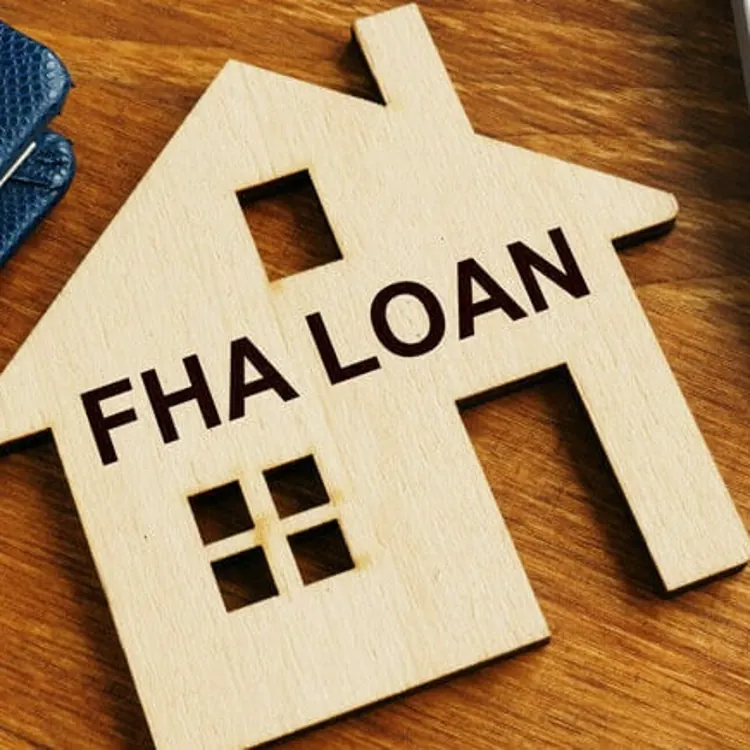
PMI and mortgage insurance premiums (MIP) have similar-sounding acronyms, but they’re different as they relate to mortgage insurance. You can expect to pay PMI on a conventional loan if your down payment is less than 20%. However, no matter how much you put down for an FHA loan, you will need to pay MIP. Your PMI payments can be removed once you’ve reached 20% equity with the loan, and MIPs often require an upfront fee along with monthly payments.
Can PMI be removed early?
PMI can often be removed before it would automatically expire. Most lenders allow you to request cancellation once your loan-to-value (LTV) ratio reaches 80%, based on your original purchase price or current home value.
Early removal typically requires that your payments are current, the home hasn’t declined in value and sometimes a home appraisal to confirm its market value. Some lenders also have minimum time or payment requirements, usually 12 to 24 months for conventional loans.
Article sources
ConsumerAffairs writers primarily rely on government data, industry experts and original research from other reputable publications to inform their work. Specific sources for this article include:
- Consumer Financial Protection Bureau, “What is mortgage insurance and how does it work?” Accessed Dec. 12, 2025.
- Texas Department of Insurance, “Private Mortgage Insurance (PMI).” Accessed Dec. 12, 2025.
- U.S. Department of Housing and Urban Development, “Single Family Upfront Mortgage Insurance Premium (MIP).” Accessed Dec. 12, 2025.
- Consumer Financial Protection Bureau, “When can I remove private mortgage insurance (PMI) from my loan?” Accessed Dec. 12, 2025.
- Industrial Federal Credit Union, “How PMI and Credit Scores Are Linked.” Accessed Dec. 12, 2025.