

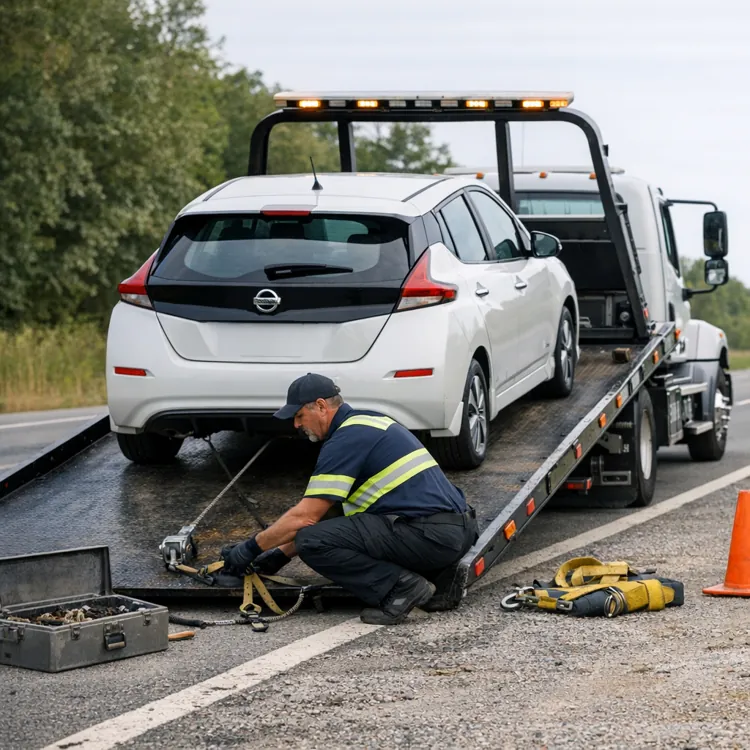
Nissan Leaf extended warranty options
Nissan Leaf extended warranties are available from Nissan and third-party providers.
Nissan Security+Plus plans
Nissan’s extended warranties are called Security+Plus Extended Protection Plans, and its EV extended warranty plans are called Security+Plus Electric Vehicle (EV) Service Contracts. It offers three tiers of coverage: Powertrain Preferred, Silver Preferred and Gold Preferred. For new vehicles, you must enroll within three years of purchase and before your car hits 36,000 miles.
Used vehicle extended warranty plans
If you’re interested in a used or certified pre-owned (CPO) Nissan Leaf, you can purchase a pre-owned EV plan or an EV CPO Wrap Upgrade plan. Pre-owned EV plans can be purchased at any time, while EV CPO Wrap Upgrade plans must be purchased within 90 days of the CPO EV purchase.
Third-party extended warranty plans
If you don’t want to get an extended warranty from Nissan, you may be able to get a third-party extended auto warranty. These types of warranties all have different eligibility requirements, coverages and costs. However, note that it’s typically harder to find an extended warranty plan for an EV, though more providers now offer some level of coverage for EVs.
Nissan Leaf warranty coverage basics
Before getting an extended warranty, it helps to understand Nissan’s factory warranty coverage and how it compares to extended warranty coverage.
Nissan Leaf factory warranty coverage
All new Nissan Leaf vehicles come with Nissan’s factory warranty, plus EV coverage.
| Warranty type | Coverage term |
|---|---|
| Basic bumper-to-bumper warranty | 3 years/36,000 miles |
| Powertrain and EV system warranty | 5 years/60,000 miles |
| Battery warranty | 8 years/100,000 miles |
| Corrosion coverage | 5 years/unlimited miles |
| California propulsion system coverage | 3 years/50,000 miles |
| California propulsion system long-term coverage | 7 years/70,000 miles |
| Seat belt warranty | 12 years/unlimited miles |
Nissan Leaf extended warranty coverage
Nissan’s Security+Plus coverage can extend all or some of your factory warranty coverage for up to eight years or 120,000 miles, whichever comes first.
Powertrain Preferred
The Powertrain Preferred plan is a powertrain warranty. For EVs, it offers coverage for electric powertrain components.
Silver Preferred
The Silver Preferred plan covers electric powertrain components, plus select specific parts.
Gold Preferred
The Gold Preferred plan effectively extends your bumper-to-bumper warranty, covering nearly all major EV parts and systems.
Nissan Leaf extended warranty benefits
You’ll also get the following perks with a Nissan extended warranty contract, regardless of the coverage level you choose:
- Emergency roadside assistance: You’ll get 24/7 roadside assistance and a reimbursement of up to $100 per occurrence.
- Towing assistance: You’ll get reimbursed up to $100 per claim for towing to your home, the nearest EV charging station if you run out of battery or an authorized Nissan certified EV dealership.
- Trip interruption protection: You’ll get reimbursed up to $500 for meals, lodging and alternative transportation if your car breaks down due to a covered issue more than 100 miles from home.
- Rental car service: You’ll get reimbursed up to $42 a day, up to a maximum of five days or $210 per breakdown, for alternate transportation services if your Leaf needs a multi-day repair for a covered item.
Nissan Leaf extended warranty costs
Nissan doesn’t provide pricing for its extended warranties online. However, you can typically expect to pay between $800 and $4,500 for coverage for a Nissan extended warranty, according to our research.
There are many factors that can affect how much you’ll pay for an extended warranty, including:
Coverage level
Comprehensive bumper-to-bumper coverage costs more than powertrain coverage, which covers far fewer parts.
Age and mileage
Extended warranty costs will typically vary depending on a vehicle’s age and mileage. Costs are typically lower for vehicles that are newer with fewer miles.
Deductible option
Nissan lets you choose either a $0 deductible or a $100 deductible with its extended warranty plans. A lower deductible means lower out-of-pocket costs per covered repair, but it also translates to a higher contract cost, typically increasing plan costs by around 20%.
Financing options
Paying cash for an extended warranty typically costs less than financing. However, it’s important to note that Nissan offers 0% financing options.
Nissan Leaf extended warranty buying tips
If you’re looking for an extended warranty for a Nissan Leaf, consider the following:
Shop around
It’s a good idea to shop around and compare quotes from at least three different extended warranty providers, including Nissan and third-party auto warranty companies.
Understand coverage exclusions
Read sample contracts online or ask for a sample contract from a provider when shopping around. Most contracts have general exclusions like damage from misuse, neglect or improper maintenance. Auto warranties also don’t cover wear and tear.
Don’t forget about perks
Compare extended warranties based on what else they may offer in addition to components coverage. Most extended warranties come with benefits like roadside assistance, towing for emergency EV charging and trip interruption coverage.
FAQ
Is an extended warranty worth it for a Nissan Leaf?
Getting an extended warranty for a Nissan Leaf may be worth it if you want peace of mind against potential repairs or if you think the cost of an extended warranty will be less than the cost of future repairs.
Can you buy an extended warranty for a used Nissan Leaf?
Yes, you can buy an extended warranty for a used Nissan Leaf. You can purchase a pre-owned EV plan at any time, though an EV CPO Wrap Upgrade plan must be purchased within 90 days.
How do you file an extended warranty claim with Nissan?
You can file an extended warranty claim with Nissan by calling 1-800-888-5245 for vehicle service contracts (VSCs) and CPO plans.
Are Nissans reliable?
Nissans have above-average reliability, according to J.D. Power’s 2026 U.S. Vehicle Dependability Study. Nissan ranked No. 10 out of 28 car brands, earning a score of 194 problems per 100 vehicles (PP100). This is better than the study average of 204 PP100. RepairPal also gave Nissan an above-average reliability rating of 4 out of 5 stars, ranking it No. 9 out of 32 car brands.
» RELATED: Nissan maintenance: cost, plans and service schedule
Article sources
ConsumerAffairs writers primarily rely on government data, industry experts and original research from other reputable publications to inform their work. Specific sources for this article include:
- J.D. Power, “Vehicle Software Updates Become More Routine, but Fall Short on Perceived Benefit, JD Power Finds.” Accessed Apr. 14, 2026.
- RepairPal, “Nissan Reliability Rating.” Accessed Apr. 14, 2026.