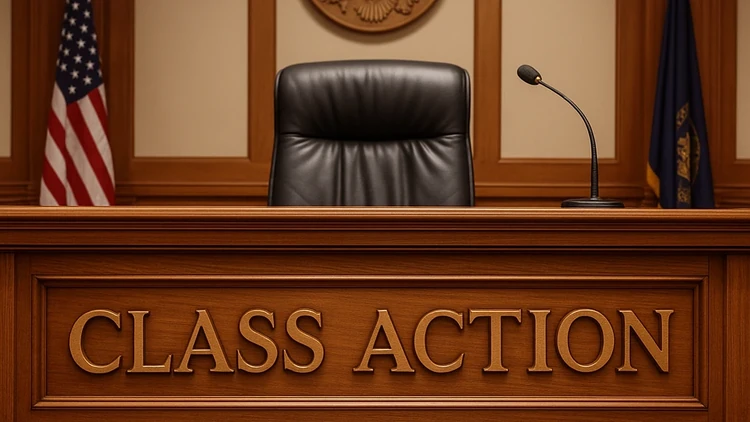
Are class action lawsuits about to be snuffed out?
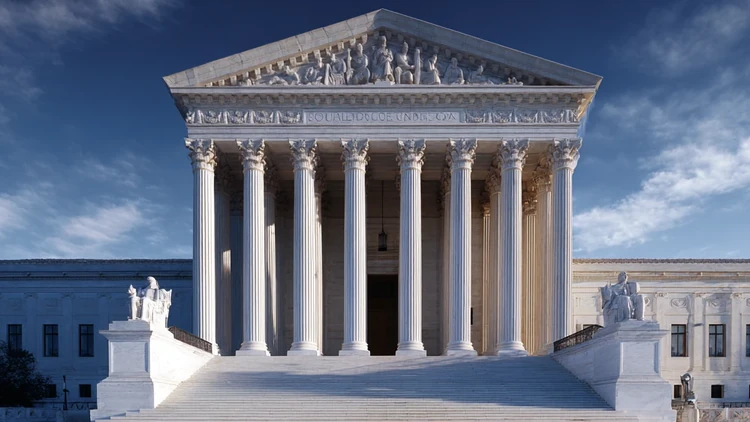
A number of legal practitioners and scholars say that might be the ultimate outcome of AT&T Mobility Services v. Concepcion, a case being argued before the Supreme Court on Tuesday.
Brian Fitzpatrick, a law professor at Vanderbilt University, writes in a San Francisco Chroniclecolumn that the case "could be [the Supreme Court's] most important case in years."
"If the case is decided the way many observers predict, it could end class-action litigation in America as we know it," Fitzpatrick warns.
Case rooted in arbitration clauses
The case owes its very existence to our old friend, arbitration clauses. The plaintiffs, Vincent and Liza Conception, who sued AT&T for deceptive practices, challenged a clause in their user agreement mandating that all claims be resolved through binding arbitration, rather than litigation in the courts. The same provision prohibited consumers from bringing class actions, either in arbitration or litigation form.
While a California federal court ruled that the class action prohibition violates public policy and is thus unenforceable - a commonly-citedargument against class action waivers - AT&T says that the Federal Arbitration Act preempts state laws and mandates enforcement of the class action waiver.
Fitzpatrick - who points out that "the current court is very friendly to businesses" - says that many observers expect the Supreme Court to side with AT&T, allowing class action waivers to be enforced all over the country.
Because of previous decisions making personal injury class actions very difficult to certify, Fitzpatrick says that a ruling in AT&T's favor could constitute a death knell to class actions altogether. That's because almost all remaining class action lawsuits are "between parties who are in transactional relationships with one another, meaning that, with a win by AT&T, would-be plaintiffs could be forced to sign away their right to bring a class action right from the beginning.
Wide-ranging consequences
The ramifications of a class action ban would be profound. Plaintiffs who bring the kinds of suits that end up as class actions - those concerning defective products, misleading contracts, or unfair working conditions - usually don't suffer economic damage great enough to justify bringing a suit all by themselves. The class action gives them an incentive to fight a case that wouldn't otherwise be worth it.
And perhaps more importantly, class actions serve as a deterrent to companies who would otherwise be able to nickel-and-dime consumers without consequence.
"The marketplace is fairer for consumers and workers because there's a deterrent out there," Deepak Gupta, an attorney with Public Citizen, a consumer watchdog group, told The Los Angeles Times. Gupta is arguing the case for consumers.
"Companies are afraid of class actions," Gupta said. "This helps keep them honest."
Long time coming?
That the conservative Supreme Court would like to end class actions is not a completely surprising concept. Recently, in staying a class action ruling against tobacco companies, Justice Scalia ominously warned that such a day might come. Scalia took issue with class action defendants' inability to cross-examine witnesses who allege that they broke the law, an issue that he said might amount to a violation of due process.
"The extent to which class treatment may constitutionally reduce the normative requirements of due process is an important question," Scalia wrote, adding that the issue is reflective of what he says is "national concern of the abuse of the class action device."