As artificial intelligence (AI) continues to make headlines, a new Sweden-based study looked at the ways AI can benefit long-term health.
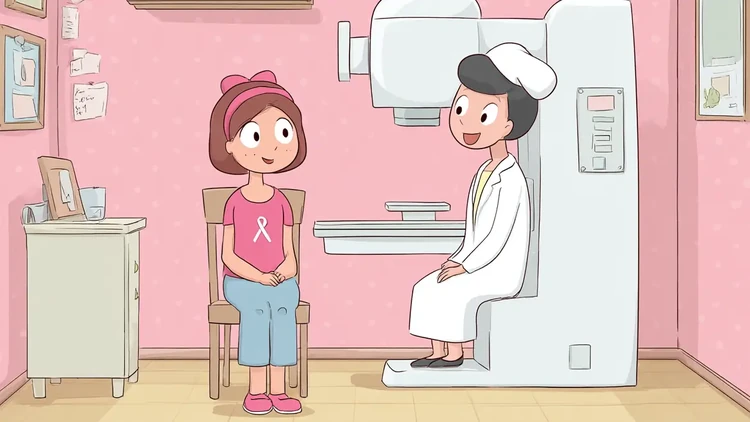
The study focused on mammogram screenings and readings to determine whether or not women had breast cancer. Experts utilized AI to support the screenings and read the results of the tests, and compared their accuracy with a standard radiologist’s screening.
Ultimately, the combination of AI and experienced radiologists led to 20% more cancer diagnoses compared to cases looked at solely by radiologists. This is an encouraging result, as early detection of the disease is likely to lead to better health outcomes for patients.
Detecting disease
The researchers had over 80,000 women between the ages of 40 and 80 who were eligible for mammograms participate in the study. Half of the women received their screening and had the report read by two experienced radiologists, while the other half received their screening and had the results read by a combination of AI and experienced radiologists.
The combination of the technology and the radiologists proved to be effective at detecting more cases of cancer than just the radiologists alone. In the AI group, 244 cases of cancer were identified, and 861 women were called back for further testing.
In the radiologist-only group, 203 cases of cancer were identified, and 817 women were called back for further testing.
The overall cancer detection rate was 6.1 per 1,000 women in the AI group, compared with 5.1 per 1,000 women in the radiologist-only group.
How does it work?
Experts from BreastCancer.org explained that doctors basically teach AI what a normal mammogram looks like versus what a cancerous mammogram looks like by inputting millions of images of different scans.
Then, once a new image is uploaded into the system, an algorithm determines whether the patient has a clear scan, needs further testing, or has cancer. Typically, two radiologists read the scans to determine the outcome, and this technology can help detect more details in mammography scans.
Will AI be at your next doctor’s appointment?
Though these findings are promising, the study remains ongoing and experts believe that more work needs to be done to fine-tune this technology. However, these results are a good starting point for more in-depth research in this area that can benefit consumers’ health.
“These promising interim safety results should be used to inform new trials and program-based evaluations to address the pronounced radiologist shortage in many countries,” lead researcher Dr. Kristina Lång said in a statement. “But they are not enough on their own to confirm that AI is ready to be implemented in mammography screening.
Lang said health researchers still need to understand the implications on patients’ outcomes, especially whether combining radiologists’ expertise with AI can help detect interval cancers that are often missed by traditional screening, as well as the cost-effectiveness of the technology.
“The greatest potential of AI right now is that it could allow our radiologists to be less burdened by the excessive amount of reading," Lang said. "While our AI-supported screening system requires at least one radiologist in charge of detection, it could potentially do away with the need for double reading of the majority of mammograms, easing the pressure on workloads and enabling radiologists to focus more on advanced diagnostics while shortening the waiting time for patients.”