CONSUMER NEWS    RECALLS    COMPLAINT FORM    SCAM ALERTS  


Complain about a product or service

Small Claims Guide | Class Actions | Lemon Law | FAQ | Resources | Newsletters | Spanish
Automotive    Education    Electronics    Family    Finance    Health    Homeowners    Shopping    Travel   
NEWS   Latest |  Archives |  Auto |  Cells, etc. |  Computers |  Financial |  Health |  Homeowners |  Parents |  Privacy |  Scams |  Seniors |  Travel

FCC Votes To Punish Comcast For Content Blocking

Majority of commissioners say cable giant violated federal policy


By Martin H. Bosworth
ConsumerAffairs.com

August 1, 2008

Broadband Access
Comcast to Cap Internet Usage for Customers
Comcast to Slow Internet Speeds for Heaviest Users
Report: Metered Broadband Bad For Consumers, Businesses
FCC Votes to Punish Comcast for Content Blocking
Comcast Tries to Polish Its Image
Communications Industry Urges Congress to Act on Broadband
Comcast Cuts Deal With Vonage on Internet Traffic
Court Upholds FCC's Video Rules
Report: U.S. Broadband Adoption Slowing
Critics: FCC Inaction Slows Economic Development
Few Are Neutral in Net Neutrality Battles
Google Petitions FCC Over Verizon's Use of Wireless Spectrum
---
More ...

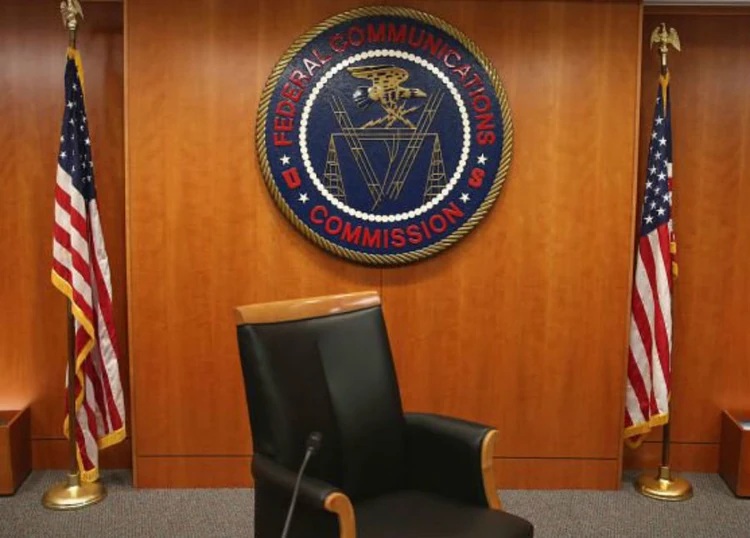
The Federal Communications Commission (FCC) officially voted 3-2 on Friday to penalize Comcast for its blocking of customer access to file-sharing engine BitTorrent. Although the FCC voted not to fine Comcast for its actions, the decision would set precedent against Internet service providers (ISPs) that attempt to block or shape their customers' Internet traffic.

FCC chairman Kevin Martin, a Republican, and commissioners Jonathan Adelstein and Michael Copps, both Democrats, all stated that Comcast violated the FCC's "Internet Principles" through its shaping of customers' Internet traffic. The Policy Statement, adopted in 2005 under previous chairman Michael Powell, principles include the rights of consumers to have lawful access to the Internet, to attach devices and run applications that are legal and cause no harm, and to enjoy competition among service providers.

"We begin by affirming that the Commission can and will enforce the Internet Principles," Martin said. "This should come as no surprise. Three years ago the Commission declared that it would not hesitate to act if faced with evidence that a provider was violating the principles."

"In an age when traditional media markets are dominated by a handful of giant conglomerates, there is optimism about the rise of broadband as an outlet for creative expression and democracy," Adelstein said. "The Internet can restore decentralized and entrepreneurial voices to the media landscape that are reflective of the best aspects of the American tradition. This Order is a vital step towards maintaining the potential and promise that the Internet holds for enriching our economic, cultural and social well-being."

"Let's be clear about what today’s Order does and does not accomplish," said Copps. "We do recognize that unreasonably impeding the performance of an Internet application—and not just outright blocking a particular website or program—violates the FCC's Internet policies. We do not, however, prohibit carriers from reasonably managing their networks. And we do not prevent engineers—either now or in the future—from coming up with new and better ways to serve their customers."

Republican commissioners Robert McDowell and Deborah Taylor Tate dissented, with McDowell claiming that the ruling would cause regulatory and technological uncertainty among Internet providers.

"Under the new regulatory rubric of the undefined term 'reasonable network management,' engineers do not know if they are allowed to manage your Internet experience so you can watch online video without distortion, pops, and hisses," McDowell said. "Similarly, they now do not know what the government will allow them to do, or not do, to manage the growing flood of peer-to-peer applications."

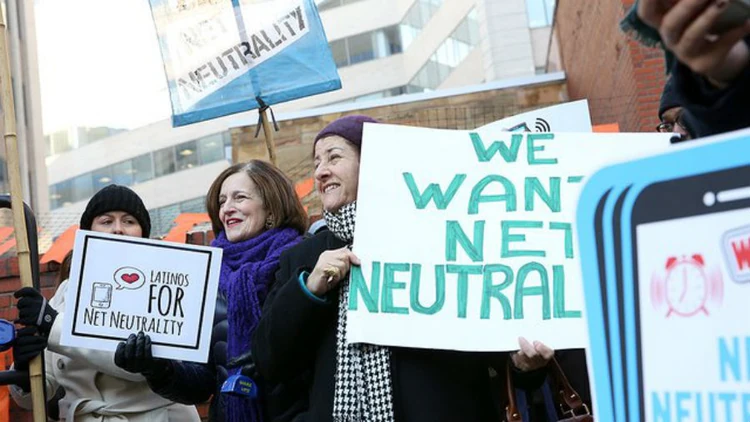
Supporters of net neutrality, the principle that all Internet content should be accessed equally, cheered the ruling. Josh Silver, executive director of media reform group Free Press, said that "The FCC's bipartisan decision to punish Comcast is a major victory."

"Defying every ounce of conventional wisdom in Washington, everyday people have taken on a major corporation and won an historic precedent for an open Internet," Silver said." In a conference call discussing the ruling, Free Press' general counsel Marvin Ammori thanked the "1.6 million Americans who knocked on doors" and drew attention to the issue, both online and off.

Comcast senior vice-president Sena Fitzmaurice said in a statement to Ars Technica that the company was grateful not to be fined, but "we are disappointed in the Commission's divided conclusion because we believe that our network management choices were reasonable, wholly consistent with the industry practices and that we did not block access to Web sites or online applications, including peer-to-peer applications."

Comcast's Hard Road

The discovery in November 2007 that Comcast was blocking users' access to BitTorrent reignited the debate over net neutrality, with supporters pointing to Comcast's actions as clear evidence that ISPs were ready and willing to block users' ability to surf the Web freely. Comcast claimed that its actions were only at peak user traffic times, and represented only a small portion of its traffic, the majority of which continued to flow freely.

But further research found that both Comcast and Cox Communications blocked access to BitTorrent at all times of the day, regardless of customer usage and traffic.

FCC chair Martin announced in January that the Commission would investigate Comcast's actions, while the company scrambled to polish its image through cutting deals with BitTorrent and Vonage to work with them on new network management practices.

Martin's Moves

Net neutrality has been a divisive issue at the FCC, with the Democratic commissioners urging strong penalties for ISPs that block customers' access to Web sites and codified principles protecting the right to an open Internet. The Republican commissioners have generally preferred a more laissez-faire approach, advocating that any problems should be dealt with using existing law, rather than creating new laws before the problem can be fully examined.

But Martin has also distinguished himself as being exceptionally friendly to telecom companies such as AT&T and Verizon, who have challenged the cable industry by offering their own combinations of high-speed Internet, phone, and television services. Martin has aggressively pursued new regulations against the cable industry and in favor of the telecom sector, ostensibly to lower prices and offer more choices for consumers. The benefits have largely been yet to materialize.

Supporters of the ruling defended Martin's decision. "I think it's unfair to say Martin is anti-consumer," said Gigi Sohn of Public Knowledge on the Free Press conference call. "He's unpredictable. Some things he's with us on, others he's against us, which is good, coming from this administration."

Sohn noted the significance of an official of the Bush administration ruling against Comcast, given its historically anti-regulatory stances. "I've been in telecommunications and business policy for over twenty years," Sohn said, "and this is the most significant decision I've seen in twenty years."

"[Martin's] decision is very pro-business," Ammori said. "The decision favors innovation, whereas a decision that would enable companies like Comcast to block content is very anti-business and anti-innovation."

What next?

Both supporters and opponents of the ruling said the door was now open for possible legislation that would codify the principles of net neutrality into law. Lawrence Spiwak of the Phoenix Center said that the ruling demonstrated that "the FCC was the appropriate agency to handle these issues, and additional legislation would be unnecessary."

Ammori said that Congressional legislation would help solidify the decision and grant it the advantage of incumbency. Several bills are pending in both the Senate and House that would use various means to prevent companies from blocking users' access to content and investigating cases when it does occur.

The issue of Internet providers increasingly using "metered" or "pay-as-you-go" broadband as an alternative to shaping traffic was brought up in the wake of the ruling, with opponents saying that without the ability to control Internet users' access, more companies would switch to metered plans in order to prevent congestion.

Sohn said that was "a false choice," and not the case in countries with more advanced and pervasive broadband penetration than the U.S. has. "Today's bandwith hog is tomorrow's normal bandwith user," Sohn said. "Companies that say they'll be using metered broadband need to stop making excuses and build out their networks to prevent congestion."


Report Your Experience
If you've had a bad experience -- or a good one -- with a consumer product or service, we'd like to hear about it. All complaints are reviewed by class action attorneys and are considered for publication on our site. Knowledge is power! Help spread the word. File your consumer report now.


Consumer News

August 30 2008

Recent Recalls & Safety Alerts


FREE CONSUMER NEWSLETTERS

The Daily Consumer
Afternoons M-F

Sign up now!


Consumer News & Alerts
Every Sunday

Sign up now!


Knowledge is free.
Knowledge is power.


Back to the top |

Advertisement


Home | Complaint Form | News | Recalls | FAQ |
Consumer Resources | Small Claims Guide | Lemon Law | Newsletter | Contact Us
Advertise With Us | Testimonials | Newsroom | RSS Feeds |


Terms of Use Your use of this site constitutes acceptance of the Terms of Use

Advertisements on this site are placed and controlled by outside advertising networks. ConsumerAffairs.com does not evaluate or endorse the products and services advertised. See the FAQ for more information.

Company Response Welcome If complaints about your company appear on our site, we welcome your response. Please see the Response Form for more information.

For more information, see the FAQ and privacy policy. The information on this Web site is general in nature and is not intended as a substitute for competent legal advice.  ConsumerAffairs.com Inc. makes no representation as to the accuracy of the information herein provided and assumes no liability for any damages or loss arising from the use thereof. 

Copyright © 2003-2008 ConsumerAffairs.com Inc.  All Rights Reserved.    The contents of this site may not be republished, reprinted, rewritten or recirculated without written permission.