|
|
NEWS
RECALLS
COMPLAINT FORM
SCAM ALERTS
RESOURCES
Small Claims Guide Class Actions Lemon Laws FAQ Newsletters |
|
| Automotive Education Employment Electronics Family Finance Health Homeowners Insurance Pets Shopping Travel |
|
|
|
![]() |
Keeping Teens Safe OnlineNavigating the treacherous streets of MySpace |
||||||||
|
By David Wood January 21, 2008
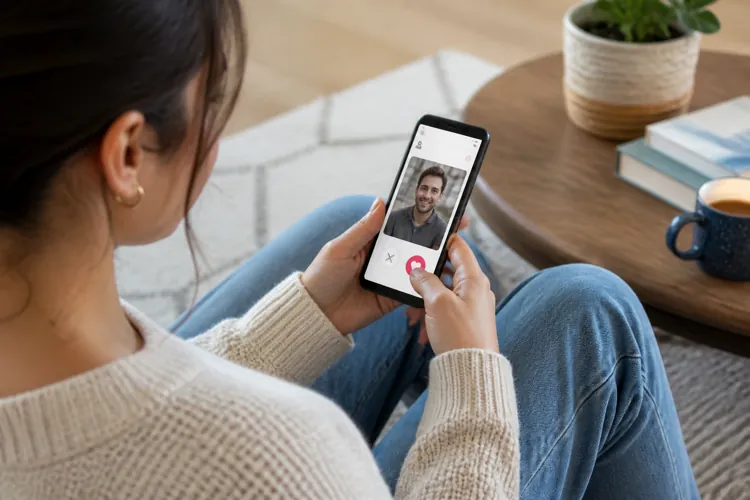
For some of us it might have been the malt shop, for others the mall. For today's teen, it's the Internet, especially MySpace, Facebook and other networking sites. These sites generally offer an excellent way for teens to keep up with their friends while making new friends along with the way. MySpace has grown to be the behemoth of the social networking websites, thanks in part to its openness that allows teens to be, well, open. But it's this openness that has created a headache for parents, teachers, teens, while raising serious issues of privacy and safety. Trying to restore its good name -- and to relieve mounting legal pressure from 49 states and the District of Columbia -- MySpace recently agreed to implement new measures to protect young users from sexual predators. Earlier MySpace had deleted the profiles of approximately 29,000 known sex offenders and predators. But deleting known predators doesn't solve the problem of young people who inadvertently give away too much information about themselves, or who, like 13-year-old Megan Meier, fall victim to hoaxes or harrassment. While recent research suggests that posting personal information is only one type of behavior that is linked to victimization, there is no doubt that a teen girl who posts too much information makes it much easier for anyone -- cyber-bully, ex-boyfriend or predator -- to find her. The acid testSo, just how effective is MySpace's latest attempt to safeguard teens? We decided to find out for ourselves how difficult it would be to track down teens or their parents. Turns out, it wasn't difficult at all. We began by browsing profiles of 18-year-old females in the Midwest, something that any non-MySpace member can do. Out of the first 50 profiles, 36 were set on "public," which meant that we could see the information even though we were not a MySpace member. Amazingly, many profiles included details such as where the girl worked, where she went to school, and her first and last name. Additionally, some included cell phone numbers. After contacting the local police departments to let them know what we were doing, we called the girls, either at their work or cell phone numbers. Every girl was shocked that we found her. We asked a very simple question: What were you thinking when you posted all of your personal information? We heard the same answers each time: "I thought that only my friends would see it," or "I didn't think anything, I just did it." Unfortunately, this behavior is not uncommon. You might ask how anyone can be so open and naive as to post an abundance of personal information to the world, especially when it involves a teen girl. While it is sometimes argued that the problem is a lack of parental involvement, there are also some profound developmental issues to deal with. Teenagers' brains aren't fully developed yet," said Anne Collier, co-director of ConnectSafely.org, and co-author of MySpace Unraveled: A Parent's Guide to Teen Social Networking. "The frontal lobe -- the executive part of the brain that controls impulses and thinks through the implications of actions -- isn't developed until people reach their early 20s," Collier said. This explains a lot about why teen-aged boys get in as much trouble as they do, but while girls may be generally better behaved, that doesn't mean they aren't also at risk of thoughtlessly putting themselves in danger. A profileFor our next experiment, we created a MySpace profile and did a random search for 16- and 17-year-old girls. We clicked on each of the first 100 profiles that appeared. Out of the 100, not one profile was set on "private," a feature that would have required the teen to add us to her "friends" list before we could view her entire page. Many of the profiles included so much personal information that a reader would probably know more about the girl than her own parents would. It was markedly worse if the teen included a third-party "survey" on her profile. These surveys are in a question-and-answer format and will ask everything from middle and last name to shoe size. Although we did not contact any of these girls directly, we did easily track down some of their parents. Most were upset about what their teen had posted, while one mother said that she had previously disconnected the home Internet connection because of this very problem. Her child had simply created and updated the profile from school or elsewhere. Many adults will remember the days of writing in a diary, and there is a good chance you wanted that diary to include a lock. The only way to read your diary was to use the little key that you had hidden away from the world. Today's teens use MySpace and other social networking sites as their diaries, but instead of trying to lock their diary (by putting their profile on private), many teens simply leave their diary open to the world. "Part of the problem is that the Internet makes it hard to visualize the breadth of our exposure," said Daniel J. Solove, author of The Future of Reputation: Gossip, Rumor, and Privacy on the Internet. "Placing information on a website and writing blog posts and comments feels more akin to chatting with friends, writing a diary, or talking on the telephone than like broadcasting live on television, publishing a novel, or addressing a crowded auditorium," Daniel said. What to doWhat's a parent to do? Solove recommends that every parent and educator needs to fully understand the potential dangers and problems, then pass that information on to their kids. "It is very difficult to force MySpace or Facebook, which have hundreds of millions of profiles, to monitor each one," stated Daniel. "Parents should know what MySpace and Facebook are; they should know what a blog is; they should find out what their children are posting online; and they should teach them about the consequences and how to post responsibly." Online safety expert Collier agreed. "I'd tell parents to keep those lines of communication with your teenager as open as possible," she said. "Don't overreact or try to ban the Internet, because that's what sends teenagers underground, where they can run into even more trouble than if they're socializing online more openly, with you around." A parent can't monitor a child's every online move when their son or daughter is away from home, but every parent has a choice of tools that can be used on their home computer. While filtering software will block certain sites, a teen can easily access the blocked site from another location. However, monitoring software can track what your child is saying and seeing, at least on your home computer. From chat rooms to MySpace, monitoring software can record the keystrokes and online activities of your child and can send you a "log" of your child's activities online. Check out Software4Parents and GetNetWise for a list of tools. Most of all, parents can't give up. "Parents who care enough to ask how to keep their kids safe are the very parents who most probably -- statistically -- have little to worry about," advised Collier. Report Your Experience
|
||||||||
Advertisement
|
|
Custom Search
|
||||
|
AUTOMOTIVE Dealers Manufacturers Service Extended Warranties Lemon Laws Recalls Tires Transporters FAMILY Aging Children, Parenting Recalls Dating Education Entertainment Pets Weddings |
FINANCE Annuities Banks Credit Cards Debt Collection Debt Counseling Insurance Investing Loans Mortgages Payday Loans Student Loans Tax Prep HEALTH Doctors Drugs, Pharmacies Health Clubs Hearing Care Hospitals Nursing Homes Nutrition, Diets Vision Care Weight Loss |
HOUSE & HOME Appliances Cookware Furniture Home Improvements Lawn & Garden Movers Pools & Spas Realtors, Rental Agents Recalls Utilities ELECTRONICS Cable TV/DBS Cameras Cell Phones Computers Home Electronics Internet Access Local Phone Service Long Distance VoIP |
SHOPPING In-Home Online Retail Stores Sporting Goods Supermarkets Telemarketers TRAVEL Airlines Bus Lines Car Rental Cruises Hotels Travel Agents Trains RESOURCES Class Actions Complaint Form Small Claims Guide Lemon Laws |
CONSUMER NEWS Latest News Automotive Telecom Financial Health Homeowners Scams Seniors Travel More ... RECALLS Automotive Children's Products Drugs Food Household Products Sporting Goods ABOUT US FAQ Privacy Policy Advertise With Us Newsroom Syndication Terms of Use |
Terms of Use Your use of this site constitutes acceptance of the Terms of Use
Copyright © 2010 ConsumerAffairs.com Inc. All Rights Reserved. The contents of this site may not be republished, reprinted, rewritten or recirculated without written permission. |
|