NEWS    RECALLS    COMPLAINT FORM    SCAM ALERTS   RESOURCES  
Small Claims Guide   Class Actions   Lemon Laws   FAQ   Newsletters  
Bookmark and Share


Complain about a product or service

Automotive    Education    Employment    Electronics    Family    Finance    Health    Homeowners    Insurance    Pets    Shopping    Travel     Print This     Email This    


NEWS   Latest |  Archives |  Auto |  Cells, etc. |  Computers |  Financial |  Health |  Homeowners |  Parents |  Privacy |  Scams |  Seniors |  Travel

U.S. Still Lags In Broadband Access

Lack of Competition Leaves U.S. 16th Among Industrialized Nations


By Martin H. Bosworth
ConsumerAffairs.com

September 17, 2006

Broadband Access

Consumer Watchdogs Challenge Comcast On 'TV Everywhere'
Study Sees Little Hope For Rural Internet Users
New Jersey Settles With Verizon Over Deceptive FiOS Marketing
Consumer Groups Oppose Comcast-NBC Merger
Federal Court Tosses Out FCC Rule On Cable Caps
New Bill Gives FTC Veto Power Over Broadband Caps
Time Warner Cable Changes Contracts To Favor Bandwith Caps
Time Warner Cable Backs Down On Bandwith Caps
Time Warner: Metered Broadband Will Prevent "Internet Brownouts"
FCC Launches National Broadband Internet Plan
Time Warner Doubles Down on Metered Broadband Plans
FCC Pressed To Defend Wireless Open Internet
Time Warner Expands Metered Broadband Billing
New Jersey Sues Verizon Over Deceptive FiOS Marketing
Government Reveals First Steps For Broadband Plans
House Committee Slams FCC Chairman for "Deception and Distrust"
Obama Promises to "Renew Information Superhighway"
Dell Introduces "White Spaces" Capable Laptops
FCC Votes to Open "White Spaces" for Use
Congress Passes Broadband Data Improvement Act
Report: Metered Broadband Bad For Consumers, Businesses
FCC Votes to Punish Comcast for Content Blocking
Comcast Tries to Polish Its Image
Communications Industry Urges Congress to Act on Broadband
Comcast Cuts Deal With Vonage on Internet Traffic
Court Upholds FCC's Video Rules
Report: U.S. Broadband Adoption Slowing
Critics: FCC Inaction Slows Economic Development
Few Are Neutral in Net Neutrality Battles
Google Petitions FCC Over Verizon's Use of Wireless Spectrum
---
More ...

The constant refrain of major telecommunications and cable companies is that there's "heavy competition" for the Internet user's dollar.

But "heavy competition" doesn't mean being able to choose only between Comcast and Verizon, and a newly published report reminds us that the United States still lags far behind the rest of the world in providing affordable broadband to its citizens.

"Broadband Reality Check II," an update to a report published last year by Consumers Union, the Consumer Federation of America, and media policy group Free Press, found that the United States continues to promote duopolies between major telecom and cable providers as real competition, that the level of Americans' access to the Internet can be severely restricted by income level and geographic area, and that the FCC uses misleading statistics to claim that competition is healthy for consumers.

"America appears to be a land of broadband haves and have-nots, where rural and low-income citizens are left behind in the information economy," the report stated. "This situation is the result of failed policy and a lack of imagination and vision from our policymakers."

Among the report's findings:

• The United States continues to rank 16th among industrialized nations for broadband development and penetration. Not only that, but broadband customers in countries such as Japan and South Korea enjoy broadband speeds that are hundreds of times faster, and can enjoy "bundled" television, phone, and Internet services for $25-$35 dollars, roughly the same price as a standalone U.S. broadband connection.

• The U.S. broadband market is "essentially a series of regional duopolies," with the top four cable and telephone companies -- Comcast, Verizon, AT&T, and Time Warner -- controlling over 83 percent of the entire broadband market, while buyouts and mergers of companies like AT&T and BellSouth serve to reduce actual competitive markets even more.

• The FCC continues to use ZIP codes that register one broadband provider as proof that broadband penetration is comprehensive across the U.S. But a recent report by the Government Accountability Office (GAO) found that the ZIP code method didn't account for the lack of more than one provider in any given region.

• The GAO also found that rural households and families with incomes of less than $30,000 were four times less likely to have broadband Internet access than urban households or those with incomes $75,000 and higher. A full third of American households are still stuck with dial-up as their only choice for Internet access.

The report comes at a time when telecommunications issues are very much on the minds of lawmakers. The massive update to the Telecommunications Act of 1996 had many provisions to address broadband access, most of which favored the duopoly system, and seemed ready to pass both the House and Senate.

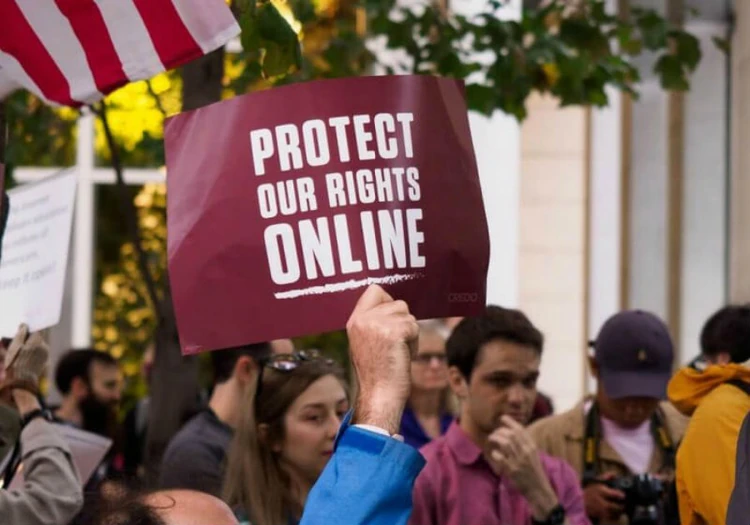
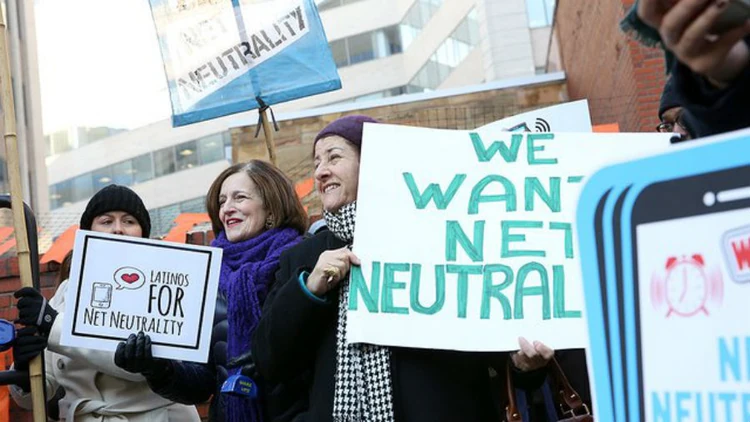
But consumer groups and technology companies were angered over the lack of protection for "net neutrality," the right of any Internet user or content provider to access the Interent on an equal footing with others. They launched a massive grassroots campaign that drew media attention to the cozy state of affairs for the telcos and cable companies

Sen. Ted Stevens (R-Alaska), author of the Senate's version of the telecom bill, recently acknowledged that the bill was "all but dead" and would have to be partitioned into individual bills to have any chance of passing.

One portion of both the House and Senate bills addresses the concept of publicly-funded municipal wireless networks, or "Municipal Wi-Fi" for short. Although many cities and towns are developing their own wireless systems for free or low-cost use, heavy telecom lobbying has pushed 15 states to ban any sort of initiatives for Wi-Fi.

Telecom companies such as AT&T are determined to roll-out high-speed broadband networks and provide platforms for "TV over Internet" services such as MobiTV. The company favors tiered pricing models that will enable only the richest clients to pay for the best service.

Critics fear that without truly affordable broadband and equal access to content, the "digital divide" between rich and poor will continue to grow, and the middle-class users will be stuck in the "slow lane" of Internet access.

As the authors of the "Broadband Reality Check" put it, "Faith-based policy and wishful thinking will not bring broadband to rural areas, and the repeated use of misleading data will not help low-income consumers afford broadband."


Report Your Experience
If you've had a bad experience -- or a good one -- with a consumer product or service, we'd like to hear about it. All complaints are reviewed by class action attorneys and are considered for publication on our site. Knowledge is power! Help spread the word. File your consumer report now.

FREE CONSUMER NEWSLETTERS

The Daily Consumer
Afternoons M-F

Sign up now!


Consumer News & Alerts
Every Sunday

Sign up now!

Follow us on Twitter.


CONSUMER NEWS

SAFETY RECALLS

Back to the top |

Advertisement


Custom Search
AUTOMOTIVE
• Dealers
• Manufacturers
• Service
• Extended Warranties
• Lemon Laws
• Recalls
• Tires
• Transporters

FAMILY
• Aging
• Children, Parenting
• Recalls
• Dating
• Education
• Entertainment
• Pets
• Weddings
FINANCE
• Annuities
• Banks
• Credit Cards
• Debt Collection
• Debt Counseling
• Insurance
• Investing
• Loans
• Mortgages
• Payday Loans
• Student Loans
• Tax Prep

HEALTH
• Doctors
• Drugs, Pharmacies
• Health Clubs
• Hearing Care
• Hospitals
• Nursing Homes
• Nutrition, Diets
• Vision Care
• Weight Loss
HOUSE & HOME
• Appliances
• Cookware
• Furniture
• Home Improvements
• Lawn & Garden
• Movers
• Pools & Spas
• Realtors, Rental Agents
• Recalls
• Utilities

ELECTRONICS
• Cable TV/DBS
• Cameras
• Cell Phones
• Computers
• Home Electronics
• Internet Access
• Local Phone Service
• Long Distance
• VoIP
SHOPPING
• In-Home
• Online
• Retail Stores
• Sporting Goods
• Supermarkets
• Telemarketers

TRAVEL
• Airlines
• Bus Lines
• Car Rental
• Cruises
• Hotels
• Travel Agents
• Trains

RESOURCES
• Class Actions
• Complaint Form
• Small Claims Guide
• Lemon Laws
CONSUMER NEWS
• Latest News
• Automotive
• Telecom
• Financial
• Health
• Homeowners
• Scams
• Seniors
• Travel
• More ...

RECALLS
• Automotive
• Children's Products
• Drugs
• Food
• Household Products
• Sporting Goods

ABOUT US
• FAQ
• Privacy Policy
• Advertise With Us
• Newsroom
• Syndication
• Terms of Use

Terms of Use Your use of this site constitutes acceptance of the Terms of Use

Advertisements on this site are placed and controlled by outside advertising networks. ConsumerAffairs.com does not evaluate or endorse the products and services advertised. See the FAQ for more information.

Company Response Welcome If complaints about your company appear on our site, we welcome your response. Please see the Response Form for more information.

For more information, see the FAQ and privacy policy. The information on this Web site is general in nature and is not intended as a substitute for competent legal advice.  ConsumerAffairs.com Inc. makes no representation as to the accuracy of the information herein provided and assumes no liability for any damages or loss arising from the use thereof. 

Copyright © 2010 ConsumerAffairs.com Inc.  All Rights Reserved.    The contents of this site may not be republished, reprinted, rewritten or recirculated without written permission.