How ConsumerAffairs uses cookies

This website utilizes technologies such as cookies to enable essential site functionality, as well as for analytics, personalization, and targeted advertising. To learn more, view the following link:

Social Media and Online Dating

This living topic delves into the multifaceted world of online dating and social media, exploring their impacts on personal relationships and societal trends. It covers the rise of international romance and the associated risks, the management of social media accounts post-mortem, and the increasing role of political beliefs in dating. The content also highlights the negative effects of social media on teenagers' sleep and mental health, legislative actions to protect minors online, and lawsuits against tech giants for their role in perpetuating addiction and harm among young users. Additionally, it examines the importance of social media management in estate planning and the complexities of navigating romantic relationships in the digital age.

Latest

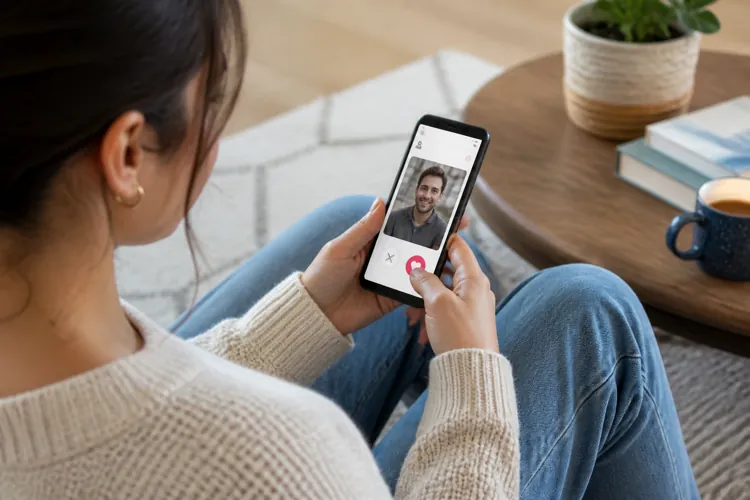
Senate probe finds major gaps in Tinder's protection against romance scams

The report said fraud detection systems went years without updates

Featured Tech News photo

A Senate investigation found that Tinder failed to update most of its artificial intelligence fraud detection models for years, allowing romance scammers to reach increasing numbers of users.

Nearly 1.5 million scammers or other suspicious accounts on Tinder and Hinge matched with at least one U.S. user during the first nine months of 2025.

Match Group has since introduced stronger security measures, including facial verification, which the company says reduced interaction...

Read Article
Featured Tech News photo
Article Image

New Mexico jury finds Meta liable in child’s death

  • A New Mexico jury has found Meta liable in connection with the death of a child, marking a rare legal setback for the tech giant.

  • Jurors concluded that the company’s platforms contributed to harmful conditions that played a role in the tragedy.

  • The verdict could have far-reaching implications for how social media companies are held accountable for user safety.


After weeks of testimony, a New Mexico jury has found Meta Platforms Inc. liable in a wrongful death case involving a child. The verdict delivers a significant legal blow to the parent company of Facebook and Instagram and intensifies scrutiny over the role of social media in young users’ lives.

The verdict, reached after weeks of testimony, concluded that Meta’s platforms contributed to conditions that ultimately led to the child’s death. While the specific details of the case remain partially sealed due to the minor’s identity, attorneys for the family argued that harmful content and inadequate safeguards exposed the child to dangerous influences.

Jurors agreed that Meta failed to take sufficient steps to protect vulnerable users, particularly minors, from content that could exacerbate mental health risks. The decision assigns a portion of liability to the company, opening the door for financial damages and potentially setting a precedent for similar cases nationwide.

“The jury’s verdict is a historic victory for every child and family who has paid the price for Meta’s choice to put profits over kids’ safety,” New Mexico Attorney General Raul Torrez said in a statement. “Meta executives knew their products harmed children, disregarded warnings from their own employees, and lied to the public about what they knew. Today the jury joined families, educators, and child safety experts in saying enough is enough.”

Meta will appeal

Meta, in a statement following the verdict, expressed sympathy for the family but disagreed with the outcome, signaling it may pursue an appeal. The company emphasized its ongoing investments in safety tools, parental controls, and content moderation.

“We are committed to protecting young people on our platforms,” the statement said. “We respectfully disagree with the jury’s findings and will review our legal options.”

Legal experts say the ruling could have broad implications for the tech industry. While lawsuits against social media companies have increased in recent years, many have faced significant hurdles due to federal protections such as Section 230 of the Communications Decency Act, which shields platforms from liability for user-generated content.

What’s under review

However, this case appears to hinge not solely on content, but on product design and alleged failures in safeguarding users — an emerging legal strategy that has gained traction.

Advocacy groups have long argued that algorithm-driven feeds can push vulnerable users toward harmful material, including content related to self-harm, eating disorders, or other dangerous behaviors. Lawmakers at both the state and federal levels have introduced legislation aimed at increasing protections for children online, though comprehensive reforms have yet to pass.

For the family at the center of the case, the verdict represents a measure of accountability.

As Meta prepares its next legal steps, the case is likely to be closely watched by regulators, industry leaders, and families alike — potentially shaping the future of how social media platforms are designed and governed.

2025
Article Image

TikTok reportedly secures its US future with final sales agreement

  • TikTok has signed binding agreements to sell a controlling stake in its U.S. business to a consortium of investors — including Oracle, Silver Lake and Abu Dhabi-based MGX — forming a new U.S. joint venture to run the platform’s American operations. 

  • The new company, TikTok USDS Joint Venture LLC, will be majority-American owned, with U.S. data storage, content moderation and algorithm security overseen domestically to satisfy national security requirements and avoid a U.S. ban.

  • ByteDance will retain a minority stake under U.S. law, with the transaction expected to close by January 22, 2026, ending years of regulatory uncertainty and legislative pressure. 


TikTok, the massively popular short-video platform used by more than 170 million Americans, has signed binding agreements to divest a controlling share of its U.S. business to a consortium of predominantly American and allied investors, according to various media reports. 

The deal, announced internally to employees Thursday and expected to be completed by January 22, 2026, creates a new entity — TikTok USDS Joint Venture LLC — that will operate TikTok’s U.S. platform under heightened oversight of data security, content moderation and algorithm governance. 

The reported deal would secure TikTok’s presence in the U.S. after Congress passed legislation to ban it unless its China-based owner relinquished control.

New ownership structure

Under the terms of the agreement:

  • A group led by Oracle, private equity firm Silver Lake, and Abu Dhabi-based MGX will collectively hold roughly 50 % of the new U.S. venture’s equity. 

  • ByteDance, TikTok’s Beijing-based parent company, will retain a 19.9 % stake — the cap permitted under U.S. foreign-ownership restrictions — while existing ByteDance investors will hold about 30.1 %. 

A majority-American board of directors will govern the U.S. entity, and Oracle is set to serve as a trusted security partner responsible for storing U.S. user data on local infrastructure. 

Addressing national security concerns 

The restructuring directly responds to bipartisan U.S. concerns that TikTok’s Chinese ownership could pose risks to national security and user privacy — arguments that have propelled legislative and regulatory action for years. Under a 2024 law, commonly known as the divest-or-ban requirement, TikTok faced a potential nationwide prohibition unless it severed control by its foreign parent company. 

As part of the new arrangement, TikTok’s recommendation algorithm will be retrained on U.S. user data to further insulate it from foreign influence — a major sticking point throughout negotiations. 

The finalized deal closes a chapter of uncertainty for TikTok in the U.S., where the app has been intermittently threatened with removal since national security concerns first bubbled into public view more than five years ago. Previous presidential administrations and Congress have repeatedly pushed for divestiture, leading to multiple deadline extensions and intense negotiation between Washington and Beijing.

Article Image

Trump grants TikTok a 75-day reprieve amid trade tensions with China

  • ⏳ President Trump extends TikTok’s U.S. deadline by 75 days, citing “tremendous progress” in talks to save the app from a national ban.

  • 🇨🇳 A finalized deal to localize TikTok under U.S. ownership was derailed after Trump’s latest tariff hike on China.

  • 💼 ByteDance says key issues remain unresolved, and any agreement must receive Chinese government approval.

President Trump on Friday announced a 75-day extension for TikTok to remain operational in the United States, delaying a potential ban on the wildly popular video app while talks continue on a deal to bring its U.S. operations under American control.

In a post on Truth Social, Trump said his administration was making “tremendous progress” and emphasized that it does “not want TikTok to ‘go dark.’” He added that officials are working closely with Chinese counterparts to reach a resolution.

Behind the scenes, a deal had reportedly been finalized earlier this week, according to two sources familiar with the matter. The plan would have spun off TikTok’s U.S. operations into a new, American-owned company, with majority control by U.S. investors and a minority stake retained by ByteDance, TikTok’s Chinese parent company.

Derailed by tariffs

However, those plans were derailed Thursday after Trump announced a 34% increase in tariffs on Chinese goods, part of a broader push for reciprocal trade policies. In response, ByteDance informed the White House that Beijing would not approve the deal under current conditions, stalling the agreement.

In a rare public statement, ByteDance confirmed it had been in discussions with Washington over a potential solution but said “key matters remain to be resolved” and any final agreement would require approval under Chinese law.

Trump hinted that his tariff policy is being used as leverage in the negotiations, calling tariffs “the most powerful Economic tool” and crucial to “our National Security.”

The reprieve provides temporary relief for TikTok’s millions of U.S. users and creators, but the platform’s future remains uncertain as geopolitical tensions between Washington and Beijing once again take center stage.

2024
2023
2022