Fratelli Beretta USA recalls ready-to-eat charcuterie meat products
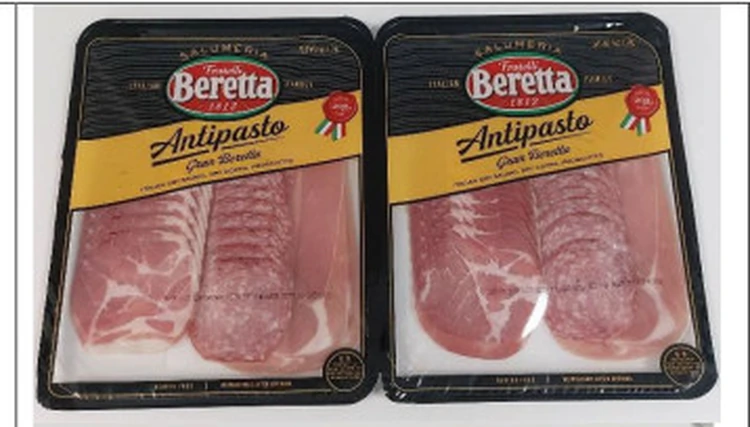
Fratelli Beretta USA of Mount Olive, N.J., is recalling an undetermined amount of ready-to-eat (RTE) meat charcuterie products.
The products contain Coppa that may be under processed, which may have resulted in possible contamination with foodborne pathogens.
The RTE Coppa products have various best by dates. A list of the recalled products, with various best by dates, may be found here.
The recalled products, bearing establishment number “EST. M47967 or M7543B” inside the USDA mark of inspection or in inkjet print on the front of the package, were shipped to distributor and retail locations nationwide.
What to do
Customers who purchased the recalled products should not consume them, but discard or return them to the place of purchase.
Consumers with questions regarding the recall may contact the Busseto Recall Hotline at 866-552-4916.

Salm Partners recalls ready-to-eat turkey kielbasa
Salm Partners of Denmark, Wis., is recalling approximately 133,039 pounds of ready-to-eat turkey kielbasa.
The product may be contaminated with extraneous materials -- specifically bone fragments.
There has been one minor oral injury reported.
The recalled product, which comes in a 13-oz. plastic vacuum-sealed package with “PARKVIEW TURKEY POLSKA KIELBASA”, P-32009 and “USE BY APR 24 24” or “USE BY APR 27 24” printed on it, was sold at retail stores nationwide.
What to do
Customers who purchased the recalled product should not consume it, but discard or return it to the place of purchase.
Consumers with questions may contact Salm Partner at (920) 863-5559, ext. 1346.