|
|
CONSUMER NEWS
RECALLS
COMPLAINT FORM
SCAM ALERTS
Small Claims Guide Class Actions Lemon Laws FAQ Newsletters |
|
|
![]() |
Pining for a Hybrid? Do the Math! |
||||||||
|
By Joe Benton June 3, 2005
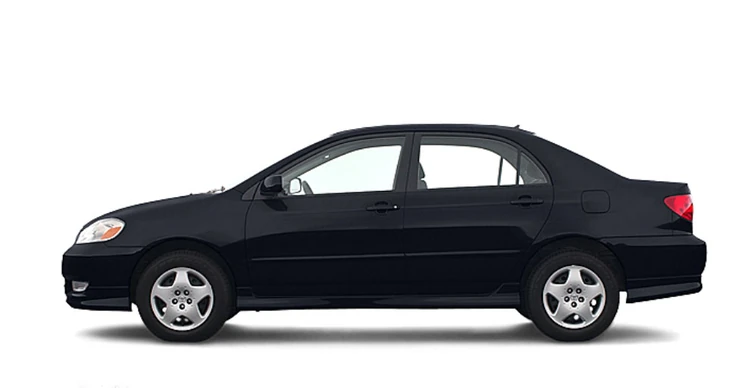
Not long ago, someone paid $500 on eBay to be first in line for a new hybrid. All this sudden fuel-saving fervor is admirable. But the question many consumers may not ask is whether hybrid cars and SUVs really will save them money. There's no question they achieve superior gas mileage but they don't cost less to operate, at least not yet. ConsumerAffairs.com compared three hybrid vehicles with three top-of-the-line vehicles in the same class by the same automaker. We calculated gasoline costs at $3 a gallon over 120,000 miles and 80,000 miles to arrive at the likely operating costs. The results would seem to demonstrate that people are buying hybrids for reasons other than saving money. Prius vs. CorollaToyota Prius sales have tripled as gasoline prices shot up this year. Toyota sold 22,880 Prius cars in the first three months of the year, more than double the number it sold in the first three months of 2004.
The Corolla sells for a Blue Book reduced price of $17,083. The car, according to the EPA, gets 26 miles to a gallon in the city and 34 on the highway. With the Prius we find a new car Blue Book price of $21,900 for the base model. The EPA gas mileage estimate for the vehicle is 60 mpg in the city and 51 on the highway. But wait, there's more. An additional $800 buyer incentive is tacked onto the Corolla. Only "market adjustments" (read dealer mark-ups) are added to the Prius. So let's look at the cost of owning a hybrid from another perspective. Let's drive a Prius for 120,000 miles. Once again we will pay an average of $3 a gallon for gasoline. Half of the miles will be driven in the city, and half on the highway. No other maintenance costs will be considered, despite the possibility that the hybrid costs might be higher. The Prius produces 60 miles to a gallon in the city and 51 on the highway according to the EPA tests. The means we consume 2,178 gallons of gasoline or $6,528. Over the same distance, the Corolla consumes 4,071 gallons of gasoline costing $12,213. So we would spend $5,685 more over 120,000 miles driving the Corolla than driving the Prius. But we paid $5,617 more for the Prius after the Toyota incentive for the Corolla. So the additional cost of driving a Corolla instead of a Prius for 120,000 miles is $68 and you don't have to stand in line to buy one. Cutting the driving distance 80,000 miles -- 40,000 in the city and 40,000 on the highway -- increases the Corolla advantage to just more than $1,000. Accord Hybrid vs. Accord EXHonda Motor Co., with sales of just over 100,000 hybrid vehicles worldwide since 1999, might be just a little smarter than Toyota when it comes to marketing gasoline-electric hybrids. Honda's new Accord hybrid is priced so high that most people won't be able to afford it. So Honda avoids the Prius problem of too many customers and too few cars. The Honda Accord Hybrid Sedan sells for $31,575. The price includes roughly a $1,000 markup. The EPA mileage estimate for the Honda is 30 MPG in the city and 37 on the highway. The top of the line Honda Accord EX sells for $25,176 which includes roughly $2,000 in price reductions. The EX gets an EPA estimated 21 mpg in the city and 30 on the highway.
The top of the line conventional Accord goes 63,990 miles on the highway or 44,793 miles in the city after pouring the price differential into the gas tank at $3 a gallon. Over 120,000 miles the hybrid Honda uses $3,707 less gasoline. However, because of the increased purchase price, the hybrid is $2,692 more to operate. Over 80,000 miles the hybrid burns $2,470 less gasoline but is $3,929 more expensive to operate, again because of the high purchase price. Escape Hybrid vs. Escape GasThe Ford Escape follows the same pattern as the Toyota and Honda, but the operating cost is much higher for the hybrid when compared to a top-of-the-line Escape XLTS.
Driving the hybrid 120,000 miles will cost 11,658 at $3 a gallon. The XLTS burns $18,181 or $6523 more. The conventional Escape is $1,893 more to operate considering the price differential. But when the $3,500 in price incentives is figured into the comparison, the XLTS costs $1,607 less to drive over 120,000 miles than the hybrid. Over an 80,000 mile distance the XLTS is $283 less to operate before incentives and $3,783 less to operate after incentives. There is plenty of guesswork in this comparison. No one knows where gas prices will be over a 120,000-mile period. The repair costs for hybrids are still uncertain. Will they cost more to maintain? Or less? While there are no automotive horror stories about hybrids to date neither is there any record on which to estimate repair costs. What's the Answer?So does this answer the question of whether your next car or SUV should be a hybrid? It depends. If you base your buying decisions strictly on economics, the likely answer is that a modest, gas-powered car with a stick shift and with minimal use of air conditioning is probably going to be considerably cheaper to buy and operate than a hybrid. If you are basing your decision on what's best for the environment, there's more than gasoline consumption to factor into the equation. A big part of what's wrong with our environmental situation, not to mention our health, is the excessive amount of time we spend in motorized vehicles. Whether they're powered by gasoline, hydrogen or fermented seaweed, cars need roads to run on. Roadways are very damaging to the environment, not least because of the effect they have on water runoff. A big reason houses tend to slide down hills in Southern California is that there is so much asphalt that storm runoff is funneled into unnatural -- and dangerous -- escape routes. Highways also contribute to global warming, even when there are no cars on them. They displace cooling vegetation and their harsh asphalt surface reflects heat back into the environment, which in itself contributes to smog, regardless of what kind of fuel the vehicles on that highway are using. The real answer to our fuel-cost woes, sedentary lifestyle and dire environmental problems is not a new kind of car. It's a new kind of city -- one that lets us walk, bike or ride transit to where we're going. But we digress. What's the Question?If the question is, will you save money buying a hybrid, we'd have to say it's not likely. On the other hand if the question is, will buying a hybrid make you feel good, we can't answer that. It might, at least for a little while. If the question is, will your hybrid help save the earth, we'd suggest the answer to that is, the earth will save itself. It was here long before we were and will be here long after we're gone. (It's the date and method of our departure that hangs in the balance). Ah, but here's another factor. In many major metro areas, hybrids are allowed in car-pool (or HOV) lanes. Thus, by buying a hybrid, you may be able to continue driving alone to work, squeezing into the already congested HOV lanes that were created to reduce congestion by reducing the number of cars on the road. In that scenario, hybrids are a threat to the environment because they contribute to increased congestion. We know from reading our mail that this is not a popular thing to say but, as our editor constantly reminds us, we're not running a popularity contest. Report Your Experience
|
||||||||
Back to the top | |
|||||||||
Advertisement
|
|
||||
|
AUTOMOTIVE Dealers Manufacturers Service Extended Warranties Lemon Laws Recalls Tires Transporters FAMILY Aging Children, Parenting Recalls Dating Education Entertainment Pets Weddings |
FINANCE Annuities Banks Credit Cards Debt Collection Debt Counseling Insurance Investing Loans Mortgages Payday Loans Student Loans Tax Prep HEALTH Drugs, Pharmacies Health Clubs Hearing Care Hospitals Nursing Homes Nutrition, Diets Vision Care Weight Loss |
HOMEOWNERS & RENTERS Appliances Cookware Furniture Home Improvements Lawn & Garden Movers Pools & Spas Realtors, Rental Agents Recalls Utilities ELECTRONICS Cable TV/DBS Cameras Cell Phones Computers Home Electronics Internet Access Local Phone Service Long Distance VoIP |
SHOPPING In-Home Online Retail Stores Sporting Goods Supermarkets Telemarketers TRAVEL Airlines Bus Lines Car Rental Cruises Hotels Travel Agents Trains RESOURCES Class Actions Complaint Form Small Claims Guide Lemon Laws |
CONSUMER NEWS Latest News Automotive Telecom Financial Health Homeowners Scams Seniors Travel More ... RECALLS Automotive Children's Products Drugs Food Household Products Sporting Goods ABOUT US FAQ Privacy Policy Advertise With Us Newsroom Syndication Terms of Use |
Terms of Use Your use of this site constitutes acceptance of the Terms of Use
Copyright © 2003-2008 ConsumerAffairs.com Inc. All Rights Reserved. The contents of this site may not be republished, reprinted, rewritten or recirculated without written permission. |
|